
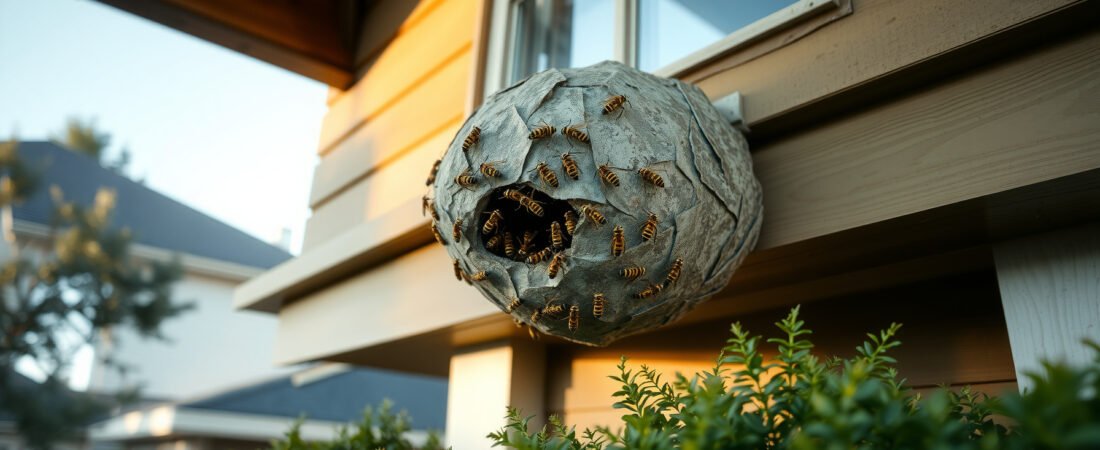
Expect to pay between $100 and $1,500 for professional wasp nest removal — and that enormous range isn’t vagueness, it’s the whole problem. Most homeowners get a quote, compare it to a $12 can of spray foam, and decide to DIY. What they don’t factor in is that the price gap between a visible paper nest on an eave and a colony that’s been living inside a wall void for three months isn’t $50 — it’s often $800. The location of the nest, not its size, is what drives professional wasp nest removal cost more than anything else.
Why Does Wasp Nest Location Change the Price So Dramatically?
A nest hanging visibly from a tree branch or porch overhang is the easiest scenario for a technician — accessible, treatable in 15 minutes, and priced accordingly at $100–$300. But a nest tucked inside a soffit, inside an attic wall, or beneath a deck requires the technician to work blind, use longer application tools, and sometimes open up a surface to reach the colony. That labor alone can push costs past $600 before treatment chemicals are even discussed.
Here’s the counterintuitive part most people don’t realize: yellow jackets, which build underground or inside wall voids, are far more dangerous and expensive to treat than the aerial paper nests that look scarier. A bald-faced hornet nest the size of a football dangling from your maple tree is essentially just intimidating packaging. A yellow jacket colony with 4,000–5,000 workers inside your crawl space is a genuine structural and medical problem — and it costs two to four times more to remove.
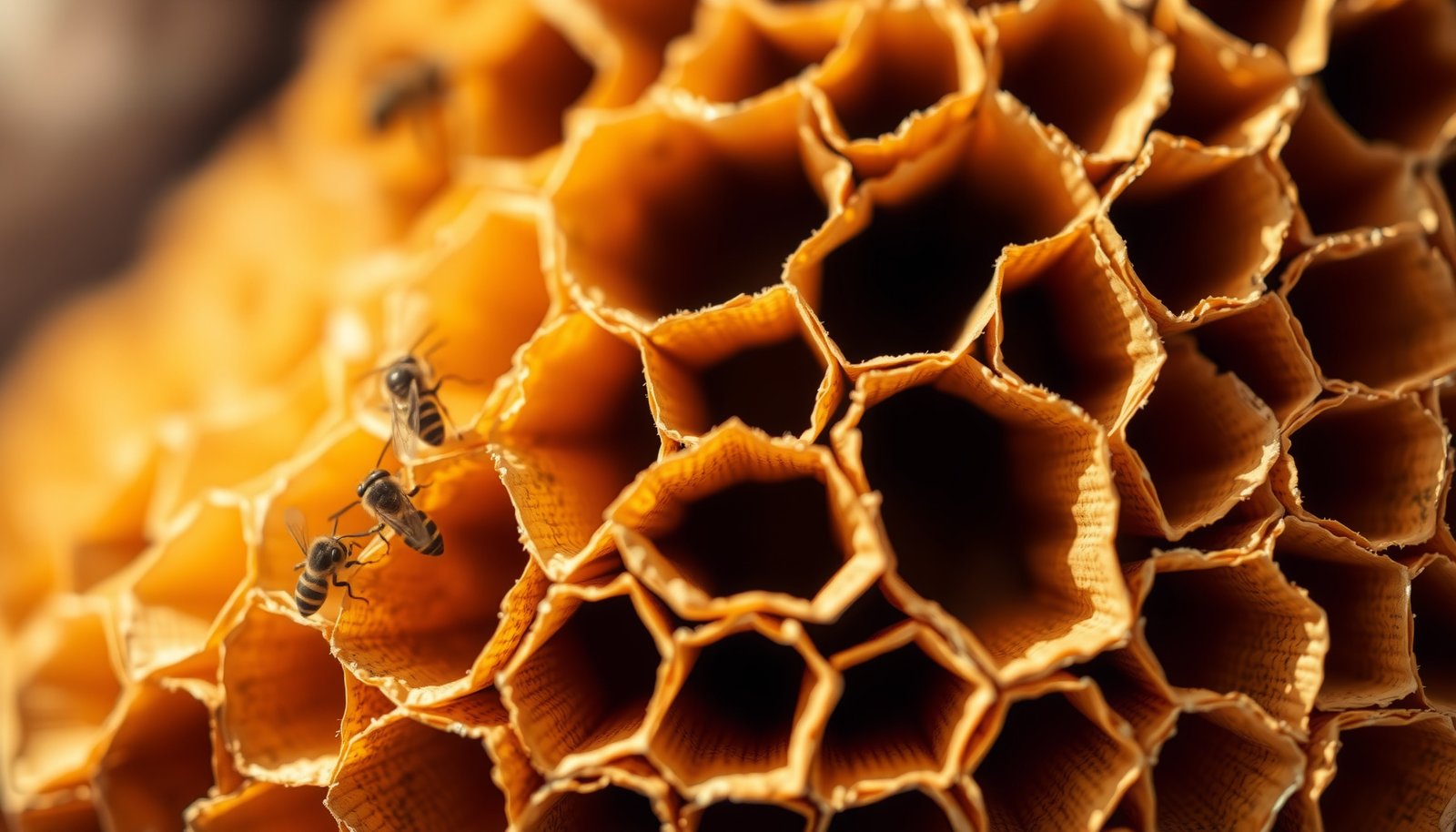
This image shows the difference between an accessible eave nest and a concealed wall-void nest — two scenarios that look similar from the outside but represent very different removal jobs, which is exactly why you should never accept a phone quote without sending photos first.
What’s Actually Included in a Professional Wasp Removal Quote?
This is where homeowners get burned. Two quotes at $150 and $350 for the “same job” often aren’t the same job at all. The cheaper one may cover insecticide application only — meaning the technician treats the nest, leaves, and the dead nest stays in your wall or eave. The pricier quote may include physical nest removal, which matters because a dead nest full of honeydew and pheromones will attract new queens and other pests within a season.
Before you agree to any service, ask the company to break the quote into its components. Here’s what a complete professional wasp service should include:
- Inspection and identification — confirming the species (wasp, yellow jacket, hornet) and locating all active entry points, not just the visible ones
- Treatment application — insecticide injected directly into or around the nest; dustable products like Delta Dust are preferred for wall voids because they penetrate deeper than liquid sprays
- Nest removal — physical extraction of the nest structure after the colony is eliminated; not all companies include this, and you should ask explicitly
- Entry point sealing — plugging the holes wasps used to get in so a new colony doesn’t move into the same cavity next season
- Follow-up visit guarantee — a 30-day warranty that covers return treatment if activity persists; this is standard with most reputable companies but not all budget operators
If a quote doesn’t mention nest removal and entry point sealing, it almost certainly doesn’t include them. Those two steps are what separate a one-season fix from a recurring annual problem.
Professional Wasp Nest Removal Cost by Nest Type and Situation
Pricing varies enough by species and access that a flat number is genuinely misleading. The table below gives honest ranges based on typical service calls across different nest scenarios — not best-case estimates.
| Nest Type / Location | Typical Cost Range | Notes |
|---|---|---|
| Paper wasp nest, open eave or porch | $100–$250 | Easiest access; often treated and removed in one visit |
| Bald-faced hornet nest, aerial (tree, roofline) | $200–$500 | Height adds cost; nest can be basketball-sized with 400–700 workers |
| Yellow jacket nest, underground or void | $300–$800 | Multiple return visits often required; colony may exceed 5,000 workers |
| Yellow jacket or wasp nest inside wall void or attic | $500–$1,500+ | May require opening drywall or siding; structural access drives cost highest |
These ranges assume a single-family home. Multi-story buildings, commercial properties, or nests near active HVAC systems can push costs even higher because technicians need additional safety equipment and more time to work safely. Geographic location matters too — pest control in suburban Texas runs cheaper than the same service in coastal California or the Pacific Northwest, where labor rates are higher across all trades.
Pro-Tip: Always ask for the quote in writing before any work begins, and confirm whether the price includes nest removal or just treatment. Insist on knowing exactly which chemical will be used and where — this matters especially if you have children, pets, or a garden near the treatment area.
Is DIY Wasp Removal Actually Cheaper When You Do the Full Math?
Picture this: a homeowner in Georgia buys two cans of wasp freeze spray at $9 each, attempts the nest at dusk, gets stung four times, and retreats. Three days later the nest is active again — wasps re-entered through a gap he couldn’t see. He buys a foam applicator wand and a can of Delta Dust for $32 total, treats again, seals the entry with expanding foam. Six weeks later, a new colony claims the same wall void. By fall, he’s spent $85, made three trips to the hardware store, and the nest is still technically inside his siding. A single professional visit would have cost $350 and included a 30-day guarantee.
DIY is legitimately cheaper for small, accessible paper wasp nests — a single visible nest on an eave with fewer than 50 workers is a reasonable spray-and-done job for anyone willing to do it at dusk wearing protective clothing. But the math flips hard the moment the nest is concealed, underground, or actively established inside a structure. At that point, DIY typically means multiple attempts, incomplete treatment, and a colony that re-establishes in the same cavity because the entry points were never sealed properly.
“The number one mistake I see with DIY wasp attempts is treating from the entrance hole without understanding that yellow jacket colonies inside a wall can have multiple exits. Homeowners seal one hole, think they’re done, and two weeks later the wasps have chewed through drywall to create a new exit inside a bedroom. At that point you’re not just paying for pest control — you’re paying for drywall repair too.”
Marcus Delray, NPMA-Certified Pest Control Professional, 14 years field experience specializing in stinging insect removal
What Hidden Costs Can Push the Final Bill Higher Than the Quote?
The quoted price is almost never the final number for concealed or structural nests. Understanding where the upsells are legitimate versus where they’re padding helps you know when to push back. These are the actual add-ons that commonly show up after the initial quote:
- Emergency or same-day service fees — most companies charge $50–$150 extra for same-day appointments; if you can wait 24–48 hours, scheduling normally saves real money
- Height and access surcharges — roofline or second-story nests requiring extension ladders or a lift add $75–$200 to most quotes; this is legitimate and not negotiable
- Structural access fees — if the technician needs to open siding, cut into drywall, or remove a soffit panel to reach a void nest, labor for that access can add $150–$400 to the bill, separate from restoration costs
- Multiple colony treatment — a property inspection often reveals secondary nests the homeowner didn’t know about; each additional nest is typically billed at a reduced rate but still adds to the total
- Return visit fees after the guarantee period — if a new colony establishes in the same location the following season, most companies treat it as a new job; only ongoing pest control contracts cover repeat infestations automatically
That last point is worth sitting with. A one-time wasp removal treats today’s problem. If your property has structural gaps that make it attractive to nesting wasps — south-facing soffits, untreated wood siding, overgrown vegetation against the foundation — you’ll likely see a new nest in the same general area within one to three seasons. Some homeowners find that a quarterly general pest plan, like those offered through Orkin or Terminix, ends up cheaper over three to five years than paying for individual wasp removal calls each summer. It depends entirely on your property’s exposure and how many nests you deal with annually.
One honest nuance that rarely gets said: climate and region matter more to recurring nest problems than the quality of the initial treatment. Homeowners in the Southeast and Mid-Atlantic states deal with yellow jacket pressure from June through October. A perfectly executed August removal doesn’t prevent a new queen from overwintering in your attic and starting a fresh colony in April. In high-pressure regions, single-event removal without structural exclusion is always going to feel like a partial fix — because it is one. That’s a property management decision as much as a pest control one, and it’s worth having that conversation with whoever you hire. The same logic applies to other wildlife that use structural voids as entry points — if you’ve had issues with squirrels, for example, checking out how exclusion-first strategies work for attic pests gives useful context for how professionals approach void access problems across species.
Wasp colonies can contain anywhere from 50 workers in a new paper wasp nest to over 5,000 in a mature yellow jacket colony by late summer — which is exactly why treatment timing affects both safety and cost. A colony treated in June when it has 200 workers is a fundamentally different job than the same nest treated in September at peak population. If you have any flexibility, scheduling removal in early to mid-summer cuts both the risk and sometimes the labor cost because the technician is dealing with a fraction of the eventual colony size.
The real takeaway isn’t which number is right for your situation — it’s that you should never accept a verbal quote over the phone for anything other than a basic visible eave nest. Send photos, describe access honestly, and ask every question in the numbered list above before agreeing to service. The companies that give you a firm price without seeing the location are either about to hit you with add-ons or cutting corners on what they’ll actually do. Neither outcome is good when you’re paying to solve a problem that involves 2,000 stinging insects inside your walls.
Frequently Asked Questions
How much does professional wasp nest removal cost?
Professional wasp nest removal typically costs between $100 and $400, with most homeowners paying around $150 to $250 for a standard job. The exact price depends on the nest’s location, size, and how difficult it is for the technician to access. Ground nests or nests inside walls usually cost more than exposed eaves nests because they require more labor.
Is it worth paying for professional wasp nest removal or can I do it myself?
If the nest is larger than a golf ball, in a hard-to-reach spot, or you’re allergic to stings, it’s worth paying a pro. DIY wasp sprays cost $10 to $20, but a botched attempt can aggravate thousands of wasps and lead to serious stings. Professionals have protective gear, commercial-grade insecticides, and the experience to handle aggressive species like yellow jackets safely.
Does homeowners insurance cover wasp nest removal?
In almost all cases, homeowners insurance doesn’t cover wasp nest removal because it’s considered a maintenance issue, not sudden accidental damage. If a large infestation causes structural damage to your home, some policies may cover the repair costs but not the extermination itself. It’s worth calling your insurer to ask, but don’t count on reimbursement.
What factors affect the cost of wasp nest removal?
The biggest cost drivers are nest location, nest size, and the wasp species involved. A nest tucked inside a wall cavity or under a roofline can run $300 or more because it requires extra labor or even drywall removal. Yellow jacket ground nests and large paper wasp colonies also tend to cost more since they’re more dangerous and time-consuming to treat.
Do exterminators charge more for wasp removal if the nest is inside the walls?
Yes, most exterminators charge a premium for in-wall wasp nests, often ranging from $300 to $600 or higher depending on the extent of the infestation. The added cost covers the time to locate the nest, drill treatment holes, and sometimes patch the wall afterward. Some companies charge separately for the pest control service and any structural repairs, so always ask for an itemized quote upfront.
Disclaimer: This article is for informational purposes only. Pest control costs, timelines, and outcomes vary widely depending on the pest, the severity of the infestation, your location, and the company you hire. Always get multiple quotes and ask for a written inspection report before agreeing to a treatment plan.