
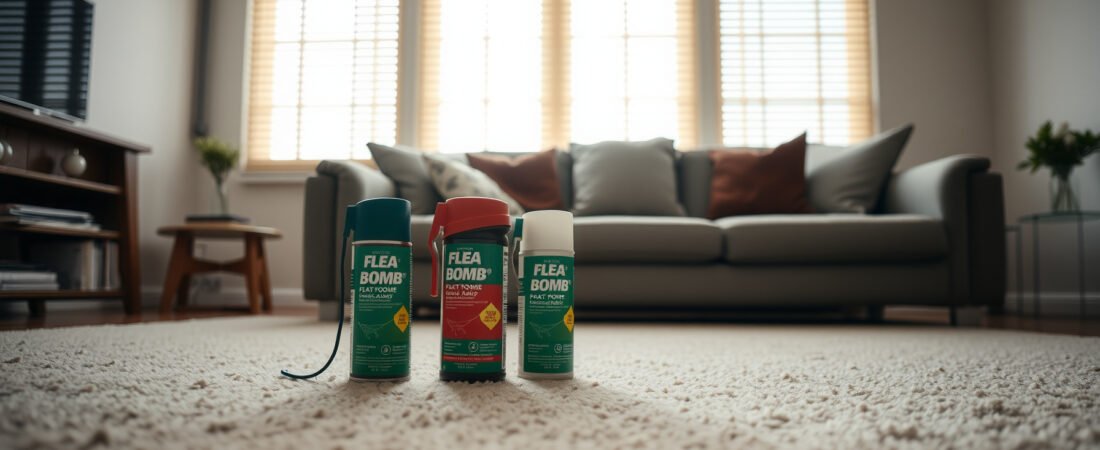
Flea bombs don’t fail because they’re weak — they fail because most people use them at the exact wrong moment in the flea life cycle. That’s the real reason you bomb your house on Saturday, come back Sunday, and still see fleas jumping by Tuesday. The product isn’t the problem. The timing and the biology are.
Here’s the bottom line: no fogger on the market can kill flea eggs or pupae. Those two stages are chemically resistant by design, and they make up roughly 85–90% of the total flea population in an infested home at any given time. The best flea bombs and foggers available today are genuinely effective — but only against adult fleas and, to a lesser degree, larvae. If you don’t understand that going in, you’ll buy the right product and still feel like it didn’t work.
This guide cuts through the noise. You’ll find out which products actually perform, what the active ingredients do (and don’t do), and how to use a fogger so it works with the flea life cycle instead of against it.
Why Do Flea Foggers Seem to Stop Working After a Few Days?
The “re-infestation” you see after fogging isn’t re-infestation at all — it’s emergence. Flea pupae are cocooned in a silk-like casing that’s physically impenetrable to insecticide spray droplets, and they can stay dormant inside that cocoon for up to 5 months. The vibration and warmth of you walking back into your home after fogging is literally the signal that triggers them to hatch. So within 48–72 hours of treatment, a fresh wave of newly hatched adult fleas appears, and people conclude the bomb didn’t work.
This is why a single treatment almost never resolves a flea problem. The products that do best long-term are foggers that contain an Insect Growth Regulator (IGR) — a chemical like methoprene or pyriproxyfen that mimics juvenile flea hormones and prevents larvae from maturing into reproducing adults. IGRs don’t kill anything immediately, but they break the reproductive cycle, and their residual effect can last 7 months or more on treated surfaces. A fogger without an IGR is just renting a solution for a week.
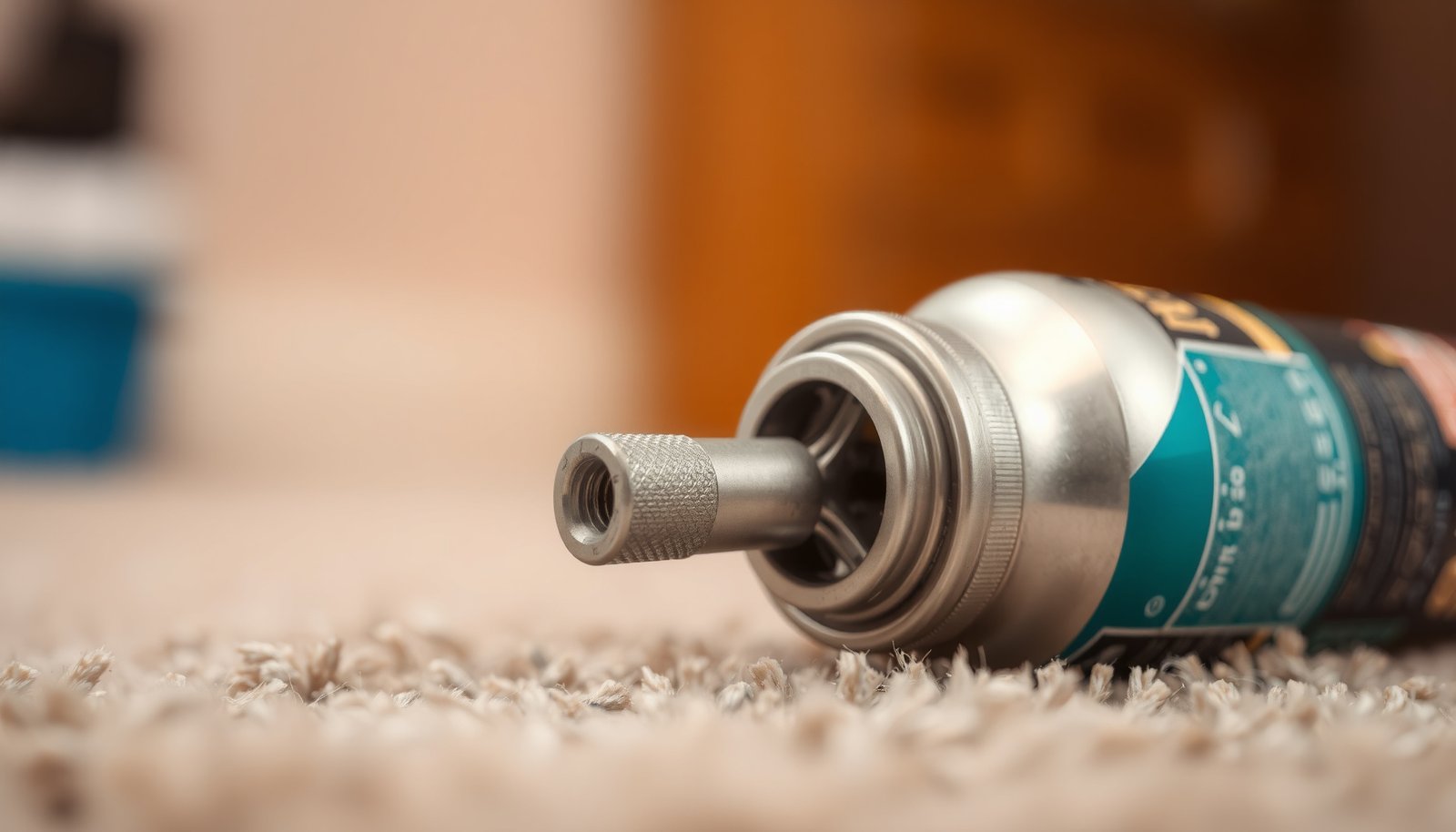
This close-up shows the nozzle mechanism of a pressurized flea fogger alongside the label’s active ingredient panel — understanding what’s actually in the canister is the single most important factor in whether your treatment succeeds or becomes a frustrating repeat purchase.
Which Flea Foggers Actually Work? The Top Products Ranked
After breaking down the active ingredients and IGR content across the most widely available products, a clear tier separates itself from the rest. The products below were evaluated on three criteria: adulticide potency, IGR inclusion and type, and coverage per canister. Picture this: you’re treating a 1,200 square foot ranch home with two cats and carpet in every room — the product you grab at the hardware store at 9pm on a Friday will determine whether you’re still dealing with this in three weeks.
Here’s how the leading options stack up in a direct comparison:
| Product | Active Adulticide | IGR Included | Coverage (per can) |
|---|---|---|---|
| Hot Shot Flea & Roach Fogger | Cypermethrin + Tetramethrin | No | 2,000 sq ft |
| Raid Flea Killer Plus Fogger | Cypermethrin + Tetramethrin | Yes (Methoprene) | 5,000 sq ft (3-pack) |
| Precor Plus Fogger (Wellmark) | Permethrin + Phenothrin | Yes (Methoprene) | 3,000 sq ft |
| Adams Plus Flea & Tick Fogger | Permethrin + MGK-264 | Yes (Pyriproxyfen) | 2,625 sq ft (3-pack) |
The Precor Plus Fogger is the standout choice for serious infestations. Precor (methoprene) is the gold standard IGR in flea control, and it’s the same active ingredient used in professional-grade products. Adams Plus is a close second, with pyriproxyfen being equally effective as an IGR — some entomologists actually prefer it for its greater stability in light-exposed areas. The Hot Shot fogger, while popular and cheap, earns low marks here because it contains no IGR whatsoever, meaning it kills what’s alive today and does nothing about what hatches tomorrow.
How Many Foggers Do You Actually Need for Your Home?
Most people underdose. They buy a single 3-pack, use all three canisters for the main living area, and ignore the garage, the crawl space under the bed, and the laundry room where the pet bed lives. Fleas don’t stay in the living room — they’re wherever your pet rests and sleeps, and those spots are often the areas with the lowest fogger penetration.
The rule of thumb from product labels is one canister per room or per specified square footage — but that math assumes open floor plans with no interior doors. A 2,000 sq ft canister rating drops to effectively 800–1,000 sq ft in a home with hallways, closets, and rooms with doors closed. Use this step-by-step approach when sizing your treatment:
- Count every enclosed space separately — each bedroom, bathroom, hallway, laundry room, and attached garage is its own zone requiring its own canister.
- Measure actual square footage per room, not the total home size listed on your floor plan — fogger mist doesn’t pass through walls.
- Add one canister for under-bed and closet saturation in rooms where your pet sleeps — these microhabitats harbor 60–70% of larvae and eggs in a typical infestation.
- Plan for a second treatment 10–14 days after the first — this is timed to catch the next generation of pupae that were chemically untouchable during round one.
- Treat your vehicle if your pet rides in it — car interiors are a commonly missed re-infestation source, and a single small fogger canister handles a typical sedan.
Pro-Tip: Before setting off any fogger, vacuum every carpeted surface aggressively — especially along baseboards and under furniture. Vacuuming triggers flea pupae to hatch (the vibration mimics a host walking by), pulling more fleas out of the chemically resistant pupal stage and into the adult stage where the fogger can actually kill them. Dispose of the vacuum bag immediately in an outdoor trash can.
Are There Situations Where a Fogger Isn’t the Right Tool?
Honestly, yes — and this is where most flea bomb articles fall short by treating foggers as a universal answer. Foggers release a fine mist that settles on horizontal surfaces and stays where it lands. They don’t penetrate into cracks, wall voids, beneath hardwood flooring, or deep into thick carpet pile where eggs and larvae are concentrated. A home with mostly hardwood or tile floors and minimal upholstered furniture is actually a worse candidate for fogging than a carpeted home, because there’s nowhere for the insecticide residual to cling and stay active.
In those situations, a combination approach works better: a direct-contact aerosol spray like Virbac Knockout Area Treatment (which also contains methoprene) applied manually to targeted surfaces, combined with a premise powder like diatomaceous earth or boric acid worked into carpet fibers, can outperform a fogger on its own. Foggers shine in carpeted, multi-room homes with moderate to heavy infestations — that’s their wheelhouse. For light infestations caught early, or in homes with minimal soft furnishings, you may be overcomplicating it.
“The biggest mistake I see homeowners make with flea foggers is treating the infestation they can see — the jumping adults — rather than the infestation that’s actually there. Eggs and pupae represent the vast majority of a flea population at any given time. If your product doesn’t include an IGR, you’re essentially mowing the lawn without pulling the roots.”
Dr. Marianne Elks, Ph.D., Board-Certified Entomologist and Urban Pest Management Consultant, University Extension Program — Southeast Region
What Safety Steps Can You Skip — and What You Absolutely Cannot
Flea fogger labels are long and people skim them. That’s understandable. But there are a handful of non-negotiable safety steps that homeowners regularly skip, and some of them create genuine fire and health hazards — not just legal boilerplate. The active ingredients in most foggers are flammable propellants combined with pyrethroid insecticides. If a pilot light is left on in a gas stove or water heater, the aerosol cloud can ignite. This is not a theoretical risk — it has caused house fires.
Here’s what actually matters and what you can relax about:
- Cannot skip: Turn off all gas appliances and extinguish every pilot light before fogging — stoves, water heaters, furnaces, and dryers with gas lines.
- Cannot skip: Remove or cover all food, food prep surfaces, and dishes — pyrethroids are toxic to fish and aquatic invertebrates at very low concentrations, so aquariums must be covered and their pumps turned off.
- Cannot skip: Keep people and pets out for the full label-specified time — typically 2–4 hours — then ventilate for at least 30 minutes before re-entry.
- Can relax about: Covering every single piece of furniture with plastic sheeting — fogger mist dissipates and the residual on upholstery isn’t a significant contact risk once the label’s re-entry time has passed.
- Can relax about: Washing every piece of fabric in the house — laundering your pet’s bedding and anything on the floor is worthwhile, but fogging your curtains and couch cushions doesn’t require stripping the whole house afterward.
One thing that genuinely surprises people: pyrethroids break down quickly in UV light and air, which is part of why they’re considered relatively low-risk for humans once dry. The window of risk is during application and for a short period after — not days later. If you’re dealing with a broader pest situation alongside fleas (it happens more often than you’d think — identifying secondary infestations like psocids or booklice is worth doing before any total-release treatment, since foggers affect multiple species at once), a single treatment can sometimes address more than one problem simultaneously.
Also worth noting: if you’re in a multi-unit building, fogging your apartment without coordinating with neighbors can actually push fleas into adjacent units and create building-wide problems — something that’s especially relevant in rentals where flea infestations have a habit of migrating through shared wall cavities, similar to how rodent pressure spreads (understanding how different pest species travel and nest gives useful context for how infestations move through structures). Talk to your building manager before setting off a fogger in a shared building.
The bottom line going forward: buy a fogger with an IGR, plan for two treatments 10–14 days apart, vacuum aggressively before each one, and treat your pet with a veterinarian-approved on-animal product simultaneously. The fogger handles the home environment — it can’t do anything about the fleas living on your dog or cat, and if that part of the equation is missing, you’ll be back at the hardware store in two weeks wondering why the bomb “didn’t work.” That’s not a product failure. That’s an incomplete treatment strategy.
Frequently Asked Questions
how long do you have to stay out of the house after a flea bomb?
Most flea foggers require you to stay out for 2 to 4 hours, but you should check the specific label since some products need up to 4 hours minimum. After you return, ventilate the house by opening windows and doors for at least 30 minutes before letting kids or pets back inside.
do flea bombs kill flea eggs or just adult fleas?
Most standard flea foggers kill adult fleas and larvae, but they don’t reliably penetrate flea eggs because eggs have a protective coating. That’s why a single treatment almost never solves the problem — you’ll typically need a second round 10 to 14 days later to hit the fleas that hatch after the first application.
how many flea foggers do I need for my house?
A standard 6 oz flea bomb typically covers around 625 square feet, so measure your home before buying. You’ll want one can per room rather than setting them all off in one central spot, since foggers can’t penetrate under furniture or into closets effectively from a distance.
is a flea bomb safe for cats and dogs?
No — you need to remove all pets, including fish tanks, before setting off a flea fogger, and don’t bring them back until the full re-entry time has passed and the space is ventilated. Fish are especially sensitive, so cover tanks and turn off air pumps since the aerosol chemicals can be lethal to them even in small amounts.
do I need to wash everything after a flea bomb?
You should wipe down any exposed countertops, food prep surfaces, and children’s toys after fogging since the residue can be harmful if touched or ingested. Bedding and clothes left out during treatment should be washed, but items that were sealed in drawers or closets are generally fine to leave as-is.