
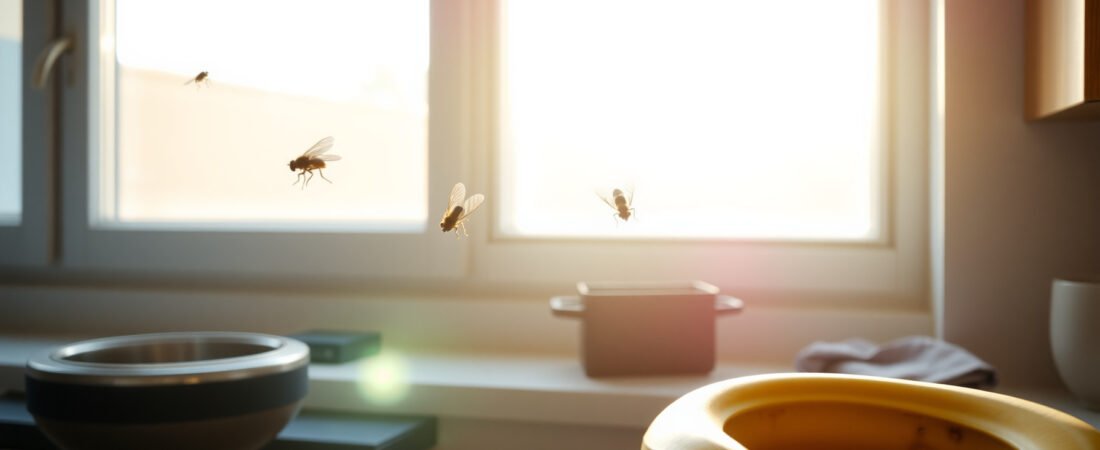
You’ve killed the same fly three times today — or at least it feels that way — and there’s no rotting fruit on the counter, no open trash, no obvious reason they should be there. Here’s the uncomfortable truth most fly control advice skips: the source is almost never where you’re looking. Flies don’t breed where you see them flying. They breed somewhere hidden, moist, and organic — and by the time adults are buzzing around your kitchen, the real problem has been building for days or weeks somewhere else entirely.
The fix isn’t a fly trap or a can of spray. It’s finding the actual breeding site. Everything else is just managing symptoms while the population keeps growing underneath you. This article is specifically about how to track down that hidden source — and what to do once you find it.
Why You Can’t Find the Source (And What You’re Missing)
The reason most people can’t locate the fly source is that they’re searching in visible, accessible spaces — counter tops, the trash can, the fruit bowl. But the species most commonly infesting homes (house flies, phorid flies, drain flies, and fungus gnats) breed in decaying organic matter that’s almost always out of sight. A single female house fly can lay 75-150 eggs per batch, and larvae can mature into adults in as little as 7-10 days under warm conditions. By the time you notice the adults, you’re several generations behind.
The other mistake is treating all small flies as the same insect. A drain fly and a phorid fly look similar at a glance but breed in completely different locations. Drain flies (also called moth flies) live almost exclusively in the gelatinous biofilm inside drain pipes. Phorid flies — the ones with that distinctive humpbacked silhouette — can breed in a dead mouse inside a wall, a cracked sewer line under your slab, or a saturated patch of potting soil. Misidentify the fly and you’ll spend a week pouring bleach down drains that have nothing to do with the problem.
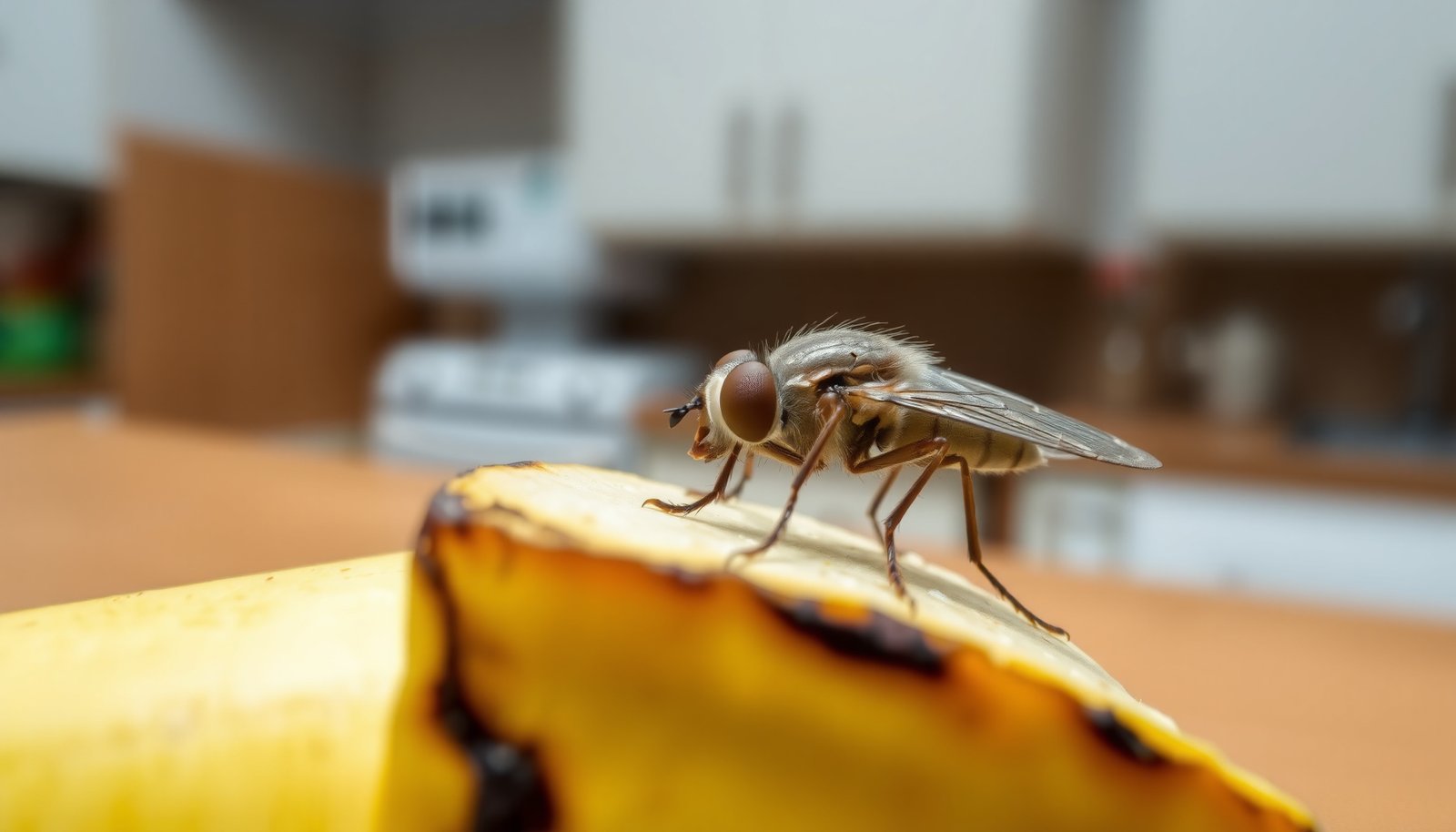
This close-up shows the physical differences between the fly species most commonly found breeding indoors — details that matter because each one points to a completely different source location in your home.
How to Identify Which Fly Species You’re Actually Dealing With
Before you search for the source, spend two minutes identifying the fly. Get one on a surface and look at it — not just its size, but its posture, wing shape, and how it moves. This single step will cut your investigation time in half.
| Fly Type | Size & Appearance | Flight Behavior | Most Likely Breeding Source |
|---|---|---|---|
| House Fly | 6–7mm, gray with 4 dark stripes on thorax | Fast, erratic, lands frequently | Trash, pet waste, decaying food, compost |
| Drain Fly (Moth Fly) | 2–5mm, fuzzy, moth-like wings held tent-style | Slow, short hops near drains | Drain pipe biofilm, sewage, wet organic buildup |
| Phorid Fly (Humpbacked Fly) | 1–6mm, arched thorax, runs before flying | Runs on surfaces, erratic bursts | Dead animals, cracked sewer lines, overwatered soil |
| Fungus Gnat | 2–3mm, long legs, dark, mosquito-like | Weak flier, stays near plants/soil | Moist potting soil, overwatered houseplants |
One thing worth knowing: phorid flies are the species most likely to signal a serious hidden problem. They’re the only common indoor fly that routinely breeds in structural voids — meaning behind walls, under floors, and in crawl spaces. If you’re seeing small humpbacked flies that seem to appear from nowhere and run sideways across your counters, take that more seriously than a typical drain fly situation.
The Step-by-Step Source Investigation Most People Never Do
Once you know what species you’re dealing with, you can run a systematic search instead of guessing. The goal is to find the breeding site — the wet, organic material where eggs are being laid — not just the spots where adults congregate. Adults will travel 15-20 feet from their breeding source easily, so where you see them is often not where they’re coming from.
- Tape test your drains overnight. Cover each drain — kitchen sink, bathroom sink, shower, floor drain — with a piece of clear tape sticky-side down. Leave it for 24 hours. If drain flies are present, adults trying to exit will stick to the tape. This tells you which specific drain is the source, not just that “drains” are the problem.
- Check every houseplant. Push your finger 2 inches into the soil of each pot. If it’s wet more than an inch down, you’ve got conditions that support fungus gnat breeding. Look for tiny white larvae in the top layer of soil — they’re about 5–6mm long, translucent, with a black head.
- Inspect behind and under appliances. Pull out the refrigerator, dishwasher, and stove. Look for standing moisture, food debris accumulation, or drain leaks. A slow dishwasher drain leak that’s been sitting for two weeks is more than enough to support a house fly or phorid fly population.
- Smell-test structural areas if you’re seeing phorid flies. Get low and sniff near wall voids, floor registers, and any area where plumbing runs. A sweet-sour or sulfur smell near a baseboard often means a dead animal or a cracked pipe — both of which can sustain phorid fly breeding indefinitely.
- Check your garbage disposal. This one surprises people. The underside of the rubber splash guard in a garbage disposal accumulates an almost unbelievable amount of organic slime that rarely gets cleaned. Peel back the rubber flap and look. It’s one of the most common hidden breeding sites in kitchens.
- Look at recycling bins and mop buckets. Recycling containers with residue from bottles and cans, mop buckets left with dirty water, and wet cleaning rags bunched in a corner are all legitimate fly breeding habitats that people systematically overlook because they don’t look like “food.”
Picture this: a homeowner spends three weeks putting fly strips near their kitchen window and can’t understand why the flies keep coming back. Eventually a pest tech pulls out the dishwasher and finds a pinhole leak that’s been soaking the subfloor for a month. The wood is saturated, slightly decomposing — and completely invisible until something gets moved. The flies weren’t coming from outside. They never were.
How to Actually Eliminate the Source (Not Just the Adults)
Killing adult flies without destroying the breeding site is the single biggest reason fly problems drag on for weeks. An adult house fly lives roughly 15-25 days. If there are 50 larvae in a drain right now, you’ll have a new wave of adults regardless of how many you swat. The breeding site has to go first — adults are a trailing indicator, not the actual problem.
Here’s what actually works by source type:
- Drain biofilm (drain flies): Physical removal is required — enzyme drain cleaners like Bio-Clean or InVade Bio Drain break down the organic film chemically, but you also need a drain brush to physically scrub the pipe walls. Boiling water alone doesn’t penetrate thick biofilm. Give enzyme treatments 5-7 days to work, and repeat weekly.
- Overwatered houseplants (fungus gnats): Let the soil dry out completely between waterings — most fungus gnat larvae die when the top 2 inches of soil stay dry for 5+ days. Adding a layer of coarse sand or fine gravel over the soil surface prevents females from laying eggs. Sticky yellow traps catch the adults while the larvae die off.
- Garbage disposal slime: Scrub the underside of the splash guard with a stiff brush and dish soap, then run ice cubes through the disposal to clean the blades. Follow with an enzyme cleaner poured directly into the disposal and left to sit overnight.
- Dead animal in a wall (phorid flies): This is the hard one. If the smell and fly activity localize to a specific wall section, you’re looking at cutting drywall to remove the carcass. If a pest control company made a bait placement that might have caused this, it’s worth understanding what happens if pest control damages your belongings — the same principle applies when their intervention creates a secondary problem.
- Moisture under appliances or subfloor: Dry the area completely using fans and a dehumidifier, then identify and repair the source of the moisture. Flies can’t breed in dry material — eliminating moisture eliminates the habitat, even if you can’t remove every bit of organic matter.
Pro-Tip: After you’ve treated the breeding site, use yellow sticky traps near the area to monitor whether adults are still emerging. If the trap catches dozens of flies in the first 48 hours and then drops to near-zero over the following week, you’ve found and eliminated the source. If numbers stay high or spike again at 10-14 days, there’s a second breeding site you haven’t located yet.
When the Source Is Structural and You Can’t Reach It
There’s a subset of indoor fly infestations that genuinely can’t be resolved with DIY methods — not because the homeowner isn’t thorough, but because the source is physically inaccessible. Cracked sewer lines under concrete slabs, dead animals inside sealed wall cavities, and saturated subfloor sections under tile all fall into this category. Phorid flies in particular are known in the pest control industry as an indicator species for sewer breaks, because they’ll emerge from cracks in grout lines, pipe collars, and floor penetrations when a line below is damaged.
“Phorid flies are one of the most diagnostically useful insects we encounter indoors. When a homeowner has a persistent phorid fly problem with no obvious surface source, my first question is always about the plumbing — specifically whether there’s been any recent work, slow drains, or unexplained wet spots near the foundation. In probably 30 percent of those cases, we find a cracked lateral line. The flies tell you something is wrong underground before any other symptom does.”
Dr. Michael Bentley, Staff Entomologist, National Pest Management Association (NPMA)
If you’ve done the full investigation above and still can’t pinpoint the source after 10-14 days of observation, a pest management professional can use a combination of drain smoke testing and UV dye to trace where flies are emerging from. This is one of those situations where calling in a professional isn’t about lack of effort — it’s about having tools that physically don’t exist in DIY form. That said, be specific with them: tell them you suspect a structural source and that you’ve already ruled out surface-level breeding sites. Just as you’d want a second opinion before committing to a major structural treatment — the same way savvy homeowners get a second opinion before paying for termite treatment — don’t let a pest company jump straight to whole-house fumigation when targeted source elimination is almost always the right answer.
One honest nuance here: the climate and building type genuinely affect how hard this problem is to solve. In humid Southern states, a slow plumbing leak can create fly-sustaining conditions within 48-72 hours. In dry climates, the same leak might not become a problem for weeks. Older homes with cast iron drain pipes have more biofilm buildup by nature of the pipe surface texture — PVC drains stay cleaner. A fly problem in a 1940s bungalow in Louisiana is a fundamentally different investigation than the same symptom in a 2010 condo in Denver.
The flies you can’t explain are almost always the ones with the most fixable source — it just requires looking somewhere you haven’t looked yet. Find where they’re breeding, remove or dry out that material, and the adults disappear on their own within a week or two. No trap, fogger, or spray gets you there faster than that.
Frequently Asked Questions
why do I suddenly have so many flies in my house?
A sudden fly surge almost always means there’s a hidden food or breeding source nearby — think a dead mouse in the wall, forgotten produce, a clogged drain, or even pet waste in the yard. Common house flies can complete their full life cycle in as little as 7 to 10 days, so a small problem can explode fast. Check inside cabinets, under appliances, and around trash cans first since those spots get missed most often.
how do I get rid of flies in the house when I can’t find where they’re coming from?
Start by treating every possible breeding site at once rather than waiting to find the exact source — pour a drain cleaner gel down all sink drains, toss any produce that’s been out more than 2 to 3 days, and deep clean your trash cans with a bleach solution. Set sticky fly traps near windows and in the kitchen to catch adults while you investigate. If you’re still seeing 10 or more flies a day after a week of this, there’s likely a hidden source like a dead animal inside a wall or crawlspace that needs professional attention.
what smell keeps flies away inside the house?
Flies strongly dislike the scent of lavender, eucalyptus, peppermint, and cloves. You can place clove-studded citrus peels near problem areas or use a peppermint essential oil spray diluted at about 10 drops per cup of water on countertops and window sills. These won’t eliminate an infestation on their own, but they do work as a decent deterrent once you’ve dealt with the source.
can flies come up through drains?
Yes — but it’s usually drain flies, not house flies, that breed inside drains. Drain flies are tiny, about 1/8 inch long, with a moth-like fuzzy appearance, and they thrive in the organic buildup inside slow or rarely used drains. Pouring boiling water down the drain daily for a week and following up with an enzyme-based drain gel like InVade Bio Drain is usually enough to clear them out.
how long does a fly infestation last in a house?
If you remove the breeding source completely, adult flies will die off within 2 to 4 weeks since house flies only live about 15 to 30 days. The problem is that a single female can lay up to 500 eggs in her lifetime, so if the source isn’t gone, the cycle just keeps restarting. Most homeowners see the infestation clear up within 1 to 2 weeks once the source is eliminated and adult flies are being trapped or killed.
Disclaimer: This article is for informational purposes only and isn’t a substitute for professional pest control advice. Always read and follow the product label instructions exactly — label directions are legally binding and vary by brand and active ingredient. Keep all pesticides, baits and traps away from children and pets, ventilate treated areas as directed, and consider calling a licensed pest control professional if an infestation is large, recurring, or involves a structural pest like termites or carpenter ants.