
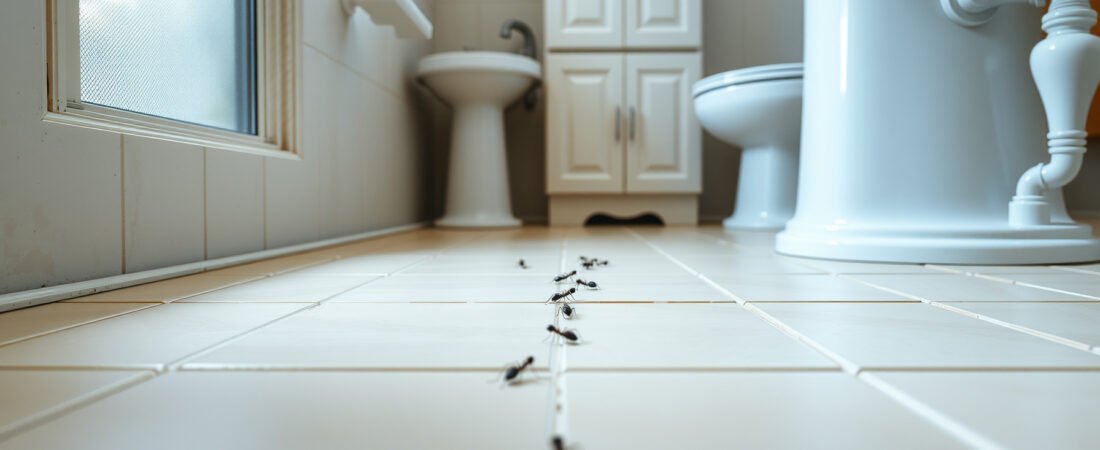
Bathroom ants are almost never a hygiene problem — they’re a moisture and plumbing problem. That distinction matters more than most people realize, because it completely changes how you treat them. Spraying the counter with whatever’s under your sink won’t fix it if there’s a slow leak behind your vanity or a perpetually damp floor mat creating the perfect habitat. The fix starts with understanding which ant species you’re dealing with and why your bathroom specifically is drawing them in.
Why Are Ants in Your Bathroom in the First Place?
Ants don’t wander into bathrooms looking for food scraps — they’re following moisture signals and established scent trails laid down by scouts. A bathroom offers three things that ant colonies actively seek out: consistent humidity, water access, and structural gaps around pipes that serve as perfect entry points. Even a bathroom that gets scrubbed weekly can attract ants if there’s a dripping faucet, a cracked caulk line around the tub, or condensation pooling under the toilet tank.
Here’s something most pest control articles gloss over: the ants you see walking across your bathroom floor are almost certainly not the problem — they’re just messengers. The colony could be 20 feet away inside a wall void, under the subfloor, or even in a neighboring unit if you’re in an apartment. You can kill every visible ant every day and still have hundreds of new ones by morning because you haven’t touched the source.
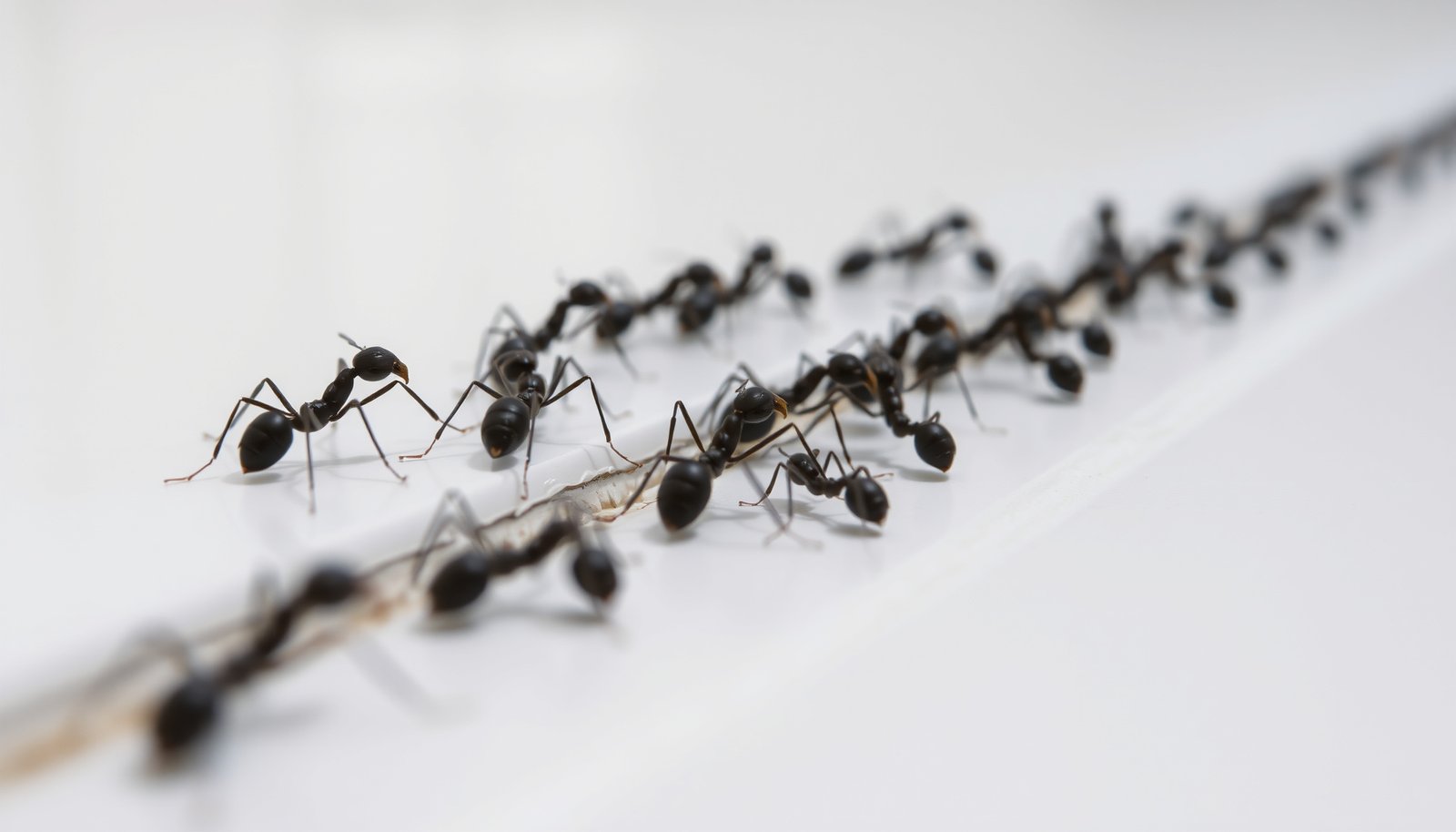
This close-up shows ants clustered near a pipe fitting — exactly the kind of moisture-adjacent entry point that makes bathrooms so attractive to multiple ant species and so frustrating to treat without addressing the root cause.
Which Ant Species Is Actually in Your Bathroom?
Getting the species right isn’t a formality — it directly determines which treatment will work and which will make things worse. Certain ant species, like odorous house ants and pavement ants, respond well to bait stations. Others, like carpenter ants, require locating and treating a structural nest. And pharaoh ants — one of the most common bathroom invaders — will actually split their colony and scatter in multiple directions if you spray them with a repellent, a phenomenon called “budding” that turns one problem into four.
Picture this: you spend $40 on a can of ant spray, hit every ant you see in the bathroom, feel good about it for two days, and then notice ants appearing in your bedroom, under your kitchen sink, and in a hallway you’ve never had a problem with before. That’s pharaoh ant budding in action — and it’s one of the most common ways homeowners accidentally make their ant situation significantly worse. Knowing your species before you act isn’t overthinking it; it’s the only way to avoid this trap.
| Ant Species | Size & Color | Bathroom Behavior | Key Treatment Approach |
|---|---|---|---|
| Pharaoh Ant | 1–2 mm, pale yellow | Travels in long trails, nests in wall voids near pipes | Slow-acting bait ONLY — never spray |
| Odorous House Ant | 2–3 mm, dark brown/black | Attracted to moisture, emits coconut odor when crushed | Bait stations + exterior barrier treatment |
| Carpenter Ant | 6–13 mm, black or bicolored | Single foragers scouting for water, nests in wet wood | Locate and treat the satellite nest |
| Pavement Ant | 2.5–3 mm, dark brown | Enters through floor gaps and expansion joints | Perimeter bait granules + crack sealing |
How to Identify Where Bathroom Ants Are Entering
Before you treat anything, spend five minutes actually watching the ants move. Follow their trail backward — not forward toward your sink, but back toward where they’re coming from. Most bathroom ant entry points fall into a predictable set of locations that are easy to miss during a quick visual scan but obvious once you know what to look for.
Work through this inspection in order, from most common to least common:
- Pipe penetrations under the sink and behind the toilet — Any gap where plumbing enters the wall is a direct ant highway. Even a 1/16-inch gap is more than enough for most bathroom ant species to squeeze through in single file.
- Cracked or missing caulk around the tub and shower — Old caulk shrinks and separates from tile over time, creating a gap that’s both an entry point and a moisture trap. Run your finger along the caulk line — if it flexes or separates at all, ants have already found it.
- The floor-wall junction under baseboards — Bathroom baseboards often sit above a thin gap where the flooring meets the wall framing. This is especially common in older homes and any bathroom with vinyl or laminate flooring.
- Electrical outlet and light switch boxes — Wall voids behind outlets are connected throughout your home. Ants traveling inside walls can exit through any outlet gap, which explains why people sometimes find ants near a bathroom outlet that has nothing to do with moisture.
- Exterior wall vents (exhaust fan) — Bathroom exhaust fans vent to the outside through a wall or roof. If the damper is worn or missing, that’s an unobstructed opening that connects your bathroom directly to the outdoors.
Pro-Tip: Place a small piece of masking tape marked with the time next to any active trail you find. Check back in 30 minutes — if the trail direction has shifted, the ants have found a new path, which tells you there are multiple entry points and you need to trace each one separately before treating.
How to Get Rid of Ants in the Bathroom — By Species
Treatment isn’t one-size-fits-all here, and the species you identified in the earlier section should be driving every decision you make. The good news is that for most bathroom ant problems, effective DIY treatment is genuinely possible — but the method has to match the ant. Using the wrong approach doesn’t just waste money; it can actively delay resolution by months.
Here’s how to approach treatment based on the ant type you’re dealing with:
- Pharaoh ants: Use only slow-acting protein-based gel bait (look for indoxacarb or fipronil as the active ingredient). Place bait stations directly on the ant trail without disturbing it. Workers need to carry the bait back to the queen — this takes 3–7 days and is working even when it looks like nothing is happening. Never use repellent sprays near pharaoh ant activity.
- Odorous house ants: These respond well to sweet bait gels (borax-based products work reliably) combined with a non-repellent exterior spray around your home’s foundation. Treat both indoors and outdoors simultaneously for best results — treating only inside usually pushes them to a different entry point.
- Carpenter ants: A single carpenter ant in your bathroom is a red flag for moisture-damaged wood nearby. These ants don’t eat wood — they excavate it to nest in it, and they seek wood that’s already soft from water damage. Bait alone won’t eliminate them; you need to find the nest (often in a wall void adjacent to a pipe leak) and treat it directly with a residual dust like delta dust or diatomaceous earth injected into wall voids.
- Pavement ants: These are the easiest bathroom ants to eliminate. Granular bait placed along the exterior foundation combined with silicone caulk sealing interior gaps usually resolves a pavement ant problem in under two weeks.
“The single biggest mistake I see with bathroom ant treatments is the use of repellent contact sprays on species like pharaoh ants and odorous house ants that have multiple queens. You eliminate a portion of the foragers, the colony detects the chemical threat, and within 48 to 72 hours you have new trails forming from secondary nest sites that were already established inside the wall system. Slow-acting bait is slower for a reason — it works with the colony’s biology instead of against it.”
Dr. Marcus Lyle, Board-Certified Entomologist and Structural Pest Management Specialist, University Extension Program
What to Fix So Bathroom Ants Don’t Come Back
Killing the current colony without fixing the conditions that attracted it is a losing game. A new colony — or a surviving satellite from the same one — will recolonize within weeks, especially during peak ant season when scout activity is at its highest. Lasting results require closing the loop on both the chemical treatment and the structural and moisture conditions that made your bathroom a target in the first place.
There’s one honest nuance worth acknowledging here: how much moisture control you can realistically achieve depends heavily on your home’s age, construction type, and whether you’re renting or own the property. An older home with cast-iron pipes and original tile grout has different limitations than a newer build. Renters, in particular, sometimes face a situation where the actual fix — like repairing a slow leak inside the wall — requires landlord involvement. If you’re in that position and running into resistance, understanding your options legally can make a difference — and it’s worth knowing what actions by a landlord cross the line if you’ve reported a pest problem and they’ve responded badly. You can read more about landlord retaliation after reporting pests and what’s illegal if you find yourself in that situation.
On the structural side, focus on these repairs after treatment:
- Re-caulk all plumbing penetrations through walls and floors using a non-shrink silicone caulk rated for wet areas
- Replace cracked or separating grout lines in tile walls and floors — these hold moisture for hours after each shower or bath
- Check under the sink for slow drips or condensation on cold-water supply lines — even minor moisture will reestablish an attractive nesting environment
- Run your exhaust fan during and for 15 minutes after every shower to reduce ambient humidity below the threshold ants find attractive
- Install a door sweep on the bathroom door if ants are entering from a hallway or adjacent room rather than from outside
One counterintuitive point worth making: many homeowners treat their bathroom thoroughly and still see ants return — not because the treatment failed, but because the outdoor portion of the treatment was skipped. Ant colonies forage up to 100 feet from their nest. If the nest is in the soil beside your foundation and you never addressed that exterior population, you’ve essentially put up a partial barrier on one end of a two-way street.
When Should You Call a Professional for Bathroom Ants?
Most bathroom ant problems are resolvable without professional help, especially if you’ve correctly identified the species, chosen the right bait, and addressed the moisture source. But there are specific situations where DIY stops making sense — and knowing where that line is can save you months of frustration and repeated product purchases that add up quickly.
Call a licensed pest control professional if: you’ve correctly applied slow-acting bait for 3–4 weeks with no reduction in activity; you’re finding carpenter ants regularly (which suggests active wood damage that needs to be located and repaired before it causes structural problems); or you’ve got recurring ant activity across multiple rooms that suggests a large satellite colony system inside the wall voids. One thing to watch for when getting quotes: treatment for bathroom ants should not require whole-home fumigation unless there’s a truly extreme infestation — if a company is recommending that on a first visit, it may be worth getting a second opinion. Knowing how to tell if a pest control company is overcharging you can help you evaluate whether a proposed treatment plan is proportionate to your actual situation.
A targeted treatment by a professional for bathroom ants typically involves non-repellent liquid treatments applied to wall voids and entry points, bait placement, and in carpenter ant cases, moisture meter readings to locate areas of wood damage. That’s a very different scope than whole-house fumigation, and any company that jumps straight to the most expensive option without first scoping the problem deserves a skeptical second look.
Bathroom ants are a fixable problem in almost every case — but they’re fixed by addressing the right thing, in the right order, with the right product for the species. Get those three variables aligned and you’ll likely never deal with the same infestation twice.
Frequently Asked Questions
Why do I have ants in my bathroom but not kitchen?
Bathrooms offer two things ants need just as much as food — moisture and shelter. Leaky pipes, damp grout, and standing water around your sink or tub are enough to attract moisture ants like odorous house ants and carpenter ants even if there’s no food nearby. Check for slow drips under the sink or poor ventilation causing condensation, because fixing the moisture source is the first step to getting rid of them.
what kills ants in the bathroom instantly?
A direct spray of diluted dish soap and water (about 1 tablespoon of soap per quart of water) kills ants on contact by blocking their breathing pores. For faster results, store-bought sprays containing pyrethrin or permethrin work within seconds on visible ants. Keep in mind that killing the ants you see won’t solve the problem — you need bait to reach the colony.
how do I get rid of ants coming up through bathroom drain?
Ants don’t actually live inside your drain pipes — they’re using the gap around the drain or moisture near the pipe as an entry point. Pour boiling water down the drain to discourage them, then caulk any gaps where the drain meets the floor or tub. Placing a slow-acting gel bait like Terro near the drain area will let forager ants carry poison back to the nest, which is the only way to wipe out the colony.
are ants in bathroom dangerous to humans?
Most bathroom ants — like odorous house ants or pavement ants — aren’t dangerous, but they can contaminate surfaces they crawl across with bacteria. Carpenter ants are the bigger concern because they tunnel through wood and can cause structural damage over time, especially if you have water-damaged framing near your bathroom. Fire ants are rare indoors but will sting if disturbed, so if you’re seeing red ants, treat it as a priority.
how long does it take to get rid of ants in bathroom?
With slow-acting bait like borax gel, you can expect to see a significant reduction in ant activity within 3 to 7 days as workers carry the poison back to the queen. Full colony elimination typically takes 1 to 2 weeks. If you’re still seeing ants after 2 weeks of consistent baiting, it usually means there’s more than one colony or the nest is inside your walls, and you may need a licensed pest control professional.
Disclaimer: This article is for informational purposes only and isn’t a substitute for professional pest control advice. Always read and follow the product label instructions exactly — label directions are legally binding and vary by brand and active ingredient. Keep all pesticides, baits and traps away from children and pets, ventilate treated areas as directed, and consider calling a licensed pest control professional if an infestation is large, recurring, or involves a structural pest like termites or carpenter ants.