
A $400 pest control bill isn’t automatically a rip-off. A $180 one might be. The price alone tells you almost nothing — and that’s exactly what most homeowners get wrong when they suspect they’re being overcharged. They focus on the total number instead of what’s hidden inside it: the treatment method chosen, the chemical concentration used, the actual time spent on-site, and whether the service was even necessary in the first place. Overcharging in this industry rarely looks like a contractor padding a bill with fake line items. It looks like recommending a $600 tent fumigation for a localized drywood termite spot that would have resolved with a $90 foam injection.
Why Pest Control Pricing Is So Easy to Manipulate
Unlike plumbing or electrical work, pest control has no standardized labor rate that homeowners can reference. A licensed exterminator in Phoenix and one in suburban Ohio might charge wildly different amounts for identical treatments — and both can justify it. The lack of price transparency is baked into the industry’s structure: most companies quote after an inspection, which means you’ve already invested time and emotional energy before you see a number.
That dynamic creates leverage for the company, not for you. Some technicians work on commission or bonus structures tied to upsells, which means the person diagnosing your “infestation” has a financial interest in how severe it sounds. That’s not a conspiracy — it’s just incentive misalignment, and knowing it exists changes how you should receive any quote you get.

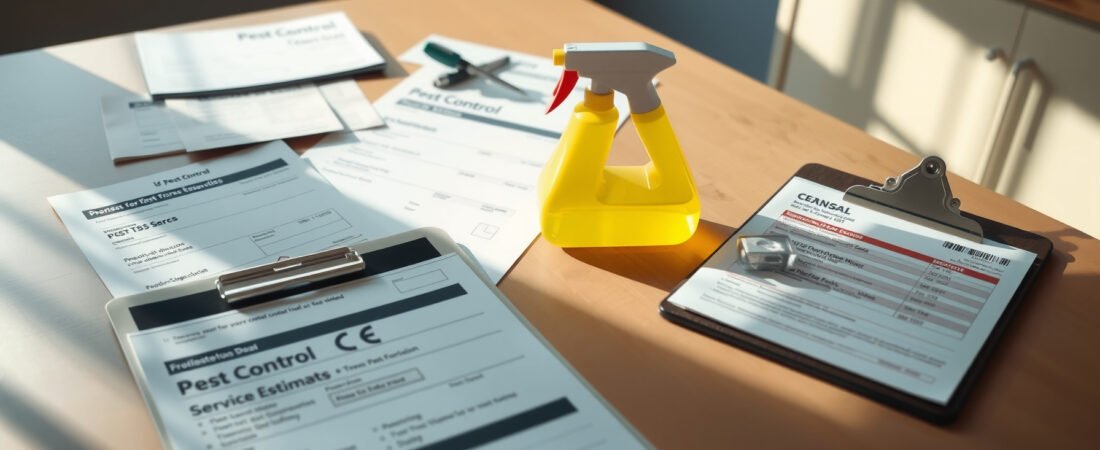
This image shows a pest control invoice with multiple vague line items — the exact document type you need to scrutinize before signing anything, because the language used (or avoided) reveals whether you’re paying for a defined service or just a visit.
What Do Legitimate Pest Control Services Actually Cost?
Before you can recognize overcharging, you need a real baseline. National averages exist, but they’re broad enough to be nearly useless on their own. What matters is matching the cost to the specific treatment type, square footage, and pest being targeted. Here’s a realistic range for common services:
| Service Type | Typical Price Range | Red Flag Threshold |
|---|---|---|
| General pest inspection | Free–$150 | Over $200 with no written report |
| Single cockroach treatment (gel bait + IGR) | $150–$300 | Over $500 for a standard apartment |
| Rodent exclusion + baiting | $300–$600 | Over $900 without a detailed entry-point report |
| Spot termite treatment (foam/inject) | $250–$500 | Skipping straight to fumigation quote |
These ranges shift based on geography, home size, and infestation severity — a 4,000 sq ft house with a mature rodent colony is genuinely more expensive to treat than a 900 sq ft apartment with a few mice. The table above isn’t a price cap; it’s a calibration tool. If a quote lands significantly above these ranges, you deserve a specific, written explanation of why.
Which Specific Tactics Signal That You’re Being Overcharged?
There’s a short list of patterns that show up consistently when pest control companies are extracting more money than a job warrants. These aren’t subtle. Once you know what they look like, you’ll spot them almost immediately.
- Severity inflation: The technician describes a “severe infestation” but won’t show you the evidence — no photos, no captured specimens, no map of activity zones. If you can’t see what they’re describing, you’re pricing a ghost.
- Skipping step-therapy: Legitimate treatment follows an escalation logic — start with targeted, less invasive methods and scale up only if needed. A company that quotes fumigation or full-structure treatment on a first visit for a localized problem is skipping steps that should come first.
- Vague chemical names: You should be able to ask exactly which active ingredient is being applied. “Professional-grade solution” is not an answer. Real technicians name the product — permethrin, fipronil, boric acid, indoxacarb — and can explain why that specific compound was chosen for your pest.
- Bundled services you didn’t ask about: A quote that includes mosquito treatment, a rodent plan, and a perimeter spray when you called about ants is a upsell structure, not a diagnosis. Each add-on should be optional and separately priced.
- Urgency pressure: “This discount is only available today” or “if you wait, the colony will be three times this size” are closing tactics, not honest assessments. Legitimate pest activity rarely changes so dramatically in 48 hours that waiting for a second quote endangers your home.
Picture this: a homeowner in Atlanta calls about what she thinks are carpenter ants in her kitchen. The technician inspects for 12 minutes, never goes outside to look at the foundation or the tree line 6 feet from the house, and quotes her $780 for a “full-structure ant elimination program.” A second company spends 40 minutes, identifies the entry point at a rotted window sill, applies a targeted borate treatment, and charges $210. Same problem. Completely different diagnostic effort — and that difference in effort is where the overcharging lives.
How Do You Verify a Quote Is Actually Fair?
Getting a second quote is the single most effective thing you can do — but only if you do it correctly. Don’t call a second company and describe the problem yourself. Let them inspect independently and compare not just the price, but the diagnosis. If two companies identify different pests, different severity levels, or recommend completely different treatments, that tells you everything about which one is reading the situation honestly.
“The biggest tell is whether a technician can explain their treatment logic in plain language. A qualified professional should be able to tell you the target pest’s biology, why the chosen product disrupts its life cycle, and what success looks like in 30 days. If they can’t — or won’t — that’s a competency problem as much as a pricing problem.”
Dr. Marcus Ellery, Board-Certified Entomologist and former technical director at a regional pest management firm
Beyond the second opinion, use these verification steps before agreeing to anything:
- Ask for a written scope of work — what exactly is being treated, with what product, applied where, and how many visits are included.
- Check the company’s state pesticide applicator license. Every state requires one, and you can verify it online through your state’s department of agriculture. Unlicensed operators are a major red flag regardless of price.
- Look up the product they plan to use on the EPA’s pesticide registration database — it’s public, free, and tells you if the label even permits use for your pest and your structure type.
- Ask what the re-treatment policy is if the problem persists after 30 days. A company confident in their work will answer this without hesitation.
- Cross-reference the quote against your county extension office’s pest control cost guidance — many publish general treatment benchmarks for common pests in your region.
One counterintuitive thing worth knowing: a significantly lower quote isn’t always a better deal. A company charging $90 for rodent control when the realistic minimum is $300 is either skipping steps, using substandard materials, or planning to come back repeatedly with add-on charges. Underpricing can be its own form of manipulation — it gets you in the door on cost, then creates dependency through incomplete treatment. The same critical eye you apply to an inflated quote should apply to one that seems too low to make sense.
Pro-Tip: Before any pest control visit, spend 15 minutes documenting what you’ve actually observed: where you’ve seen activity, how frequently, and any physical evidence like droppings or damage. Bring this to the inspection. Technicians who are doing their job honestly will use your observations to confirm their findings. Those who ignore your documented evidence and describe a completely different problem are working from a sales script, not a real assessment.
Are Annual Contracts and Service Plans Worth What They Cost?
This is where the largest long-term overcharging happens — not in a single inflated visit, but across a 12-month plan that delivers far less than it promises. Annual pest control contracts can be genuinely valuable for certain situations: homes with documented recurring ant pressure, properties in high-mosquito zones, or houses that have had two or more confirmed rodent entries. For many other homes, they’re a maintenance fee for a problem that doesn’t exist year-round.
The math to run: if a contract costs $600 per year for quarterly visits, each visit needs to deliver at least $150 in actual pest prevention value to break even. That means the technician needs to be applying something with a documented residual effect, inspecting for new entry points each visit, and logging findings in writing. If quarterly “treatments” consist of a 10-minute perimeter spray with no inspection notes and no documentation of what was found — or not found — you’re paying for a truck to pull up, not for pest control. Some households genuinely benefit from preventive plans, especially in regions where pest pressure is seasonal and predictable. But the honest answer is that it depends heavily on your specific home, its history, and your local pest environment — not on what a salesperson tells you during a free inspection.
For homeowners who are trying to evaluate whether a recurring pest problem is worth a professional contract versus handling themselves, it helps to understand what over-the-counter products can realistically accomplish. If you’re dealing with a minor fly issue around a specific area of your home, for example, resources like How to Get Rid of Flies in the House When You Can’t Find the Source can help you determine whether you actually need a professional at all — or whether the problem is something a targeted DIY approach resolves in a week. That kind of triage, done before you call a company, is one of the best defenses against paying for services you don’t need.
Similarly, if a technician has quoted you for a rodent plan and you want to understand what legitimate rodent control products look like at the consumer level — so you can evaluate whether what they’re proposing actually justifies the cost difference — checking a detailed breakdown like Best Rodent Repellents: Sprays, Pouches and Devices Compared gives you the product knowledge to have a real conversation rather than just accepting the quote.
The broader point is this: pest control overcharging isn’t usually dramatic theft. It’s quiet, incremental, and built on the assumption that you don’t know enough about pest biology or treatment chemistry to ask the right questions. The best protection is calibrated skepticism — not toward every technician, but toward any quote that arrives without a clear explanation of the problem, the method, and the standard for what success looks like. Demand specifics. Every time.
Frequently Asked Questions
how much does pest control usually cost for a house?
A one-time pest control treatment for a standard home typically runs between $150 and $300, while recurring quarterly service plans usually cost $100 to $150 per visit. If a company quotes you significantly above those ranges without a clear explanation, that’s worth questioning. Prices do vary by pest type and region, but anything over $500 for a basic initial treatment on a single-family home deserves a second opinion.
how do I know if a pest control company is scamming me?
A few red flags include pressure to sign a long-term contract on the first visit, vague invoices that don’t itemize chemicals or services used, and technicians who won’t let you watch them work or explain what they’re applying. Legitimate companies will give you a written quote before any work starts and won’t push you to decide on the spot. If a tech claims to find a severe infestation during a free inspection and immediately pushes a $1,000+ treatment, get a second opinion before paying anything.
is it normal for pest control to charge a separate inspection fee?
Most reputable pest control companies offer free inspections for common household pests like ants, roaches, or rodents, especially if they’re hoping to earn your business. Charging $75 to $150 for a termite inspection is standard and widely accepted in the industry, but paying for a general inspection upfront is less common. If a company charges an inspection fee for basic pests and then won’t apply it toward your treatment cost, that’s a sign they may be padding their revenue.
what questions should I ask a pest control company before hiring them?
Ask for a written itemized quote that lists the specific pesticides they’ll use, the square footage covered, and the number of visits included. You should also ask whether they’re licensed in your state and if the technician who gives the quote will be the one doing the work. Getting at least two to three quotes for any job over $200 is a smart way to spot pricing outliers before you commit.
can pest control companies charge more after they’ve already started the job?
A company can charge more if they discover a genuinely larger infestation than expected, but they’re required to notify you and get your approval before doing additional work — at least in most states. If they complete extra services without telling you first and then add charges to your bill, that’s a consumer protection issue you can report to your state’s pesticide regulatory agency or attorney general’s office. Always get any mid-job changes confirmed in writing, even a quick text or email, before they proceed.
Disclaimer: This article is for informational purposes only. Pest control costs, timelines, and outcomes vary widely depending on the pest, the severity of the infestation, your location, and the company you hire. Always get multiple quotes and ask for a written inspection report before agreeing to a treatment plan.