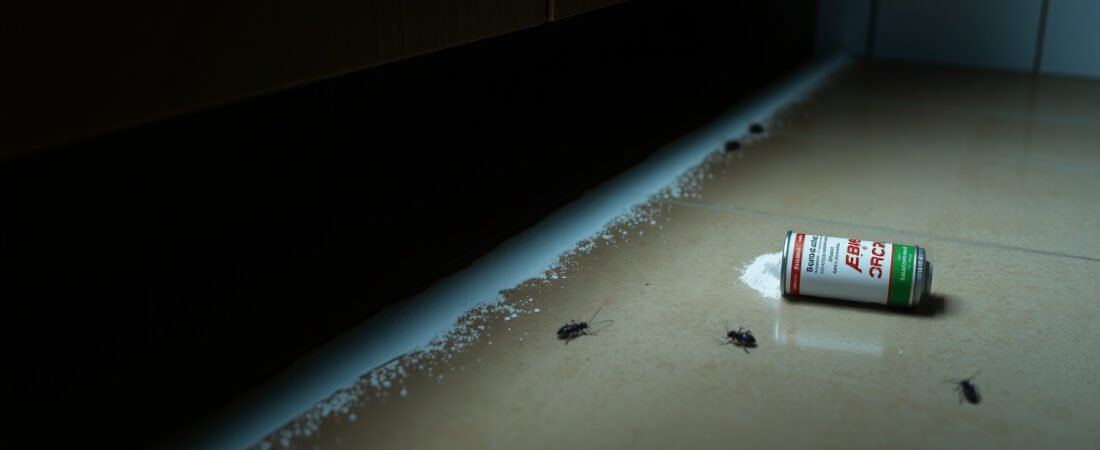
Boric acid works — but almost nobody applies it correctly, and that’s why most people using it are getting mediocre results while blaming the product. The real problem isn’t the boric acid itself. It’s that homeowners pile it on in thick white mounds, roaches and ants detect it immediately and route around it, and nothing dies. A layer thin enough that you can barely see it is more lethal than a visible drift of powder. That one detail changes everything about how you buy and use these products.
Why Does Boric Acid Kill Roaches and Ants When Other Products Fail?
Boric acid kills insects through two separate mechanisms working together, which is part of why it outperforms many synthetic sprays over the long haul. When a cockroach or ant walks through boric acid powder, the fine particles cling to the waxy outer layer of the insect’s exoskeleton and are also ingested during grooming — and once inside, boric acid disrupts the insect’s digestive system and metabolic processes, causing death within 72 hours. That dual-action pathway means even insects that don’t consume much of it directly still absorb a lethal dose through contact.
The other reason boric acid outperforms contact sprays in infested spaces is residual activity. A properly applied thin dusting in a wall void or under a refrigerator motor can stay lethal for months without reapplication, provided it doesn’t get wet or disturbed. Synthetic pyrethroids break down in UV light and lose potency fast — boric acid in a dark cabinet doesn’t degrade the same way. That’s the legitimate reason pest control professionals have used it as a backbone product for decades, not because it’s “natural” or cheap (though both are true), but because it keeps working long after the initial application.
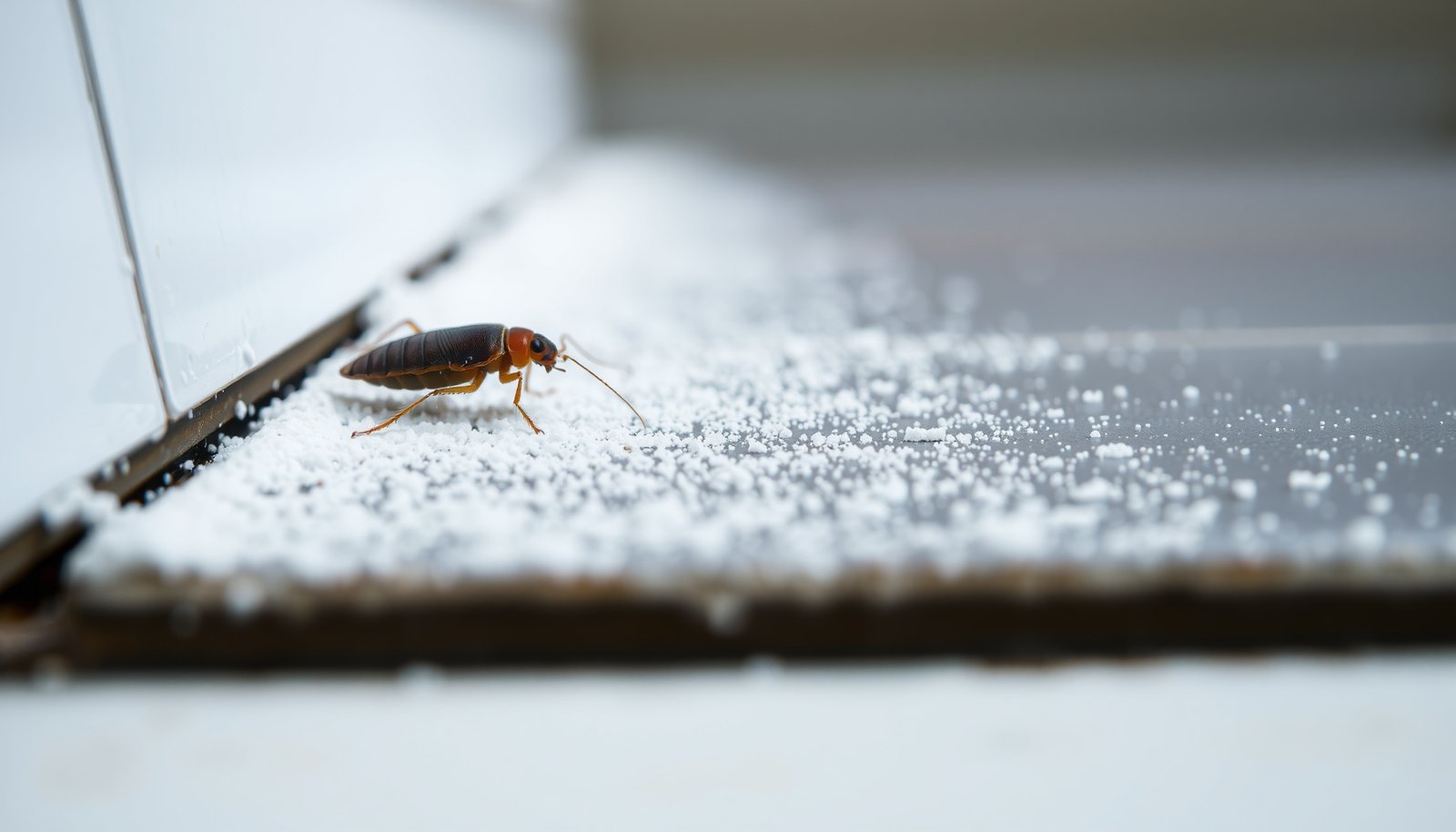
This close-up shows the difference between an over-applied clump of boric acid powder and a correctly dusted surface — the barely-visible film on the right is what actually kills insects, not the visible white piles that pests simply walk around.
What Are the Best Boric Acid Products Available Right Now?
Not all boric acid products are formulated the same way, and the delivery format matters as much as the active ingredient concentration. Pure boric acid powder, gel baits containing boric acid, and ready-to-use bait stations all use the same chemistry but apply it differently — and the right format depends on where you’re treating and what pest you’re targeting. Here’s a ranked breakdown of the formats and the standout products in each category.
- Harris Boric Acid Roach and Silverfish Killer Powder with Lure — This is the benchmark dry powder product. It contains 99% boric acid with a food-grade lure already mixed in, which solves the attraction problem that plain boric acid has. The included puffer tip applicator is genuinely useful for getting powder into wall voids and under appliances without over-applying. Best for roaches in kitchens and bathrooms.
- Rockwell Labs Bora-Care — This is a professional-grade borate concentrate designed for wood-boring pest prevention and carpenter ant control. It penetrates wood fibers directly, making it ideal for treating wall voids and structural wood where carpenter ants are establishing colonies. It’s more expensive, but for serious ant problems in walls, it’s in a different class.
- Terro Ant Killer Liquid Baits (Borax-based) — Borax is boric acid’s close chemical relative, and Terro’s liquid bait stations use it at a low enough concentration (5.4%) that ants carry it back to the colony before dying. This slow-kill approach is intentional — it targets the queen. For outdoor ant trails coming indoors, this format is often more effective than powder.
- Zap-A-Roach Boric Acid Powder — A no-frills pure boric acid powder at 99% concentration, no attractant added. It’s cheaper per ounce than Harris and works identically in spots where you’re pairing it with a separate bait to attract insects into the treated zone. Good backup option for large-scale treatments.
- Nisus Bora-Care with Mold-Care — Similar to standard Bora-Care but formulated with an antifungal component, which matters in humid climates where moisture issues and carpenter ant activity tend to appear together. If you’re in the Southeast or Pacific Northwest dealing with carpenter ants in wet wood, this dual-action formula addresses both problems at once.
One thing worth knowing: boric acid products sold for pest control are regulated differently by state, and a handful of states have specific labeling or registration requirements. If you’re ordering online, confirm the product ships to your state before purchasing — some Bora-Care concentrates have had shipping restrictions in certain markets.
How Do You Apply Boric Acid So It Actually Works?
Picture this: a homeowner buys a container of boric acid powder, reads that it kills roaches, and dumps visible piles behind the stove, under the sink, and along the baseboard. Two weeks later, the roaches are still there and the homeowner concludes boric acid is a myth. It isn’t — but that application technique is exactly what fails. Cockroaches, which have chemoreceptors sensitive enough to detect food odors from across a room, can absolutely detect large aggregations of foreign substances and will actively avoid them.
The correct technique is a “ghost application” — dust so thin that the surface just barely looks different in certain light. Use a puffer duster or a small paint brush to apply a film inside cabinet hinges, along the top inner edges of kickboards under cabinets, inside wall voids through outlet boxes (with the power off), and in the motor housing of refrigerators where roaches love to nest. For ants, focus on entry points: under door thresholds, around pipe penetrations in walls, and along the interior edge of window frames. Reapply after 90 days in undisturbed locations, and immediately if the area gets wet.
Pro-Tip: Before applying boric acid powder in kitchen cabinets, remove everything and wipe surfaces clean. Boric acid competes with food residue for the insect’s attention — a clean surface means the product’s built-in lure (if present) works harder. Also, never apply boric acid on countertop surfaces where food preparation happens; stick to enclosed, hard-to-reach zones where children and pets can’t contact it.
Which Pest Problems Is Boric Acid Not the Right Tool For?
Boric acid has real limitations, and being honest about them saves you time and money. It works best as a slow-kill residual treatment, not as a knockdown product. If you have a German cockroach infestation where a female can produce 30–40 eggs per capsule and populations double every few weeks, boric acid alone will not outrun the reproduction cycle fast enough. You’d need to pair it with an insect growth regulator (IGR) and a gel bait to hit the population from three angles simultaneously.
Similarly, boric acid is not appropriate for fire ant mound treatments outdoors — the powder disperses, gets wet, and loses effectiveness too quickly to reach the queen deep underground. If outdoor fire ants are your main concern, there are better chemical and non-chemical strategies designed specifically for that situation, including approaches covered in our guide on how to get rid of fire ants in the yard without chemicals. Boric acid also doesn’t work on pests that don’t groom themselves — so it’s ineffective against most beetles, mosquitoes, and flying insects that don’t make sustained contact with treated surfaces.
“Boric acid is one of the most misused tools in DIY pest control. Homeowners consistently over-apply it, which makes it repellent rather than attractive to insects. The threshold is counterintuitive — less powder means more dead roaches. When applied correctly in combination with a protein or sugar bait, it outperforms most over-the-counter contact sprays for long-term cockroach suppression.”
Dr. Sandra Pérez-Morales, Urban Entomologist and Certified Pest Control Consultant, Texas A&M AgriLife Extension
How Do Boric Acid Products Compare on Safety, Concentration, and Cost?
Boric acid has a relatively low acute toxicity to mammals — its oral LD50 in rats is around 2,660 mg/kg, which puts it in the same general hazard category as table salt. That said, “low toxicity” doesn’t mean “no toxicity,” and the precautions on the label exist for a reason. Keep powder applications out of reach of children and pets, especially cats, who are more sensitive to borate compounds than dogs. The dust can also irritate respiratory systems if inhaled during application, so a basic dust mask is worth using.
| Product | Active Ingredient % | Best Use Case | Approx. Cost Per Oz |
|---|---|---|---|
| Harris Boric Acid Powder w/ Lure | 99% boric acid | Roaches, silverfish, indoor ants | $0.30–$0.45 |
| Terro Liquid Ant Baits | 5.4% borax | Trailing ants, colony elimination | $0.80–$1.10 |
| Rockwell Labs Bora-Care | 40% disodium octaborate tetrahydrate | Carpenter ants, wood-boring pests | $2.50–$3.50 |
| Zap-A-Roach Powder | 99% boric acid | General roach and ant powder treatment | $0.20–$0.35 |
The cost difference between consumer powders and professional borate concentrates like Bora-Care is significant, but the use cases are genuinely different. If you’re treating a wall void or structural wood for carpenter ants, Bora-Care’s penetrating formula justifies the price. If you’re dusting under kitchen appliances for German roaches, the $0.30-per-ounce Harris powder is exactly what you need and spending more doesn’t improve results. Match the product to the location, not to the price point.
One honest nuance worth acknowledging: in severe multi-unit infestations — the kind common in older apartment buildings where roaches are moving freely between units through shared wall voids — even perfectly applied boric acid will lose ground because reinfestation pressure is constant. The product isn’t failing; the environment is working against it. In those situations, boric acid is still a useful part of the treatment plan, but it’s a supplement to professional intervention, not a substitute. If you’re renting and dealing with a shared-wall infestation, the question of who’s responsible for treatment costs gets complicated fast — something we’ve broken down in detail in our piece on who’s responsible for treatment costs when a roommate brings pests into the unit.
Here’s a quick reference for what boric acid products are genuinely well-suited for versus where they fall short:
- Good fit: German roaches in kitchen cabinets, wall voids, and appliance motor housings
- Good fit: Trailing indoor ants using liquid borax bait stations placed along active trails
- Good fit: Carpenter ant control inside structural wood (with penetrating borate concentrate)
- Poor fit: American cockroaches outdoors — they don’t groom the same way and spend less time in treated zones
- Poor fit: Any pest situation requiring fast knockdown — boric acid takes 24–72 hours minimum to kill, and up to a week for ants returning it to a colony
- Poor fit: Wet or high-humidity environments like under-sink areas with active leaks — moisture deactivates dry boric acid powder almost immediately
The counterintuitive fact that almost no pest control article mentions: boric acid is actually more effective at killing ant colonies than it is at killing individual ants — and that’s by design. The 5–10% concentration in liquid ant baits is calibrated so that forager ants survive long enough to carry the boric acid back and feed it to larvae and the queen before dying themselves. A higher concentration would kill the forager before she returns to the colony and the whole colony-elimination strategy collapses. The slow kill isn’t a weakness — it’s the mechanism.
If you’re starting a boric acid treatment today, the single best move you can make is to combine a puffer-applied ghost dusting in harborage zones with a separate sugar or protein bait station placed nearby to drive insects through the treated area. Neither element works as well alone. Boric acid without an attractant depends on random contact; bait without a residual lets survivors rebuild populations freely. Used together in the right locations, they cover each other’s gaps — and that’s the approach that actually empties a cabinet of roaches instead of just inconveniencing them.
Frequently Asked Questions
does boric acid actually work for cockroaches and ants?
Yes, boric acid is one of the most effective long-term treatments for both cockroaches and ants when it’s applied correctly. It works as a stomach poison — insects walk through the powder, groom themselves, and ingest it. The key is using a very thin, barely visible layer; a thick pile of powder will actually cause bugs to avoid it.
how long does it take for boric acid to kill cockroaches?
Boric acid typically kills cockroaches within 72 hours of ingestion, but you won’t wipe out a full infestation overnight. It works gradually through a colony, so most people start seeing a noticeable drop in roach activity within 1 to 2 weeks of consistent application. For severe infestations, it can take up to a month to get full control.
is boric acid safe to use around pets and kids?
Boric acid has low toxicity to humans and pets when used correctly, but it’s not completely harmless — ingesting large amounts can cause nausea, vomiting, or kidney damage. The general rule is to apply it in cracks, behind appliances, and inside cabinet voids where children and pets can’t directly contact it. Keep it away from food prep surfaces and avoid using it in areas where toddlers or pets spend a lot of time on the floor.
what percentage of boric acid is best for killing insects?
Products with 98 to 99% pure boric acid, like Zap-A-Roach or Harris Boric Acid Roach Powder, are the most commonly recommended for pest control. However, some commercial baits mix boric acid at lower concentrations — around 5% — combined with attractants, which can actually be more effective because the insects are drawn to eat it rather than just walk through it. The right percentage depends on whether you’re dusting or using a bait-style product.
where should you apply boric acid powder for ants and roaches in your house?
Focus on applying boric acid in areas where insects travel or nest — under the refrigerator, behind the stove, inside wall voids, along baseboards, under sinks, and in the back corners of cabinets. For ants, also target entry points like gaps around pipes and window sills. Avoid applying it in open areas or anywhere it’ll get wet, since moisture breaks down the powder and kills its effectiveness.