
Your roommate’s suitcase brought bed bugs home, and now you’re both looking at a $1,500–$3,000 extermination bill — and at each other. Here’s the blunt truth most articles skip: who legally pays and who morally caused it are almost never the same thing, and conflating the two is how roommate relationships (and wallets) get destroyed. The actual answer depends on your lease, your state, and one factor almost nobody talks about — whether bed bugs were already present before your roommate ever unpacked.
Why “My Roommate Brought Them” Is Harder to Prove Than You Think
The single biggest mistake people make in this situation is assuming that because their roommate traveled, stayed in a hotel, or bought secondhand furniture, the source is obviously established. It’s not. Adult bed bugs can survive over 300 days without feeding, which means an infestation discovered today could have been quietly living in the walls, baseboards, or a previous tenant’s mattress frame for months before anyone moved in. A pest control technician can identify an active infestation, but they almost never can pinpoint exactly when or how it started — and no reputable professional will sign a document saying “roommate X introduced these bugs on date Y.”
This matters enormously because without documented proof of introduction, any claim that your roommate is financially responsible becomes a personal dispute rather than a legal one. Picture this: you go to small claims court with screenshots of your roommate’s hotel check-in and a $2,400 exterminator invoice. The judge asks for evidence that those specific bugs came from that specific hotel. You have none. The case gets dismissed, and you’ve spent three weeks furious at someone who might have had nothing to do with it. That scenario plays out constantly, and it’s completely avoidable if you understand the real legal framework first.
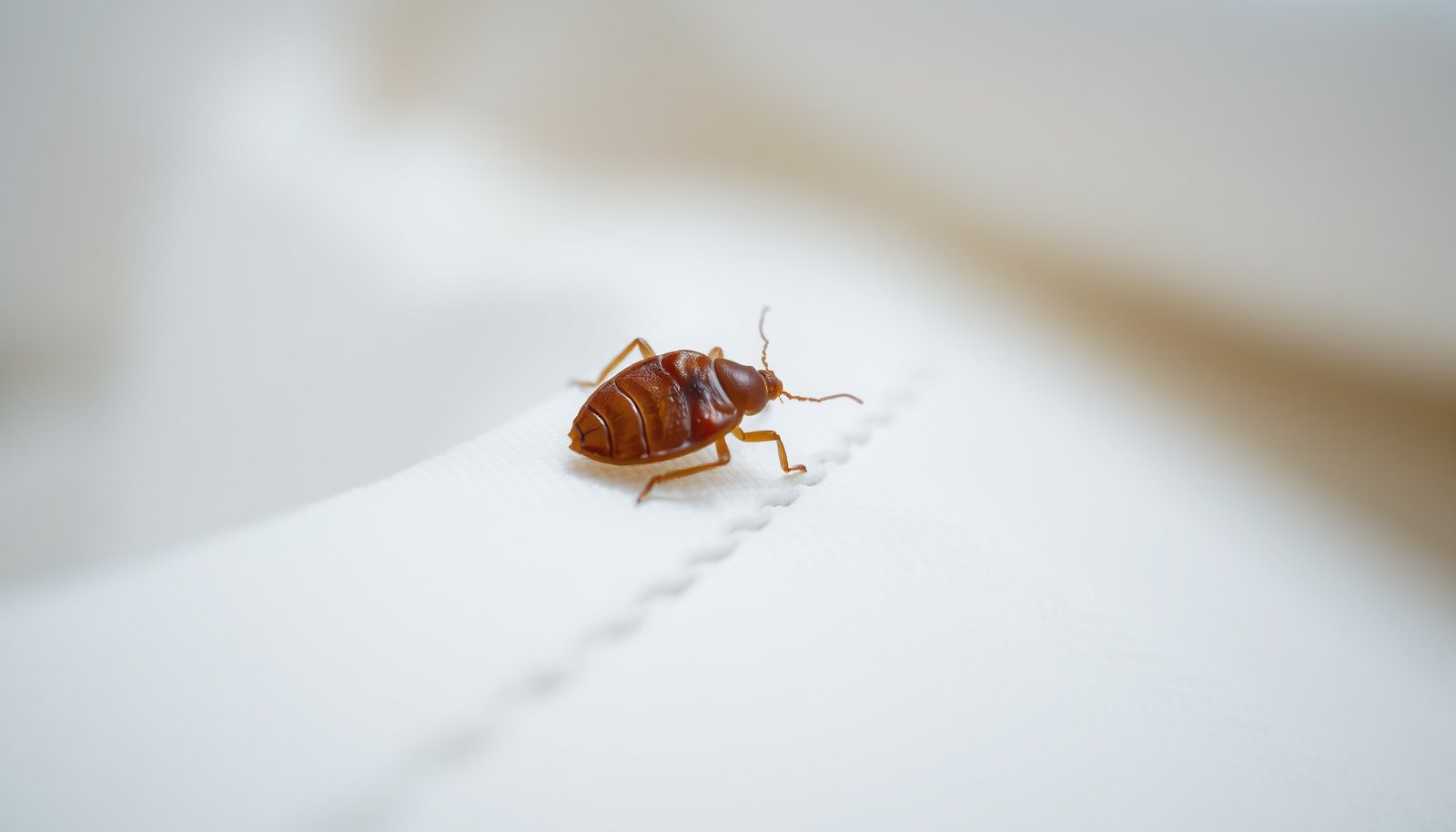
This close-up shows the telltale signs of an active bed bug infestation in mattress seams — rust-colored staining, shed exoskeletons, and live insects — which a pest control professional will use to assess severity and guide treatment recommendations.
What Your Lease Actually Says About Bed Bug Costs (Read This Section Twice)
Most tenants — and even some landlords — have never actually read the pest control clause in their lease carefully. In the majority of states, landlords are legally required to provide a habitable unit, which includes being free of pest infestations. That means the default legal position in most jurisdictions is that the landlord pays for bed bug treatment, not the tenants, regardless of how the bugs got there. There are exceptions — some leases include clauses that shift liability to tenants who are found to have “introduced” pests — but those clauses are only enforceable if the landlord can demonstrate that you or your roommate were the source, which brings us back to the proof problem.
A handful of states — including New York, Maine, Arizona, and Nevada — have specific bed bug statutes that explicitly require landlords to disclose prior infestations and bear treatment costs. Other states leave it to general habitability law, which courts have routinely interpreted in tenants’ favor. The honest nuance here is that enforcement varies wildly depending on your city, your judge, and whether your landlord has a history of ignoring maintenance requests. Before you split any bill with your roommate, check whether your landlord is legally on the hook first — because you may be negotiating over money that shouldn’t be coming out of either of your pockets.
“In my experience, about 70% of tenant-reported bed bug cases in multi-unit buildings involve wall-void migration from adjacent units rather than introduction from outside. Tenants who accept automatic financial responsibility without demanding a professional inspection first are often paying for a pre-existing problem they had no part in creating.”
Dr. Patricia Hensley, Board-Certified Entomologist and Housing Pest Consultant, NPMA Member
How to Determine Who Actually Pays — A Step-by-Step Framework
The order you do things in here matters more than most people realize. Going straight to confronting your roommate before you’ve checked your lease or contacted your landlord is like calling a plumber before you’ve checked whether the water is shut off. There’s a logical sequence that protects your money and your relationship.
Work through these steps before anyone writes a check or signs anything:
- Get an independent inspection first. Don’t let your landlord hire the exterminator and then hand you a bill. Request your own inspection from a licensed pest control company — many offer free or low-cost initial assessments. Ask them to document the severity and, if possible, estimate how long the infestation has likely been active. A widespread infestation with multiple life stages (eggs, nymphs, adults) suggests weeks or months of activity, not a recent introduction.
- Review your lease pest control clause word for word. Look specifically for language about “tenant-introduced pests,” “tenant negligence,” or “tenant responsibility for treatment costs.” If that language isn’t there, your landlord likely cannot legally pass the bill to you.
- Notify your landlord in writing within 24–48 hours of discovery. This creates a legal paper trail and, in most states, starts a mandatory response clock. Landlords who fail to respond within a reasonable timeframe — often 7–14 days depending on state law — can lose the right to claim tenant liability.
- Check your state’s bed bug statutes. Your state attorney general’s website or local tenant advocacy organization will have plain-language summaries. Don’t rely on what your landlord tells you the law says.
- Document everything about your roommate’s recent travel or acquisitions — but don’t confront yet. If your roommate recently stayed somewhere or brought in used furniture, note the dates and locations in writing privately. This is only relevant if it becomes a legal dispute later, and only if the landlord attempts to hold tenants liable.
- Only negotiate roommate cost-sharing after the landlord question is resolved. If your landlord is legitimately not responsible under your lease, then — and only then — is the roommate conversation worth having. By this point you’ll also have inspection documentation that may either support or undermine the “my roommate did it” theory.
What Happens When You and Your Roommate Actually Need to Split the Bill
Let’s say the landlord is genuinely not responsible — maybe you own the property jointly, maybe your lease has an enforceable tenant-liability clause, or maybe you’re dealing with a landlord in a state with minimal tenant protections and you’ve decided not to fight it. Now the roommate conversation becomes real. The counterintuitive thing about this conversation is that demanding your roommate pay 100% almost always backfires — not just emotionally, but practically. Even if they agree in the heat of the moment, you’ll likely never collect it all, and you’ll be living in a hostile environment during the weeks of treatment preparation.
A more functional approach is cost-sharing with structure. Here’s how the financial responsibility typically breaks down depending on the situation:
| Scenario | Recommended Cost Split | Rationale |
|---|---|---|
| Source is genuinely unknown or disputed | 50/50 | No proof of introduction means equal shared responsibility as co-tenants |
| Roommate acknowledges they likely brought bugs (hotel, travel, used furniture) | 70/30 or 60/40 (roommate pays more) | Moral acknowledgment doesn’t equal legal liability, but a voluntary split is reasonable |
| Bugs confirmed in roommate’s bedroom only, infestation is new | Roommate pays majority or all | Localized infestation in one room is the closest thing to documented introduction |
| Pre-existing infestation confirmed by inspector or prior tenant history | Landlord pays; neither roommate owes | Habitability obligation overrides lease liability clauses in most states |
Get any agreement in writing — even a simple text message thread or email chain where your roommate confirms their agreement to pay a specific amount by a specific date. One factor that genuinely affects this is whether you share common sleeping areas. If you’ve been using the same couch or guest bed, it’s much harder to argue the infestation is confined to one person’s “fault zone.”
Pro-Tip: Before committing to any professional treatment, ask the exterminator specifically whether a heat treatment or chemical treatment is recommended for your unit size and infestation severity. Heat treatment — which runs $1,500–$3,000 for a standard apartment — kills bugs in a single visit and requires no follow-up in most cases. Chemical treatment is cheaper upfront ($300–$900) but typically requires 2–3 visits spaced 2 weeks apart, which means more time out of your unit and more preparation burden split between you and your roommate.
What You Can Legally Do to Protect Yourself During and After Treatment
Treatment prep is the part of this situation nobody warns you about. Before a professional comes in, both you and your roommate will need to launder and bag all clothing and linens, dismantle bed frames, pull furniture away from walls, and often vacate for 4–8 hours or longer depending on the method used. That labor is divided between two people who are probably not on great terms right now. It’s worth establishing — in writing — who handles which prep tasks in which rooms, because an unprepared room can cause treatment to fail entirely and require a costly re-treatment.
There are also a few low-cost things you can do while waiting for professional treatment that won’t interfere with extermination and can reduce the spread between rooms. Food-grade diatomaceous earth applied along baseboards and under furniture can slow bed bug movement between living areas — it works by abrading the insects’ exoskeleton and causing dehydration, which means it’s not an instant kill but it does create a barrier over 48–72 hours of contact. It’s not a replacement for professional treatment, but it’s a reasonable interim step. Keep in mind that unlike controlling a flying insect problem — say, trying to manage mosquitoes that have gotten inside your home — bed bugs require sustained, layered treatment because of how effectively they hide in furniture seams, wall voids, and electrical outlets.
After treatment is complete, document the results. Ask the pest control company for a written treatment report and any warranty or re-treatment guarantee they offer. If the infestation returns within the warranty period, both you and your roommate are entitled to re-treatment at no additional cost — but only if someone has the paperwork to prove what was promised. That document also becomes valuable evidence if a future landlord tries to hold you responsible for a “pre-existing” infestation in your next unit.
Here are the specific things to have in hand before the treatment technician leaves:
- Written treatment report with date, method used, and areas treated
- Copy of any re-treatment warranty and its specific conditions (usually 30–90 days)
- Technician’s written post-treatment instructions for both roommates
- Any receipts or invoices with both your names on the payment record if you’re splitting costs
- Contact information for the licensed technician who performed the inspection and treatment
Having all of this on file means that if your landlord attempts to deduct “pest damage” from your security deposit when you eventually move out, you have a documented paper trail showing the problem was professionally treated and resolved. Landlords who try to double-dip — charging tenants for pest treatment and then deducting it from the security deposit too — are in legally shaky territory in most states, but only tenants who can document the timeline can effectively fight it.
The longer-term insight worth sitting with: bed bug situations between roommates almost always reveal a larger gap in how co-tenants handle shared household responsibilities. The roommates who get through this intact are the ones who approached it as a logistical problem to solve together rather than a blame assignment to win. The bugs don’t care who brought them — they’ll spread to both bedrooms regardless — and a failed treatment because two people couldn’t cooperate on prep costs everyone more in the end.
Frequently Asked Questions
is my landlord responsible for bed bug treatment if my roommate brought them in?
In most states, landlords are legally required to provide a habitable living space, which includes treating bed bug infestations regardless of how they started. Even if your roommate brought them in, your landlord typically can’t make you pay for professional treatment — that cost usually runs $300 to $5,000 depending on the severity. Check your state’s landlord-tenant laws, since about 22 states have specific bed bug statutes that spell this out clearly.
can I make my roommate pay for bed bug extermination if they caused it?
You can absolutely pursue your roommate for reimbursement, especially if you have proof they introduced the infestation — like photos of bugs in their bedroom first or a documented move-in date. Small claims court is the most realistic option if they refuse to pay, and most states let you file for amounts under $5,000 to $10,000 without a lawyer. Your odds are better if you have a written roommate agreement that assigns financial responsibility for damages each person causes.
what does a lease say about who pays for bed bug treatment?
Most standard leases are vague on bed bugs specifically, but many include clauses holding tenants responsible for infestations caused by their own actions or negligence. If your lease has a ‘tenant responsibility’ clause and your roommate clearly brought the bugs in, your landlord might try to pass the treatment cost to both of you jointly. Always read your lease carefully — if it’s silent on bed bugs, your state’s housing code usually fills in the gap and often puts the burden on the landlord.
how do you prove a roommate brought bed bugs into the apartment?
Proving the source of a bed bug infestation is genuinely hard, but your best evidence is timing — document when bugs first appeared relative to your roommate’s move-in date, travel history, or secondhand furniture they brought in. Photos with timestamps, pest inspection reports that pinpoint the origin room, and text messages where your roommate admits to knowing about bugs can all strengthen your case. A licensed pest control inspector can sometimes identify infestation patterns that suggest a single entry point, which helps establish responsibility.
can a landlord evict me or my roommate over a bed bug infestation?
A landlord generally can’t evict you just for having bed bugs, since most states treat infestations as a habitability issue — not tenant misconduct. However, if a tenant refuses to cooperate with treatment prep, like bagging belongings or allowing exterminator access, that refusal can be grounds for a lease violation and potential eviction. If your roommate is the one blocking treatment, document everything in writing so you’re not held jointly responsible for the delay.
Disclaimer: This article is for general informational purposes only and does not constitute legal advice. Landlord-tenant laws and pest-related disclosure or habitability requirements vary significantly by state and even by city, and they change over time. Before withholding rent, breaking a lease, or taking other legal action over a pest infestation, consult a licensed attorney or your local tenant rights organization familiar with the laws in your area.