
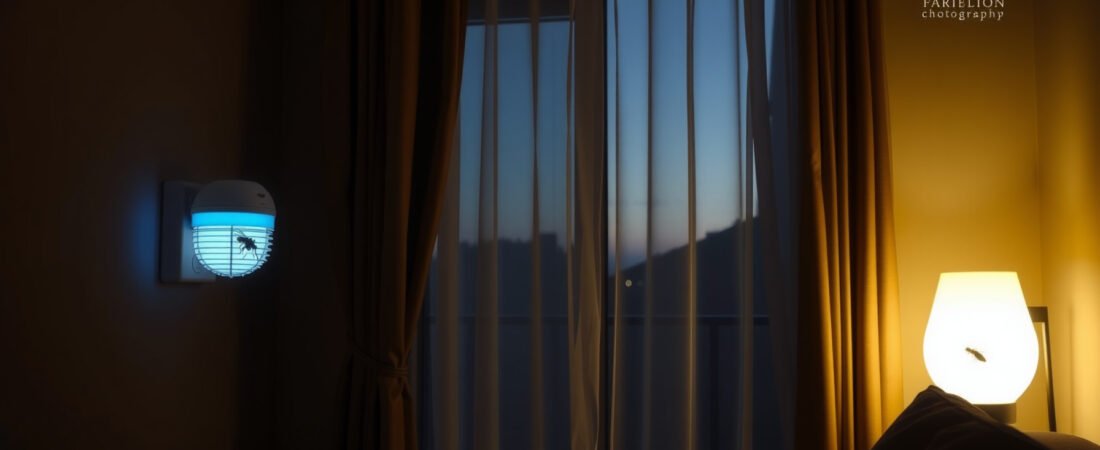
One mosquito inside your house at 11pm will ruin more sleep than a full yard of them ever could. But here’s what most people get completely wrong: they treat an indoor mosquito problem the same way they treat an outdoor one — spraying repellents, lighting citronella candles, maybe swatting at the air — and wonder why the same mosquito is back buzzing their ear at 3am. Indoor mosquitoes aren’t an outdoor problem that followed you inside. They’re a breeding problem that’s already living with you, and until you find where they’re reproducing inside your home, you’ll be fighting a war you can’t win one bite at a time.
Why Are Mosquitoes Breeding Inside Your House (Not Just Flying In)?
The assumption most homeowners make is that indoor mosquitoes flew in through an open door or torn screen and will eventually leave or die. Sometimes that’s true. But if you’re seeing mosquitoes consistently — every night, or every time you walk into a specific room — there’s a very real chance they’re not migrating in from outside. A female mosquito only needs about half an inch of standing water to lay her eggs, and she’ll lay 100–200 eggs at a time. Those eggs hatch into larvae within 24–48 hours under warm indoor conditions.
The indoor breeding sources most people miss include plant saucers that hold water under houseplants, vases with cut flowers that haven’t been changed in days, pet water bowls that sit stagnant, and even the drip trays under refrigerators. A single forgotten vase in a guest bedroom can sustain a mosquito population for weeks. The breeding cycle from egg to biting adult takes roughly 7–10 days indoors where it’s warm — meaning one overlooked water source can generate a new wave of mosquitoes before you’ve even identified the first one.
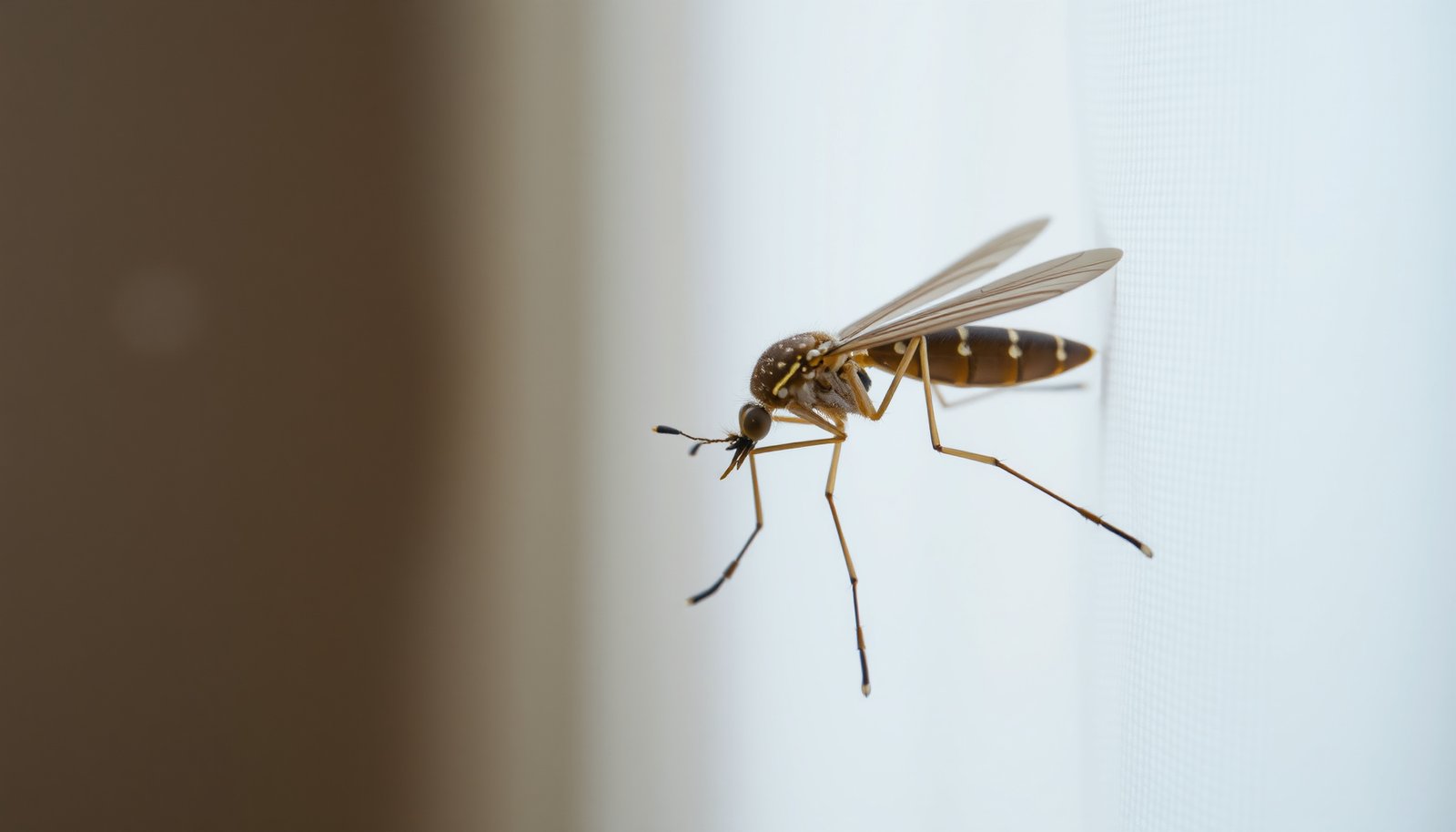
This close-up shows how minimal standing water needs to be to support mosquito larvae — a detail that explains why so many indoor treatments fail when the actual source goes undetected.
Where Exactly Are Mosquitoes Hiding and Breeding Inside Your Home?
Before you spray anything, you need to do a source audit — room by room, low to the ground. Mosquitoes don’t breed in the air. They breed in water, and they rest in dark, humid places between feedings. That means your search should focus on two things simultaneously: standing water sources and resting spots like closets, under-sink cabinets, and behind toilets where surfaces stay cool and damp.
Here are the most commonly overlooked indoor breeding and harborage spots, ranked by how often they surprise people:
- Plant saucers and pot trays — even a shallow film of water under a houseplant is enough. Empty and dry them every 3–4 days.
- Flower vases and decorative containers — change the water every 2 days or drop in a BTI dunk (more on that below).
- Bathroom drains and shower floors — if water pools after use and drains slowly, the film left behind can support eggs temporarily.
- Refrigerator drip trays — pull the front kick plate off your refrigerator and check the drip collection tray. It’s dark, hidden, and often holds stagnant water for months.
- Pet water bowls — especially ones left full and unchanged for multiple days. Mosquitoes can lay eggs in a bowl that looks perfectly clean to you.
- Window AC unit drainage — window air conditioners collect condensation that should drain outside, but clogged drainage channels create a standing water reservoir right at a gap in your wall.
What Actually Kills Mosquitoes Inside the House (and What Wastes Your Time)?
There’s a product category that gets heavily marketed as the solution to indoor mosquitoes, and it’s genuinely not: bug zappers. The UV light in traditional bug zappers is attractive to many flying insects, but mosquitoes navigate primarily by CO₂ (the carbon dioxide you exhale) and body heat — not light. Studies have shown that zappers kill enormous numbers of non-target beneficial insects while leaving mosquito populations mostly untouched. If you’re shopping for one anyway and want to understand what they actually do well, the Best Bug Zappers for Indoor and Outdoor Use guide on this site breaks down which types perform better against different insects, so you can make a decision with real expectations.
What actually works indoors is a layered approach targeting different life stages. For larvae in standing water you can’t eliminate (like a decorative fountain or a water feature), Bacillus thuringiensis israelensis (BTI) is a naturally occurring bacteria sold as “Mosquito Dunks” that kills larvae without harming pets, birds, or people. For adult mosquitoes already flying around, residual pyrethroid sprays applied to resting surfaces — walls, drapes, under furniture — are significantly more effective than spraying into open air. Mosquitoes rest constantly between feedings, and that’s when a surface treatment makes contact.
Pro-Tip: Hang a small portable CO₂ mosquito trap (like a Dynatrap or similar) in the room where you’re seeing the most activity. These traps work by mimicking what attracts mosquitoes to you — CO₂ and warmth — which is exactly why they outperform UV-only zappers for this specific pest indoors. Run it continuously rather than on a timer for best results.
How Do You Stop Mosquitoes From Getting Inside in the First Place?
Killing the mosquitoes already inside matters less than stopping the next wave from entering. The entry point problem is more nuanced than most people expect, because it’s rarely one obvious gap — it’s a combination of small failures across windows, doors, and structural penetrations that add up to a mosquito-permeable home.
Here’s a practical comparison of the most common entry point fixes and their relative effectiveness:
| Entry Point | Common Failure | Fix |
|---|---|---|
| Window screens | Holes larger than 1.2mm, bent frames with gaps at edges | Replace damaged screens; use 18×16 mesh rated for mosquitoes |
| Door gaps | No door sweep, worn weatherstripping at sides | Install a door sweep and replace weatherstripping — mosquitoes enter low |
| Exhaust vents (bathroom/kitchen) | Louvered covers that don’t seal, missing flap | Install spring-loaded damper covers that close when fan is off |
| Window AC units | Gaps around the unit frame where it meets the window | Foam AC side panels + tape the top seam; mosquitoes enter through the drainage gap |
Picture this: you’ve replaced all your window screens, the doors seal tight, and you’re still getting mosquitoes every evening in the living room. In a surprising number of cases like this, the entry point turns out to be the fireplace — an open damper or a damper that doesn’t fully close is essentially a direct tunnel from outside into the center of your home. Checking and closing the flue when the fireplace isn’t in use is one of the most overlooked exclusion steps there is.
Does the Type of Mosquito Inside Your House Change How You Treat It?
Yes — and this is a detail almost no general indoor mosquito article addresses. In the US, most mosquitoes people encounter outside are Culex species, which bite at dusk and dawn and breed in stagnant outdoor water. But the mosquito most commonly found inside homes — especially in basements, crawlspaces, and garages — is often Culex pipiens, the northern house mosquito, which specifically seeks out dark, sheltered indoor environments to overwinter. A single Culex pipiens female can enter a home in late summer, go dormant in a cool basement, and re-emerge in February to bite you — which explains why some homeowners swear they’re getting bitten in the dead of winter with no logical outdoor source.
The other mosquito worth knowing about indoors is Aedes albopictus — the Asian tiger mosquito — which has expanded its range across much of the eastern and southern US. Unlike Culex, it bites aggressively during daylight hours, is a known vector for several diseases, and breeds in extremely small water containers, making it especially well-suited to indoor breeding sites. If your indoor mosquito problem is happening during the day rather than at night, tiger mosquitoes are the likely culprit, and eliminating every micro-water-source in and around the home matters even more.
“Most homeowners focus entirely on adult mosquitoes they can see and swat at, but the infestation is always driven by larvae you can’t see yet. Finding and eliminating standing water inside the structure — including hidden sources like HVAC condensate pans and refrigerator drip trays — is the single intervention with the highest return. Without it, you’re just replacing the mosquitoes you’ve killed one generation at a time.”
Dr. Renee Holloway, Urban Entomology Extension Specialist, University of Florida IFAS
What If You’re a Renter and Indoor Mosquitoes Are a Recurring Problem?
Renters run into a specific problem with indoor mosquitoes that owners don’t: they often can’t make the structural changes needed to actually fix the issue — replacing screens, sealing gaps around window AC units, or addressing drainage problems in crawlspaces. If your landlord is unresponsive about a recurring pest problem that affects your ability to live comfortably in the unit, that’s not just an inconvenience. In most states, pest infestations that impact habitability fall under landlord maintenance obligations, and there are legal timelines they’re required to follow. The article on How Long Does a Landlord Have to Fix a Pest Infestation by Law? breaks down what those timelines look like state by state and what documentation you’ll need if you have to escalate.
In the meantime, renters aren’t powerless. The steps that don’t require landlord permission — eliminating every standing water source inside the unit, using BTI dunks in water features, applying door sweeps (which are removable), and running a CO₂ trap — can dramatically reduce the indoor population while you work the maintenance request angle. One honest note here: how much DIY control can accomplish depends heavily on your building type. A ground-floor unit in a humid southern state with inadequate window screens is a fundamentally harder situation than a third-floor apartment in a drier climate. The structural fixes matter more in some environments than others, and knowing that lets you calibrate your expectations and your urgency in pushing your landlord to act.
The mosquitoes already inside your house right now are either resting somewhere dark and waiting to bite again, actively laying eggs in water you haven’t found yet, or both. That narrows the problem considerably. Find the water, seal the entry points, and target adults on surfaces rather than in mid-air — and you’re doing what most people who “can’t get rid of mosquitoes inside” haven’t tried yet.
Frequently Asked Questions
what kills mosquitoes inside the house instantly?
A pyrethrin-based indoor insecticide spray kills mosquitoes on contact and is safe to use inside when applied according to label directions. You can also use an electric mosquito racket zapper for direct kills without chemicals — it’s especially useful at night when mosquitoes are most active near sleeping areas.
why do I have so many mosquitoes in my house?
Mosquitoes get inside through gaps in window screens, open doors, or cracks around pipes and vents — even a hole as small as 1/4 inch is enough. Once inside, they’ll stick around if there’s standing water, high humidity above 80%, or dark resting spots like closets and under furniture.
how long can a mosquito live inside the house?
A mosquito can live indoors for up to 3 weeks under the right conditions — warm temperatures between 70–80°F and high humidity help them survive longer. Without a blood meal, females typically die within a few days, but if they’ve fed, they can live long enough to lay eggs in any standing water they find inside.
what scent keeps mosquitoes away indoors?
Mosquitoes are strongly repelled by lavender, eucalyptus, and citronella — you can use essential oil diffusers with these scents to help deter them indoors. Keep in mind these work best as a supplement to other control methods, not as a standalone fix, since scent-based repellents don’t kill mosquitoes already in the room.
can mosquitoes breed inside the house?
Yes, mosquitoes can absolutely breed indoors — they only need about a tablespoon of standing water to lay eggs, which hatch in as little as 24–48 hours. Common indoor breeding spots include flower pot saucers, pet water bowls, air conditioner drip trays, and any container that holds water for more than a week.
Disclaimer: This article is for informational purposes only and isn’t a substitute for professional pest control advice. Always read and follow the product label instructions exactly — label directions are legally binding and vary by brand and active ingredient. Keep all pesticides, baits and traps away from children and pets, ventilate treated areas as directed, and consider calling a licensed pest control professional if an infestation is large, recurring, or involves a structural pest like termites or carpenter ants.