
Yes, a roach infestation can legally justify breaking your lease early — but almost no tenant does it correctly, and that mistake ends up costing them thousands. The real problem isn’t whether you have the right to leave. It’s that most renters skip the one step that actually makes that right enforceable: creating an airtight paper trail before they do anything else.
Picture this: you’ve been complaining to your landlord about roaches for three months. You’ve sent texts, left voicemails, even knocked on the office door. Nothing happens. So you pack your things, hand back the keys, and stop paying rent — fully believing you’re protected. Then you get a collections notice for two months of unpaid rent and a $400 cleaning fee. That scenario plays out constantly, and it’s almost always preventable.
This article is specifically about what most renters get wrong when they try to break a lease over roaches — not just whether it’s legal, but the exact sequence of actions that determines whether you walk away clean or end up in small claims court.
Does a Roach Infestation Actually Make a Lease Voidable?
Under housing law in every U.S. state, landlords are required to provide a dwelling that meets basic habitability standards. A serious roach infestation — one that persists after documented complaints — almost universally qualifies as a habitability failure. The legal concept is called the implied warranty of habitability, and it exists in some form in all 50 states, even when it isn’t spelled out explicitly in your lease.
Here’s the part most people don’t realize: a single roach sighting doesn’t automatically void your lease. Courts and housing authorities look at severity, duration, and — critically — whether the landlord was given a reasonable opportunity to fix it and failed. A German cockroach population can double every few weeks because a single female produces 30–40 eggs per capsule and can generate up to 8 capsules in her lifetime. So “a few roaches” in January can become a full-scale infestation by March. Documenting that progression is what transforms your complaint from a tenant grievance into a legal habitability claim.
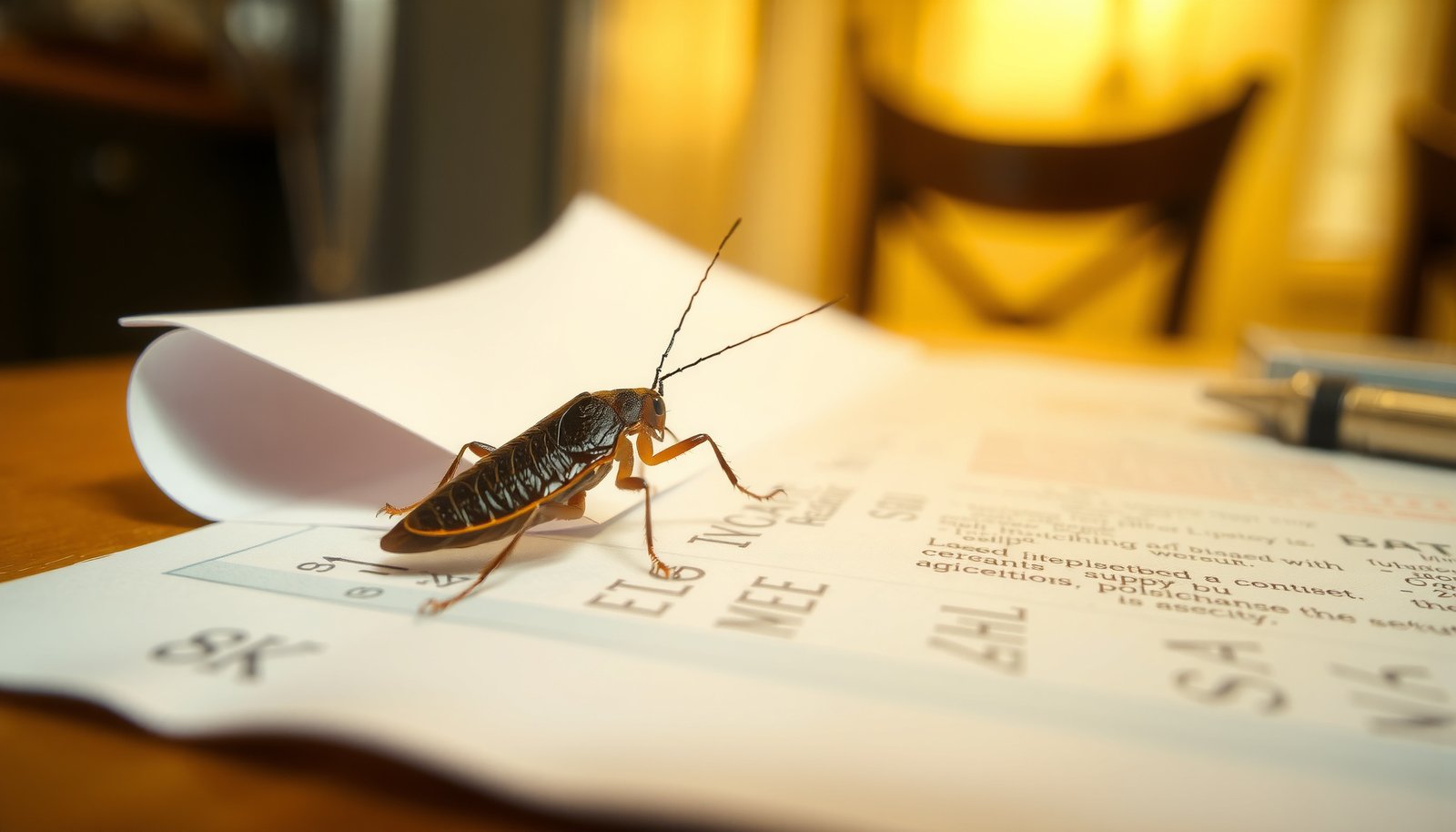
This image shows the type of roach activity — droppings, egg casings, and live insects in a kitchen cabinet — that qualifies as documented evidence in a habitability dispute with a landlord.
What’s the Step Most Tenants Skip That Blows Up Their Case?
The single most common mistake is leaving before the landlord has been formally notified in writing and given a defined window to respond. Verbal complaints don’t count. Texts are borderline. What actually holds up is a written notice sent via certified mail or email with a read receipt — something that creates a timestamp and a record that cannot be disputed later. Without that, a landlord’s attorney can simply claim they had no knowledge of the problem.
Most states require landlords to respond to habitability complaints within a “reasonable” timeframe, which typically means 14–30 days for non-emergency repairs. Roaches are generally not classified as an emergency the way a gas leak or broken heat would be, which means you usually can’t leave the next day and claim constructive eviction. The sequence matters enormously — and getting it right is what separates a clean lease break from a credit-damaging collections dispute.
Pro-Tip: When you send your written notice to the landlord, include photos with visible timestamps, describe specifically where roaches were seen (not just “the kitchen”), and state clearly that you are requesting remediation under the implied warranty of habitability. Keep the tone factual, not angry. A businesslike letter reads far better in a courtroom than a frustrated one.
What Steps Do You Actually Need to Take Before Breaking the Lease?
There’s a specific legal sequence you need to follow if you want to break your lease over roaches without financial liability. Skipping steps or doing them out of order can undermine your position even if the infestation is genuinely severe. Here’s the order that matters:
- Document everything immediately. Take timestamped photos and videos of roach activity, droppings, egg casings, and any structural conditions contributing to the problem (gaps around pipes, broken door seals). Store copies somewhere your landlord can’t access — a personal email folder or cloud drive works well.
- Send formal written notice. Notify your landlord in writing — certified mail is best — that the unit has a roach infestation that makes it unfit for habitation. Specify a response deadline (14–30 days is standard in most states). Keep a copy of everything.
- Allow a reasonable repair window. Even if you’re certain nothing will happen, you typically must give the landlord a chance to fix the problem before you can claim constructive eviction or invoke lease termination rights. This window varies by state but is usually 14–30 days.
- Contact your local housing authority. Filing a complaint with your city or county housing authority creates an official record outside your private communications with the landlord. An inspector’s report documenting the infestation is one of the strongest pieces of evidence you can have.
- Consult a tenant rights attorney or housing clinic. Many cities have free legal aid services for renters. Even a 30-minute consultation can tell you exactly what your state’s statutes say about constructive eviction and habitability — and whether your specific situation qualifies.
- Provide formal notice of lease termination. Only after completing the above steps should you give written notice that you are terminating the lease due to the landlord’s failure to maintain habitable conditions. Your notice should reference the prior complaints, the response deadline that was missed, and the specific legal basis for termination.
That last step — the formal termination notice — is what legally ends your financial obligation under most state habitability statutes. Without the steps before it, it’s just an angry letter.
How Do State Laws Differ and Why Does That Actually Matter?
This is where the honest nuance lives: your rights depend significantly on where you live, and the difference between states isn’t minor. Some states like California, New York, and Texas have strong tenant habitability protections with explicit repair-and-deduct remedies. Others — particularly some Southern and Midwestern states — have weaker statutory protections, meaning your case rests more heavily on lease language and common law than on state statute.
The table below gives a quick overview of how some key states approach roach-related habitability claims and lease termination rights. This isn’t legal advice, and statutes change — always verify with a local tenant attorney or your state’s housing authority before acting.
| State | Implied Warranty of Habitability | Repair-and-Deduct Option | Tenant Termination Right (Habitability) |
|---|---|---|---|
| California | Yes — strong statutory protection | Yes (up to 1 month’s rent) | Yes — after written notice and repair window |
| New York | Yes — explicitly codified | Limited — rent withholding allowed | Yes — constructive eviction doctrine applies |
| Texas | Yes — codified in Property Code | Yes (up to 1 month’s rent + $500) | Yes — after written notice and 7-day window |
| Florida | Yes — but narrower application | Yes (with specific notice requirements) | Yes — after 7-day written notice to landlord |
“The biggest mistake tenants make is assuming the law will automatically protect them without any procedural legwork. Habitability law is real and enforceable, but judges want to see that you gave your landlord a genuine opportunity to fix the problem before you unilaterally walked out. The paper trail isn’t just helpful — in most jurisdictions, it’s literally required.”
Marcus Delray, Licensed Housing Attorney and Tenant Rights Advocate, Southeast Regional Legal Aid Network
What Evidence Do You Need to Actually Win If a Landlord Fights Back?
Landlords who dispute an early lease break over roaches almost always argue one of three things: they didn’t know about the infestation, the tenant caused it through unsanitary conditions, or the problem wasn’t severe enough to justify termination. Your evidence needs to preemptively dismantle all three of those defenses. That means your documentation has to show not just that roaches exist, but that they were widespread, that the landlord was notified, and that the building’s condition — not your behavior — contributed to the problem.
Here’s what strong evidence looks like in practice:
- Timestamped photos and videos showing live roaches, droppings (which look like dark specks or coffee grounds), and egg casings (ootheca) in multiple locations throughout the unit — not just one spot.
- All written communications with the landlord — emails, texts, certified letters — with dates and any responses (or lack thereof) clearly preserved.
- A housing inspector’s report, which is an independent third-party document and one of the most persuasive pieces of evidence you can have. Request an inspection from your local housing or code enforcement office as soon as possible.
- Statements from neighbors who have experienced the same problem — particularly useful in apartments where the infestation clearly originates from shared walls or building-wide structural issues.
- Receipts for any pest control products you purchased, which demonstrate that you attempted to address the problem yourself — and that it persisted anyway. If you’ve been using products like those in our guide to best boric acid products for cockroach and ant control and the infestation didn’t respond, that actually supports the argument that professional remediation was necessary.
- Any prior pest complaints about the building — maintenance request logs, building violation records, or prior tenants’ reports if accessible through public housing complaint databases.
One counterintuitive thing worth knowing: courts don’t necessarily require you to prove the infestation was the landlord’s “fault” in the traditional sense. Under the implied warranty of habitability, the landlord’s obligation to maintain a habitable unit exists regardless of how the roaches got there. The question isn’t who let them in — it’s whether the landlord fixed the problem after being properly notified. That shift in framing changes how you approach your whole case.
Also worth noting: roaches aren’t like some seasonal pests that show up briefly and leave on their own. German cockroaches in particular are almost entirely indoor-dwelling and do not self-resolve. A colony established in a wall void can sustain itself indefinitely, and an infestation that started in one unit has likely already spread to adjacent units through shared plumbing and electrical pathways. That’s not speculation — it’s how roach biology works in multi-unit buildings, and it’s relevant context for why an unaddressed infestation is a building-wide structural problem, not a tenant hygiene issue. Interestingly, the same kind of persistence-despite-effort logic applies to outdoor pests too — anyone who’s tried to get rid of fire ants in the yard without chemicals knows that some infestations require a systems-level approach, not just surface-level treatment.
Your goal in any dispute is to show that the infestation meets the threshold of making the unit “unfit for human habitation” — a legal standard, not just a comfort level. Supporting that claim with multiple independent sources of evidence (your own documentation, an inspector’s report, neighbor statements) is what makes a case defensible.
Breaking a lease early over roaches is absolutely a legitimate legal remedy — but it’s one that rewards tenants who treat it like a legal process from day one, not an emotional reaction. The renters who come out of these situations clean are the ones who documented before they complained, complained before they left, and left only after the landlord’s window to respond had clearly closed. If you’re already in the middle of this situation, start that paper trail today — even if you’ve already sent a few texts or made some calls. What you do next still matters.
Frequently Asked Questions
Can you break a lease early because of a roach infestation?
Yes, in most U.S. states you can break your lease early due to a roach infestation if the landlord fails to fix the problem after written notice. This falls under the implied warranty of habitability, which requires landlords to maintain pest-free living conditions. Most states give landlords between 14 and 30 days to remediate after you notify them in writing before you’re legally allowed to terminate.
How bad does a roach infestation have to be to break a lease?
The infestation doesn’t have to be severe — even a moderate, recurring roach problem that affects your health or safety can qualify as a habitability violation. What matters most is that you documented the problem and gave your landlord a reasonable chance to fix it. Courts have ruled in tenants’ favor with infestations as small as a consistent presence in the kitchen or bathroom that persisted after multiple complaints.
What proof do you need to break a lease for roaches?
You’ll need written documentation to protect yourself, including photos or videos of roaches, dated repair requests sent to your landlord, and any written responses you received. Keep copies of texts, emails, or certified letters — verbal complaints alone won’t hold up if the case goes to court or a security deposit dispute. Pest control inspection reports from a licensed exterminator can also serve as strong supporting evidence.
Can a landlord charge you for breaking a lease over a roach infestation?
If you follow the proper legal steps — written notice, a waiting period, and documented landlord failure — most states prohibit landlords from charging early termination fees or withholding your deposit over a habitability-based lease break. However, if you leave without following the correct process, you could still be held liable for remaining rent. Always check your specific state’s landlord-tenant laws before moving out.
Who is responsible for roach infestation in a rental — landlord or tenant?
In most cases, the landlord is responsible for roach infestations that exist at move-in or that stem from building-wide conditions like shared walls, poor sanitation in common areas, or structural issues. Tenants can be held responsible if the infestation is clearly caused by their own unsanitary conditions, like leaving food out or excessive clutter. If you moved in and discovered roaches within the first few weeks, that’s almost always the landlord’s liability.
Disclaimer: This article is for general informational purposes only and does not constitute legal advice. Landlord-tenant laws and pest-related disclosure or habitability requirements vary significantly by state and even by city, and they change over time. Before withholding rent, breaking a lease, or taking other legal action over a pest infestation, consult a licensed attorney or your local tenant rights organization familiar with the laws in your area.