
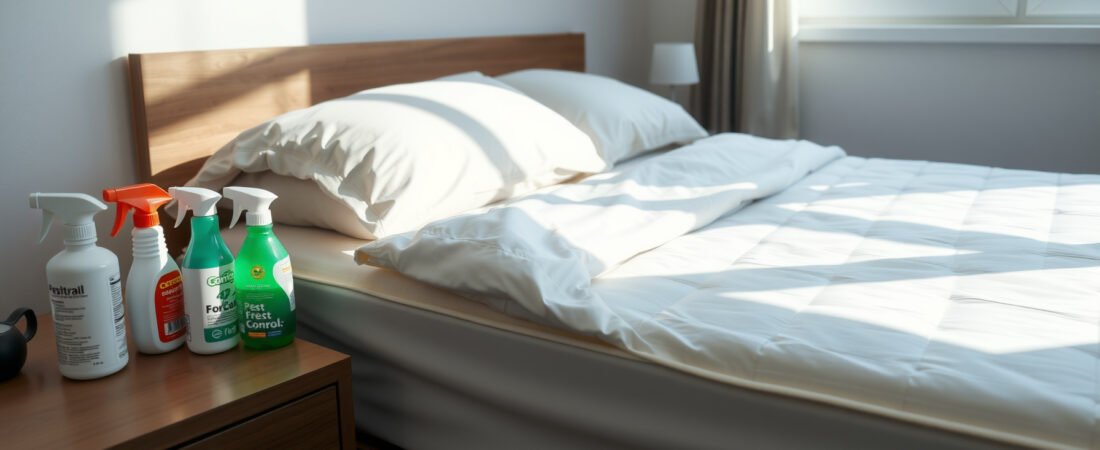
Spray a bottle of the wrong bed bug killer on your mattress and you’ve wasted $20, lost two weeks of treatment time, and possibly scattered the infestation deeper into your box spring. That’s the real cost of bad product selection — and it happens constantly, because most “best of” lists rank sprays based on Amazon reviews rather than how the chemistry actually works against bed bugs. The spray that clears a light couch infestation in an apartment can be completely useless against a resistant population that’s had three or four generations to adapt. Knowing the difference before you buy is what actually gets rid of them.
Why Most Bed Bug Sprays Fail Before You Even Open the Bottle
The number one reason bed bug sprays underperform has nothing to do with application technique — it’s insecticide resistance, and it’s far more widespread than most homeowners realize. Research from Rutgers University found that common pyrethroid-based sprays (the active ingredient in a huge share of retail products) showed little to no effect on bed bug populations collected from New York and New Jersey apartments. These bugs have developed a genetic mutation called knockdown resistance, or kdr, that literally prevents the pyrethroid molecules from binding to their nervous system the way they’re supposed to.
This doesn’t mean sprays don’t work — it means the wrong spray, on a resistant population, is essentially just wetting the bugs down. Adult bed bugs can survive over 300 days without feeding, so they have plenty of runway to simply wait out a chemical that doesn’t kill them. Choosing a spray with a different mode of action, or combining chemical classes, is the only way to actually break through that resistance wall.
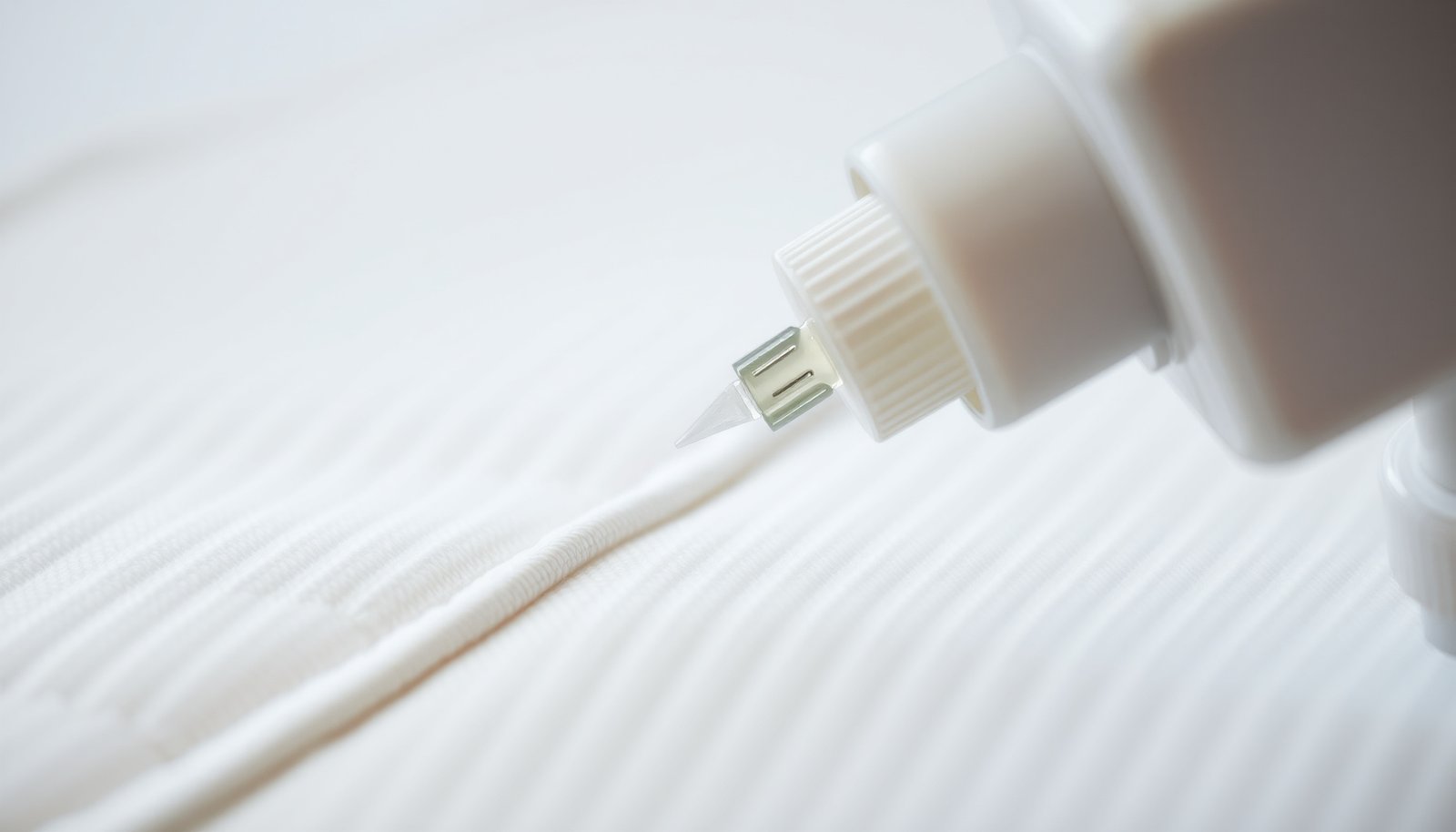
This close-up shows exactly where bed bugs hide along mattress seams and tufted fabric folds — the precise spots your spray needs to penetrate to make contact with eggs and nymphs, not just exposed adults.
What Do the Active Ingredients Actually Do to Bed Bugs?
Understanding the chemistry isn’t a deep dive for scientists — it’s practical information that helps you pick the right product for your specific situation. There are three main classes of active ingredients you’ll encounter in retail bed bug sprays, and they work completely differently from each other. Pyrethroids (like cypermethrin and deltamethrin) disrupt sodium channels in the nervous system. Neonicotinoids (like imidacloprid) block nicotinic acetylcholine receptors. And desiccants — diatomaceous earth and silica aerogel-based sprays — physically damage the waxy outer layer of the bug’s exoskeleton, causing it to dehydrate and die.
Desiccants are the counterintuitive standout here: bugs cannot develop resistance to a physical mechanism. That’s why silica aerogel-based sprays like CimeXa are increasingly recommended by pest professionals even though they look nothing like what people picture when they think “bed bug spray.” The tradeoff is that desiccants work more slowly — typically 24 to 72 hours per contact — and they don’t repel bugs the way contact-kill pyrethroid sprays do. For mattresses and upholstered furniture, that slower action is actually fine, because you’re creating a treated zone bugs must walk through repeatedly.
“The biggest mistake consumers make is assuming all bed bug sprays are interchangeable. A product with deltamethrin alone may do absolutely nothing to a resistant population — and at this point, resistance is the norm in urban environments, not the exception. Rotating chemical classes, or using a pyrethroid paired with a desiccant, gives you a much stronger shot at full elimination.”
Dr. Michael Osterwald, Board-Certified Entomologist and Urban Pest Management Specialist, Virginia Tech Extension
Which Bed Bug Sprays Are Actually Worth Buying?
Picture this: you’ve already washed every piece of bedding on high heat, vacuumed every seam on the mattress, and you’re standing in the pest control aisle staring at twelve nearly identical bottles. Here’s a ranked breakdown of what’s actually worth your money, organized by mode of action and real-world effectiveness — not star ratings.
- Rockwell CimeXa Insecticide Dust (Silica Aerogel) — The most consistently effective product available to homeowners without a license. Apply with a soft brush along mattress seams, box spring edges, and upholstered furniture tufts. Bugs can’t build resistance to it. Lasts up to 10 years in undisturbed areas.
- Crossfire Bed Bug Concentrate (Clothianidin + Metofluthrin) — A neonicotinoid paired with a pyrethroid, specifically formulated to address resistance. This two-mode combination is what many pest control professionals use when a single active ingredient has stopped working. Requires mixing and a pump sprayer.
- Harris Toughest Bed Bug Killer (Deltamethrin) — A solid pyrethroid option for moderate infestations in areas without known resistance history. Works well for killing exposed adults on contact and leaves a residual. Less effective as a standalone product in heavily urbanized areas.
- Bedlam Plus Aerosol (Sumithrin + Imidacloprid) — One of the better aerosol options for hard-to-reach areas like furniture joints, baseboards, and mattress tufts. The neonicotinoid component gives it reach into cracks where bugs shelter during the day.
- EcoRaider Bed Bug Killer (Geraniol + Cedar Extract) — The strongest naturally-derived option, with university testing from Rutgers showing 91–100% kill rates in lab conditions. A realistic choice for people avoiding synthetic insecticides, but requires more frequent reapplication than residual chemicals.
One honest nuance worth stating plainly: if you’re in a multi-unit apartment building, your spray choice matters less than you think if the source population keeps reinfesting from adjacent units. No spray — even professional-grade product — solves a structural reinfestation problem without a building-wide treatment plan.
How to Apply Bed Bug Spray on Mattresses and Furniture Without Making It Worse
Application method is where most DIY treatments fall apart, even with a good product. Bed bugs spend roughly 90% of their time hiding, not out in the open — so spraying visible surfaces and calling it done treats maybe 10% of the actual population. The seams, folds, tufts, and the underside of the box spring are where the real colony lives, and that’s exactly where your spray nozzle needs to go.
Pro-Tip: Before applying any liquid spray to a mattress, strip it completely and run the bedding through a dryer on high heat for at least 30 minutes — this kills all life stages including eggs, which most sprays don’t penetrate reliably. Then apply your spray while the mattress is bare and let it dry fully before putting on a mattress encasement. The encasement traps any survivors and prevents reinfestation from the mattress itself while the residual chemical continues working.
For upholstered furniture, flip every cushion and spray the undersides and the platform beneath them. Pull the furniture away from walls and treat the back and underside — bed bugs aggregate in tight, dark spaces and a couch back against a wall is prime territory. If you’re using a dust or silica aerogel product, a makeup brush or dedicated applicator brush gives you precise control along seams without creating a visible residue on fabric.
How Do These Sprays Compare on Safety, Residual Time, and Egg Kill?
Not all sprays leave a residual — some kill on contact only, which sounds appealing until you realize bed bug eggs are completely impervious to most liquid sprays regardless of concentration. A female bed bug lays 1 to 5 eggs per day and can produce up to 500 eggs in her lifetime, cementing them to surfaces with a glue-like secretion that most spray formulas simply can’t penetrate. This is why a single spray treatment almost never eliminates a full infestation, and why residual products matter more than contact killers for long-term control. For a complete picture of what it takes to fully eliminate an infestation rather than just knock back the visible population, the How to Get Rid of Bed Bugs Permanently: Step-by-Step Guide lays out the full protocol alongside chemical treatment.
Here’s a side-by-side comparison of the key performance factors across the top products:
| Product | Active Ingredient Class | Residual Duration | Egg Kill Effectiveness | Resistance Risk |
|---|---|---|---|---|
| CimeXa Dust | Desiccant (silica aerogel) | Up to 10 years (undisturbed) | Moderate (physical mechanism) | None — no resistance possible |
| Crossfire Concentrate | Neonicotinoid + Pyrethroid | 30 days+ | Low (liquid sprays rarely penetrate eggs) | Low (dual mode of action) |
| Harris Toughest | Pyrethroid (Deltamethrin) | Up to 16 weeks (dry surfaces) | Low | High in urban areas |
| EcoRaider | Botanical (Geraniol/Cedar) | 2–4 weeks | Low to moderate | None reported |
The safety picture also matters for bedroom products specifically. Pyrethroids are low-toxicity to mammals at label concentrations, but prolonged skin contact with wet spray should still be avoided — particularly for children and pets who spend time on furniture. Silica aerogel products are non-toxic to mammals by ingestion but can cause lung irritation if inhaled during application, so a simple dust mask is worth wearing. Botanical sprays like EcoRaider are the gentlest option for people who are chemical-sensitive, though they require more frequent retreatment to maintain effectiveness.
What Spray Alone Can’t Fix (And What to Do Instead)
There’s a version of this problem that no spray solves: a severe infestation that’s had months to spread into wall voids, electrical outlets, and the subfloor. Sprays work on surfaces and inside the gaps you can physically access. By the time a bed bug colony has colonized a box spring seam, the inside of a bed frame joint, behind a baseboard, and the back of a wall outlet — and that’s exactly what a 3-to-6-month-old infestation typically looks like — surface sprays are only touching a fraction of the population.
The most effective DIY approach treats sprays as one layer of a multi-layered strategy, not the whole plan. Here’s what that looks like in combination with spray treatment:
- Mattress and box spring encasements — Traps any surviving bugs inside where they eventually starve, and prevents new harborage in the most common infestation site.
- Interceptor traps under bed legs — Catches bugs moving between furniture and the bed, giving you data on whether the infestation is shrinking over time.
- Heat treatment for soft goods — Dryers at 120°F+ kill all life stages in 30 minutes. Clothing, stuffed animals, pillows, and curtains should cycle through before and after treatment.
- Steamer for cracks and seams — A steam temperature of 212°F penetrates fabric and kills eggs on contact where liquid sprays can’t reach. Best used before applying a residual spray.
- Follow-up spray applications at 10–14 day intervals — Egg hatch cycles mean a single treatment misses the next generation. Plan for at least two to three applications spaced two weeks apart to catch newly hatched nymphs before they reproduce.
The counterintuitive truth about bed bug sprays is this: the product you choose matters less than the consistency and completeness of your application. A moderately effective spray applied thoroughly every two weeks, combined with encasements and interceptors, will outperform an expensive professional-grade product applied once to visible surfaces and then forgotten. Bed bug control is less about finding the magic bottle and more about removing every hiding place, denying new ones, and staying persistent through two or three egg hatch cycles — because that’s the only timeline that actually ends an infestation.
Frequently Asked Questions
what is the best bed bug spray for mattresses?
Sprays containing pyrethrins, pyrethroids, or isopropyl alcohol at 91% concentration or higher tend to work best directly on mattresses. Look for products labeled safe for fabric contact, like Bedlam Plus or Harris Bed Bug Killer. Always let the mattress dry completely before putting bedding back on.
how long does bed bug spray take to work?
Most contact sprays kill bed bugs within minutes of direct application, but residual sprays can keep working for up to 2 weeks after drying. The problem is that sprays don’t kill eggs, so you’ll need to reapply every 7 to 10 days to catch newly hatched nymphs. Don’t expect a single treatment to wipe out an infestation on its own.
is bed bug spray safe to use on furniture?
It depends on the spray and the furniture material — most water-based sprays are safe for upholstered furniture, but oil-based or alcohol-heavy formulas can stain or damage wood finishes. Always test a small hidden spot first and check the label for surface-specific warnings. If you’re treating a couch or upholstered chair, let it air out for at least 4 hours before anyone sits on it.
can I spray for bed bugs myself or do I need an exterminator?
DIY sprays can control a light infestation if you’re thorough and consistent with treatments over 3 to 4 weeks. But if you’re finding bed bugs in multiple rooms or seeing heavy activity, a professional is going to be more effective — they have access to stronger chemicals and heat treatment equipment. Sprays alone rarely eliminate a severe infestation without professional backup.
do bed bug sprays work on eggs?
Most over-the-counter bed bug sprays don’t kill eggs because the shell is too thick for liquid chemicals to penetrate. This is why repeated treatments every 7 to 10 days matter — you need to kill the nymphs as they hatch before they reach breeding age. Some products like Gentrol contain an insect growth regulator (IGR) that prevents nymphs from maturing, which helps break the life cycle even if it doesn’t kill eggs outright.