
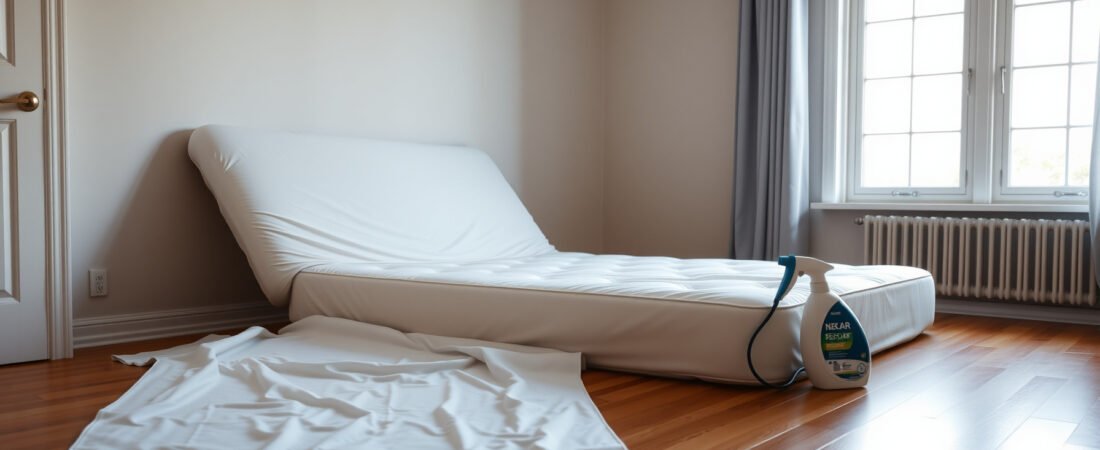
Bed bugs are not a cleanliness problem — they’re a transportation problem. That one shift in thinking changes everything about how you approach getting rid of them permanently, because it means any home, any neighborhood, any income level is vulnerable. The real reason most people fail to eliminate bed bugs isn’t that they didn’t try hard enough. It’s that they treated the symptoms instead of breaking the cycle.
Here’s the bottom line: permanently eliminating bed bugs requires attacking three things simultaneously — the bugs you can see, the eggs you can’t see, and every re-introduction pathway into your home. Miss any one of those three, and you’ll be back to square one within 6 to 8 weeks, right when the next generation hatches. This guide walks you through exactly how to do all three without wasting money on things that don’t work.
Why Do Bed Bug Treatments Fail Even After You Think They Worked?
The single biggest reason bed bug treatments fail is eggs. A single fertilized female bed bug can lay 1 to 5 eggs per day and up to 500 eggs over her lifetime. Most over-the-counter sprays will kill adult bugs on contact, but they have zero effect on eggs — and because eggs hatch in 6 to 10 days under warm conditions, you’ll see what looks like a successful treatment followed by a full reinfestation before the month is out. People blame the product. The product isn’t the problem. The protocol is.
There’s also the hiding factor that most treatment guides dramatically underestimate. Bed bugs don’t just live in mattresses. They’ve been found behind electrical outlet covers, inside alarm clocks, underneath carpet tacking strips, and even inside the hollow legs of bed frames. A female bed bug is roughly the size and thickness of an apple seed — she can squeeze into a crack that’s less than 1.5mm wide. That’s not a metaphor for “they hide well.” That’s a literal physical reality that determines where you need to treat.
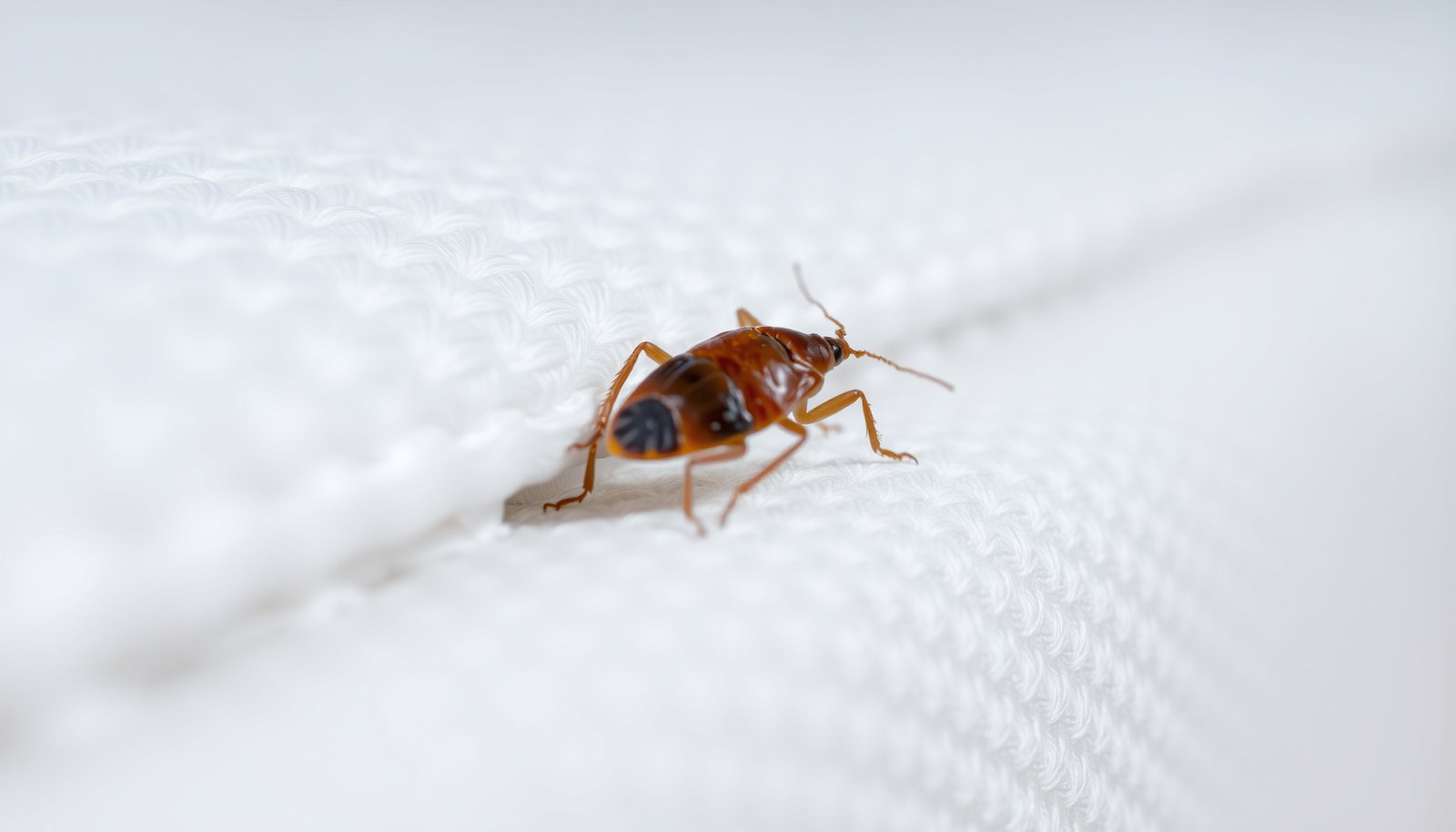
This close-up shows the actual scale of a bed bug relative to common household surfaces — understanding their size helps explain why they’re so easy to miss during a visual inspection and why treatment must go far beyond the mattress surface.
How Do You Actually Confirm You Have Bed Bugs Before Treating?
Don’t treat until you confirm. That sounds obvious, but a lot of people buy a can of spray because they woke up with itchy welts — and the welts could be mosquito bites, spider bites, hives, or a reaction to laundry detergent. Treating for bed bugs you don’t have wastes money, exposes your household to unnecessary chemicals, and delays finding the real problem. The only way to confirm a bed bug infestation is physical evidence.
Pull the mattress off the box spring. Check the seams of both with a flashlight and a credit card — use the card to drag along seam folds where bugs cluster. You’re looking for live bugs (reddish-brown, flat, oval), shed skins (translucent, papery husks that hold the exact shape of the bug), tiny white oval eggs roughly 1mm long, and dark rust-colored fecal spots that smear when you wipe them with a damp cloth. Finding any two of these is confirmation enough to start treatment. Finding just one welt on your arm is not.
“One of the most persistent mistakes I see is homeowners skipping the confirmation step entirely. They start spraying the whole bedroom based on a feeling, and then they’re surprised when they’re still finding bites three weeks later — often because the infestation was in the living room furniture, not the bed. A proper inspection takes 20 minutes and changes your entire treatment strategy.”
Dr. Linda Mercer, PhD Entomology, University Extension Specialist in Urban Pest Management
What Is the Correct Step-by-Step Process to Get Rid of Bed Bugs Permanently?
Permanent elimination is a multi-round process, not a one-day event. The reason professionals charge what they do isn’t because the labor is particularly difficult — it’s because they understand that effective treatment requires follow-up inspections timed to the egg hatching cycle. You can replicate that discipline yourself if you commit to the timeline. Here’s the exact sequence that works.
- Strip and launder everything fabric on high heat. Wash all bedding, curtains, clothing in closets near the bed, and throw rugs. Dry everything on the highest heat setting for at least 30 minutes. Heat above 120°F kills bed bugs at all life stages including eggs. Bag clean items in sealed plastic immediately — don’t set them back down in the room until treatment is complete.
- Vacuum every surface methodically. Use a stiff-bristled attachment to vacuum mattress seams, box spring edges, bed frame joints, baseboards, carpet edges, upholstered furniture seams, and behind nightstands. Immediately after vacuuming, remove the vacuum bag, seal it in a plastic bag, and put it in an outdoor trash bin. Leaving the bag in your vacuum creates a live bug incubator inside your home.
- Apply a residual pesticide to all harborage points. Products containing pyrethroids (like deltamethrin or bifenthrin) work well as residuals, but resistance is growing in many urban populations. Pairing a pyrethroid with a desiccant dust like diatomaceous earth or CimeXa (amorphous silica gel) dramatically improves kill rates because the dust damages the bug’s exoskeleton and works through a different mechanism — bugs can’t develop resistance to physical desiccation.
- Encase your mattress and box spring. Bed bug-proof encasements trap any surviving bugs inside, where they’ll eventually starve — adult bed bugs can survive over 300 days without feeding, so leave encasements on for at least 18 months. This also prevents new bugs from colonizing the mattress interior during future exposure.
- Install active monitors under each bed leg. Interceptor monitors (smooth-sided cups that trap bugs trying to climb into or out of the bed) serve two purposes: they physically reduce bed access, and they tell you whether you still have activity after treatment. Check them weekly.
- Repeat chemical application at days 14 and 28. This timing is deliberate — it catches newly hatched nymphs before they reach reproductive maturity. Skipping the follow-up treatments is the #1 reason DIY efforts fail. Set a calendar reminder right now if you’re serious about this.
One thing worth knowing: the severity of the infestation genuinely changes what’s realistic. A light infestation caught early — say, in one piece of furniture in one room — is very manageable with DIY methods. A whole-apartment infestation that’s been growing for months is a different beast, and honest advice here means telling you that professional heat treatment may be the only realistic path forward in that scenario.
Pro-Tip: CimeXa silica gel dust outperforms diatomaceous earth in most real-world tests because it’s engineered specifically to stick to an insect’s waxy cuticle and absorb moisture from it — regular food-grade diatomaceous earth is coarser and much less effective in the low-humidity conditions typical of climate-controlled homes. Apply CimeXa in a very thin layer (barely visible) with a hand bulb duster into cracks, crevices, and wall voids. A heavy pile of dust actually repels bugs rather than attracting them to walk through it.
Does Heat Treatment Actually Work, and When Should You Use It?
Heat treatment is the closest thing to a silver bullet that exists for bed bugs — with one important caveat. Professional whole-room heat treatment works by raising the ambient temperature of an infested space to 118–122°F and holding it there for 90 minutes or longer. At that temperature, bed bugs and their eggs die at all life stages. There are no survivors hiding in cracks, no eggs that “take longer.” The physics are reliable in a way that chemical treatments simply aren’t.
Here’s the counterintuitive part that most articles skip over: heat treatment alone, without any residual chemical left behind, offers zero protection against re-introduction. If a bed bug walks into your apartment from a neighbor’s unit the week after heat treatment, it has a completely clean, unprotected environment to start a new colony. The professionals who get the best long-term results combine heat treatment with a residual dust application in wall voids and entry points, so that anything that comes in afterward still encounters a treated barrier. Heat kills what’s there. The residual protects what comes next.
| Treatment Method | Kills Eggs? | Residual Protection? | Best Use Case |
|---|---|---|---|
| Contact spray (OTC pyrethroid) | No | Limited (days) | Supplemental knockdown only |
| Desiccant dust (CimeXa) | Yes (on contact) | Yes (months to years) | Cracks, voids, preventive barrier |
| Professional heat treatment | Yes | No | Heavy infestation, one-time reset |
| Mattress encasement | Traps/starves | Passive (18+ months) | Essential add-on to any treatment |
How Do You Stop Bed Bugs From Coming Back After Treatment?
Picture this: a family spends $1,200 on professional heat treatment, cleans the whole apartment, and feels completely confident. Six weeks later the bites are back. They call the exterminator furious, assuming the treatment didn’t work. The exterminator finds the new infestation is localized entirely to the couch — the one piece of furniture the family moved into the hallway during treatment to “get it out of the way,” then moved back in. The infestation traveled with the couch. The original treatment worked perfectly.
Preventing re-introduction is the part of permanent bed bug control that almost nobody talks about, and it’s where most reinfestations originate. It’s not about being paranoid — it’s about understanding a few specific high-risk behaviors and building simple habits around them. Here’s what actually matters for long-term prevention:
- Inspect secondhand furniture before it enters your home. Free furniture left on the curb is one of the most common re-introduction vectors in urban areas. Run a flashlight along every seam and joint before a single piece crosses your threshold — if you see any dark spotting or shed skins, leave it.
- Use luggage racks when traveling, never the floor. Bed bugs in hotel rooms find luggage by following CO2 plumes from sleeping humans — a bag left on the floor next to the bed is much more likely to pick up hitchhikers than a bag elevated on a metal rack away from the bed.
- Bag and heat your travel clothing immediately on return. Go straight from the front door to the dryer — 30 minutes on high heat before anything goes in a drawer or closet.
- In multi-unit buildings, seal wall penetrations. Bed bugs travel between apartment units through electrical conduits, pipe chases, and gaps around outlets. Sealing these with caulk or expanding foam dramatically reduces inter-unit transfer — something renters can do with $8 worth of supplies.
- Keep interceptor monitors in place permanently. They’re not just for active infestations. A monitor that catches 1 bug before it becomes 100 bugs is worth every cent of its low cost.
The uncomfortable truth about bed bug permanence is that in dense housing — apartments, condos, townhouses — “permanently” means permanently vigilant, not permanently finished. A single-family home where you control all entry points is a different situation than a 20-unit building where your neighbor’s guests bring a different variable every weekend. Adjust your expectations and your strategy based on your actual living situation, not a generic promise on a product label.
The goal from here isn’t to live in fear of bed bugs — it’s to understand that you now know more about how they spread and what actually kills them than 90% of the people dealing with this problem. Use that knowledge, stay consistent with the follow-up treatments, and you’ll be in a genuinely different position than the homeowners who spray once, assume it’s over, and end up starting from scratch two months later.
Frequently Asked Questions
how long does it take to get rid of bed bugs permanently?
Most bed bug infestations take 2 to 4 treatment cycles over 3 to 6 weeks to fully eliminate. It depends on how severe the infestation is and whether you’re using DIY methods or hiring a professional exterminator. Pros using heat treatment can often clear an infestation in a single visit, while chemical treatments usually require 2 to 3 follow-up applications.
can I get rid of bed bugs myself or do I need an exterminator?
You can handle a minor infestation yourself using a combination of vacuuming, steam cleaning, mattress encasements, and EPA-registered insecticides like diatomaceous earth or bed bug sprays. But if you’ve had bugs for more than a few weeks or they’ve spread to multiple rooms, it’s worth calling a pest control professional. DIY methods often fail because people miss hidden harborage spots behind outlets, baseboards, and inside furniture joints.
what temperature kills bed bugs instantly?
Bed bugs die when exposed to temperatures above 120°F (49°C) for at least 20 minutes. For cold treatment, temperatures need to drop to 0°F (-18°C) and stay there for at least 4 days to kill both bugs and eggs. A household clothes dryer set to high heat for 30 minutes is one of the easiest ways to kill bed bugs in fabric items like bedding, curtains, and clothing.
how do I know if bed bugs are gone after treatment?
You’ll want to monitor for at least 2 to 3 weeks after your final treatment before assuming the infestation is gone. Use bed bug interceptor traps under each bed leg and check them every few days — no captures after 3 weeks is a good sign. Keep in mind that bed bug eggs can take 6 to 10 days to hatch, so one treatment almost never means it’s fully over.
what attracts bed bugs to your bed in the first place?
Bed bugs are drawn to the carbon dioxide and body heat you give off while sleeping, which is why they almost always show up closest to where you sleep. They don’t care about dirty or clean homes — they hitchhike in on luggage, used furniture, clothing, or even visitors’ bags. Hotels, public transit, and secondhand furniture are the most common sources for US homeowners and renters.
Disclaimer: This article is for informational purposes only and isn’t a substitute for professional pest control advice. Always read and follow the product label instructions exactly — label directions are legally binding and vary by brand and active ingredient. Keep all pesticides, baits and traps away from children and pets, ventilate treated areas as directed, and consider calling a licensed pest control professional if an infestation is large, recurring, or involves a structural pest like termites or carpenter ants.