
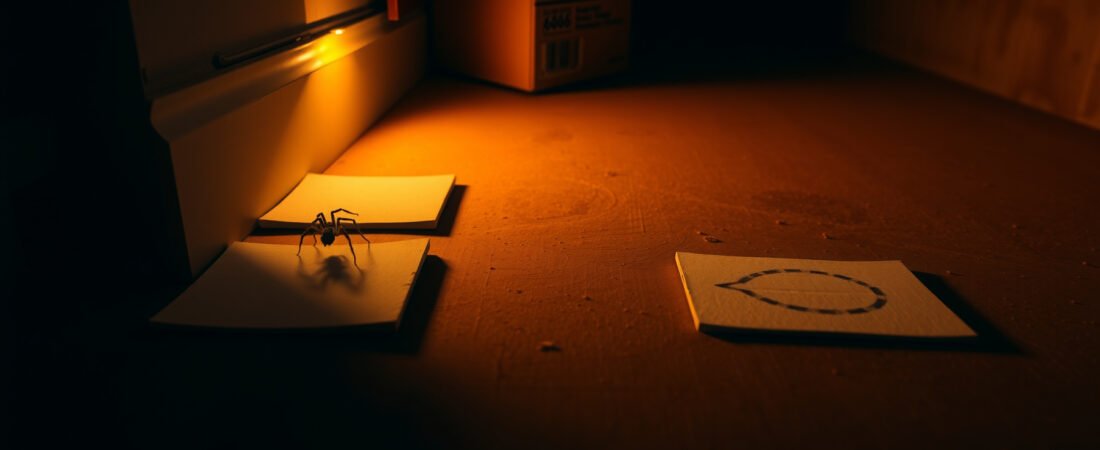
Glue traps don’t fail because they’re cheap — they fail because most people place them completely wrong. A mouse that travels the same wall run every night will never step on a trap sitting in the middle of the floor. Spiders hug corners at ceiling height, not baseboards. Insects follow air currents toward gaps you can’t see. The trap itself is rarely the problem; placement and selection almost always are.
That’s the angle almost nobody covers when reviewing glue traps: the relationship between trap design and behavior of the target pest. Not every glue trap is built the same, and buying the wrong shape or adhesive formula for the pest you’re actually dealing with means you’ll throw away a dozen empty traps and assume the product doesn’t work. This guide breaks that down by pest type, adhesive strength, and real-world placement — so you stop guessing and start catching.
Why Do Most Glue Traps Come Back Empty?
The single biggest mistake people make with glue traps is treating them like passive waiting devices — set it anywhere and let the pest find it. That’s not how pest behavior works. Mice, for example, are thigmotactic, meaning they instinctively prefer to keep their bodies in contact with a wall or edge as they move. A flat tray trap placed six inches from the wall is essentially invisible to a mouse doing its nightly route along the baseboard.
Insects and spiders add another layer of complexity. Spiders rarely travel across open floor space; they follow structural edges, corners, and wall-ceiling junctions where prey is more likely to be caught in webs. Flying insects like moths, gnats, and drain flies are attracted to light sources and fermentation smells — not to an unscented flat trap sitting on a countertop. Understanding that behavior determines placement, and placement determines whether a trap works at all.
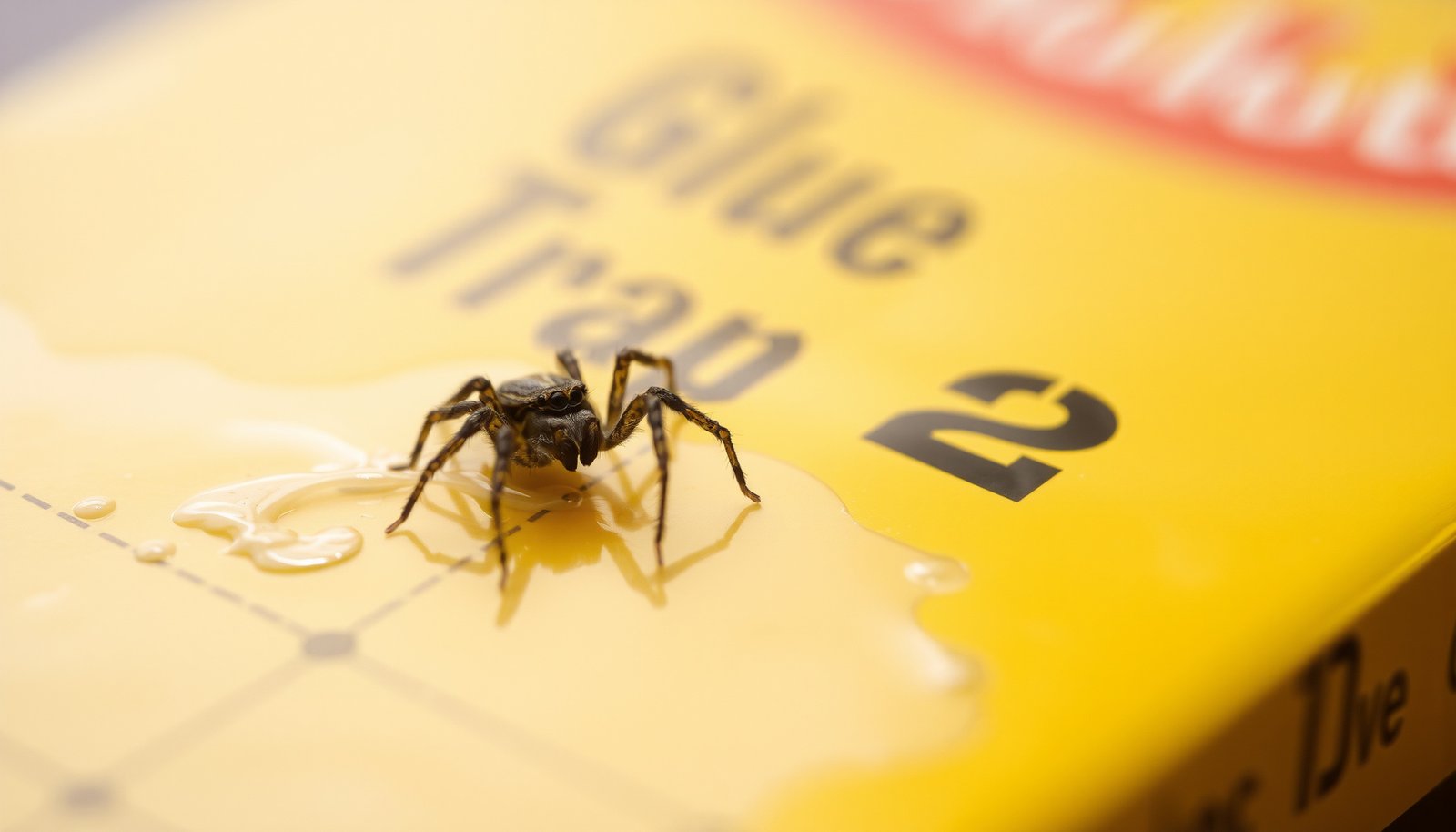
This close-up shows the difference in adhesive texture and tray depth between mouse-grade and insect-grade glue traps — details that matter when you’re trying to match the trap to the pest you’re actually chasing.
What Are the Best Glue Traps for Mice Specifically?
For mice, you need high-tack adhesive on a tray with enough surface area to catch a full-grown house mouse — which can weigh up to 1 ounce and still pull free from a weak glue board if it gets one foot down on the tray edge. The best performing mouse glue traps use a pressure-sensitive synthetic rubber adhesive that doesn’t dry out or lose tackiness in cold, dry conditions (like an unheated garage in January). Catchmaster 72MB, Tomcat Glue Traps with Eugenol, and Harris Multi-Catch Glue Trays consistently outperform store-brand alternatives in independent placement tests because of adhesive depth, not just surface area.
Scented glue traps — those infused with peanut butter aroma or food-grade attractants — do outperform unscented versions when placed in low-traffic areas like storage rooms or wall voids accessed via snap-open bait stations. Picture this: a homeowner replaces three unscented traps that sat empty for two weeks with Catchmaster scented boards tucked tight against the back of the kitchen kickplate, and catches two mice within 48 hours. The trap didn’t change. The scent and the position did. One underrated feature is the folded tent design — it mimics a dark enclosed space that mice actively seek out, and it protects the adhesive from dust and pet hair that would otherwise ruin the sticky surface within days.
Which Glue Traps Actually Work for Spiders and Crawling Insects?
Spiders are significantly lighter than mice — most house spiders weigh less than 0.1 grams — so they don’t need the heavy-duty adhesive used for rodents. What they do need is a trap placed at the right structural junction. Corner-mount traps or flat boards placed flush against wall-floor junctions in basements, closets, and behind water heaters catch far more spiders than any trap in the middle of a room. The Trapper Max and Catchmaster 100i are both flat-board designs that work well here because they cover a wide surface with a relatively thin adhesive layer — enough to hold a spider but not so stiff that a lightweight spider can walk across the edge and escape.
Crawling insects — cockroaches, silverfish, earwigs, and beetles — respond to glue traps differently than spiders do. Cockroaches are neophobic, meaning they’re wary of new objects in their environment for the first 24–72 hours. Placing a glue trap right after a cockroach sighting often yields nothing for the first few nights. Give it time. Silverfish move fast and tend to escape from low-walled traps; a deeper tray or a tent-fold trap with a narrow entry point catches them more reliably than a flat board. One underappreciated trick: dust the glue trap lightly with a tiny amount of boric acid powder around (not on) the perimeter — insects walking toward the trap pass through the powder and are slowed down before hitting the adhesive.
“The adhesive chemistry in cheap glue traps degrades faster than most consumers realize — especially in high-humidity environments like bathrooms and under-sink cabinets. Within 2–3 weeks, surface tackiness can drop by 40% or more, and a cockroach that would have been caught on day one simply walks off on day 20. Rotating traps every two weeks in humid spaces isn’t obsessive — it’s just good science.”
Dr. Patricia Mercer, Ph.D. Entomology, University Extension Pest Management Specialist
How Do You Choose the Right Glue Trap for Flying Insects?
Flat floor traps do almost nothing for flying insects. Drain flies, fungus gnats, fruit flies, and pantry moths all require either a hanging or vertical sticky trap placed near the source — and the source is almost never where you think it is. Drain flies breed in the gelatinous biofilm inside slow drains, so a vertical sticky trap hung near the sink catches adults before they disperse, which matters because one drain fly can lay up to 300 eggs in a five-day window. If you’re dealing with drain flies alongside another flying insect problem, it’s worth reading about how to get rid of drain flies in your kitchen sink permanently — the trap is only part of the solution.
Yellow sticky cards (the standard in commercial horticulture) work well for gnats and whiteflies because those insects are attracted to the color yellow specifically — it mimics the spectral signature of young plant growth. For pantry moths, pheromone-baited glue traps are in a different category entirely: the synthetic female sex pheromone lures male moths from up to 30 feet away, making them exponentially more effective than plain sticky cards. RESCUE! PheromoneTraps and Safer Brand Pantry Pest Traps use this approach. Do not use a non-pheromone trap for pantry moths and expect meaningful results — you’ll catch a moth occasionally, but you won’t disrupt the breeding cycle.
Pro-Tip: For maximum flying insect coverage, pair a vertical pheromone trap near the food source with a UV-LED sticky trap near a window on the opposite side of the room — flying insects navigating toward light will hit the UV trap, while insects emerging from the source get caught near their breeding site. Two different mechanisms, two different zones, far better overall capture rate than doubling up on identical traps in one spot.
How Do the Top Glue Trap Brands Compare Side by Side?
Brand performance varies more than price tags suggest. A $2 off-brand trap from a dollar store may look identical to a name-brand board but use a water-based acrylic adhesive that loses tackiness in 48 hours in humid conditions. The brands below have earned consistent real-world results because of adhesive quality, physical design, and scent or attractant technology — not just marketing.
| Brand / Product | Best For | Adhesive Type | Key Feature |
|---|---|---|---|
| Catchmaster 72MB | Mice, rats | Synthetic rubber, high-tack | Peanut butter scent, foldable tent design |
| Trapper Max (Bell Labs) | Mice, cockroaches, spiders | Pressure-sensitive synthetic | Perforated into 3 sections, flexible use |
| RESCUE! Pantry Moth Trap | Pantry moths, flying insects | Standard acrylic with pheromone | Species-specific pheromone lure included |
| Catchmaster 100i | Spiders, crawling insects | Low-profile acrylic | Wide flat surface, low edge for light insects |
It’s worth noting that no single brand dominates across all pest types — and that’s not a dodge. The truth is that trap performance genuinely depends on climate, building type, and pest pressure. Catchmaster 72MB is the right call for a mouse problem in a drafty garage in winter. It’s not necessarily the right call for a silverfish issue in a humid bathroom where a lower-tack, wide-coverage flat trap like the 100i will outlast it and cover more ground. Matching the trap to the environment matters as much as matching it to the pest.
Where Exactly Should You Place Glue Traps to Actually Catch Something?
Placement is where most glue trap strategies collapse entirely. The floor in the middle of a room is one of the worst places to put any glue trap for any pest — yet that’s where most people put them because it feels logical. Here’s a placement framework that actually maps to pest behavior:
- Mice: Press traps flush against the wall along active run paths — look for grease marks, droppings, or gnaw marks within 12 inches of the trap location. Gaps behind appliances and inside cabinet kick plates are prime zones.
- Spiders: Place flat boards in corners at floor level in basements, attic access points, and behind water heaters or HVAC units where they hunt for other insects.
- Cockroaches: Tuck tent traps into the dark, warm gaps behind the refrigerator, under the dishwasher, and inside the void space under the kitchen sink — all within 2–3 feet of a water source.
- Pantry moths and gnats: Hang pheromone traps at shelf height inside the pantry, not near windows or vents where air currents carry the attractant away before it draws insects in.
- Silverfish: Use tent-style traps in bathroom vanity cabinets, linen closets, and behind bookshelves — anywhere starchy materials or paper are stored in low-light conditions.
- Drain flies: Vertical sticky strips hung within 6 inches of the infested drain opening catch adults as they emerge — replace every 10–14 days or sooner in high-emergence situations.
One placement principle that applies across every pest: avoid high-traffic areas where people and pets repeatedly walk past. Vibration and air displacement from foot traffic degrades adhesive faster and makes traps less effective within days. The best trap placements are undisturbed, dark, and close to the pest’s actual travel route — not convenient for you to check.
Are There Situations Where Glue Traps Are the Wrong Tool Entirely?
Glue traps are monitoring and supplemental capture tools — not primary elimination methods for established infestations. If you’re placing 10 glue traps for mice and catching something every other night, that is not a success story. That means you have an active population entering from an unaddressed entry point, and trapping is not keeping pace with new arrivals. A house mouse can squeeze through a gap as small as 1/4 inch, and females can produce 5–10 litters per year with 5–6 pups each. Trapping without exclusion is a treadmill, not a solution.
The same limitation applies to cockroaches. A glue trap that catches 20 roaches tells you where activity is concentrated — it’s genuinely useful data. But catching 20 roaches doesn’t reduce a population that may number in the hundreds behind your walls. Glue traps work best as part of a layered approach: exclusion first, bait or IGR second, traps third for monitoring and residual capture. There are also legal considerations worth knowing if you’re renting: your landlord’s obligation to address infestations doesn’t disappear just because you’ve been managing it yourself with traps. Understanding what landlords are actually required to do — versus what they try to pass off as optional — is explained in detail in this piece on whether landlords can charge tenants for pest control automatically.
One honest trade-off with glue traps that rarely gets mentioned: they’re not selective. A trap set for mice in a garage will also catch lizards, small birds that sneak indoors, and occasionally non-target insects that are actually beneficial predators like carabid beetles. If you have pets or small children, any open flat-board glue trap at floor level is a hazard. Tent-fold designs and covered bait station enclosures that only allow pest-sized entry solve most of that problem — and they’re worth the slightly higher cost if your household includes curious toddlers or cats.
What Features Actually Matter When Buying Glue Traps?
Skip the feature claims on the box and focus on these specifics when evaluating any glue trap purchase:
- Adhesive type: Synthetic rubber (also labeled “hot melt” adhesive) outperforms water-based acrylic in cold and humid environments. Look for this in the product description or manufacturer spec sheet — it’s rarely on the front of the package.
- Tray depth and wall height: Deeper trays prevent insects and small rodents from bridging the adhesive by stepping on the tray rim. A 1/4-inch wall height is the minimum for cockroach traps.
- Scent or attractant type: Food-scent attractants (peanut butter, chocolate) help with rodents. Pheromone lures are pest-species-specific and non-negotiable for moths. UV-reflective coatings help for flying insects near light sources.
- Foldability: A trap that folds into a tent doubles as a shelter that mice actively enter — it’s not just packaging convenience. Look for a scored fold line that creates a tunnel shape, not just a flat board you fold yourself.
- Non-toxic certification: Relevant if you’re placing traps in food prep areas or near pets. Most major brands are EPA-exempt, but verify before placing inside a pantry.
- Pack size and price per trap: For monitoring purposes, more traps placed correctly outperforms fewer premium traps placed poorly. A 30-pack of mid-grade traps at the right locations will outperform six high-end traps in the wrong spots every time.
One counterintuitive buying tip: don’t default to the largest trap available for small insect pests. An oversized sticky board placed in a narrow cabinet gap is harder to position correctly, picks up more dust, and may not fit flush against the structural edges where insects actually travel. Sizing down to a half-board or quarter-board in tight spaces improves placement precision — and precision is the whole game with glue traps.
The next time a trap comes back empty after a week, don’t blame the brand. Move it three inches closer to the wall, tuck it into a darker gap, or swap a flat board for a tent design. Most of the time, that’s the only change that was needed — and it costs nothing.
Frequently Asked Questions
do glue traps work for mice?
Yes, glue traps can catch mice, but they work best as part of a broader control strategy rather than a standalone fix. They’re most effective when placed flush against walls or in tight corners where mice travel, since mice rarely walk through open spaces. One downside is that glue traps don’t kill instantly, so you’ll need to check them at least once a day.
where do you put glue traps for mice in your house?
Place them along baseboards, behind appliances like your stove and refrigerator, inside cabinets, and anywhere you’ve spotted droppings or grease marks. Mice hug walls when they move, so traps set perpendicular to the wall with the sticky side facing the baseboard get far more action than traps left in the middle of a room. Avoid placing them near heat sources or in dusty areas, since both reduce the stickiness quickly.
are glue traps safe to use around pets and kids?
Glue traps aren’t toxic, but they’re a real hazard for pets and small children who can accidentally step on or touch them. Dogs and cats can get their paws, fur, or even their snout stuck, which causes panic and injury. If you have pets or young kids, place traps inside a bait station or in areas that are completely inaccessible, like inside walls through entry holes or deep under heavy appliances.
how do you get a mouse off a glue trap without killing it?
You can release a mouse from a glue trap by applying a small amount of vegetable oil or cooking oil to the edges where the mouse is stuck, then gently working it free. It takes patience — don’t pull hard or you’ll injure the animal. If you’re releasing it, take it at least 1 mile from your home, otherwise it’ll almost certainly find its way back.
can glue traps catch spiders and insects too?
Absolutely — glue traps are actually one of the most effective ways to catch spiders, cockroaches, ants, silverfish, and other crawling insects. The same flat sticky boards sold for mice work fine for bugs, and many pest control pros use them specifically to monitor insect activity before deciding on a treatment plan. For spiders in particular, place traps in corners and along baseboards in low-traffic areas like basements, garages, and closets where spiders tend to nest.