
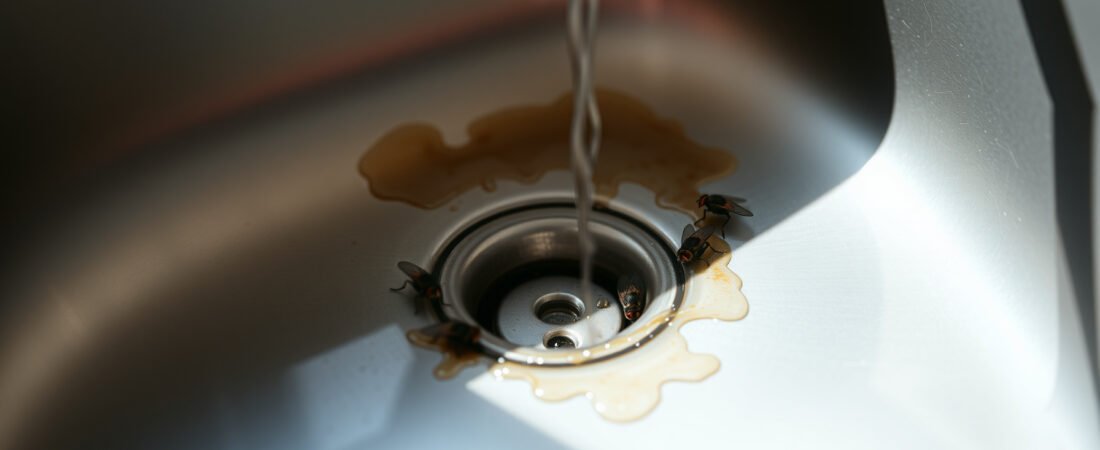
Pouring boiling water or bleach down your kitchen sink drain might kill a handful of drain flies on contact — but the infestation will be back within a week, sometimes less. That’s not because the treatment failed. It’s because the actual problem was never the flies themselves. It’s the biofilm.
Drain flies — also called moth flies or filter flies — don’t breed in standing water. They breed inside a thick, gelatinous layer of decomposed organic matter that coats the inner walls of your drain pipe. That slime layer can be 3 to 5 millimeters deep, and a female drain fly can lay between 30 and 100 eggs directly into it. Those eggs hatch in as little as 32 hours under warm conditions. If you’re only targeting the adult flies you can see hovering near the sink, you’re fighting the wrong battle.
The real fix is biofilm elimination — and doing it thoroughly enough that there’s nothing left for a new generation to feed on or lay eggs in. Everything else is temporary.
Why Drain Flies in the Kitchen Sink Keep Coming Back After Treatment
Here’s the piece most people miss: the kitchen sink drain isn’t just a pipe. Over months or years of use, food particles, grease, soap scum, and decomposing organic matter build up into a structured film that clings to the interior walls. This biofilm is essentially a food source and breeding habitat rolled into one. It doesn’t flush away when you run the tap, and it doesn’t dissolve with standard dish soap or even most drain cleaners.
Drain fly larvae are semi-aquatic and breathe through a specialized siphon tube at their rear end. They live within that biofilm layer — not in the water flowing past it — which is why a quick blast of boiling water only skims the surface. Studies on drain fly biology have shown that larvae can survive brief exposure to temperatures that would kill adult flies outright, because the biofilm itself acts as insulation. You could pour scalding water down that drain every single day and still have flies emerging a week later from larvae tucked deeper in the film.
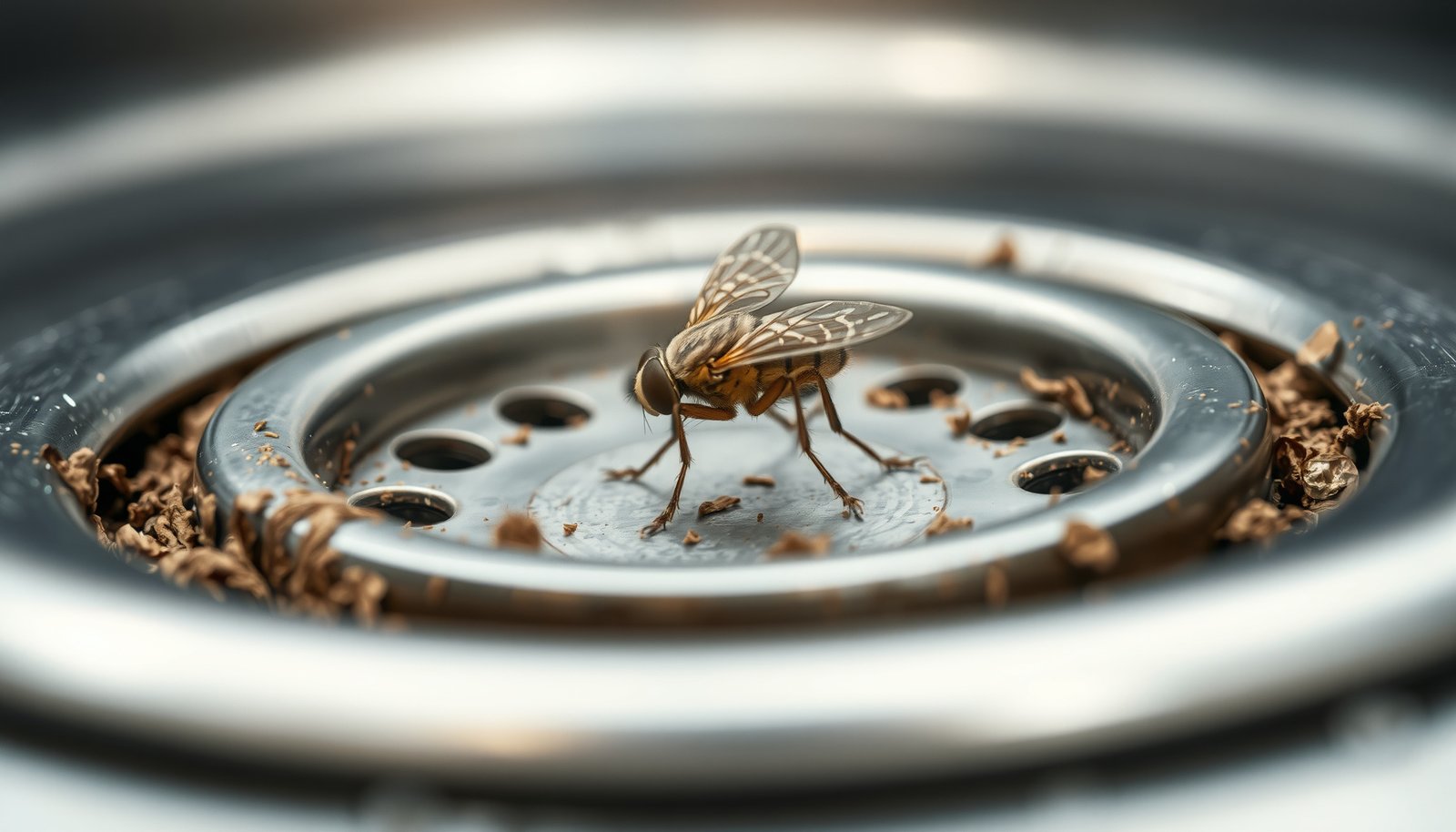
This close-up shows the typical resting position of adult drain flies on a sink basin near the drain opening — noticing where they cluster tells you exactly where the biofilm breeding source is concentrated.
How to Confirm You Actually Have Drain Flies and Not Fungus Gnats or Fruit Flies
Before you spend time and money treating the wrong pest, take 60 seconds to confirm what you’re dealing with. Drain flies are small — about 1.5 to 5 mm long — with fuzzy, moth-like wings that they hold flat and tent-shaped over their body when resting. That wing shape is the telltale sign. Fruit flies have clear or reddish wings and a more rounded, bee-like body. Fungus gnats are slender with long legs and look more like tiny mosquitoes.
The fastest confirmation method is the tape test. Place a piece of clear tape over the drain opening — sticky side down — and leave it for 24 to 48 hours. If drain flies are emerging from that drain, you’ll catch them on the tape as they try to fly out. Picture this: you pull the tape off and find 8 to 12 tiny fuzzy-winged insects stuck to it. That’s not a minor problem — that’s an active breeding population, and it means the biofilm inside that pipe is significant enough to support a full reproductive cycle.
“Drain flies are one of the few household pests where the adult population you see is actually the least important part of the equation. A kitchen sink drain with mature biofilm can sustain dozens of breeding females simultaneously, and each one lays eggs every few days. Treating just the adults with sprays or traps is like bailing out a boat without plugging the hole.”
Dr. Marcus Tillman, Board-Certified Entomologist and Urban Pest Management Specialist, University Extension Program
The Step-by-Step Process That Actually Eliminates Drain Flies Permanently
Permanent elimination means removing the biofilm completely and keeping it from rebuilding. That takes a specific sequence of steps — not just one product dumped down the drain. The order matters because you need to break up the physical film before an enzyme-based cleaner can penetrate and digest what’s left.
- Remove and clean the drain cover or stopper. This piece accumulates its own layer of slime and is often overlooked entirely. Scrub it with a stiff brush and dish soap, getting into every crevice. Dry it before replacing.
- Manually scrub the drain pipe walls. Use a flexible drain brush — the kind designed for bottle cleaning or pipe cleaning — and physically agitate the interior walls. This step is non-negotiable. No liquid treatment can work effectively on biofilm that hasn’t been physically disrupted first.
- Apply an enzyme-based drain gel. Enzyme cleaners contain biological agents that digest organic matter at a molecular level. Pour the gel slowly so it coats the pipe walls rather than rushing straight through. Let it sit for at least 6 to 8 hours — overnight is better. For a detailed look at which products perform best in this category, see the Best Drain Cleaners That Also Kill Drain Flies and Larvae guide before you buy anything.
- Flush with hot (not boiling) water. Boiling water can damage PVC pipes. Hot tap water — around 140°F — is enough to help flush the loosened debris. Run it for a full 2 to 3 minutes.
- Repeat the enzyme treatment every 3 days for 2 to 3 weeks. One treatment won’t reach every layer of biofilm. The life cycle from egg to adult is approximately 21 days under normal household temperatures, so you need sustained treatment to interrupt each generation before it matures.
- Deploy a drain fly trap for adults during treatment. This doesn’t solve the problem, but it slows reproduction by catching adults before they can return to the drain to lay more eggs. A simple dish of apple cider vinegar with a drop of dish soap works, or you can use a purpose-built sticky trap placed near the sink.
Skipping the manual scrubbing step — which most homeowners do because it’s unpleasant — is the single most common reason treatments fail. The biofilm has the consistency of wet clay in some sections. Enzyme gel sitting on top of undisturbed biofilm is like pouring cleaner on a countertop without wiping it. It does almost nothing.
Are There Hidden Drain Fly Sources in Your Kitchen You’re Missing?
The kitchen sink drain is the most obvious source, but it’s not always the only one — and treating one source while ignoring another will make your infestation look like it’s resistant to treatment when it’s actually just surviving elsewhere. Drain flies will use any moist organic accumulation they can find, and kitchens have several candidates.
Check these additional sources if your sink treatment isn’t producing results within 10 to 14 days:
- Garbage disposal unit. The underside of the rubber splash guard is a notorious biofilm trap. Lift the flap and look — it’s often coated in black or brown organic film. Clean it weekly with a brush and dish soap.
- Dishwasher drain line. The corrugated hose running from your dishwasher to the disposal or sink drain traps debris inside its ridges. Drain flies can breed in the buildup inside that line even if you run the dishwasher regularly.
- Overflow drain opening. Many kitchen sinks don’t have an overflow, but some do. That small opening near the top of the basin often accumulates standing moisture and debris and is almost never cleaned.
- Slow or partially clogged drain traps. A P-trap that’s draining slowly will hold water longer and accumulate biofilm faster. If your drain runs slowly, clearing the clog is part of the drain fly fix, not a separate project.
- Moisture under the sink. A slow pipe leak, even one that’s just damp rather than actively dripping, can create a moist environment where organic matter collects and drain flies breed. Pull everything out from under the sink cabinet and inspect the floor of the cabinet and the pipe connections.
Pro-Tip: Run the tape test over every possible drain source simultaneously — including the garbage disposal opening if you have one — rather than one at a time. This tells you within 48 hours exactly which drains are active breeding sites, so you know where to concentrate your effort instead of treating every opening in the kitchen and hoping for the best.
How Long Does It Actually Take to Get Rid of Drain Flies Completely?
Realistically, expect 3 to 4 weeks of consistent treatment before you see the infestation fully collapse. That timeline surprises people who expect a pest problem to resolve in a day or two, but it’s tied directly to the drain fly life cycle. Eggs hatch in 32 to 48 hours, larvae develop over 9 to 15 days depending on temperature, and pupae take another 20 to 40 hours to emerge as adults. A single female can produce a new batch of 30 to 100 eggs every few days throughout her adult lifespan.
| Drain Fly Life Stage | Typical Duration |
|---|---|
| Egg to hatch | 32–48 hours |
| Larval development | 9–15 days |
| Pupal stage | 20–40 hours |
| Adult lifespan | 2 weeks (approximately) |
The honest nuance here is that timeline varies significantly based on your kitchen’s temperature and how thoroughly you can access and clean the drain system. An older home with cast iron pipes tends to harbor far more biofilm than a newer build with smooth PVC, because the rougher interior surface of older pipe materials gives organic matter more to grip. In those situations, even diligent treatment might take closer to 5 to 6 weeks, and you may need to bring in a plumber to hydro-jet the line if manual scrubbing can’t reach far enough into the pipe.
One thing worth knowing if you’re renting: if your building has shared plumbing — common in apartments and older multi-family homes — drain flies from a neighboring unit’s plumbing can migrate through shared pipe runs into your kitchen drain. You can eliminate your local biofilm completely and still have adults showing up because the source is upstream or in a shared line. If that’s your situation, Can Landlords Charge Tenants for Pest Control Automatically? is worth reading before you decide whether to keep treating on your own or push for the landlord to address the building’s plumbing.
Once you’ve cleared the infestation, keeping it gone comes down to one habit: run an enzyme-based drain cleaner through the kitchen sink once a month. Biofilm rebuilds slowly but steadily every time organic matter goes down the drain, and a monthly maintenance dose keeps it from ever reaching the depth where drain flies can breed in it again. That’s less exciting than a dramatic treatment, but it’s the difference between solving this once and dealing with it every summer.
Frequently Asked Questions
What causes drain flies in kitchen sink?
Drain flies breed in the thick layer of organic slime — food particles, grease, and hair — that builds up inside your drain pipe. They don’t need much to get started; even a thin film of decomposing matter is enough for them to lay eggs. If you’re seeing them around your kitchen sink specifically, there’s almost certainly a buildup inside the P-trap or further down the pipe that’s been sitting undisturbed for weeks or longer.
How long does it take to get rid of drain flies?
You can kill adult drain flies within a day or two, but fully eliminating an infestation usually takes 1 to 3 weeks. That’s because the eggs and larvae hiding deep in the drain need repeated treatments to wipe out completely. If you treat once and stop, any surviving larvae will mature into new adults and the cycle starts over — so consistency is the key.
Does bleach kill drain flies in kitchen sink?
Bleach will kill some drain fly larvae on contact, but it flows through too quickly to coat the slime buildup where most eggs are hidden. It’s not a reliable fix on its own and can damage your pipes with repeated use. You’re better off using a gel drain cleaner like American Bio-Sciences Drain Gel or a stiff drain brush to physically scrub out the organic matter they’re breeding in.
Are drain flies in kitchen sink harmful to humans?
Drain flies aren’t dangerous in the way mosquitoes or ticks are — they don’t bite and they don’t transmit disease directly to humans. That said, large infestations can trigger allergic reactions or asthma symptoms in sensitive individuals, especially when the dead flies and their body parts become airborne. They’re more of a hygiene problem than a health emergency, but they are a sign that your drain needs a serious cleaning.
Why do I keep getting drain flies in my kitchen even after cleaning?
If drain flies keep coming back, the organic slime inside your drain pipe probably wasn’t fully removed the first time. Surface cleaning doesn’t reach the buildup coating the inside walls of the pipe 6 to 12 inches below the drain opening, which is where they actually breed. Try using a drill-mounted drain brush combined with a biological enzyme gel treatment, and repeat every 3 to 5 days for at least two weeks to break the breeding cycle completely.
Disclaimer: This article is for informational purposes only and isn’t a substitute for professional pest control advice. Always read and follow the product label instructions exactly — label directions are legally binding and vary by brand and active ingredient. Keep all pesticides, baits and traps away from children and pets, ventilate treated areas as directed, and consider calling a licensed pest control professional if an infestation is large, recurring, or involves a structural pest like termites or carpenter ants.