
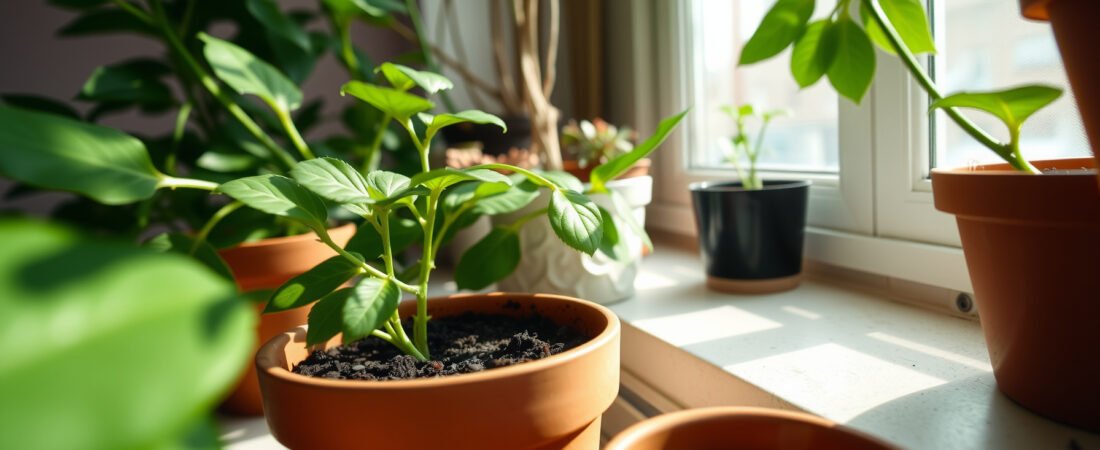
One honest nuance worth naming: how quickly you can fully eliminate fungus gnats depends on how many plants you’re dealing with, how warm your home runs (warmer temperatures accelerate the life cycle), and whether the gnats have spread from their original host plant to neighboring pots. A single infested succulent on a windowsill is a two-week problem. A 15-plant indoor garden where every pot shares a moisture-retaining soil mix is a 6–8 week project minimum, and the approach has to be applied systematically across every pot — not just the one where you first noticed adults flying. Similarly, just as How to Get Rid of Aphids Indoors and Outdoors makes clear that multi-plant situations require a coordinated approach rather than treating one plant in isolation, the same principle applies here with fungus gnats.
Once you’ve cleared an infestation and corrected the soil environment, fungus gnats rarely become a serious recurring problem — as long as you’ve actually addressed the root cause rather than just managing the adults. The plants you thought were struggling from overwatering or mysterious deficiencies will often rebound noticeably within a few weeks once their root systems are no longer under attack. That recovery alone is worth the effort of doing this right the first time.
Frequently Asked Questions
how do I know if I have fungus gnats in houseplant soil?
The easiest way to tell is to stick your finger about an inch into the soil — if you disturb tiny flies that look like fruit flies, those are almost certainly fungus gnats. You might also spot their larvae, which are small white worms with black heads, living in the top 2–3 inches of soil. Adult fungus gnats are about 1/8 inch long and tend to hover near the soil surface or fly up when you water your plants.
what kills fungus gnats in soil fast?
Hydrogen peroxide is one of the quickest options — mix 1 part 3% hydrogen peroxide with 4 parts water and drench the soil, which kills larvae on contact. Bacillus thuringiensis var. israelensis (Bti), sold under brands like Gnatrol or Mosquito Bits, is another effective treatment that wipes out larvae within a few days without harming your plants. For best results, repeat applications every 5–7 days for at least 3 weeks to break the full life cycle.
does letting soil dry out kill fungus gnats?
Yes, letting the top 2 inches of soil dry out completely between waterings is one of the most effective ways to kill fungus gnat larvae, since they can’t survive in dry conditions. Fungus gnat eggs and young larvae die within 24–48 hours without moisture, so overwatering is the number one reason infestations keep coming back. Switching to bottom watering can help you keep the surface dry while still getting water to the roots.
are yellow sticky traps effective for fungus gnats?
Yellow sticky traps are great for catching adult fungus gnats and measuring how bad your infestation is, but they won’t solve the problem on their own because they don’t kill the larvae in the soil. Place traps at soil level rather than up near the leaves, since adults tend to stay close to the surface. Use them alongside a soil treatment like Bti or hydrogen peroxide for the best results.
can fungus gnats in houseplant soil spread to other plants?
Absolutely — adult fungus gnats fly freely between plants and will lay eggs in any moist potting soil they find, so an infestation can spread through an entire collection quickly. Female gnats can lay up to 300 eggs at a time, which means a small problem can turn into a large one within 2–3 weeks. Isolate any heavily infested plants as soon as you spot the problem and treat all nearby plants at the same time to prevent re-infestation.
Disclaimer: This article is for informational purposes only and isn’t a substitute for professional pest control advice. Always read and follow the product label instructions exactly — label directions are legally binding and vary by brand and active ingredient. Keep all pesticides, baits and traps away from children and pets, ventilate treated areas as directed, and consider calling a licensed pest control professional if an infestation is large, recurring, or involves a structural pest like termites or carpenter ants.
One honest nuance worth naming: how quickly you can fully eliminate fungus gnats depends on how many plants you’re dealing with, how warm your home runs (warmer temperatures accelerate the life cycle), and whether the gnats have spread from their original host plant to neighboring pots. A single infested succulent on a windowsill is a two-week problem. A 15-plant indoor garden where every pot shares a moisture-retaining soil mix is a 6–8 week project minimum, and the approach has to be applied systematically across every pot — not just the one where you first noticed adults flying. Similarly, just as How to Get Rid of Aphids Indoors and Outdoors makes clear that multi-plant situations require a coordinated approach rather than treating one plant in isolation, the same principle applies here with fungus gnats.
Once you’ve cleared an infestation and corrected the soil environment, fungus gnats rarely become a serious recurring problem — as long as you’ve actually addressed the root cause rather than just managing the adults. The plants you thought were struggling from overwatering or mysterious deficiencies will often rebound noticeably within a few weeks once their root systems are no longer under attack. That recovery alone is worth the effort of doing this right the first time.
Frequently Asked Questions
how do I know if I have fungus gnats in houseplant soil?
what kills fungus gnats in soil fast?
does letting soil dry out kill fungus gnats?
are yellow sticky traps effective for fungus gnats?
can fungus gnats in houseplant soil spread to other plants?
Disclaimer: This article is for informational purposes only and isn’t a substitute for professional pest control advice. Always read and follow the product label instructions exactly — label directions are legally binding and vary by brand and active ingredient. Keep all pesticides, baits and traps away from children and pets, ventilate treated areas as directed, and consider calling a licensed pest control professional if an infestation is large, recurring, or involves a structural pest like termites or carpenter ants.
One honest nuance worth naming: how quickly you can fully eliminate fungus gnats depends on how many plants you’re dealing with, how warm your home runs (warmer temperatures accelerate the life cycle), and whether the gnats have spread from their original host plant to neighboring pots. A single infested succulent on a windowsill is a two-week problem. A 15-plant indoor garden where every pot shares a moisture-retaining soil mix is a 6–8 week project minimum, and the approach has to be applied systematically across every pot — not just the one where you first noticed adults flying. Similarly, just as How to Get Rid of Aphids Indoors and Outdoors makes clear that multi-plant situations require a coordinated approach rather than treating one plant in isolation, the same principle applies here with fungus gnats.
Once you’ve cleared an infestation and corrected the soil environment, fungus gnats rarely become a serious recurring problem — as long as you’ve actually addressed the root cause rather than just managing the adults. The plants you thought were struggling from overwatering or mysterious deficiencies will often rebound noticeably within a few weeks once their root systems are no longer under attack. That recovery alone is worth the effort of doing this right the first time.
Frequently Asked Questions
how do I know if I have fungus gnats in houseplant soil?
what kills fungus gnats in soil fast?
does letting soil dry out kill fungus gnats?
are yellow sticky traps effective for fungus gnats?
can fungus gnats in houseplant soil spread to other plants?
Disclaimer: This article is for informational purposes only and isn’t a substitute for professional pest control advice. Always read and follow the product label instructions exactly — label directions are legally binding and vary by brand and active ingredient. Keep all pesticides, baits and traps away from children and pets, ventilate treated areas as directed, and consider calling a licensed pest control professional if an infestation is large, recurring, or involves a structural pest like termites or carpenter ants.
One honest nuance worth naming: how quickly you can fully eliminate fungus gnats depends on how many plants you’re dealing with, how warm your home runs (warmer temperatures accelerate the life cycle), and whether the gnats have spread from their original host plant to neighboring pots. A single infested succulent on a windowsill is a two-week problem. A 15-plant indoor garden where every pot shares a moisture-retaining soil mix is a 6–8 week project minimum, and the approach has to be applied systematically across every pot — not just the one where you first noticed adults flying. Similarly, just as How to Get Rid of Aphids Indoors and Outdoors makes clear that multi-plant situations require a coordinated approach rather than treating one plant in isolation, the same principle applies here with fungus gnats.
Once you’ve cleared an infestation and corrected the soil environment, fungus gnats rarely become a serious recurring problem — as long as you’ve actually addressed the root cause rather than just managing the adults. The plants you thought were struggling from overwatering or mysterious deficiencies will often rebound noticeably within a few weeks once their root systems are no longer under attack. That recovery alone is worth the effort of doing this right the first time.
Frequently Asked Questions
how do I know if I have fungus gnats in houseplant soil?
what kills fungus gnats in soil fast?
does letting soil dry out kill fungus gnats?
are yellow sticky traps effective for fungus gnats?
can fungus gnats in houseplant soil spread to other plants?
Disclaimer: This article is for informational purposes only and isn’t a substitute for professional pest control advice. Always read and follow the product label instructions exactly — label directions are legally binding and vary by brand and active ingredient. Keep all pesticides, baits and traps away from children and pets, ventilate treated areas as directed, and consider calling a licensed pest control professional if an infestation is large, recurring, or involves a structural pest like termites or carpenter ants.
One honest nuance worth naming: how quickly you can fully eliminate fungus gnats depends on how many plants you’re dealing with, how warm your home runs (warmer temperatures accelerate the life cycle), and whether the gnats have spread from their original host plant to neighboring pots. A single infested succulent on a windowsill is a two-week problem. A 15-plant indoor garden where every pot shares a moisture-retaining soil mix is a 6–8 week project minimum, and the approach has to be applied systematically across every pot — not just the one where you first noticed adults flying. Similarly, just as How to Get Rid of Aphids Indoors and Outdoors makes clear that multi-plant situations require a coordinated approach rather than treating one plant in isolation, the same principle applies here with fungus gnats.
Once you’ve cleared an infestation and corrected the soil environment, fungus gnats rarely become a serious recurring problem — as long as you’ve actually addressed the root cause rather than just managing the adults. The plants you thought were struggling from overwatering or mysterious deficiencies will often rebound noticeably within a few weeks once their root systems are no longer under attack. That recovery alone is worth the effort of doing this right the first time.
Frequently Asked Questions
how do I know if I have fungus gnats in houseplant soil?
what kills fungus gnats in soil fast?
does letting soil dry out kill fungus gnats?
are yellow sticky traps effective for fungus gnats?
can fungus gnats in houseplant soil spread to other plants?
Disclaimer: This article is for informational purposes only and isn’t a substitute for professional pest control advice. Always read and follow the product label instructions exactly — label directions are legally binding and vary by brand and active ingredient. Keep all pesticides, baits and traps away from children and pets, ventilate treated areas as directed, and consider calling a licensed pest control professional if an infestation is large, recurring, or involves a structural pest like termites or carpenter ants.
- Use the finger test, not a schedule: Push your finger 2 inches into the soil. Water only when it feels dry at that depth, not when a week has passed. This single change eliminates the sustained surface moisture that female gnats need to oviposit successfully.
- Inspect new plants before they come inside: Nursery plants are a primary entry point for fungus gnats. Let any new purchase sit in quarantine — away from your other plants — for at least two weeks, and check for adult activity daily using a sticky trap placed flat on the soil surface.
- Store unused potting mix sealed: Open bags of potting mix left in a garage or shed collect moisture and can harbor fungus gnat eggs before you’ve even used the soil. Keep unused mix in a sealed container or heavy-duty zip bag.
- Remove decomposing organic material: Fallen leaves, dead blooms, and rotting mulch on the surface of potted soil are feeding sites for larvae. Clear them regularly, especially during high-humidity months when decomposition accelerates.
One honest nuance worth naming: how quickly you can fully eliminate fungus gnats depends on how many plants you’re dealing with, how warm your home runs (warmer temperatures accelerate the life cycle), and whether the gnats have spread from their original host plant to neighboring pots. A single infested succulent on a windowsill is a two-week problem. A 15-plant indoor garden where every pot shares a moisture-retaining soil mix is a 6–8 week project minimum, and the approach has to be applied systematically across every pot — not just the one where you first noticed adults flying. Similarly, just as How to Get Rid of Aphids Indoors and Outdoors makes clear that multi-plant situations require a coordinated approach rather than treating one plant in isolation, the same principle applies here with fungus gnats.
Once you’ve cleared an infestation and corrected the soil environment, fungus gnats rarely become a serious recurring problem — as long as you’ve actually addressed the root cause rather than just managing the adults. The plants you thought were struggling from overwatering or mysterious deficiencies will often rebound noticeably within a few weeks once their root systems are no longer under attack. That recovery alone is worth the effort of doing this right the first time.
Frequently Asked Questions
how do I know if I have fungus gnats in houseplant soil?
what kills fungus gnats in soil fast?
does letting soil dry out kill fungus gnats?
are yellow sticky traps effective for fungus gnats?
can fungus gnats in houseplant soil spread to other plants?
Disclaimer: This article is for informational purposes only and isn’t a substitute for professional pest control advice. Always read and follow the product label instructions exactly — label directions are legally binding and vary by brand and active ingredient. Keep all pesticides, baits and traps away from children and pets, ventilate treated areas as directed, and consider calling a licensed pest control professional if an infestation is large, recurring, or involves a structural pest like termites or carpenter ants.
- Use the finger test, not a schedule: Push your finger 2 inches into the soil. Water only when it feels dry at that depth, not when a week has passed. This single change eliminates the sustained surface moisture that female gnats need to oviposit successfully.
- Inspect new plants before they come inside: Nursery plants are a primary entry point for fungus gnats. Let any new purchase sit in quarantine — away from your other plants — for at least two weeks, and check for adult activity daily using a sticky trap placed flat on the soil surface.
- Store unused potting mix sealed: Open bags of potting mix left in a garage or shed collect moisture and can harbor fungus gnat eggs before you’ve even used the soil. Keep unused mix in a sealed container or heavy-duty zip bag.
- Remove decomposing organic material: Fallen leaves, dead blooms, and rotting mulch on the surface of potted soil are feeding sites for larvae. Clear them regularly, especially during high-humidity months when decomposition accelerates.
One honest nuance worth naming: how quickly you can fully eliminate fungus gnats depends on how many plants you’re dealing with, how warm your home runs (warmer temperatures accelerate the life cycle), and whether the gnats have spread from their original host plant to neighboring pots. A single infested succulent on a windowsill is a two-week problem. A 15-plant indoor garden where every pot shares a moisture-retaining soil mix is a 6–8 week project minimum, and the approach has to be applied systematically across every pot — not just the one where you first noticed adults flying. Similarly, just as How to Get Rid of Aphids Indoors and Outdoors makes clear that multi-plant situations require a coordinated approach rather than treating one plant in isolation, the same principle applies here with fungus gnats.
Once you’ve cleared an infestation and corrected the soil environment, fungus gnats rarely become a serious recurring problem — as long as you’ve actually addressed the root cause rather than just managing the adults. The plants you thought were struggling from overwatering or mysterious deficiencies will often rebound noticeably within a few weeks once their root systems are no longer under attack. That recovery alone is worth the effort of doing this right the first time.
Frequently Asked Questions
how do I know if I have fungus gnats in houseplant soil?
what kills fungus gnats in soil fast?
does letting soil dry out kill fungus gnats?
are yellow sticky traps effective for fungus gnats?
can fungus gnats in houseplant soil spread to other plants?
Disclaimer: This article is for informational purposes only and isn’t a substitute for professional pest control advice. Always read and follow the product label instructions exactly — label directions are legally binding and vary by brand and active ingredient. Keep all pesticides, baits and traps away from children and pets, ventilate treated areas as directed, and consider calling a licensed pest control professional if an infestation is large, recurring, or involves a structural pest like termites or carpenter ants.
Which Treatments Are Actually Worth Your Money?
The pest control aisle is full of products that kill adult fungus gnats in seconds but do absolutely nothing for the larvae living rent-free in your soil. Most aerosol sprays fall into this category. You’ll spray, watch adults drop, feel like you’ve solved something, and be right back to square one in a week. Knowing what a product actually targets before you buy it saves you both time and money.
| Treatment | Target Stage | Effectiveness |
|---|---|---|
| Bti (Mosquito Bits drench) | Larvae | High — kills larvae within 24–48 hours, safe for plants and pets |
| Hydrogen peroxide drench (3%) | Larvae + eggs | High short-term — use as a first strike, not ongoing treatment |
| Yellow sticky traps | Adults | Moderate — best used for monitoring, not elimination |
| Pyrethrin-based aerosol sprays | Adults only | Low — kills on contact but doesn’t touch soil-stage pests |
Neem oil is worth a separate mention because it’s commonly recommended but inconsistently effective against fungus gnats specifically. Azadirachtin — the active compound in raw neem — does disrupt larval development, but most commercial neem oil products are diluted enough that soil drench concentrations aren’t reliable. If you use neem, choose a concentrated azadirachtin product like AzaMax rather than garden-grade neem oil, and still combine it with Bti for backup.
“The biggest mistake I see homeowners make with fungus gnats is treating the adult flight stage as the primary problem. Adults live only about a week and don’t feed on plant tissue at all. The larvae are where you need to focus your chemistry — specifically a biological control like Bti applied as a consistent soil drench over multiple life cycles. One treatment will never be enough.”
Dr. Marcus Hale, Board-Certified Entomologist and University Extension Specialist in Urban Horticulture Pest Management
When Fungus Gnats Are a Soil Problem, Not a Pest Problem
Here’s something most fungus gnat articles won’t tell you: if you have a chronic, recurring infestation that bounces back within two weeks of treatment, the issue might be your potting mix more than anything else. Many commercial potting soils — especially those marketed for moisture retention — are loaded with peat moss, bark fines, and composted organic matter that stay wet at the core for days or weeks. That’s a fungus gnat nursery. You’re not just inviting them in; you’re providing ideal breeding conditions at a structural level.
Switching to a chunkier, better-draining mix — one that includes perlite at 20–30% by volume, coarse orchid bark, or pumice — changes the substrate environment enough that egg survival rates drop significantly. This is especially true for succulents and cacti, which are notoriously overpotted in dense, moisture-retaining mixes that absolutely do not suit them. Honestly, repotting into a better-draining substrate alongside your treatment plan is one of the highest-leverage moves you can make, and almost no one mentions it. For context, just as you’d address soil composition when dealing with garden pests (the way Best Mole and Vole Repellents for Lawn and Garden covers how habitat changes reduce pressure outdoors), the same logic applies indoors — fix the environment, not just the symptom.
Pro-Tip: Before repotting, gently unpot your plant and inspect the root ball. Healthy roots are white or light tan and firm. If you see brown, mushy, or absent fine root hairs, fungus gnat larvae have already caused meaningful damage. Trim the damaged roots back to healthy tissue, let the root ball air-dry for an hour, and repot into fresh well-draining mix — this resets the environment and removes the larvae-dense soil in one move.
How to Make Sure Fungus Gnats Don’t Come Back
Prevention comes down to three habits that are easy to maintain once you’ve reset the soil environment. These aren’t complicated, but they require a small shift in how most houseplant owners think about watering — specifically, moving away from scheduled watering and toward reactive watering based on actual soil moisture.
- Use the finger test, not a schedule: Push your finger 2 inches into the soil. Water only when it feels dry at that depth, not when a week has passed. This single change eliminates the sustained surface moisture that female gnats need to oviposit successfully.
- Inspect new plants before they come inside: Nursery plants are a primary entry point for fungus gnats. Let any new purchase sit in quarantine — away from your other plants — for at least two weeks, and check for adult activity daily using a sticky trap placed flat on the soil surface.
- Store unused potting mix sealed: Open bags of potting mix left in a garage or shed collect moisture and can harbor fungus gnat eggs before you’ve even used the soil. Keep unused mix in a sealed container or heavy-duty zip bag.
- Remove decomposing organic material: Fallen leaves, dead blooms, and rotting mulch on the surface of potted soil are feeding sites for larvae. Clear them regularly, especially during high-humidity months when decomposition accelerates.
One honest nuance worth naming: how quickly you can fully eliminate fungus gnats depends on how many plants you’re dealing with, how warm your home runs (warmer temperatures accelerate the life cycle), and whether the gnats have spread from their original host plant to neighboring pots. A single infested succulent on a windowsill is a two-week problem. A 15-plant indoor garden where every pot shares a moisture-retaining soil mix is a 6–8 week project minimum, and the approach has to be applied systematically across every pot — not just the one where you first noticed adults flying. Similarly, just as How to Get Rid of Aphids Indoors and Outdoors makes clear that multi-plant situations require a coordinated approach rather than treating one plant in isolation, the same principle applies here with fungus gnats.
Once you’ve cleared an infestation and corrected the soil environment, fungus gnats rarely become a serious recurring problem — as long as you’ve actually addressed the root cause rather than just managing the adults. The plants you thought were struggling from overwatering or mysterious deficiencies will often rebound noticeably within a few weeks once their root systems are no longer under attack. That recovery alone is worth the effort of doing this right the first time.
Frequently Asked Questions
how do I know if I have fungus gnats in houseplant soil?
what kills fungus gnats in soil fast?
does letting soil dry out kill fungus gnats?
are yellow sticky traps effective for fungus gnats?
can fungus gnats in houseplant soil spread to other plants?
Disclaimer: This article is for informational purposes only and isn’t a substitute for professional pest control advice. Always read and follow the product label instructions exactly — label directions are legally binding and vary by brand and active ingredient. Keep all pesticides, baits and traps away from children and pets, ventilate treated areas as directed, and consider calling a licensed pest control professional if an infestation is large, recurring, or involves a structural pest like termites or carpenter ants.
Which Treatments Are Actually Worth Your Money?
The pest control aisle is full of products that kill adult fungus gnats in seconds but do absolutely nothing for the larvae living rent-free in your soil. Most aerosol sprays fall into this category. You’ll spray, watch adults drop, feel like you’ve solved something, and be right back to square one in a week. Knowing what a product actually targets before you buy it saves you both time and money.
| Treatment | Target Stage | Effectiveness |
|---|---|---|
| Bti (Mosquito Bits drench) | Larvae | High — kills larvae within 24–48 hours, safe for plants and pets |
| Hydrogen peroxide drench (3%) | Larvae + eggs | High short-term — use as a first strike, not ongoing treatment |
| Yellow sticky traps | Adults | Moderate — best used for monitoring, not elimination |
| Pyrethrin-based aerosol sprays | Adults only | Low — kills on contact but doesn’t touch soil-stage pests |
Neem oil is worth a separate mention because it’s commonly recommended but inconsistently effective against fungus gnats specifically. Azadirachtin — the active compound in raw neem — does disrupt larval development, but most commercial neem oil products are diluted enough that soil drench concentrations aren’t reliable. If you use neem, choose a concentrated azadirachtin product like AzaMax rather than garden-grade neem oil, and still combine it with Bti for backup.
“The biggest mistake I see homeowners make with fungus gnats is treating the adult flight stage as the primary problem. Adults live only about a week and don’t feed on plant tissue at all. The larvae are where you need to focus your chemistry — specifically a biological control like Bti applied as a consistent soil drench over multiple life cycles. One treatment will never be enough.”
Dr. Marcus Hale, Board-Certified Entomologist and University Extension Specialist in Urban Horticulture Pest Management
When Fungus Gnats Are a Soil Problem, Not a Pest Problem
Here’s something most fungus gnat articles won’t tell you: if you have a chronic, recurring infestation that bounces back within two weeks of treatment, the issue might be your potting mix more than anything else. Many commercial potting soils — especially those marketed for moisture retention — are loaded with peat moss, bark fines, and composted organic matter that stay wet at the core for days or weeks. That’s a fungus gnat nursery. You’re not just inviting them in; you’re providing ideal breeding conditions at a structural level.
Switching to a chunkier, better-draining mix — one that includes perlite at 20–30% by volume, coarse orchid bark, or pumice — changes the substrate environment enough that egg survival rates drop significantly. This is especially true for succulents and cacti, which are notoriously overpotted in dense, moisture-retaining mixes that absolutely do not suit them. Honestly, repotting into a better-draining substrate alongside your treatment plan is one of the highest-leverage moves you can make, and almost no one mentions it. For context, just as you’d address soil composition when dealing with garden pests (the way Best Mole and Vole Repellents for Lawn and Garden covers how habitat changes reduce pressure outdoors), the same logic applies indoors — fix the environment, not just the symptom.
Pro-Tip: Before repotting, gently unpot your plant and inspect the root ball. Healthy roots are white or light tan and firm. If you see brown, mushy, or absent fine root hairs, fungus gnat larvae have already caused meaningful damage. Trim the damaged roots back to healthy tissue, let the root ball air-dry for an hour, and repot into fresh well-draining mix — this resets the environment and removes the larvae-dense soil in one move.
How to Make Sure Fungus Gnats Don’t Come Back
Prevention comes down to three habits that are easy to maintain once you’ve reset the soil environment. These aren’t complicated, but they require a small shift in how most houseplant owners think about watering — specifically, moving away from scheduled watering and toward reactive watering based on actual soil moisture.
- Use the finger test, not a schedule: Push your finger 2 inches into the soil. Water only when it feels dry at that depth, not when a week has passed. This single change eliminates the sustained surface moisture that female gnats need to oviposit successfully.
- Inspect new plants before they come inside: Nursery plants are a primary entry point for fungus gnats. Let any new purchase sit in quarantine — away from your other plants — for at least two weeks, and check for adult activity daily using a sticky trap placed flat on the soil surface.
- Store unused potting mix sealed: Open bags of potting mix left in a garage or shed collect moisture and can harbor fungus gnat eggs before you’ve even used the soil. Keep unused mix in a sealed container or heavy-duty zip bag.
- Remove decomposing organic material: Fallen leaves, dead blooms, and rotting mulch on the surface of potted soil are feeding sites for larvae. Clear them regularly, especially during high-humidity months when decomposition accelerates.
One honest nuance worth naming: how quickly you can fully eliminate fungus gnats depends on how many plants you’re dealing with, how warm your home runs (warmer temperatures accelerate the life cycle), and whether the gnats have spread from their original host plant to neighboring pots. A single infested succulent on a windowsill is a two-week problem. A 15-plant indoor garden where every pot shares a moisture-retaining soil mix is a 6–8 week project minimum, and the approach has to be applied systematically across every pot — not just the one where you first noticed adults flying. Similarly, just as How to Get Rid of Aphids Indoors and Outdoors makes clear that multi-plant situations require a coordinated approach rather than treating one plant in isolation, the same principle applies here with fungus gnats.
Once you’ve cleared an infestation and corrected the soil environment, fungus gnats rarely become a serious recurring problem — as long as you’ve actually addressed the root cause rather than just managing the adults. The plants you thought were struggling from overwatering or mysterious deficiencies will often rebound noticeably within a few weeks once their root systems are no longer under attack. That recovery alone is worth the effort of doing this right the first time.
Frequently Asked Questions
how do I know if I have fungus gnats in houseplant soil?
what kills fungus gnats in soil fast?
does letting soil dry out kill fungus gnats?
are yellow sticky traps effective for fungus gnats?
can fungus gnats in houseplant soil spread to other plants?
Disclaimer: This article is for informational purposes only and isn’t a substitute for professional pest control advice. Always read and follow the product label instructions exactly — label directions are legally binding and vary by brand and active ingredient. Keep all pesticides, baits and traps away from children and pets, ventilate treated areas as directed, and consider calling a licensed pest control professional if an infestation is large, recurring, or involves a structural pest like termites or carpenter ants.
Which Treatments Are Actually Worth Your Money?
The pest control aisle is full of products that kill adult fungus gnats in seconds but do absolutely nothing for the larvae living rent-free in your soil. Most aerosol sprays fall into this category. You’ll spray, watch adults drop, feel like you’ve solved something, and be right back to square one in a week. Knowing what a product actually targets before you buy it saves you both time and money.
| Treatment | Target Stage | Effectiveness |
|---|---|---|
| Bti (Mosquito Bits drench) | Larvae | High — kills larvae within 24–48 hours, safe for plants and pets |
| Hydrogen peroxide drench (3%) | Larvae + eggs | High short-term — use as a first strike, not ongoing treatment |
| Yellow sticky traps | Adults | Moderate — best used for monitoring, not elimination |
| Pyrethrin-based aerosol sprays | Adults only | Low — kills on contact but doesn’t touch soil-stage pests |
Neem oil is worth a separate mention because it’s commonly recommended but inconsistently effective against fungus gnats specifically. Azadirachtin — the active compound in raw neem — does disrupt larval development, but most commercial neem oil products are diluted enough that soil drench concentrations aren’t reliable. If you use neem, choose a concentrated azadirachtin product like AzaMax rather than garden-grade neem oil, and still combine it with Bti for backup.
“The biggest mistake I see homeowners make with fungus gnats is treating the adult flight stage as the primary problem. Adults live only about a week and don’t feed on plant tissue at all. The larvae are where you need to focus your chemistry — specifically a biological control like Bti applied as a consistent soil drench over multiple life cycles. One treatment will never be enough.”
Dr. Marcus Hale, Board-Certified Entomologist and University Extension Specialist in Urban Horticulture Pest Management
When Fungus Gnats Are a Soil Problem, Not a Pest Problem
Here’s something most fungus gnat articles won’t tell you: if you have a chronic, recurring infestation that bounces back within two weeks of treatment, the issue might be your potting mix more than anything else. Many commercial potting soils — especially those marketed for moisture retention — are loaded with peat moss, bark fines, and composted organic matter that stay wet at the core for days or weeks. That’s a fungus gnat nursery. You’re not just inviting them in; you’re providing ideal breeding conditions at a structural level.
Switching to a chunkier, better-draining mix — one that includes perlite at 20–30% by volume, coarse orchid bark, or pumice — changes the substrate environment enough that egg survival rates drop significantly. This is especially true for succulents and cacti, which are notoriously overpotted in dense, moisture-retaining mixes that absolutely do not suit them. Honestly, repotting into a better-draining substrate alongside your treatment plan is one of the highest-leverage moves you can make, and almost no one mentions it. For context, just as you’d address soil composition when dealing with garden pests (the way Best Mole and Vole Repellents for Lawn and Garden covers how habitat changes reduce pressure outdoors), the same logic applies indoors — fix the environment, not just the symptom.
Pro-Tip: Before repotting, gently unpot your plant and inspect the root ball. Healthy roots are white or light tan and firm. If you see brown, mushy, or absent fine root hairs, fungus gnat larvae have already caused meaningful damage. Trim the damaged roots back to healthy tissue, let the root ball air-dry for an hour, and repot into fresh well-draining mix — this resets the environment and removes the larvae-dense soil in one move.
How to Make Sure Fungus Gnats Don’t Come Back
Prevention comes down to three habits that are easy to maintain once you’ve reset the soil environment. These aren’t complicated, but they require a small shift in how most houseplant owners think about watering — specifically, moving away from scheduled watering and toward reactive watering based on actual soil moisture.
- Use the finger test, not a schedule: Push your finger 2 inches into the soil. Water only when it feels dry at that depth, not when a week has passed. This single change eliminates the sustained surface moisture that female gnats need to oviposit successfully.
- Inspect new plants before they come inside: Nursery plants are a primary entry point for fungus gnats. Let any new purchase sit in quarantine — away from your other plants — for at least two weeks, and check for adult activity daily using a sticky trap placed flat on the soil surface.
- Store unused potting mix sealed: Open bags of potting mix left in a garage or shed collect moisture and can harbor fungus gnat eggs before you’ve even used the soil. Keep unused mix in a sealed container or heavy-duty zip bag.
- Remove decomposing organic material: Fallen leaves, dead blooms, and rotting mulch on the surface of potted soil are feeding sites for larvae. Clear them regularly, especially during high-humidity months when decomposition accelerates.
One honest nuance worth naming: how quickly you can fully eliminate fungus gnats depends on how many plants you’re dealing with, how warm your home runs (warmer temperatures accelerate the life cycle), and whether the gnats have spread from their original host plant to neighboring pots. A single infested succulent on a windowsill is a two-week problem. A 15-plant indoor garden where every pot shares a moisture-retaining soil mix is a 6–8 week project minimum, and the approach has to be applied systematically across every pot — not just the one where you first noticed adults flying. Similarly, just as How to Get Rid of Aphids Indoors and Outdoors makes clear that multi-plant situations require a coordinated approach rather than treating one plant in isolation, the same principle applies here with fungus gnats.
Once you’ve cleared an infestation and corrected the soil environment, fungus gnats rarely become a serious recurring problem — as long as you’ve actually addressed the root cause rather than just managing the adults. The plants you thought were struggling from overwatering or mysterious deficiencies will often rebound noticeably within a few weeks once their root systems are no longer under attack. That recovery alone is worth the effort of doing this right the first time.
Frequently Asked Questions
how do I know if I have fungus gnats in houseplant soil?
what kills fungus gnats in soil fast?
does letting soil dry out kill fungus gnats?
are yellow sticky traps effective for fungus gnats?
can fungus gnats in houseplant soil spread to other plants?
Disclaimer: This article is for informational purposes only and isn’t a substitute for professional pest control advice. Always read and follow the product label instructions exactly — label directions are legally binding and vary by brand and active ingredient. Keep all pesticides, baits and traps away from children and pets, ventilate treated areas as directed, and consider calling a licensed pest control professional if an infestation is large, recurring, or involves a structural pest like termites or carpenter ants.
Which Treatments Are Actually Worth Your Money?
The pest control aisle is full of products that kill adult fungus gnats in seconds but do absolutely nothing for the larvae living rent-free in your soil. Most aerosol sprays fall into this category. You’ll spray, watch adults drop, feel like you’ve solved something, and be right back to square one in a week. Knowing what a product actually targets before you buy it saves you both time and money.
| Treatment | Target Stage | Effectiveness |
|---|---|---|
| Bti (Mosquito Bits drench) | Larvae | High — kills larvae within 24–48 hours, safe for plants and pets |
| Hydrogen peroxide drench (3%) | Larvae + eggs | High short-term — use as a first strike, not ongoing treatment |
| Yellow sticky traps | Adults | Moderate — best used for monitoring, not elimination |
| Pyrethrin-based aerosol sprays | Adults only | Low — kills on contact but doesn’t touch soil-stage pests |
Neem oil is worth a separate mention because it’s commonly recommended but inconsistently effective against fungus gnats specifically. Azadirachtin — the active compound in raw neem — does disrupt larval development, but most commercial neem oil products are diluted enough that soil drench concentrations aren’t reliable. If you use neem, choose a concentrated azadirachtin product like AzaMax rather than garden-grade neem oil, and still combine it with Bti for backup.
“The biggest mistake I see homeowners make with fungus gnats is treating the adult flight stage as the primary problem. Adults live only about a week and don’t feed on plant tissue at all. The larvae are where you need to focus your chemistry — specifically a biological control like Bti applied as a consistent soil drench over multiple life cycles. One treatment will never be enough.”
Dr. Marcus Hale, Board-Certified Entomologist and University Extension Specialist in Urban Horticulture Pest Management
When Fungus Gnats Are a Soil Problem, Not a Pest Problem
Here’s something most fungus gnat articles won’t tell you: if you have a chronic, recurring infestation that bounces back within two weeks of treatment, the issue might be your potting mix more than anything else. Many commercial potting soils — especially those marketed for moisture retention — are loaded with peat moss, bark fines, and composted organic matter that stay wet at the core for days or weeks. That’s a fungus gnat nursery. You’re not just inviting them in; you’re providing ideal breeding conditions at a structural level.
Switching to a chunkier, better-draining mix — one that includes perlite at 20–30% by volume, coarse orchid bark, or pumice — changes the substrate environment enough that egg survival rates drop significantly. This is especially true for succulents and cacti, which are notoriously overpotted in dense, moisture-retaining mixes that absolutely do not suit them. Honestly, repotting into a better-draining substrate alongside your treatment plan is one of the highest-leverage moves you can make, and almost no one mentions it. For context, just as you’d address soil composition when dealing with garden pests (the way Best Mole and Vole Repellents for Lawn and Garden covers how habitat changes reduce pressure outdoors), the same logic applies indoors — fix the environment, not just the symptom.
Pro-Tip: Before repotting, gently unpot your plant and inspect the root ball. Healthy roots are white or light tan and firm. If you see brown, mushy, or absent fine root hairs, fungus gnat larvae have already caused meaningful damage. Trim the damaged roots back to healthy tissue, let the root ball air-dry for an hour, and repot into fresh well-draining mix — this resets the environment and removes the larvae-dense soil in one move.
How to Make Sure Fungus Gnats Don’t Come Back
Prevention comes down to three habits that are easy to maintain once you’ve reset the soil environment. These aren’t complicated, but they require a small shift in how most houseplant owners think about watering — specifically, moving away from scheduled watering and toward reactive watering based on actual soil moisture.
- Use the finger test, not a schedule: Push your finger 2 inches into the soil. Water only when it feels dry at that depth, not when a week has passed. This single change eliminates the sustained surface moisture that female gnats need to oviposit successfully.
- Inspect new plants before they come inside: Nursery plants are a primary entry point for fungus gnats. Let any new purchase sit in quarantine — away from your other plants — for at least two weeks, and check for adult activity daily using a sticky trap placed flat on the soil surface.
- Store unused potting mix sealed: Open bags of potting mix left in a garage or shed collect moisture and can harbor fungus gnat eggs before you’ve even used the soil. Keep unused mix in a sealed container or heavy-duty zip bag.
- Remove decomposing organic material: Fallen leaves, dead blooms, and rotting mulch on the surface of potted soil are feeding sites for larvae. Clear them regularly, especially during high-humidity months when decomposition accelerates.
One honest nuance worth naming: how quickly you can fully eliminate fungus gnats depends on how many plants you’re dealing with, how warm your home runs (warmer temperatures accelerate the life cycle), and whether the gnats have spread from their original host plant to neighboring pots. A single infested succulent on a windowsill is a two-week problem. A 15-plant indoor garden where every pot shares a moisture-retaining soil mix is a 6–8 week project minimum, and the approach has to be applied systematically across every pot — not just the one where you first noticed adults flying. Similarly, just as How to Get Rid of Aphids Indoors and Outdoors makes clear that multi-plant situations require a coordinated approach rather than treating one plant in isolation, the same principle applies here with fungus gnats.
Once you’ve cleared an infestation and corrected the soil environment, fungus gnats rarely become a serious recurring problem — as long as you’ve actually addressed the root cause rather than just managing the adults. The plants you thought were struggling from overwatering or mysterious deficiencies will often rebound noticeably within a few weeks once their root systems are no longer under attack. That recovery alone is worth the effort of doing this right the first time.
Frequently Asked Questions
how do I know if I have fungus gnats in houseplant soil?
what kills fungus gnats in soil fast?
does letting soil dry out kill fungus gnats?
are yellow sticky traps effective for fungus gnats?
can fungus gnats in houseplant soil spread to other plants?
Disclaimer: This article is for informational purposes only and isn’t a substitute for professional pest control advice. Always read and follow the product label instructions exactly — label directions are legally binding and vary by brand and active ingredient. Keep all pesticides, baits and traps away from children and pets, ventilate treated areas as directed, and consider calling a licensed pest control professional if an infestation is large, recurring, or involves a structural pest like termites or carpenter ants.
Which Treatments Are Actually Worth Your Money?
The pest control aisle is full of products that kill adult fungus gnats in seconds but do absolutely nothing for the larvae living rent-free in your soil. Most aerosol sprays fall into this category. You’ll spray, watch adults drop, feel like you’ve solved something, and be right back to square one in a week. Knowing what a product actually targets before you buy it saves you both time and money.
| Treatment | Target Stage | Effectiveness |
|---|---|---|
| Bti (Mosquito Bits drench) | Larvae | High — kills larvae within 24–48 hours, safe for plants and pets |
| Hydrogen peroxide drench (3%) | Larvae + eggs | High short-term — use as a first strike, not ongoing treatment |
| Yellow sticky traps | Adults | Moderate — best used for monitoring, not elimination |
| Pyrethrin-based aerosol sprays | Adults only | Low — kills on contact but doesn’t touch soil-stage pests |
Neem oil is worth a separate mention because it’s commonly recommended but inconsistently effective against fungus gnats specifically. Azadirachtin — the active compound in raw neem — does disrupt larval development, but most commercial neem oil products are diluted enough that soil drench concentrations aren’t reliable. If you use neem, choose a concentrated azadirachtin product like AzaMax rather than garden-grade neem oil, and still combine it with Bti for backup.
“The biggest mistake I see homeowners make with fungus gnats is treating the adult flight stage as the primary problem. Adults live only about a week and don’t feed on plant tissue at all. The larvae are where you need to focus your chemistry — specifically a biological control like Bti applied as a consistent soil drench over multiple life cycles. One treatment will never be enough.”
Dr. Marcus Hale, Board-Certified Entomologist and University Extension Specialist in Urban Horticulture Pest Management
When Fungus Gnats Are a Soil Problem, Not a Pest Problem
Here’s something most fungus gnat articles won’t tell you: if you have a chronic, recurring infestation that bounces back within two weeks of treatment, the issue might be your potting mix more than anything else. Many commercial potting soils — especially those marketed for moisture retention — are loaded with peat moss, bark fines, and composted organic matter that stay wet at the core for days or weeks. That’s a fungus gnat nursery. You’re not just inviting them in; you’re providing ideal breeding conditions at a structural level.
Switching to a chunkier, better-draining mix — one that includes perlite at 20–30% by volume, coarse orchid bark, or pumice — changes the substrate environment enough that egg survival rates drop significantly. This is especially true for succulents and cacti, which are notoriously overpotted in dense, moisture-retaining mixes that absolutely do not suit them. Honestly, repotting into a better-draining substrate alongside your treatment plan is one of the highest-leverage moves you can make, and almost no one mentions it. For context, just as you’d address soil composition when dealing with garden pests (the way Best Mole and Vole Repellents for Lawn and Garden covers how habitat changes reduce pressure outdoors), the same logic applies indoors — fix the environment, not just the symptom.
Pro-Tip: Before repotting, gently unpot your plant and inspect the root ball. Healthy roots are white or light tan and firm. If you see brown, mushy, or absent fine root hairs, fungus gnat larvae have already caused meaningful damage. Trim the damaged roots back to healthy tissue, let the root ball air-dry for an hour, and repot into fresh well-draining mix — this resets the environment and removes the larvae-dense soil in one move.
How to Make Sure Fungus Gnats Don’t Come Back
Prevention comes down to three habits that are easy to maintain once you’ve reset the soil environment. These aren’t complicated, but they require a small shift in how most houseplant owners think about watering — specifically, moving away from scheduled watering and toward reactive watering based on actual soil moisture.
- Use the finger test, not a schedule: Push your finger 2 inches into the soil. Water only when it feels dry at that depth, not when a week has passed. This single change eliminates the sustained surface moisture that female gnats need to oviposit successfully.
- Inspect new plants before they come inside: Nursery plants are a primary entry point for fungus gnats. Let any new purchase sit in quarantine — away from your other plants — for at least two weeks, and check for adult activity daily using a sticky trap placed flat on the soil surface.
- Store unused potting mix sealed: Open bags of potting mix left in a garage or shed collect moisture and can harbor fungus gnat eggs before you’ve even used the soil. Keep unused mix in a sealed container or heavy-duty zip bag.
- Remove decomposing organic material: Fallen leaves, dead blooms, and rotting mulch on the surface of potted soil are feeding sites for larvae. Clear them regularly, especially during high-humidity months when decomposition accelerates.
One honest nuance worth naming: how quickly you can fully eliminate fungus gnats depends on how many plants you’re dealing with, how warm your home runs (warmer temperatures accelerate the life cycle), and whether the gnats have spread from their original host plant to neighboring pots. A single infested succulent on a windowsill is a two-week problem. A 15-plant indoor garden where every pot shares a moisture-retaining soil mix is a 6–8 week project minimum, and the approach has to be applied systematically across every pot — not just the one where you first noticed adults flying. Similarly, just as How to Get Rid of Aphids Indoors and Outdoors makes clear that multi-plant situations require a coordinated approach rather than treating one plant in isolation, the same principle applies here with fungus gnats.
Once you’ve cleared an infestation and corrected the soil environment, fungus gnats rarely become a serious recurring problem — as long as you’ve actually addressed the root cause rather than just managing the adults. The plants you thought were struggling from overwatering or mysterious deficiencies will often rebound noticeably within a few weeks once their root systems are no longer under attack. That recovery alone is worth the effort of doing this right the first time.
Frequently Asked Questions
how do I know if I have fungus gnats in houseplant soil?
what kills fungus gnats in soil fast?
does letting soil dry out kill fungus gnats?
are yellow sticky traps effective for fungus gnats?
can fungus gnats in houseplant soil spread to other plants?
Disclaimer: This article is for informational purposes only and isn’t a substitute for professional pest control advice. Always read and follow the product label instructions exactly — label directions are legally binding and vary by brand and active ingredient. Keep all pesticides, baits and traps away from children and pets, ventilate treated areas as directed, and consider calling a licensed pest control professional if an infestation is large, recurring, or involves a structural pest like termites or carpenter ants.
Which Treatments Are Actually Worth Your Money?
The pest control aisle is full of products that kill adult fungus gnats in seconds but do absolutely nothing for the larvae living rent-free in your soil. Most aerosol sprays fall into this category. You’ll spray, watch adults drop, feel like you’ve solved something, and be right back to square one in a week. Knowing what a product actually targets before you buy it saves you both time and money.
| Treatment | Target Stage | Effectiveness |
|---|---|---|
| Bti (Mosquito Bits drench) | Larvae | High — kills larvae within 24–48 hours, safe for plants and pets |
| Hydrogen peroxide drench (3%) | Larvae + eggs | High short-term — use as a first strike, not ongoing treatment |
| Yellow sticky traps | Adults | Moderate — best used for monitoring, not elimination |
| Pyrethrin-based aerosol sprays | Adults only | Low — kills on contact but doesn’t touch soil-stage pests |
Neem oil is worth a separate mention because it’s commonly recommended but inconsistently effective against fungus gnats specifically. Azadirachtin — the active compound in raw neem — does disrupt larval development, but most commercial neem oil products are diluted enough that soil drench concentrations aren’t reliable. If you use neem, choose a concentrated azadirachtin product like AzaMax rather than garden-grade neem oil, and still combine it with Bti for backup.
“The biggest mistake I see homeowners make with fungus gnats is treating the adult flight stage as the primary problem. Adults live only about a week and don’t feed on plant tissue at all. The larvae are where you need to focus your chemistry — specifically a biological control like Bti applied as a consistent soil drench over multiple life cycles. One treatment will never be enough.”
Dr. Marcus Hale, Board-Certified Entomologist and University Extension Specialist in Urban Horticulture Pest Management
When Fungus Gnats Are a Soil Problem, Not a Pest Problem
Here’s something most fungus gnat articles won’t tell you: if you have a chronic, recurring infestation that bounces back within two weeks of treatment, the issue might be your potting mix more than anything else. Many commercial potting soils — especially those marketed for moisture retention — are loaded with peat moss, bark fines, and composted organic matter that stay wet at the core for days or weeks. That’s a fungus gnat nursery. You’re not just inviting them in; you’re providing ideal breeding conditions at a structural level.
Switching to a chunkier, better-draining mix — one that includes perlite at 20–30% by volume, coarse orchid bark, or pumice — changes the substrate environment enough that egg survival rates drop significantly. This is especially true for succulents and cacti, which are notoriously overpotted in dense, moisture-retaining mixes that absolutely do not suit them. Honestly, repotting into a better-draining substrate alongside your treatment plan is one of the highest-leverage moves you can make, and almost no one mentions it. For context, just as you’d address soil composition when dealing with garden pests (the way Best Mole and Vole Repellents for Lawn and Garden covers how habitat changes reduce pressure outdoors), the same logic applies indoors — fix the environment, not just the symptom.
Pro-Tip: Before repotting, gently unpot your plant and inspect the root ball. Healthy roots are white or light tan and firm. If you see brown, mushy, or absent fine root hairs, fungus gnat larvae have already caused meaningful damage. Trim the damaged roots back to healthy tissue, let the root ball air-dry for an hour, and repot into fresh well-draining mix — this resets the environment and removes the larvae-dense soil in one move.
How to Make Sure Fungus Gnats Don’t Come Back
Prevention comes down to three habits that are easy to maintain once you’ve reset the soil environment. These aren’t complicated, but they require a small shift in how most houseplant owners think about watering — specifically, moving away from scheduled watering and toward reactive watering based on actual soil moisture.
- Use the finger test, not a schedule: Push your finger 2 inches into the soil. Water only when it feels dry at that depth, not when a week has passed. This single change eliminates the sustained surface moisture that female gnats need to oviposit successfully.
- Inspect new plants before they come inside: Nursery plants are a primary entry point for fungus gnats. Let any new purchase sit in quarantine — away from your other plants — for at least two weeks, and check for adult activity daily using a sticky trap placed flat on the soil surface.
- Store unused potting mix sealed: Open bags of potting mix left in a garage or shed collect moisture and can harbor fungus gnat eggs before you’ve even used the soil. Keep unused mix in a sealed container or heavy-duty zip bag.
- Remove decomposing organic material: Fallen leaves, dead blooms, and rotting mulch on the surface of potted soil are feeding sites for larvae. Clear them regularly, especially during high-humidity months when decomposition accelerates.
One honest nuance worth naming: how quickly you can fully eliminate fungus gnats depends on how many plants you’re dealing with, how warm your home runs (warmer temperatures accelerate the life cycle), and whether the gnats have spread from their original host plant to neighboring pots. A single infested succulent on a windowsill is a two-week problem. A 15-plant indoor garden where every pot shares a moisture-retaining soil mix is a 6–8 week project minimum, and the approach has to be applied systematically across every pot — not just the one where you first noticed adults flying. Similarly, just as How to Get Rid of Aphids Indoors and Outdoors makes clear that multi-plant situations require a coordinated approach rather than treating one plant in isolation, the same principle applies here with fungus gnats.
Once you’ve cleared an infestation and corrected the soil environment, fungus gnats rarely become a serious recurring problem — as long as you’ve actually addressed the root cause rather than just managing the adults. The plants you thought were struggling from overwatering or mysterious deficiencies will often rebound noticeably within a few weeks once their root systems are no longer under attack. That recovery alone is worth the effort of doing this right the first time.
Frequently Asked Questions
how do I know if I have fungus gnats in houseplant soil?
what kills fungus gnats in soil fast?
does letting soil dry out kill fungus gnats?
are yellow sticky traps effective for fungus gnats?
can fungus gnats in houseplant soil spread to other plants?
Disclaimer: This article is for informational purposes only and isn’t a substitute for professional pest control advice. Always read and follow the product label instructions exactly — label directions are legally binding and vary by brand and active ingredient. Keep all pesticides, baits and traps away from children and pets, ventilate treated areas as directed, and consider calling a licensed pest control professional if an infestation is large, recurring, or involves a structural pest like termites or carpenter ants.
Which Treatments Are Actually Worth Your Money?
The pest control aisle is full of products that kill adult fungus gnats in seconds but do absolutely nothing for the larvae living rent-free in your soil. Most aerosol sprays fall into this category. You’ll spray, watch adults drop, feel like you’ve solved something, and be right back to square one in a week. Knowing what a product actually targets before you buy it saves you both time and money.
| Treatment | Target Stage | Effectiveness |
|---|---|---|
| Bti (Mosquito Bits drench) | Larvae | High — kills larvae within 24–48 hours, safe for plants and pets |
| Hydrogen peroxide drench (3%) | Larvae + eggs | High short-term — use as a first strike, not ongoing treatment |
| Yellow sticky traps | Adults | Moderate — best used for monitoring, not elimination |
| Pyrethrin-based aerosol sprays | Adults only | Low — kills on contact but doesn’t touch soil-stage pests |
Neem oil is worth a separate mention because it’s commonly recommended but inconsistently effective against fungus gnats specifically. Azadirachtin — the active compound in raw neem — does disrupt larval development, but most commercial neem oil products are diluted enough that soil drench concentrations aren’t reliable. If you use neem, choose a concentrated azadirachtin product like AzaMax rather than garden-grade neem oil, and still combine it with Bti for backup.
“The biggest mistake I see homeowners make with fungus gnats is treating the adult flight stage as the primary problem. Adults live only about a week and don’t feed on plant tissue at all. The larvae are where you need to focus your chemistry — specifically a biological control like Bti applied as a consistent soil drench over multiple life cycles. One treatment will never be enough.”
Dr. Marcus Hale, Board-Certified Entomologist and University Extension Specialist in Urban Horticulture Pest Management
When Fungus Gnats Are a Soil Problem, Not a Pest Problem
Here’s something most fungus gnat articles won’t tell you: if you have a chronic, recurring infestation that bounces back within two weeks of treatment, the issue might be your potting mix more than anything else. Many commercial potting soils — especially those marketed for moisture retention — are loaded with peat moss, bark fines, and composted organic matter that stay wet at the core for days or weeks. That’s a fungus gnat nursery. You’re not just inviting them in; you’re providing ideal breeding conditions at a structural level.
Switching to a chunkier, better-draining mix — one that includes perlite at 20–30% by volume, coarse orchid bark, or pumice — changes the substrate environment enough that egg survival rates drop significantly. This is especially true for succulents and cacti, which are notoriously overpotted in dense, moisture-retaining mixes that absolutely do not suit them. Honestly, repotting into a better-draining substrate alongside your treatment plan is one of the highest-leverage moves you can make, and almost no one mentions it. For context, just as you’d address soil composition when dealing with garden pests (the way Best Mole and Vole Repellents for Lawn and Garden covers how habitat changes reduce pressure outdoors), the same logic applies indoors — fix the environment, not just the symptom.
Pro-Tip: Before repotting, gently unpot your plant and inspect the root ball. Healthy roots are white or light tan and firm. If you see brown, mushy, or absent fine root hairs, fungus gnat larvae have already caused meaningful damage. Trim the damaged roots back to healthy tissue, let the root ball air-dry for an hour, and repot into fresh well-draining mix — this resets the environment and removes the larvae-dense soil in one move.
How to Make Sure Fungus Gnats Don’t Come Back
Prevention comes down to three habits that are easy to maintain once you’ve reset the soil environment. These aren’t complicated, but they require a small shift in how most houseplant owners think about watering — specifically, moving away from scheduled watering and toward reactive watering based on actual soil moisture.
- Use the finger test, not a schedule: Push your finger 2 inches into the soil. Water only when it feels dry at that depth, not when a week has passed. This single change eliminates the sustained surface moisture that female gnats need to oviposit successfully.
- Inspect new plants before they come inside: Nursery plants are a primary entry point for fungus gnats. Let any new purchase sit in quarantine — away from your other plants — for at least two weeks, and check for adult activity daily using a sticky trap placed flat on the soil surface.
- Store unused potting mix sealed: Open bags of potting mix left in a garage or shed collect moisture and can harbor fungus gnat eggs before you’ve even used the soil. Keep unused mix in a sealed container or heavy-duty zip bag.
- Remove decomposing organic material: Fallen leaves, dead blooms, and rotting mulch on the surface of potted soil are feeding sites for larvae. Clear them regularly, especially during high-humidity months when decomposition accelerates.
One honest nuance worth naming: how quickly you can fully eliminate fungus gnats depends on how many plants you’re dealing with, how warm your home runs (warmer temperatures accelerate the life cycle), and whether the gnats have spread from their original host plant to neighboring pots. A single infested succulent on a windowsill is a two-week problem. A 15-plant indoor garden where every pot shares a moisture-retaining soil mix is a 6–8 week project minimum, and the approach has to be applied systematically across every pot — not just the one where you first noticed adults flying. Similarly, just as How to Get Rid of Aphids Indoors and Outdoors makes clear that multi-plant situations require a coordinated approach rather than treating one plant in isolation, the same principle applies here with fungus gnats.
Once you’ve cleared an infestation and corrected the soil environment, fungus gnats rarely become a serious recurring problem — as long as you’ve actually addressed the root cause rather than just managing the adults. The plants you thought were struggling from overwatering or mysterious deficiencies will often rebound noticeably within a few weeks once their root systems are no longer under attack. That recovery alone is worth the effort of doing this right the first time.
Frequently Asked Questions
how do I know if I have fungus gnats in houseplant soil?
what kills fungus gnats in soil fast?
does letting soil dry out kill fungus gnats?
are yellow sticky traps effective for fungus gnats?
can fungus gnats in houseplant soil spread to other plants?
Disclaimer: This article is for informational purposes only and isn’t a substitute for professional pest control advice. Always read and follow the product label instructions exactly — label directions are legally binding and vary by brand and active ingredient. Keep all pesticides, baits and traps away from children and pets, ventilate treated areas as directed, and consider calling a licensed pest control professional if an infestation is large, recurring, or involves a structural pest like termites or carpenter ants.
Which Treatments Are Actually Worth Your Money?
The pest control aisle is full of products that kill adult fungus gnats in seconds but do absolutely nothing for the larvae living rent-free in your soil. Most aerosol sprays fall into this category. You’ll spray, watch adults drop, feel like you’ve solved something, and be right back to square one in a week. Knowing what a product actually targets before you buy it saves you both time and money.
| Treatment | Target Stage | Effectiveness |
|---|---|---|
| Bti (Mosquito Bits drench) | Larvae | High — kills larvae within 24–48 hours, safe for plants and pets |
| Hydrogen peroxide drench (3%) | Larvae + eggs | High short-term — use as a first strike, not ongoing treatment |
| Yellow sticky traps | Adults | Moderate — best used for monitoring, not elimination |
| Pyrethrin-based aerosol sprays | Adults only | Low — kills on contact but doesn’t touch soil-stage pests |
Neem oil is worth a separate mention because it’s commonly recommended but inconsistently effective against fungus gnats specifically. Azadirachtin — the active compound in raw neem — does disrupt larval development, but most commercial neem oil products are diluted enough that soil drench concentrations aren’t reliable. If you use neem, choose a concentrated azadirachtin product like AzaMax rather than garden-grade neem oil, and still combine it with Bti for backup.
“The biggest mistake I see homeowners make with fungus gnats is treating the adult flight stage as the primary problem. Adults live only about a week and don’t feed on plant tissue at all. The larvae are where you need to focus your chemistry — specifically a biological control like Bti applied as a consistent soil drench over multiple life cycles. One treatment will never be enough.”
Dr. Marcus Hale, Board-Certified Entomologist and University Extension Specialist in Urban Horticulture Pest Management
When Fungus Gnats Are a Soil Problem, Not a Pest Problem
Here’s something most fungus gnat articles won’t tell you: if you have a chronic, recurring infestation that bounces back within two weeks of treatment, the issue might be your potting mix more than anything else. Many commercial potting soils — especially those marketed for moisture retention — are loaded with peat moss, bark fines, and composted organic matter that stay wet at the core for days or weeks. That’s a fungus gnat nursery. You’re not just inviting them in; you’re providing ideal breeding conditions at a structural level.
Switching to a chunkier, better-draining mix — one that includes perlite at 20–30% by volume, coarse orchid bark, or pumice — changes the substrate environment enough that egg survival rates drop significantly. This is especially true for succulents and cacti, which are notoriously overpotted in dense, moisture-retaining mixes that absolutely do not suit them. Honestly, repotting into a better-draining substrate alongside your treatment plan is one of the highest-leverage moves you can make, and almost no one mentions it. For context, just as you’d address soil composition when dealing with garden pests (the way Best Mole and Vole Repellents for Lawn and Garden covers how habitat changes reduce pressure outdoors), the same logic applies indoors — fix the environment, not just the symptom.
Pro-Tip: Before repotting, gently unpot your plant and inspect the root ball. Healthy roots are white or light tan and firm. If you see brown, mushy, or absent fine root hairs, fungus gnat larvae have already caused meaningful damage. Trim the damaged roots back to healthy tissue, let the root ball air-dry for an hour, and repot into fresh well-draining mix — this resets the environment and removes the larvae-dense soil in one move.
How to Make Sure Fungus Gnats Don’t Come Back
Prevention comes down to three habits that are easy to maintain once you’ve reset the soil environment. These aren’t complicated, but they require a small shift in how most houseplant owners think about watering — specifically, moving away from scheduled watering and toward reactive watering based on actual soil moisture.
- Use the finger test, not a schedule: Push your finger 2 inches into the soil. Water only when it feels dry at that depth, not when a week has passed. This single change eliminates the sustained surface moisture that female gnats need to oviposit successfully.
- Inspect new plants before they come inside: Nursery plants are a primary entry point for fungus gnats. Let any new purchase sit in quarantine — away from your other plants — for at least two weeks, and check for adult activity daily using a sticky trap placed flat on the soil surface.
- Store unused potting mix sealed: Open bags of potting mix left in a garage or shed collect moisture and can harbor fungus gnat eggs before you’ve even used the soil. Keep unused mix in a sealed container or heavy-duty zip bag.
- Remove decomposing organic material: Fallen leaves, dead blooms, and rotting mulch on the surface of potted soil are feeding sites for larvae. Clear them regularly, especially during high-humidity months when decomposition accelerates.
One honest nuance worth naming: how quickly you can fully eliminate fungus gnats depends on how many plants you’re dealing with, how warm your home runs (warmer temperatures accelerate the life cycle), and whether the gnats have spread from their original host plant to neighboring pots. A single infested succulent on a windowsill is a two-week problem. A 15-plant indoor garden where every pot shares a moisture-retaining soil mix is a 6–8 week project minimum, and the approach has to be applied systematically across every pot — not just the one where you first noticed adults flying. Similarly, just as How to Get Rid of Aphids Indoors and Outdoors makes clear that multi-plant situations require a coordinated approach rather than treating one plant in isolation, the same principle applies here with fungus gnats.
Once you’ve cleared an infestation and corrected the soil environment, fungus gnats rarely become a serious recurring problem — as long as you’ve actually addressed the root cause rather than just managing the adults. The plants you thought were struggling from overwatering or mysterious deficiencies will often rebound noticeably within a few weeks once their root systems are no longer under attack. That recovery alone is worth the effort of doing this right the first time.
Frequently Asked Questions
how do I know if I have fungus gnats in houseplant soil?
what kills fungus gnats in soil fast?
does letting soil dry out kill fungus gnats?
are yellow sticky traps effective for fungus gnats?
can fungus gnats in houseplant soil spread to other plants?
Disclaimer: This article is for informational purposes only and isn’t a substitute for professional pest control advice. Always read and follow the product label instructions exactly — label directions are legally binding and vary by brand and active ingredient. Keep all pesticides, baits and traps away from children and pets, ventilate treated areas as directed, and consider calling a licensed pest control professional if an infestation is large, recurring, or involves a structural pest like termites or carpenter ants.
- Bacillus thuringiensis var. israelensis (Bti) soil drench: This is a naturally occurring soil bacterium sold under brand names like Gnatrol or Mosquito Bits. When larvae ingest it, it destroys their gut lining within 24–48 hours. It’s the only larval treatment with real kill data behind it — not just anecdotal results. Mix it into your watering can and apply it directly to the soil every 7–10 days for at least 4 weeks.
- Yellow sticky traps for adult monitoring: These don’t eliminate an infestation on their own, but they’re genuinely useful. Place them horizontally on top of the soil (not hanging vertically) to intercept adults before they lay more eggs. Count the catch over a week — it tells you whether your larval treatment is working.
- Hydrogen peroxide soil drench (3% solution): Mix one part 3% hydrogen peroxide with four parts water and water your plant with it once. It fizzes on contact with organic material in the soil, killing larvae and eggs on contact. It breaks down quickly into water and oxygen, so it won’t harm your plant. Use this as a fast-acting first strike before switching to Bti for sustained control.
- Top-dress with a non-organic layer: Replace the top half-inch of soil with coarse horticultural sand or fine gravel. Female gnats won’t lay eggs in dry, inorganic material. This doesn’t kill what’s already in the soil, but it cuts off the next reproductive cycle at the source.
- Bottom watering: Switch from watering the top of the soil to setting your pot in a saucer of water for 20–30 minutes. The plant wicks up what it needs, but the top inch of soil stays dry — exactly where females prefer to oviposit.
Which Treatments Are Actually Worth Your Money?
The pest control aisle is full of products that kill adult fungus gnats in seconds but do absolutely nothing for the larvae living rent-free in your soil. Most aerosol sprays fall into this category. You’ll spray, watch adults drop, feel like you’ve solved something, and be right back to square one in a week. Knowing what a product actually targets before you buy it saves you both time and money.
| Treatment | Target Stage | Effectiveness |
|---|---|---|
| Bti (Mosquito Bits drench) | Larvae | High — kills larvae within 24–48 hours, safe for plants and pets |
| Hydrogen peroxide drench (3%) | Larvae + eggs | High short-term — use as a first strike, not ongoing treatment |
| Yellow sticky traps | Adults | Moderate — best used for monitoring, not elimination |
| Pyrethrin-based aerosol sprays | Adults only | Low — kills on contact but doesn’t touch soil-stage pests |
Neem oil is worth a separate mention because it’s commonly recommended but inconsistently effective against fungus gnats specifically. Azadirachtin — the active compound in raw neem — does disrupt larval development, but most commercial neem oil products are diluted enough that soil drench concentrations aren’t reliable. If you use neem, choose a concentrated azadirachtin product like AzaMax rather than garden-grade neem oil, and still combine it with Bti for backup.
“The biggest mistake I see homeowners make with fungus gnats is treating the adult flight stage as the primary problem. Adults live only about a week and don’t feed on plant tissue at all. The larvae are where you need to focus your chemistry — specifically a biological control like Bti applied as a consistent soil drench over multiple life cycles. One treatment will never be enough.”
Dr. Marcus Hale, Board-Certified Entomologist and University Extension Specialist in Urban Horticulture Pest Management
When Fungus Gnats Are a Soil Problem, Not a Pest Problem
Here’s something most fungus gnat articles won’t tell you: if you have a chronic, recurring infestation that bounces back within two weeks of treatment, the issue might be your potting mix more than anything else. Many commercial potting soils — especially those marketed for moisture retention — are loaded with peat moss, bark fines, and composted organic matter that stay wet at the core for days or weeks. That’s a fungus gnat nursery. You’re not just inviting them in; you’re providing ideal breeding conditions at a structural level.
Switching to a chunkier, better-draining mix — one that includes perlite at 20–30% by volume, coarse orchid bark, or pumice — changes the substrate environment enough that egg survival rates drop significantly. This is especially true for succulents and cacti, which are notoriously overpotted in dense, moisture-retaining mixes that absolutely do not suit them. Honestly, repotting into a better-draining substrate alongside your treatment plan is one of the highest-leverage moves you can make, and almost no one mentions it. For context, just as you’d address soil composition when dealing with garden pests (the way Best Mole and Vole Repellents for Lawn and Garden covers how habitat changes reduce pressure outdoors), the same logic applies indoors — fix the environment, not just the symptom.
Pro-Tip: Before repotting, gently unpot your plant and inspect the root ball. Healthy roots are white or light tan and firm. If you see brown, mushy, or absent fine root hairs, fungus gnat larvae have already caused meaningful damage. Trim the damaged roots back to healthy tissue, let the root ball air-dry for an hour, and repot into fresh well-draining mix — this resets the environment and removes the larvae-dense soil in one move.
How to Make Sure Fungus Gnats Don’t Come Back
Prevention comes down to three habits that are easy to maintain once you’ve reset the soil environment. These aren’t complicated, but they require a small shift in how most houseplant owners think about watering — specifically, moving away from scheduled watering and toward reactive watering based on actual soil moisture.
- Use the finger test, not a schedule: Push your finger 2 inches into the soil. Water only when it feels dry at that depth, not when a week has passed. This single change eliminates the sustained surface moisture that female gnats need to oviposit successfully.
- Inspect new plants before they come inside: Nursery plants are a primary entry point for fungus gnats. Let any new purchase sit in quarantine — away from your other plants — for at least two weeks, and check for adult activity daily using a sticky trap placed flat on the soil surface.
- Store unused potting mix sealed: Open bags of potting mix left in a garage or shed collect moisture and can harbor fungus gnat eggs before you’ve even used the soil. Keep unused mix in a sealed container or heavy-duty zip bag.
- Remove decomposing organic material: Fallen leaves, dead blooms, and rotting mulch on the surface of potted soil are feeding sites for larvae. Clear them regularly, especially during high-humidity months when decomposition accelerates.
One honest nuance worth naming: how quickly you can fully eliminate fungus gnats depends on how many plants you’re dealing with, how warm your home runs (warmer temperatures accelerate the life cycle), and whether the gnats have spread from their original host plant to neighboring pots. A single infested succulent on a windowsill is a two-week problem. A 15-plant indoor garden where every pot shares a moisture-retaining soil mix is a 6–8 week project minimum, and the approach has to be applied systematically across every pot — not just the one where you first noticed adults flying. Similarly, just as How to Get Rid of Aphids Indoors and Outdoors makes clear that multi-plant situations require a coordinated approach rather than treating one plant in isolation, the same principle applies here with fungus gnats.
Once you’ve cleared an infestation and corrected the soil environment, fungus gnats rarely become a serious recurring problem — as long as you’ve actually addressed the root cause rather than just managing the adults. The plants you thought were struggling from overwatering or mysterious deficiencies will often rebound noticeably within a few weeks once their root systems are no longer under attack. That recovery alone is worth the effort of doing this right the first time.
Frequently Asked Questions
how do I know if I have fungus gnats in houseplant soil?
what kills fungus gnats in soil fast?
does letting soil dry out kill fungus gnats?
are yellow sticky traps effective for fungus gnats?
can fungus gnats in houseplant soil spread to other plants?
Disclaimer: This article is for informational purposes only and isn’t a substitute for professional pest control advice. Always read and follow the product label instructions exactly — label directions are legally binding and vary by brand and active ingredient. Keep all pesticides, baits and traps away from children and pets, ventilate treated areas as directed, and consider calling a licensed pest control professional if an infestation is large, recurring, or involves a structural pest like termites or carpenter ants.
- Bacillus thuringiensis var. israelensis (Bti) soil drench: This is a naturally occurring soil bacterium sold under brand names like Gnatrol or Mosquito Bits. When larvae ingest it, it destroys their gut lining within 24–48 hours. It’s the only larval treatment with real kill data behind it — not just anecdotal results. Mix it into your watering can and apply it directly to the soil every 7–10 days for at least 4 weeks.
- Yellow sticky traps for adult monitoring: These don’t eliminate an infestation on their own, but they’re genuinely useful. Place them horizontally on top of the soil (not hanging vertically) to intercept adults before they lay more eggs. Count the catch over a week — it tells you whether your larval treatment is working.
- Hydrogen peroxide soil drench (3% solution): Mix one part 3% hydrogen peroxide with four parts water and water your plant with it once. It fizzes on contact with organic material in the soil, killing larvae and eggs on contact. It breaks down quickly into water and oxygen, so it won’t harm your plant. Use this as a fast-acting first strike before switching to Bti for sustained control.
- Top-dress with a non-organic layer: Replace the top half-inch of soil with coarse horticultural sand or fine gravel. Female gnats won’t lay eggs in dry, inorganic material. This doesn’t kill what’s already in the soil, but it cuts off the next reproductive cycle at the source.
- Bottom watering: Switch from watering the top of the soil to setting your pot in a saucer of water for 20–30 minutes. The plant wicks up what it needs, but the top inch of soil stays dry — exactly where females prefer to oviposit.
Which Treatments Are Actually Worth Your Money?
The pest control aisle is full of products that kill adult fungus gnats in seconds but do absolutely nothing for the larvae living rent-free in your soil. Most aerosol sprays fall into this category. You’ll spray, watch adults drop, feel like you’ve solved something, and be right back to square one in a week. Knowing what a product actually targets before you buy it saves you both time and money.
| Treatment | Target Stage | Effectiveness |
|---|---|---|
| Bti (Mosquito Bits drench) | Larvae | High — kills larvae within 24–48 hours, safe for plants and pets |
| Hydrogen peroxide drench (3%) | Larvae + eggs | High short-term — use as a first strike, not ongoing treatment |
| Yellow sticky traps | Adults | Moderate — best used for monitoring, not elimination |
| Pyrethrin-based aerosol sprays | Adults only | Low — kills on contact but doesn’t touch soil-stage pests |
Neem oil is worth a separate mention because it’s commonly recommended but inconsistently effective against fungus gnats specifically. Azadirachtin — the active compound in raw neem — does disrupt larval development, but most commercial neem oil products are diluted enough that soil drench concentrations aren’t reliable. If you use neem, choose a concentrated azadirachtin product like AzaMax rather than garden-grade neem oil, and still combine it with Bti for backup.
“The biggest mistake I see homeowners make with fungus gnats is treating the adult flight stage as the primary problem. Adults live only about a week and don’t feed on plant tissue at all. The larvae are where you need to focus your chemistry — specifically a biological control like Bti applied as a consistent soil drench over multiple life cycles. One treatment will never be enough.”
Dr. Marcus Hale, Board-Certified Entomologist and University Extension Specialist in Urban Horticulture Pest Management
When Fungus Gnats Are a Soil Problem, Not a Pest Problem
Here’s something most fungus gnat articles won’t tell you: if you have a chronic, recurring infestation that bounces back within two weeks of treatment, the issue might be your potting mix more than anything else. Many commercial potting soils — especially those marketed for moisture retention — are loaded with peat moss, bark fines, and composted organic matter that stay wet at the core for days or weeks. That’s a fungus gnat nursery. You’re not just inviting them in; you’re providing ideal breeding conditions at a structural level.
Switching to a chunkier, better-draining mix — one that includes perlite at 20–30% by volume, coarse orchid bark, or pumice — changes the substrate environment enough that egg survival rates drop significantly. This is especially true for succulents and cacti, which are notoriously overpotted in dense, moisture-retaining mixes that absolutely do not suit them. Honestly, repotting into a better-draining substrate alongside your treatment plan is one of the highest-leverage moves you can make, and almost no one mentions it. For context, just as you’d address soil composition when dealing with garden pests (the way Best Mole and Vole Repellents for Lawn and Garden covers how habitat changes reduce pressure outdoors), the same logic applies indoors — fix the environment, not just the symptom.
Pro-Tip: Before repotting, gently unpot your plant and inspect the root ball. Healthy roots are white or light tan and firm. If you see brown, mushy, or absent fine root hairs, fungus gnat larvae have already caused meaningful damage. Trim the damaged roots back to healthy tissue, let the root ball air-dry for an hour, and repot into fresh well-draining mix — this resets the environment and removes the larvae-dense soil in one move.
How to Make Sure Fungus Gnats Don’t Come Back
Prevention comes down to three habits that are easy to maintain once you’ve reset the soil environment. These aren’t complicated, but they require a small shift in how most houseplant owners think about watering — specifically, moving away from scheduled watering and toward reactive watering based on actual soil moisture.
- Use the finger test, not a schedule: Push your finger 2 inches into the soil. Water only when it feels dry at that depth, not when a week has passed. This single change eliminates the sustained surface moisture that female gnats need to oviposit successfully.
- Inspect new plants before they come inside: Nursery plants are a primary entry point for fungus gnats. Let any new purchase sit in quarantine — away from your other plants — for at least two weeks, and check for adult activity daily using a sticky trap placed flat on the soil surface.
- Store unused potting mix sealed: Open bags of potting mix left in a garage or shed collect moisture and can harbor fungus gnat eggs before you’ve even used the soil. Keep unused mix in a sealed container or heavy-duty zip bag.
- Remove decomposing organic material: Fallen leaves, dead blooms, and rotting mulch on the surface of potted soil are feeding sites for larvae. Clear them regularly, especially during high-humidity months when decomposition accelerates.
One honest nuance worth naming: how quickly you can fully eliminate fungus gnats depends on how many plants you’re dealing with, how warm your home runs (warmer temperatures accelerate the life cycle), and whether the gnats have spread from their original host plant to neighboring pots. A single infested succulent on a windowsill is a two-week problem. A 15-plant indoor garden where every pot shares a moisture-retaining soil mix is a 6–8 week project minimum, and the approach has to be applied systematically across every pot — not just the one where you first noticed adults flying. Similarly, just as How to Get Rid of Aphids Indoors and Outdoors makes clear that multi-plant situations require a coordinated approach rather than treating one plant in isolation, the same principle applies here with fungus gnats.
Once you’ve cleared an infestation and corrected the soil environment, fungus gnats rarely become a serious recurring problem — as long as you’ve actually addressed the root cause rather than just managing the adults. The plants you thought were struggling from overwatering or mysterious deficiencies will often rebound noticeably within a few weeks once their root systems are no longer under attack. That recovery alone is worth the effort of doing this right the first time.
Frequently Asked Questions
how do I know if I have fungus gnats in houseplant soil?
what kills fungus gnats in soil fast?
does letting soil dry out kill fungus gnats?
are yellow sticky traps effective for fungus gnats?
can fungus gnats in houseplant soil spread to other plants?
Disclaimer: This article is for informational purposes only and isn’t a substitute for professional pest control advice. Always read and follow the product label instructions exactly — label directions are legally binding and vary by brand and active ingredient. Keep all pesticides, baits and traps away from children and pets, ventilate treated areas as directed, and consider calling a licensed pest control professional if an infestation is large, recurring, or involves a structural pest like termites or carpenter ants.
Letting your soil dry out completely will not kill a fungus gnat infestation — and that single misunderstanding is why most people cycle through the same problem for months. The real issue isn’t moisture on top of the soil. It’s what’s happening two inches below the surface, where larvae are actively feeding on root tissue before most people even notice the adults flying around. Killing the adults is almost pointless if you’re ignoring what’s underneath.
Why Letting Soil Dry Out Doesn’t Actually Solve the Problem
The “let it dry out” advice isn’t wrong, exactly — it’s just incomplete. A single female fungus gnat can lay up to 200 eggs in the top 2–3 inches of moist soil, and those eggs hatch into larvae within 4–6 days. By the time you’re watching adults bounce around near your windowsill, there are already one to four generations of larvae working their way through your plant’s root system below.
Drying the surface slows egg-laying, but larvae already in the soil can survive deeper moisture pockets that surface drying never touches. That’s the part the standard advice skips. You need a strategy that targets the larvae in the soil at the same time you’re dealing with the adults in the air — and those two phases require completely different treatments.
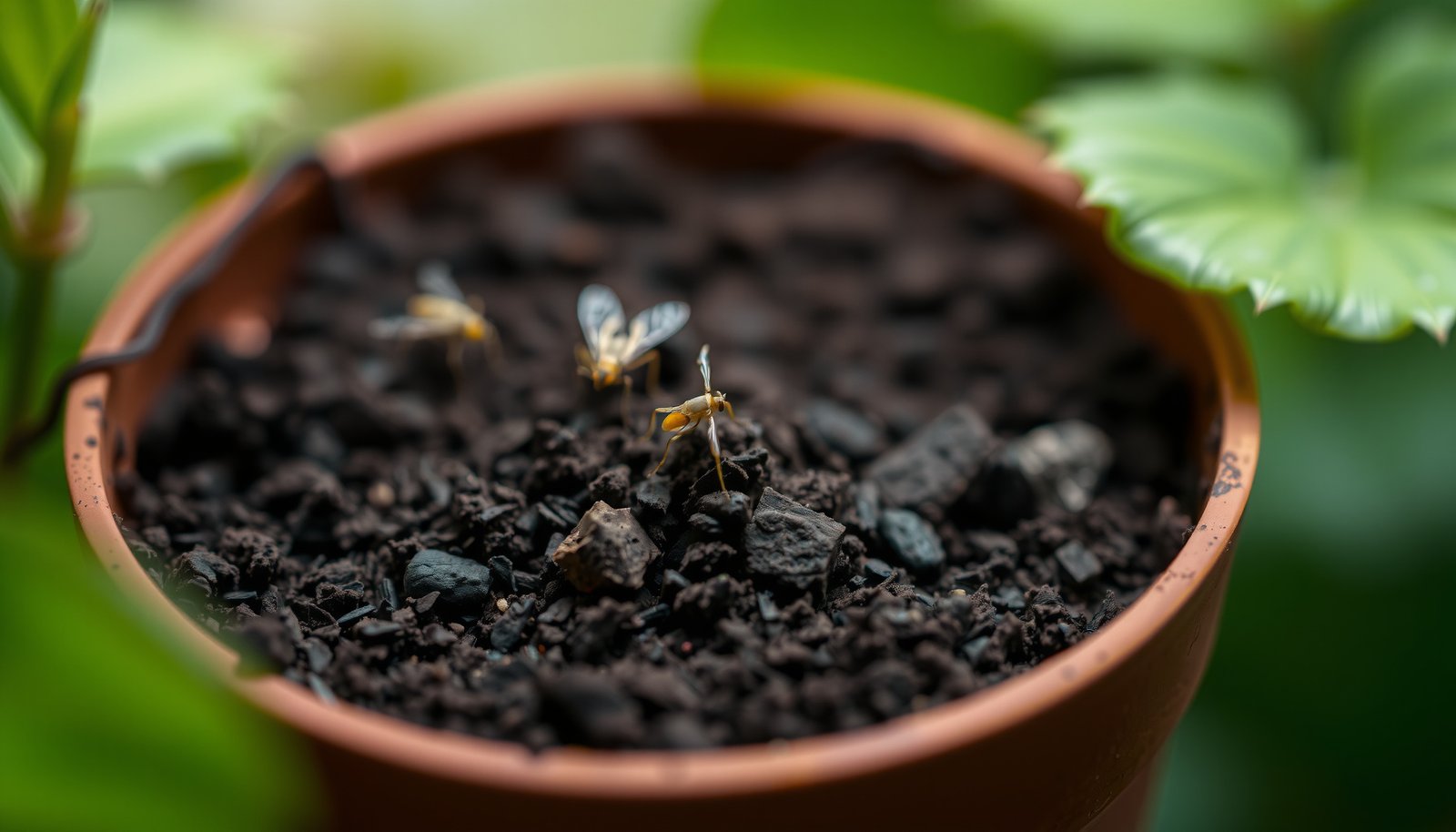
This close-up shows fungus gnat larvae threading through root-level soil — the stage most homeowners never see but that causes the actual plant damage worth worrying about.
What Are Fungus Gnats Actually Doing in Your Soil?
Adult fungus gnats don’t bite and they don’t eat your plants. They’re annoying, but structurally harmless on their own. The larvae are a different story. They feed on fungal material and decomposing organic matter in the soil — but when populations are high, they’ll chew through fine root hairs and even larger roots, which starves your plant of water and nutrients from the bottom up. Plants start wilting, yellowing, or dropping leaves for what looks like no reason.
Picture this: you’ve got a healthy pothos on your desk that suddenly looks waterlogged even though you haven’t changed your watering schedule. You water it more, which makes the problem worse. What’s actually happening is that larval damage has compromised the root system’s ability to uptake water efficiently — so the plant shows the same symptoms as underwatering regardless of how wet the soil is. That feedback loop fools a lot of plant owners into making the infestation worse before they figure out what’s really going on.
How to Break the Fungus Gnat Life Cycle at Every Stage
Fungus gnats complete their full life cycle — egg, larva, pupa, adult — in about 3 to 4 weeks at room temperature. That’s fast enough that if you only treat once and stop, a new generation will be flying around before you know you’ve got a problem again. Effective elimination means hitting all four stages with tools that are matched to each one.
Here’s the sequence that actually works, applied in order and consistently over at least two full life cycles (roughly 6–8 weeks total):
- Bacillus thuringiensis var. israelensis (Bti) soil drench: This is a naturally occurring soil bacterium sold under brand names like Gnatrol or Mosquito Bits. When larvae ingest it, it destroys their gut lining within 24–48 hours. It’s the only larval treatment with real kill data behind it — not just anecdotal results. Mix it into your watering can and apply it directly to the soil every 7–10 days for at least 4 weeks.
- Yellow sticky traps for adult monitoring: These don’t eliminate an infestation on their own, but they’re genuinely useful. Place them horizontally on top of the soil (not hanging vertically) to intercept adults before they lay more eggs. Count the catch over a week — it tells you whether your larval treatment is working.
- Hydrogen peroxide soil drench (3% solution): Mix one part 3% hydrogen peroxide with four parts water and water your plant with it once. It fizzes on contact with organic material in the soil, killing larvae and eggs on contact. It breaks down quickly into water and oxygen, so it won’t harm your plant. Use this as a fast-acting first strike before switching to Bti for sustained control.
- Top-dress with a non-organic layer: Replace the top half-inch of soil with coarse horticultural sand or fine gravel. Female gnats won’t lay eggs in dry, inorganic material. This doesn’t kill what’s already in the soil, but it cuts off the next reproductive cycle at the source.
- Bottom watering: Switch from watering the top of the soil to setting your pot in a saucer of water for 20–30 minutes. The plant wicks up what it needs, but the top inch of soil stays dry — exactly where females prefer to oviposit.
Which Treatments Are Actually Worth Your Money?
The pest control aisle is full of products that kill adult fungus gnats in seconds but do absolutely nothing for the larvae living rent-free in your soil. Most aerosol sprays fall into this category. You’ll spray, watch adults drop, feel like you’ve solved something, and be right back to square one in a week. Knowing what a product actually targets before you buy it saves you both time and money.
| Treatment | Target Stage | Effectiveness |
|---|---|---|
| Bti (Mosquito Bits drench) | Larvae | High — kills larvae within 24–48 hours, safe for plants and pets |
| Hydrogen peroxide drench (3%) | Larvae + eggs | High short-term — use as a first strike, not ongoing treatment |
| Yellow sticky traps | Adults | Moderate — best used for monitoring, not elimination |
| Pyrethrin-based aerosol sprays | Adults only | Low — kills on contact but doesn’t touch soil-stage pests |
Neem oil is worth a separate mention because it’s commonly recommended but inconsistently effective against fungus gnats specifically. Azadirachtin — the active compound in raw neem — does disrupt larval development, but most commercial neem oil products are diluted enough that soil drench concentrations aren’t reliable. If you use neem, choose a concentrated azadirachtin product like AzaMax rather than garden-grade neem oil, and still combine it with Bti for backup.
“The biggest mistake I see homeowners make with fungus gnats is treating the adult flight stage as the primary problem. Adults live only about a week and don’t feed on plant tissue at all. The larvae are where you need to focus your chemistry — specifically a biological control like Bti applied as a consistent soil drench over multiple life cycles. One treatment will never be enough.”
Dr. Marcus Hale, Board-Certified Entomologist and University Extension Specialist in Urban Horticulture Pest Management
When Fungus Gnats Are a Soil Problem, Not a Pest Problem
Here’s something most fungus gnat articles won’t tell you: if you have a chronic, recurring infestation that bounces back within two weeks of treatment, the issue might be your potting mix more than anything else. Many commercial potting soils — especially those marketed for moisture retention — are loaded with peat moss, bark fines, and composted organic matter that stay wet at the core for days or weeks. That’s a fungus gnat nursery. You’re not just inviting them in; you’re providing ideal breeding conditions at a structural level.
Switching to a chunkier, better-draining mix — one that includes perlite at 20–30% by volume, coarse orchid bark, or pumice — changes the substrate environment enough that egg survival rates drop significantly. This is especially true for succulents and cacti, which are notoriously overpotted in dense, moisture-retaining mixes that absolutely do not suit them. Honestly, repotting into a better-draining substrate alongside your treatment plan is one of the highest-leverage moves you can make, and almost no one mentions it. For context, just as you’d address soil composition when dealing with garden pests (the way Best Mole and Vole Repellents for Lawn and Garden covers how habitat changes reduce pressure outdoors), the same logic applies indoors — fix the environment, not just the symptom.
Pro-Tip: Before repotting, gently unpot your plant and inspect the root ball. Healthy roots are white or light tan and firm. If you see brown, mushy, or absent fine root hairs, fungus gnat larvae have already caused meaningful damage. Trim the damaged roots back to healthy tissue, let the root ball air-dry for an hour, and repot into fresh well-draining mix — this resets the environment and removes the larvae-dense soil in one move.
How to Make Sure Fungus Gnats Don’t Come Back
Prevention comes down to three habits that are easy to maintain once you’ve reset the soil environment. These aren’t complicated, but they require a small shift in how most houseplant owners think about watering — specifically, moving away from scheduled watering and toward reactive watering based on actual soil moisture.
- Use the finger test, not a schedule: Push your finger 2 inches into the soil. Water only when it feels dry at that depth, not when a week has passed. This single change eliminates the sustained surface moisture that female gnats need to oviposit successfully.
- Inspect new plants before they come inside: Nursery plants are a primary entry point for fungus gnats. Let any new purchase sit in quarantine — away from your other plants — for at least two weeks, and check for adult activity daily using a sticky trap placed flat on the soil surface.
- Store unused potting mix sealed: Open bags of potting mix left in a garage or shed collect moisture and can harbor fungus gnat eggs before you’ve even used the soil. Keep unused mix in a sealed container or heavy-duty zip bag.
- Remove decomposing organic material: Fallen leaves, dead blooms, and rotting mulch on the surface of potted soil are feeding sites for larvae. Clear them regularly, especially during high-humidity months when decomposition accelerates.
One honest nuance worth naming: how quickly you can fully eliminate fungus gnats depends on how many plants you’re dealing with, how warm your home runs (warmer temperatures accelerate the life cycle), and whether the gnats have spread from their original host plant to neighboring pots. A single infested succulent on a windowsill is a two-week problem. A 15-plant indoor garden where every pot shares a moisture-retaining soil mix is a 6–8 week project minimum, and the approach has to be applied systematically across every pot — not just the one where you first noticed adults flying. Similarly, just as How to Get Rid of Aphids Indoors and Outdoors makes clear that multi-plant situations require a coordinated approach rather than treating one plant in isolation, the same principle applies here with fungus gnats.
Once you’ve cleared an infestation and corrected the soil environment, fungus gnats rarely become a serious recurring problem — as long as you’ve actually addressed the root cause rather than just managing the adults. The plants you thought were struggling from overwatering or mysterious deficiencies will often rebound noticeably within a few weeks once their root systems are no longer under attack. That recovery alone is worth the effort of doing this right the first time.
Frequently Asked Questions
how do I know if I have fungus gnats in houseplant soil?
what kills fungus gnats in soil fast?
does letting soil dry out kill fungus gnats?
are yellow sticky traps effective for fungus gnats?
can fungus gnats in houseplant soil spread to other plants?
Disclaimer: This article is for informational purposes only and isn’t a substitute for professional pest control advice. Always read and follow the product label instructions exactly — label directions are legally binding and vary by brand and active ingredient. Keep all pesticides, baits and traps away from children and pets, ventilate treated areas as directed, and consider calling a licensed pest control professional if an infestation is large, recurring, or involves a structural pest like termites or carpenter ants.