
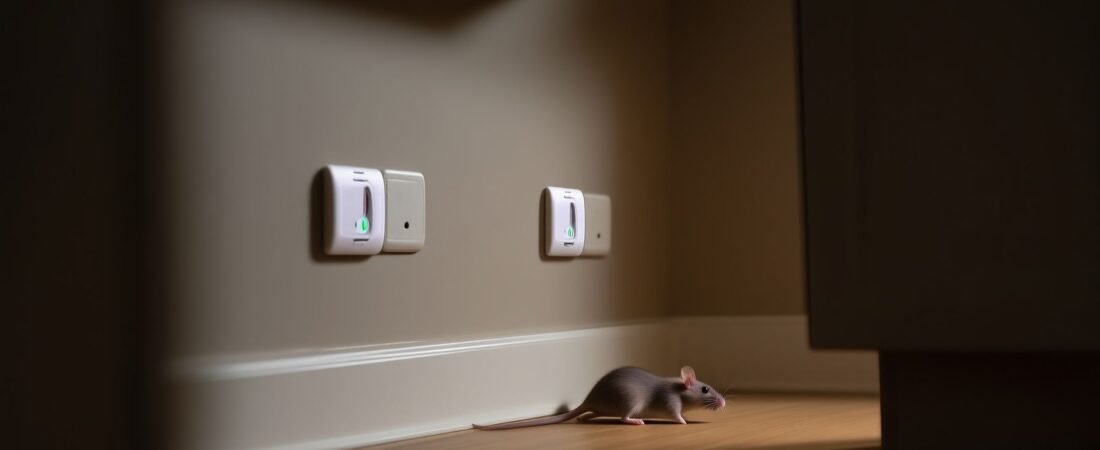
Plug it in, walk away, done — that’s the promise. The reality is that mouse repellent plug-in devices are one of the most purchased and least understood pest control products on the market, and the reason most people are disappointed with them has nothing to do with the technology itself. It’s that they’re being used in the wrong situations, in the wrong rooms, with completely unrealistic expectations about what sound waves can and can’t do inside a house full of furniture, drywall, and hollow wall cavities.
What Are Mouse Repellent Plug-In Devices and How Do They Actually Work?
Ultrasonic plug-in repellers emit high-frequency sound waves — typically in the 15,000 to 65,000 Hz range — that are inaudible to humans and most pets but are supposed to agitate the auditory and nervous systems of rodents. The idea is that constant exposure to an uncomfortable frequency makes mice want to leave an area and stay out. Most units draw somewhere between 5 and 25 watts of power and look like standard air freshener plug-ins.
Electromagnetic versions work differently — they claim to use your home’s existing electrical wiring to pulse a field that disrupts rodent activity throughout the walls. That sounds impressive, but the mechanism has even less independent research behind it than the ultrasonic category. What both types share is a clean, chemical-free pitch that appeals to homeowners who are understandably reluctant to use poison around kids or pets.
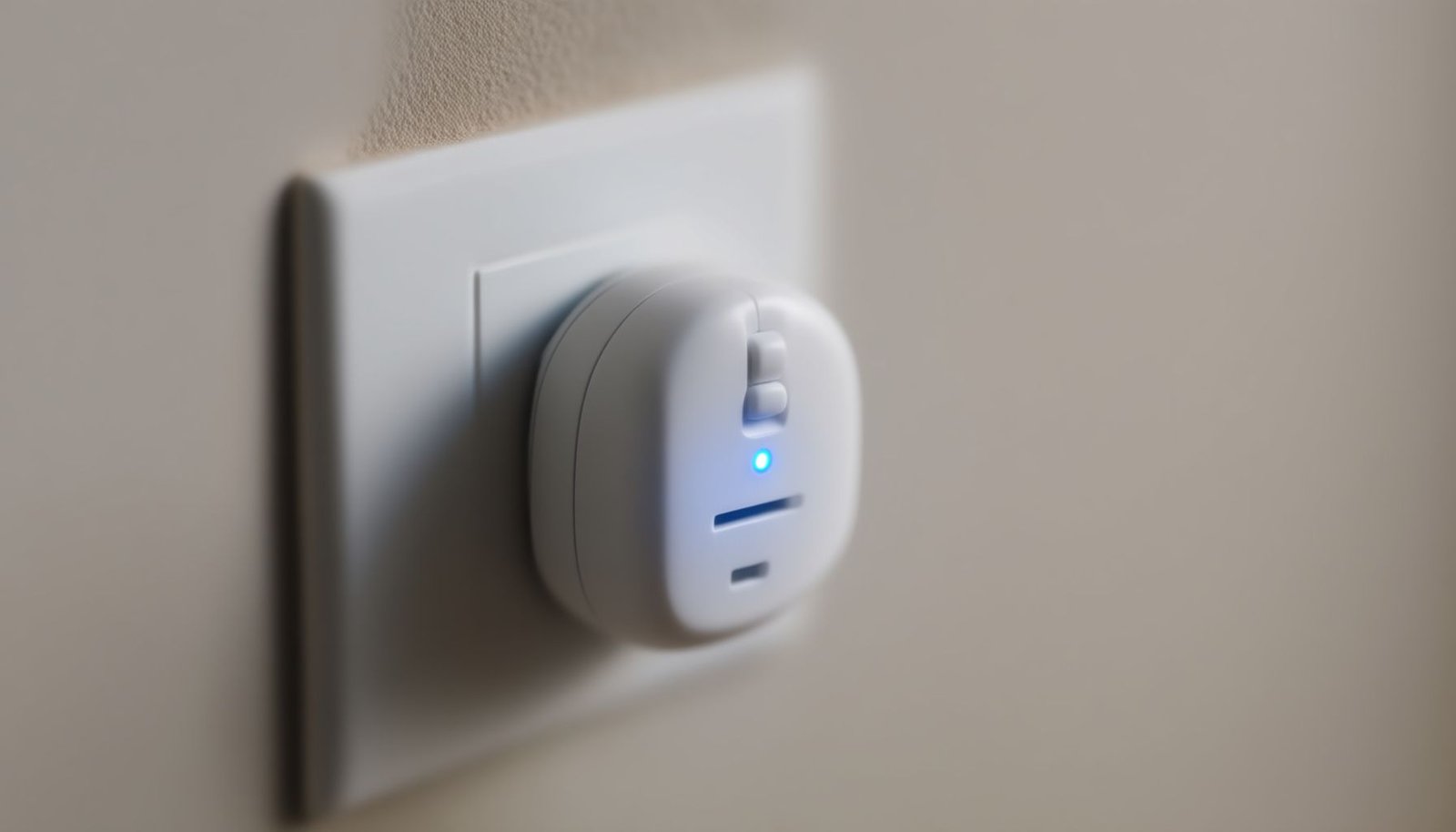
This close-up shows the typical plug-in form factor and speaker grille design used by most ultrasonic repellers — understanding what you’re actually buying helps set realistic expectations before you spend money on a product that may or may not address your specific mouse problem.
Does the Science Actually Support Ultrasonic Mouse Repellers?
Here’s the part that most product review sites quietly skip: the FTC has taken action against ultrasonic repeller manufacturers for making unsubstantiated pest control claims, and multiple independent studies — including peer-reviewed research published in pest management journals — have found that ultrasonic devices produce inconsistent results at best. Mice do initially react to novel ultrasonic stimuli. The problem is habituation. Within a few days to a few weeks, rodents acclimate to the sound and resume normal activity in the same space.
One genuinely counterintuitive thing that these studies revealed: sound waves at these frequencies don’t travel through walls, furniture, or most solid objects. That means a device plugged in on one side of your kitchen may have zero effect on mice traveling inside the wall cavity three feet away. A mouse can squeeze through a gap as small as 1/4 inch — they’re navigating the inside of your walls, your cabinet bases, and your insulation, none of which ultrasound penetrates effectively.
“Ultrasonic devices may produce a short-term startle response in rodents, but habituation occurs rapidly — often within 3 to 7 days of continuous exposure. There is no peer-reviewed evidence demonstrating that any commercially available ultrasonic device produces sustained rodent exclusion under real-world conditions.”
Dr. Patricia Callahan, Board-Certified Entomologist and Urban Pest Management Specialist, Midwest Extension Program
Why Do So Many Homeowners Think These Devices Worked?
Picture this: someone buys a plug-in repeller in November, installs it in the garage, and by January the mouse activity has dropped noticeably. Success, right? Not necessarily. Mouse populations naturally fluctuate with temperature, food availability, and breeding cycles. If you started using the device at the peak of seasonal entry (fall, when mice push indoors as temperatures drop), reduction in activity over the next month or two may have happened anyway — regardless of the device.
This is what researchers call a confounding variable, and it’s the single biggest reason anecdotal testimonials on product pages don’t mean what they appear to mean. People also often pair plug-in devices with other actions — sealing a gap, removing food sources, setting a snap trap — and then credit the plug-in when it was actually the exclusion work doing the job. The device gets the five-star review; the steel wool in the dryer vent gap did the actual work.
Pro-Tip: If you’re going to try a plug-in repeller, use it as one layer of a broader approach, not as a standalone fix. Document your mouse activity with a few snap traps or glue boards before plugging in the device — that gives you a real baseline so you can actually measure whether anything changed, rather than relying on impression.
Which Plug-In Devices Perform Best in Real-World Conditions?
If you’ve decided you want to try one anyway — and there are reasonable arguments for using them as part of a layered strategy — some devices are genuinely better-built than others. Coverage area, frequency range, and whether the device cycles through frequencies matter more than brand name. Devices that emit a fixed single frequency are almost always outperformed by models that rotate through multiple frequencies, because habituation takes longer when the stimulus keeps changing.
| Device Type | Claimed Coverage | Habituation Risk | Best Use Case |
|---|---|---|---|
| Single-frequency ultrasonic | 800–1,200 sq ft | High (3–7 days) | Not recommended as primary method |
| Multi-frequency ultrasonic | 1,000–1,500 sq ft | Moderate (2–4 weeks) | Supplemental use in open rooms |
| Electromagnetic wall pulse | Whole-home claim | Unknown / unproven | Not supported by independent research |
| Combination ultrasonic + strobe | 800–1,200 sq ft | Lower (multiple stimuli) | Garages, basements with line-of-sight |
Rooms where plug-in repellers have the best theoretical shot at doing something useful are open-plan spaces with minimal furniture obstruction and good line-of-sight — think an unfinished basement, an open garage, or a utility room. Dense, furnished living spaces with lots of soft surfaces absorb sound and dramatically reduce effective range. Worth keeping in mind: just like how the best products for Asian lady beetle infestations work best when paired with physical exclusion, plug-in repellers for mice follow the same rule — the product alone rarely closes the loop.
What Should You Actually Do Instead of (or Alongside) a Plug-In Device?
The honest answer is that exclusion — physically blocking the ways mice get in — is the only method with a consistent track record. A house mouse only needs a 1/4-inch gap to enter, and a single female can produce 5 to 10 litters per year with 5 to 6 pups per litter. No plug-in device addresses either of those biological realities. Caulk, hardware cloth, and steel wool in the right locations will do more in one afternoon than months of plug-in operation.
That said, a realistic multi-method approach gives you the best results — especially in buildings where full exclusion isn’t immediately feasible (old rental homes, shared walls, crawl spaces). Here’s what actually moves the needle:
- Seal entry points first. Inspect the foundation, utility penetrations, and door sweeps. Use 1/4-inch hardware cloth or copper mesh for gaps you can’t permanently seal — mice can chew through foam and standard caulk.
- Remove food and harborage. Pet food left out overnight, open bags of birdseed in the garage, and cardboard boxes on the floor are all active invitations. Mice don’t need much — they can survive on 3 to 4 grams of food per day.
- Deploy snap traps strategically. Place them perpendicular to the wall, trigger end against the baseboard, in areas with visible droppings or grease rubs. This is still the fastest and most effective mechanical control method available.
- Add plug-in repellers in open spaces as a deterrent layer. If you want to use them, use multi-frequency models in open, unobstructed rooms — not inside wall cavities, not behind appliances, not in heavily furnished areas.
- Monitor consistently for 2–4 weeks. Check trap activity and droppings every 48–72 hours. If activity isn’t declining, something in the environment is still supporting the population — don’t assume the plug-in is working if you haven’t confirmed it with physical evidence.
One thing that often gets overlooked in these conversations: the type of building matters enormously. A tight, newer construction home where you’ve sealed the obvious gaps is a completely different situation than a 1940s farmhouse with a rubble-stone foundation. In the latter, plug-in devices are almost certainly fighting a losing battle on their own — but they’re also not going to hurt anything if used alongside real exclusion work. The same logic applies to other household pest categories where environmental context shapes product performance; as one example, strategies for managing pill bugs in the house also change significantly depending on whether the building has moisture issues and how well-sealed the perimeter is.
Here’s what a reasonable plug-in repeller setup looks like when used correctly:
- One device per room — ultrasound does not pass through walls, so one unit per open space is the minimum effective configuration
- Plug in at least 6–8 inches off the floor for better propagation across the room
- Avoid placing behind furniture, inside cabinets, or in rooms with heavy carpet or drapes — all of these absorb high-frequency sound
- Run continuously rather than intermittently — the already-marginal effect drops even further with inconsistent operation
- Rotate or replace units every 30–45 days in areas with active mouse pressure — habituation will occur regardless of quality
The bottom line on plug-in repellers is this: they’re not a scam in the sense that some mice, in some situations, may avoid an active ultrasonic zone for some period of time. But framing them as a solution to a mouse problem — rather than one small piece of a broader response — is where homeowners consistently get burned. The technology isn’t the issue. The expectation is.
If you’re dealing with an active infestation, start with exclusion and mechanical trapping, get that under control first, and then consider plug-in devices as a passive long-term deterrent to reinfestation — especially in areas like garages or utility rooms where mice tend to probe for reentry points. That’s the window where these devices make the most logical sense, and where you’re most likely to see a result you can actually attribute to the plug-in rather than to everything else you did at the same time.
Frequently Asked Questions
do mouse repellent plug-in devices actually work?
The evidence is mixed. Some ultrasonic plug-in devices do cause short-term behavioral changes in mice, but studies — including ones from the USDA — have found that mice often habituate to the sound within a week or two and return to their normal activity. They work best as a supplemental deterrent, not a standalone fix.
how far do ultrasonic mouse repellers reach?
Most manufacturers claim a range of 800 to 1,200 square feet, but ultrasonic sound waves don’t pass through walls, furniture, or insulation well at all. In a real home, the effective range per unit is closer to one open room — so you’d need multiple devices for larger or divided spaces.
are mouse repellent plug-in devices safe for pets?
Dogs and cats can typically hear ultrasonic frequencies, so some pets — especially rodents like hamsters, gerbils, or guinea pigs — will be directly stressed by these devices. Dogs and cats may show mild irritation early on but usually adjust. If you own small pet rodents, don’t use ultrasonic repellers in the same room.
where should I plug in a mouse repellent device in my house?
Place units in rooms where you’ve seen droppings, chew marks, or actual mice — common spots include kitchens, garages, basements, and utility rooms. Plug them into outlets low to the ground since mice travel along baseboards, and avoid placing them behind large appliances or furniture that’ll block the signal.
what works better than plug-in mouse repellers?
Snap traps are consistently rated as the most effective and fastest way to eliminate mice already in your home. Sealing entry points — any gap larger than a dime — with steel wool, caulk, or hardware cloth is the most important long-term control method. Plug-in repellers work best as a preventive layer after you’ve already dealt with an active infestation.