
Foggers don’t actually kill fleas in carpet — and that’s the real reason your flea problem keeps coming back after you use one. The insecticide in most bug bombs disperses horizontally through open air, but flea eggs, larvae, and pupae are buried down in carpet fibers where the fog never reaches. So if you’ve decided to skip the fogger entirely, you’re not taking the lazy route. You’re actually making the smarter call.
Here’s the angle most flea articles completely miss: the war isn’t against adult fleas. Adults make up less than 5% of the total flea population in your home at any given time. The other 95% — eggs, larvae, and pupae — are sitting in your carpet, your rugs, and the cracks along your baseboards. Any treatment that ignores that 95% is just cosmetic. You’ll knock down the adults you can see, and two weeks later you’re back to scratching your ankles.
This article is built around that problem. Every method here targets the hidden majority — the life stages that survive foggers, surface sprays, and half-measures — using approaches that are safe for most households, don’t require you to vacate for hours, and actually work when you follow the sequence correctly.
Why Carpet Is the Worst Place to Fight Fleas (And Why You Have to Fight There)
Carpet is essentially a flea nursery. A single female cat flea — the most common species found in US homes, regardless of whether you own a cat — lays up to 50 eggs per day. Those eggs aren’t sticky. They fall off your pet’s body wherever the animal walks, rests, or sleeps, and they sink down through carpet pile to the base of the fibers within minutes. That’s where they hatch into larvae, feed on organic debris, spin cocoons, and wait.
The pupal stage is where most treatments fail hardest. Flea pupae are encased in a sticky, silken cocoon that acts almost like a physical barrier against contact insecticides. They can remain dormant in that cocoon for up to 6 months, waiting for heat, vibration, and carbon dioxide — signals that a host is nearby — before they emerge. This is why people treat a room, think it’s done, and then have a massive flea surge two to three weeks later. The pupae were never dead. They were just waiting.
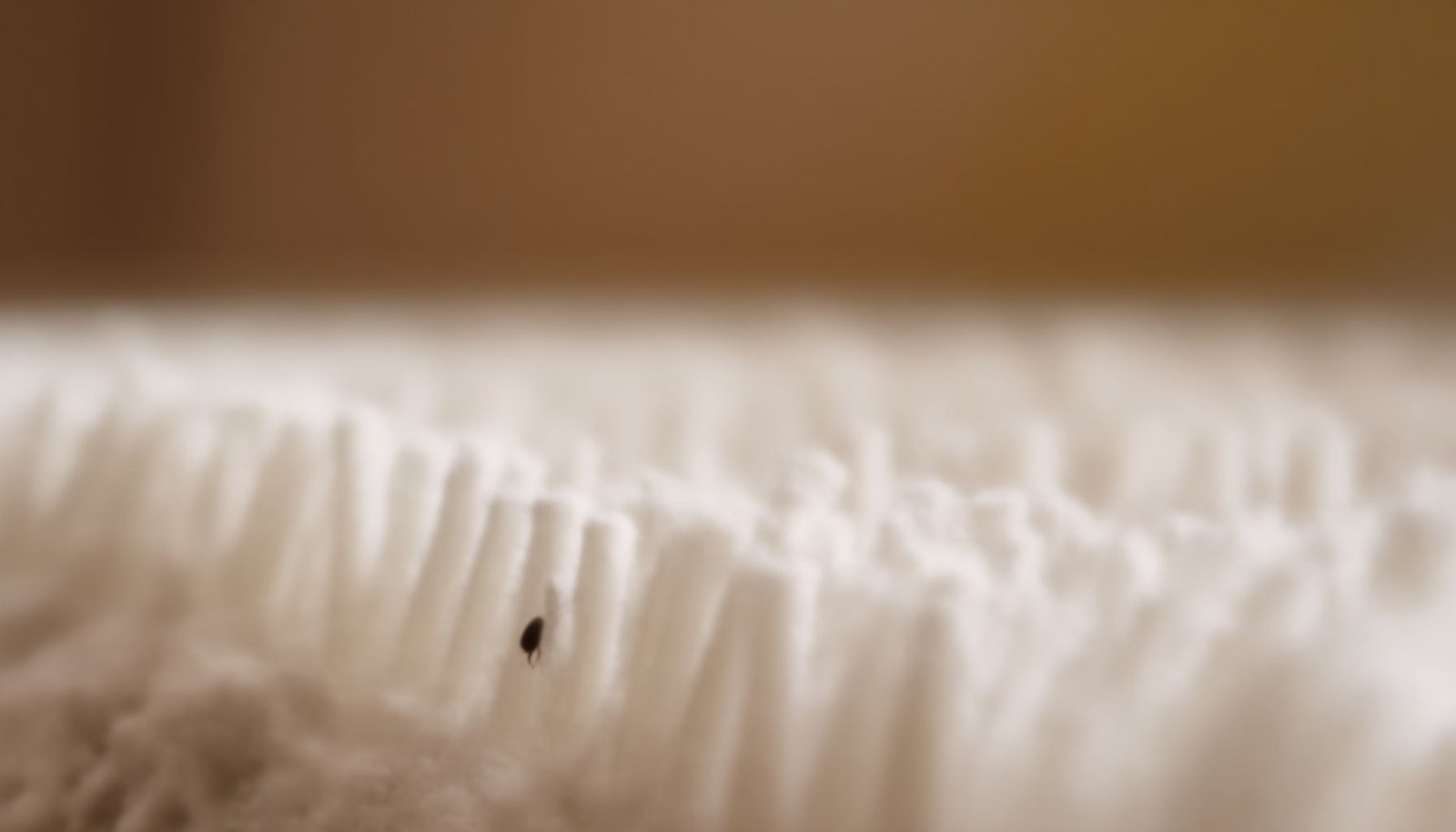
This close-up shows how deep flea eggs and debris can settle into carpet pile — which is exactly why surface-level treatments like foggers so consistently fail to eliminate an infestation at its source.
What Actually Kills Fleas in Carpet Without a Fogger?
The most effective fogger-free approach combines mechanical removal with two chemical classes that most people have never heard of: insect growth regulators (IGRs) and adulticides that have residual activity down in the carpet pile. Neither one works well alone. Used together in the right sequence, they break the flea life cycle at every stage — something no fogger has ever reliably done.
IGRs like methoprene and pyriproxyfen mimic juvenile hormones in fleas, preventing larvae and pupae from ever developing into breeding adults. They don’t kill immediately — that’s actually the point. They stop reproduction and maturation, which collapses the infestation from the inside out over two to four weeks. Pair that with a contact adulticide like permethrin or bifenthrin applied directly into the carpet (not sprayed into the air), and you’re addressing all life stages in the one place that matters most.
The Correct Order of Treatment — Step by Step
Order matters more than most people realize. Treating before vacuuming is one of the most common mistakes, because unvacuumed carpet is full of debris that binds to insecticides and neutralizes them before they can work. Do this in sequence, and don’t skip steps to save time.
- Vacuum aggressively before any treatment. Use a beater-bar vacuum on all carpeted areas, rugs, upholstered furniture, and along baseboards. The vibration stimulates pupae to emerge from cocoons, making them vulnerable to the treatment that follows. Empty the canister or seal and discard the bag immediately outside your home — live fleas can escape from a full vacuum.
- Apply diatomaceous earth (food-grade) to low-traffic carpet areas. Work it into the pile with a broom or brush, leave it for 12–24 hours, then vacuum it up. DE damages the flea’s exoskeleton and causes dehydration. It’s not a standalone fix but useful as a prep layer in heavy infestation zones.
- Treat carpet with an IGR + adulticide spray. Products like Precor 2000 Plus or Vigren SFR contain both an IGR and a residual insecticide. Apply directly to carpet, paying extra attention to areas where pets sleep or rest. Allow to dry completely — typically 2–4 hours — before allowing pets or children back onto the surface.
- Treat your pet simultaneously. No carpet treatment works if the animal is still carrying live fleas back into the treated area. Use a veterinarian-recommended flea treatment on the same day you treat the carpet. This is non-negotiable.
- Repeat vacuum at 5–7 day intervals for three weeks. Each vacuuming session stimulates more pupae to hatch into adults that are then killed by the residual insecticide still active in the carpet. Without this repeated stimulation, pupae stay dormant and survive.
Picture this: you treat on a Saturday, the carpet smells like the spray for a few hours, and by Sunday everything seems fine. Two weeks later, you’re seeing fleas again and you think the treatment failed. It didn’t fail — you just stopped vacuuming too early and the dormant pupae hatched into a new adult population. The repeat vacuuming isn’t optional cleanup. It’s an active part of the treatment.
Which Fogger-Free Products Actually Work on Carpet Fleas?
Not all flea sprays are equal, and the label matters more than the brand name. Look for products that explicitly list both an IGR (methoprene or pyriproxyfen) and a residual adulticide (permethrin, bifenthrin, or lambda-cyhalothrin) on the active ingredients panel. A product with only one of these won’t be enough for a real infestation.
| Product Type | What It Targets | How Long It Lasts in Carpet |
|---|---|---|
| IGR + Adulticide Spray (e.g., Precor 2000 Plus) | Larvae, pupae, adults | Up to 7 months (IGR component) |
| Borate-based powder (e.g., Fleabusters Rx) | Larvae, some adults | Up to 12 months if carpet stays dry |
| Food-grade diatomaceous earth | Adults, mobile larvae | As long as it stays dry — no residual if wet |
| Essential oil sprays (cedar, peppermint) | Repellent only, no kill | Hours — not a treatment, at best a supplement |
Borate-based treatments like Fleabusters Rx deserve more attention than they get. Sodium polyborate works as a desiccant and gut toxin for flea larvae when worked into carpet fibers, and it maintains activity for months as long as the carpet isn’t repeatedly wet-cleaned. It’s low-toxicity to mammals and doesn’t off-gas like aerosol products. The tradeoff is that it won’t knock down an adult population fast, so it’s better used as a follow-up treatment or preventative layer after you’ve handled the immediate surge.
“The biggest mistake I see DIYers make is treating for adult fleas only. Adults are the symptom. The eggs, larvae, and pupae in the carpet are the disease. An IGR is the only thing that addresses the reproductive cycle, and without it, you’re just buying yourself two more weeks before the next generation emerges.”
Dr. Patricia Mercer, Board-Certified Entomologist and Urban Pest Management Consultant, University Extension Program
What to Do About Rooms Without Pets (And Why You Can’t Ignore Them)
Here’s something that catches a lot of homeowners off guard: fleas spread through rooms where your pet barely spends any time. A dog that trots through a hallway once a day deposits eggs along that path. A cat that occasionally sleeps under a guest bed can seed an entire room’s carpet in a single week. Limiting treatment to the “pet area” is almost always why a second treatment becomes necessary.
Focus your attention on these commonly missed zones:
- Baseboards and carpet edges — flea larvae avoid light and actively move toward dark edges, making the perimeter of every room a high-density zone
- Under and around furniture legs — eggs fall here constantly, and these areas rarely get vacuumed with enough pressure
- Hallways and high-traffic paths — any route your pet walks regularly is an egg-deposition zone
- Area rugs on hard floors — often treated as hard floor (ignored) when they function exactly like carpet for flea larvae purposes
- Car interiors — if your pet rides with you, your car’s upholstery and floor mats can be heavily infested while your house treatment is underway
One honest nuance here: the severity of flea spread across non-pet rooms depends significantly on your home’s layout, your pet’s behavioral patterns, and how long the infestation has been established before you started treating. A two-week infestation in a small apartment is a very different problem from a three-month infestation in a multi-story house with two pets. In severe, long-established cases, whole-home treatment of every carpeted surface isn’t optional — it’s the only path that actually works.
Pro-Tip: After vacuuming, drop a flea collar or a few mothballs into the vacuum bag or canister before you seal and discard it. Flea pupae that were stimulated to hatch by the vacuum’s vibration are now alive inside the bag — a sealed bag alone won’t kill them before they escape or get tracked back out during disposal.
How Long Until Your Carpet Is Actually Flea-Free?
Realistic expectations matter here, because a lot of people abandon the treatment too early, thinking it hasn’t worked. After a correct first treatment, you will still see adult fleas for up to two to three weeks. That’s not treatment failure — that’s pupae hatching on schedule and dying on contact with the residual insecticide in your carpet. The emergence is actually confirmation that your treatment is working.
True resolution — meaning no new flea sightings for at least seven consecutive days — typically takes three to six weeks with consistent treatment and repeated vacuuming. If you’re past six weeks and still seeing live fleas, one of three things is happening: your pet’s on-animal treatment isn’t working, there’s an outdoor reinfestation source (a stray cat under your porch, feral animals in the yard), or there are untreated areas in the home where the cycle is continuing. Outdoor flea pressure is a real complicating factor that most indoor-focused articles don’t address — and if wildlife is regularly visiting your property, that perimeter matters as much as what’s inside. Controlling rodents that carry fleas into the yard is part of the equation too, which is why tools like those covered in our guide to best rodent bait stations for outdoor perimeter use can play a supporting role in breaking the outdoor flea cycle.
Once you’ve cleared the infestation, keeping your pet on a monthly flea preventative year-round is the single most effective thing you can do to prevent reinfestation. Fleas don’t take winters off in most parts of the US — especially in the South and along the coasts — and a single adult flea that hitches a ride back into your home can restart the cycle within days. If you’re in a region with wildlife pressure, also consider checking out guidance on managing rodent populations around your home’s perimeter, since small mammals are one of the primary ways fleas get reintroduced to yards adjacent to treated homes.
The counterintuitive truth about flea control is that the hardest part isn’t the treatment itself — it’s the discipline to keep vacuuming and monitoring after the treatment is down and the bites have stopped. Most people stop when they stop itching. The fleas that are still dormant in their cocoons don’t care.
Frequently Asked Questions
what kills fleas in carpet instantly without a fogger?
Salt and baking soda are two of the most effective DIY options — sprinkle either generously over the carpet, work it into the fibers with a brush, and leave it for 12 to 48 hours before vacuuming. For faster results, a carpet spray containing IGR (insect growth regulator) like methoprene can kill adult fleas on contact and stop eggs from hatching.
how long does it take to get rid of fleas in carpet without bombing?
Realistically, you’re looking at 2 to 4 weeks to fully break the flea life cycle without a fogger. That’s because eggs and pupae can survive treatments that kill adults, so you’ll need to vacuum daily and reapply treatments every 5 to 7 days to catch newly hatched fleas before they reproduce.
does vacuuming really get rid of fleas in carpet?
Vacuuming alone won’t eliminate an infestation, but it’s a critical part of the process. It removes up to 30% of flea larvae and a good chunk of eggs, plus the vibration triggers pupae to hatch so they’re exposed to treatments — just make sure to empty or seal the vacuum bag immediately after each use so fleas can’t escape back into your home.
is diatomaceous earth safe to use on carpet for fleas?
Food-grade diatomaceous earth is safe to use on carpet and works by physically damaging the flea’s exoskeleton, causing it to dehydrate and die. Sprinkle a thin layer over the carpet, leave it for 48 to 72 hours, then vacuum it up — wear a dust mask during application since the fine particles can irritate your lungs, and keep pets out of the treated area until it’s vacuumed up.
can fleas live in carpet without pets in the house?
Yes, fleas can survive in carpet for up to 100 days without a host by entering a dormant pupal stage. If you’ve moved into a home where the previous owners had pets, or if wildlife like rodents have been inside, you can absolutely have a flea problem even if you don’t have any animals living there.
Disclaimer: This article is for informational purposes only and isn’t a substitute for professional pest control advice. Always read and follow the product label instructions exactly — label directions are legally binding and vary by brand and active ingredient. Keep all pesticides, baits and traps away from children and pets, ventilate treated areas as directed, and consider calling a licensed pest control professional if an infestation is large, recurring, or involves a structural pest like termites or carpenter ants.