

Standing 20 feet from a paper wasp nest tucked under a second-story eave and spraying a standard can of wasp killer straight up into the air is a great way to drench yourself in insecticide and accomplish nothing else. The real problem isn’t finding a product that kills wasps — almost all of them do. The problem is that most homeowners buy a foam spray thinking the label distance claim tells the whole story, then discover mid-spray that nozzle angle, can pressure, and foam viscosity matter just as much as how far the stream technically reaches.
Why “25-Foot Spray” Doesn’t Mean What You Think It Does
Spray distance claims on wasp foam cans are measured under ideal conditions — meaning the can is held upright, at room temperature, in calm air, on a flat surface. Real-world use almost never matches that. Spray a can overhead at a 45-degree angle, and you’ll lose 30–40% of your effective range before the stream even curves downward from gravity. Cold weather — anything under 50°F — thickens the propellant and can drop your actual spray distance by nearly half.
Foam formulations add another layer of complexity that aerosol sprays don’t have. Foam expands on contact, which is great for filling a void or coating a nest completely, but the foam itself is heavier than a thin liquid stream. That extra mass means a foam product rated at 20 feet of range may deliver effective foam coverage at only 12–15 feet under real conditions. Knowing that gap going in changes how you position yourself before you ever press the nozzle.
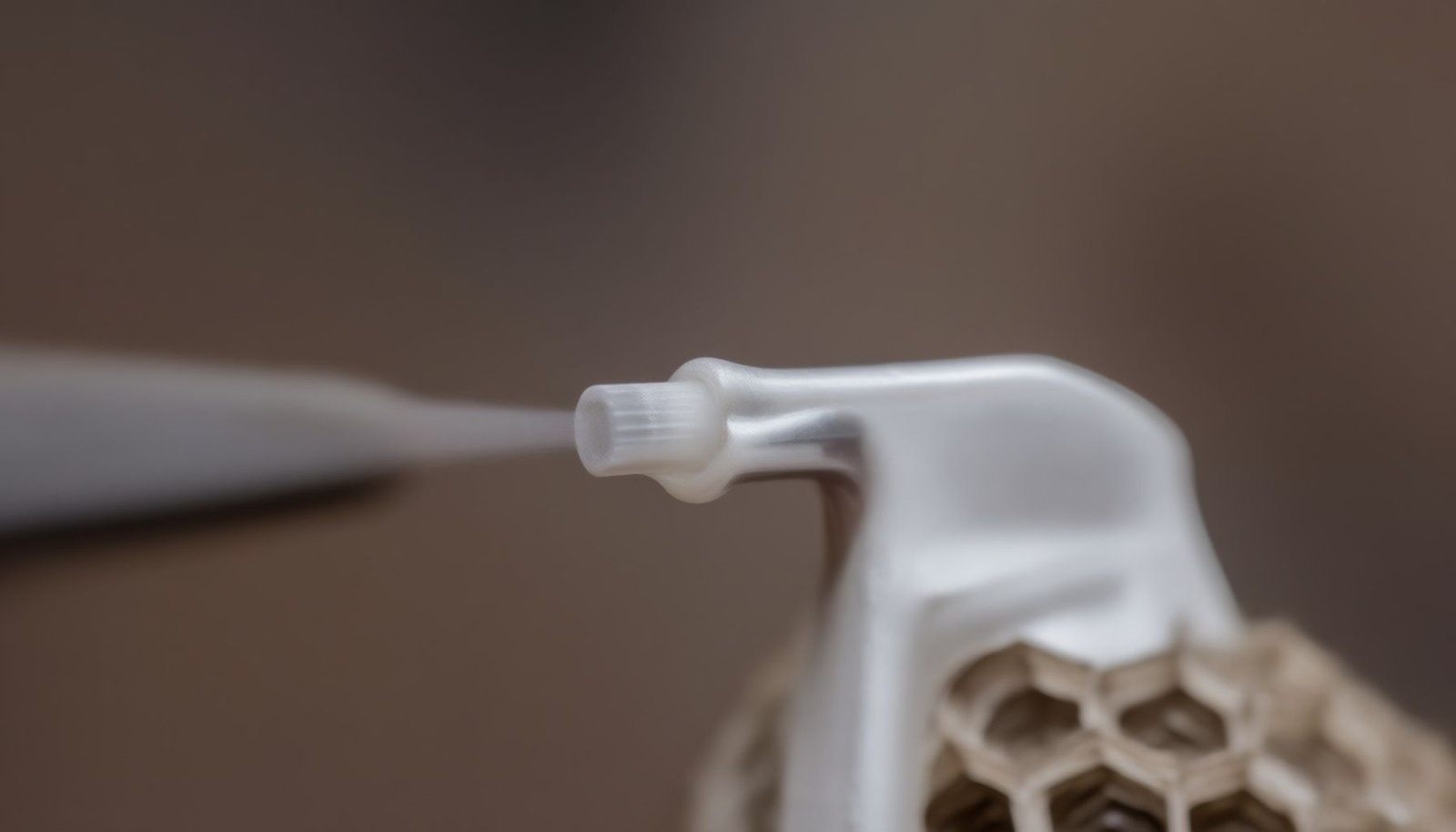
This close-up shows the foam expansion pattern on contact with a nest surface — notice how the foam envelops the entry hole rather than simply coating the exterior, which is exactly why foam outperforms liquid spray for void-nesting species like yellow jackets and paper wasps.
Which Wasp Nest Foam Sprays Actually Deliver Long-Range Performance?
After sorting through the noise, a handful of products consistently outperform the pack in real-world long-range use — meaning they hold stream integrity at distance, deliver enough active ingredient volume to kill on contact, and their foam expansion doesn’t rob you of reach. Here’s how the top contenders actually compare where it counts:
| Product | Claimed Range | Active Ingredient | Foam or Stream | Best Use Case |
|---|---|---|---|---|
| Spectracide Wasp & Hornet Killer | 27 ft | Prallethrin + Lambda-Cyhalothrin | Jet stream | High eave nests, overhead angles |
| Raid Wasp & Hornet Killer | 22 ft | Cypermethrin + Imiprothrin | Jet stream | Ground-level and low eave nests |
| Ortho Home Defense Hornet & Wasp | 20 ft | Bifenthrin | Foam stream | Enclosed void nests, wall entries |
| BioAdvanced Termite & Carpenter Bee | 15 ft | Beta-Cyfluthrin | Foam | Wood-boring species, short-range void filling |
Two things jump out from that comparison. First, the products with the longest claimed ranges use jet stream delivery, not true foam — they coat the nest surface but won’t fill a void or cavity the way a foam product does. Second, bifenthrin-based foams like Ortho’s formula have a longer residual kill time (up to 6 months on treated surfaces) compared to pyrethroid jet sprays that lose effectiveness after 1–2 weeks in UV-exposed outdoor conditions. Choosing between them depends entirely on nest location and type.
Does Foam Actually Kill Faster Than Liquid Spray?
Picture this: you spray a paper wasp nest at dusk, see wasps drop immediately, and figure the job is done. You come back in the morning and find 30 wasps actively working the nest again — because the workers that were out foraging during your treatment returned overnight. This happens constantly with liquid jet sprays that don’t penetrate the nest interior. Foam changes that equation by physically blocking the entry point and coating internal chambers where larvae, pupae, and the queen shelter.
The active ingredients themselves work the same way in both formats — they disrupt the sodium channels in insect nerve cells, causing paralysis and death within minutes. What differs is coverage. A foam product expands to 2–4 times its liquid volume on contact, which means a 1-second burst of foam at the entry point can fill enough of a 4-inch void to contact every wasp inside, not just the ones on the outer surface. That’s the mechanism that makes foam genuinely more effective for enclosed nests, not just a marketing angle.
Pro-Tip: Spray at dusk or just after dark — not because wasps can’t see you (they can’t navigate well in low light, but they will still sting), but because 90–95% of the colony’s foraging workers are back inside the nest by then. Treating at that window means you’re contacting the full population in a single application rather than leaving the field workers alive to rebuild.
How to Get the Maximum Safe Distance When You Spray
Getting the most out of whatever product you’re using comes down to technique as much as product selection. A few adjustments at the moment of application can add 3–5 feet of effective range and dramatically reduce your exposure risk. Follow this sequence:
- Warm the can first. Keep your foam spray at room temperature (65–80°F) before use — a cold can from a garage shelf can lose up to 40% of its spray velocity. Run warm water over it for 60 seconds if needed, but never use heat guns or boiling water.
- Position at a slight downward angle to the nest. Spraying upward into an overhead nest fights gravity the entire way. If you can use a ladder to get within level range — or position yourself on an adjacent elevated surface — do it. Every foot of elevation gain translates to 2–3 feet of effective spray distance at the nest.
- Use a windless window. Even a 5 mph crosswind can deflect a foam stream by 6–8 inches at 15 feet of distance, enough to miss the nest entry entirely. Early morning before 8am is typically the calmest period in most US regions.
- Hold the can fully upright. Aerosol propellants are designed to feed the dip tube correctly when the can is vertical. Tilting more than 15 degrees starts releasing propellant without formula, reducing pressure and range within seconds.
- Start at maximum distance, move closer only if needed. Begin spraying at the farthest point where you see foam hitting the nest, then step in only if coverage is incomplete. This keeps you out of the 8–12 foot defensive flight zone that triggers mass stinging responses.
- Don’t stop spraying to assess. A 3-second continuous burst before pulling back is safer than a half-second spray, a pause to look, another half-second spray. Stopping mid-application releases agitated wasps without neutralizing them first.
One thing worth knowing: the defensive perimeter of a wasp colony isn’t fixed at a single distance. A paper wasp nest with 30–50 workers has a much smaller aggressive response zone than a yellow jacket colony that can house 1,500–15,000 individuals. The same technique that works perfectly for a small eave nest could put you in serious danger with a large in-ground colony — which is a separate problem entirely from what foam sprays are designed to handle.
“The biggest mistake I see homeowners make with long-range wasp sprays isn’t the product choice — it’s spraying into the wind or cold. I’ve had clients call back saying a product ‘didn’t work,’ and when I ask about conditions, it was 45°F with a breeze. That can might as well have been half empty. Foam products need warmth and still air to perform to their rated distance. Get those two variables right, and most consumer-grade foams will do the job.”
Dr. Janet Morrow, BCE — Board Certified Entomologist and urban pest management consultant with 18 years in integrated pest management for residential and commercial properties
When Foam Spray Isn’t the Right Tool (and What to Use Instead)
Foam spray works extremely well for paper wasp nests under eaves, mud dauber nests on siding, and small aerial hornet nests you can access with a long-range stream. It struggles — and sometimes makes things significantly worse — in three specific situations that most product reviews don’t mention. Understanding when not to use it saves you from a genuinely dangerous afternoon.
Here’s where foam spray falls short and what actually works better in each case:
- Large in-ground yellow jacket colonies: Foam can seal the primary entrance and send 1,000+ agitated wasps boiling out of secondary exits you didn’t know existed. Dust insecticides like Delta Dust applied directly into the tunnel are safer and more effective here — the dust coats wasps as they exit rather than trapping them.
- Wall void nests inside a structure: Spraying foam into a wall void without knowing where it terminates can drive wasps further into the wall, into your living space, or collapse a foam-filled void that later creates moisture and mold issues. A pest control professional with injection equipment handles this differently — and more safely — than a surface foam application.
- Nests larger than a basketball: A mature bald-faced hornet nest can contain 400–700 workers in peak season. Consumer foam cans hold 14–17.5 oz of formula — often not enough to saturate a large nest interior completely in a single treatment. Multiple applications are needed, and return trips before the colony is fully dead are genuinely dangerous.
- Nests near HVAC intakes or open windows: Pyrethroid vapors from foam sprays are low-toxicity to humans at outdoor concentrations, but spraying near an open intake can pull chemical vapor inside. Close windows and turn off HVAC systems within 15 feet of the treatment area before you spray.
Just like getting rid of fleas in carpet without a fogger requires understanding what the fogger can’t actually reach before you choose a method, wasp nest treatment requires the same honest assessment of access. The best product in the world can’t compensate for applying it to the wrong entry point or in conditions where it can’t perform. Knowing the nest type and location before you buy anything is half the battle.
There’s also a seasonal nuance that most articles skip entirely: nests treated in late summer or early fall (August through October) are at peak population and maximum aggression, but they’re also naturally declining as the colony prepares to die off. A nest you see in September may only need one more month to self-terminate with zero intervention — especially in northern US climates where the first hard frost kills the colony completely. That’s not a reason to leave an aggressive nest untreated if it’s near a doorway or play area, but it’s worth factoring in before you spend $15 on a can of spray and risk a sting encounter unnecessarily. The same way getting rid of mice in walls requires timing and entry point knowledge to actually work long-term, wasp control is as much about timing as it is about product.
The honest truth about wasp nest foam sprays is that the distance claim on the label matters less than how you position yourself, what time of day you spray, and whether foam is even the right delivery method for your specific nest type. Get those three things right first, then choose your product — and you’ll have a much higher chance of handling this in a single visit rather than retreating twice and still having an active nest on your hands.
Frequently Asked Questions
how far does wasp nest foam spray shoot
Most wasp nest foam sprays are designed to shoot 15 to 27 feet, depending on the brand and formulation. Raid Wasp and Hornet Killer and Spectracide Wasp and Hornet Killer are two of the longest-range options, both reaching up to 27 feet. Always check the label before buying if distance is your main concern.
is wasp nest foam spray better than regular wasp killer spray
Foam sprays have a real advantage over standard liquid sprays because the expanding foam fills the nest opening and traps wasps inside, preventing escapes. Regular sprays knock down wasps faster on contact, but foam is better for enclosed or hard-to-reach nests like those in wall voids or under eaves. If you’re dealing with an exposed nest, either works, but foam gives you extra control.
best time of day to use wasp nest foam spray
You’ll get the best results spraying at dusk or just after dark, when wasps are back in the nest and less active. Avoid midday when the colony is at full strength and foragers are flying — you’re more likely to get stung. Cooler temperatures also slow wasps down, which gives you more time to retreat safely after spraying.
how long does it take for wasp nest foam spray to kill the nest
Most foams kill on contact and can wipe out the visible colony within 24 hours. However, if the queen and deeper nest chambers survive, you may see activity again within a few days and need a second treatment. Wait at least 24 hours before removing the nest, and check for any remaining movement before getting close.
can I use wasp nest foam spray indoors
Some wasp foam sprays are labeled for indoor use, but many are not — you need to check the product label before spraying inside walls or attics. Using an outdoor-only formula indoors can leave behind toxic residues and create ventilation hazards. If wasps have nested inside your home, look for products specifically labeled for indoor use or consider calling a pest control professional.