
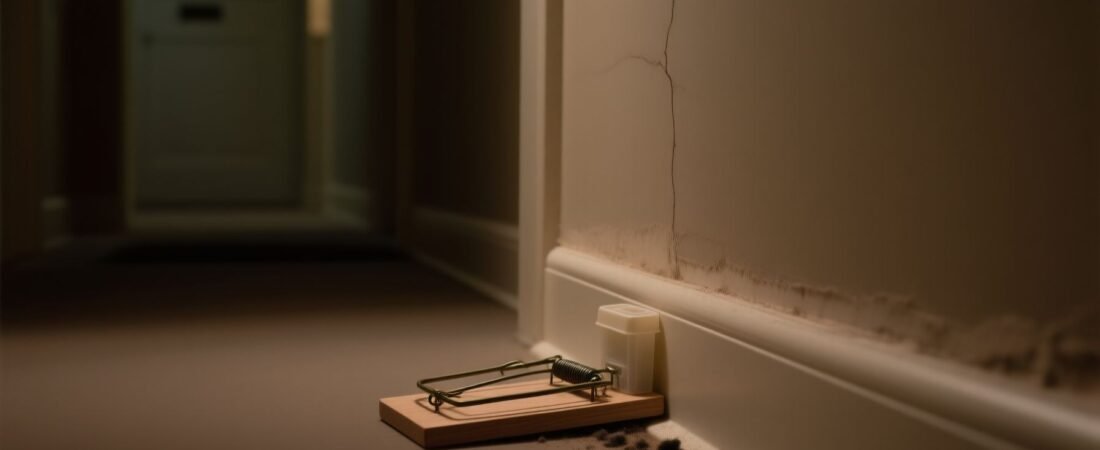
Tearing out drywall is almost never the right answer — and the fact that most pest control articles treat it as a last resort still worth mentioning says a lot about how badly this topic gets misunderstood. Mice in walls are a transit problem, not a nesting problem. The wall void is a highway, not a home. Fix the highway system and you solve the problem without touching a single stud.
That distinction matters because it changes your entire strategy. If you assume mice are living inside your walls, you chase sounds and scratch marks and never actually catch anything. If you understand they’re traveling through walls to reach food, water, and warmth — you intercept them at the endpoints instead. That’s the approach that actually works, and it’s what this article is built around.
Why Mice Are in Your Walls (It’s Not What You Think)
House mice don’t seek out wall voids because they prefer them. They use them because wall cavities are dark, protected, and connect almost every room in a house — including the kitchen, the pantry, and the laundry room. A mouse can squeeze through a gap as small as 1/4 inch, which means the space around a pipe penetration or a loose baseboard is essentially a welcome mat. Your walls are a shortcut, not a sanctuary.
Where mice actually nest is usually somewhere warmer and softer — insulation in a crawl space, the back corner of a cabinet, behind the dishwasher, or inside a drawer that rarely gets opened. They run through walls to get there and back. This is why you hear scratching at night (mice are nocturnal and most active between midnight and 4 a.m.) but find no evidence of chewing or droppings inside the wall itself when you investigate.
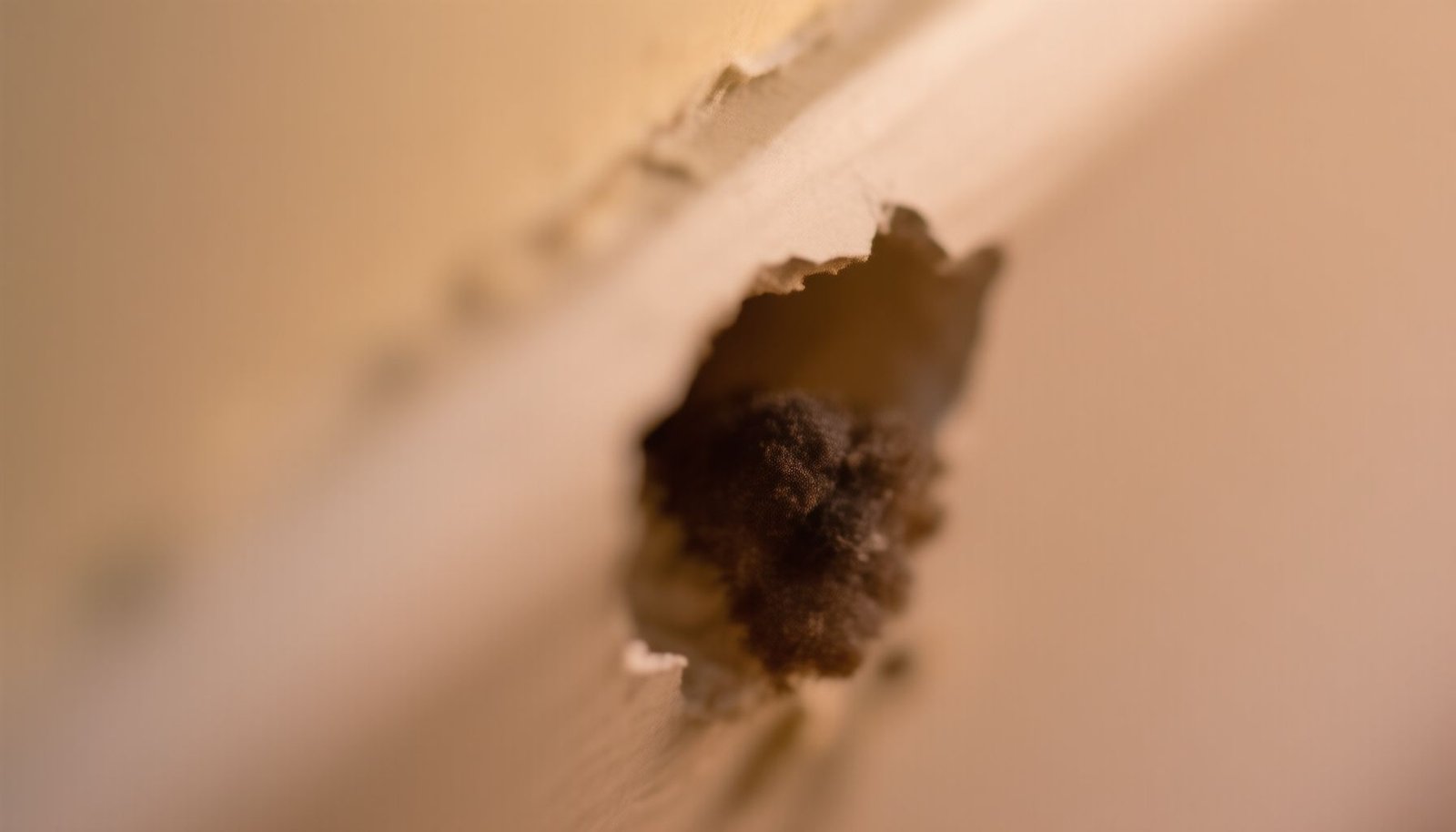
This image shows a cross-section view of a typical wall void used by mice as a travel corridor — note the lack of nesting material, which confirms that wall spaces function as passageways rather than permanent harborage sites.
How Do You Actually Confirm Mice Are in Your Walls?
Scratching sounds alone don’t tell you much. Pipes expand and contract, squirrels move differently than mice (heavier, more sporadic), and settling houses creak in ways that sound biological at 2 a.m. Before you do anything else, confirm what you’re dealing with. Place snap traps or glue boards along baseboards directly below where you hear the most activity — mice rarely travel more than 10 to 30 feet from their nest, so sound location is a surprisingly reliable clue about where they’re entering and exiting the wall.
Droppings are your best physical evidence. Mouse droppings are 1/8 to 1/4 inch long, dark, and pointed at both ends — rat droppings are larger and blunt. Find fresh droppings (they’re shiny and soft) near wall outlets, behind the stove, or along the base of kitchen cabinets, and you’ve confirmed active mouse movement in that zone. Rub marks — dark greasy smears along baseboards from mouse fur — are another tell that’s easy to miss unless you’re looking for them at floor level with a flashlight.
What Actually Removes Mice From Walls Without Demolition
The goal isn’t to reach into the wall — it’s to force the mice out of the wall and into a trap or exclusion point. This requires a specific sequence of steps, and skipping any one of them is usually why people end up doing it twice. Here’s the order that works:
- Locate the exit points — Check where plumbing and electrical enter walls, gaps around the dryer vent, and spaces where the wall meets the floor. These are the spots mice use to leave the wall cavity and enter living spaces.
- Set snap traps at every identified exit point — Use wooden Victor-style snap traps baited with peanut butter and oat mixture. Place them perpendicular to the wall with the trigger side facing the baseboard so the mouse runs directly across it.
- Create a temporary funnel using exclusion material — At non-active entry points (gaps you’re certain they use to enter but not exit into living spaces), stuff with steel wool temporarily. This forces mice to use only the exits where traps are waiting.
- Check traps every 24 hours — Dead mice left longer than 24-48 hours attract secondary pests and begin decomposing rapidly. Active trapping windows are typically 3 to 7 nights for a contained infestation.
- Seal all entry points permanently once trapping stops — Use copper mesh, caulk, or hardware cloth. Steel wool compresses and rusts; copper mesh holds shape and doesn’t corrode. This step done before trapping is complete is one of the most common mistakes people make.
- Verify with fresh bait or tracking powder — Place a small amount of flour or commercial tracking powder near sealed points. No new tracks within 5 to 7 days means the population inside the wall has been cleared.
One counterintuitive thing worth knowing: sealing before you trap traps live mice inside the wall. That’s genuinely worse. A mouse that can’t get out will chew through drywall, electrical wiring, or insulation — and if it dies in the wall, the odor from decomposition can persist for weeks. Trap first, seal second. Always.
Which Wall Entry Points Are Mice Actually Using?
Picture this: a technician spends three hours setting traps throughout a kitchen, catches nothing, and eventually discovers that every mouse in the house was entering through a half-inch gap behind the dishwasher where the water supply line enters the wall. That gap was there for years — hidden, never noticed — and it connected directly to a wall cavity running the full length of the kitchen. One copper mesh plug, two snap traps beside the dishwasher for a week, and the problem was gone. The lesson? The entry point is almost never where the noise is loudest.
Common wall entry points most homeowners overlook are listed below. These aren’t the obvious ones — gaps in foundation sills, open vents — but the secondary access points that mice find after the obvious ones are closed:
- Gaps around pipe penetrations under kitchen and bathroom sinks (often hidden by under-sink organizers)
- Spaces where HVAC ductwork exits the wall into rooms (the sheet metal collar rarely makes a tight seal)
- The gap between the bottom of a wall cabinet and the wall surface behind it
- Electrical outlets and switch plates on exterior-facing walls (mice travel inside the wall cavity and exit through the box opening)
- Where the floor meets an interior wall at an unfinished garage or basement transition
Pro-Tip: Remove outlet covers on any wall where you’re hearing mouse activity and shine a flashlight into the electrical box. If you see daylight, insulation debris, or dark smearing on the inside of the box, you’ve found an active travel point. Stuff copper mesh behind the box before replacing the cover — just keep it away from the wiring itself.
Does Poison Bait Work for Mice Inside Walls?
Rodenticide bait blocks do kill mice — but using them inside wall voids without a bait station is one of the worst approaches for an interior infestation. Here’s why: mice that consume rodenticide typically don’t die immediately. They usually succumb within 4 to 10 days, and during that window they tend to retreat to wherever they feel most secure. For a mouse living in a wall, that’s often the deepest, least accessible part of the cavity. You end up with exactly what you were trying to avoid: a dead mouse in the wall, impossible to retrieve, decomposing slowly for 2 to 4 weeks.
That said, bait stations placed outside the home along the perimeter serve a genuinely useful function — they reduce the incoming population before mice get a chance to find entry points. If you’re dealing with a recurring mouse problem rather than a one-time intrusion, exterior bait stations placed 15 to 30 feet apart around the foundation can reduce pressure significantly. Check out the options covered in our guide to best rodent bait stations for outdoor perimeter use for tamper-resistant stations that meet EPA placement requirements. Interior infestations, though — stick to snap traps. They’re faster, cleaner, and you always know where the mouse ends up.
“The single most common mistake I see homeowners make is treating mice in walls as a wall problem. It’s an entry point problem. The wall is just the symptom. You fix the gaps, you eliminate the food source, and you trap aggressively for a two-week window — that resolves about 90% of residential mouse infestations without any structural work. Demolition is essentially never indicated unless there’s a massive harborage situation behind a wall that’s been active for years.”
Dr. Marcus Ellery, Board-Certified Entomologist and Urban Pest Management Consultant, NPMA Member
How Long Does It Take to Clear Mice From Walls?
Timeline matters because people often give up too early or seal too soon. For a typical single-family home with a contained infestation — one to three mice using wall voids as travel corridors — active trapping usually produces results within 3 to 7 nights. A more established population, especially in older homes with extensive wall-to-wall cavity connections, can take 2 to 3 weeks of consistent trapping before activity drops off entirely. The honest answer is that it depends heavily on how long the infestation has been active, how many entry points exist, and whether there’s an exterior population continuing to push new mice inside.
| Infestation Scenario | Estimated Clearance Timeline | Primary Method |
|---|---|---|
| 1–3 mice, recent entry (less than 2 weeks) | 3–7 nights of active trapping | Snap traps at exit points, then seal |
| Established population, 1–2 months active | 2–3 weeks of trapping plus exterior control | Snap traps + perimeter bait stations |
| Long-term infestation, multiple entry points | 3–6 weeks; professional exclusion often needed | Full exclusion inspection + staged sealing |
One variable that genuinely changes the math is the home’s construction type. Older balloon-frame homes (built before roughly the 1940s) have continuous wall cavities that run floor to ceiling with no horizontal fire blocking — mice can travel vertically through an entire exterior wall without ever touching a floor. Modern platform-frame construction has horizontal blocking that segments the cavities and limits how far mice can move. If you’re in an older home and hearing scratching on multiple floors, that’s why.
For homes that border fields, wooded lots, or areas with significant outdoor rodent pressure, the exterior perimeter strategy is just as important as interior trapping. The same pressure that sends voles tunneling through your lawn drives mice toward your foundation — the best vole and gopher traps for lawn damage article covers some of the same trap mechanics that translate well to above-ground mouse control around the foundation perimeter.
Once your traps go unsprung for five consecutive nights and you find no fresh droppings anywhere in the house, you’re clear to do your final sealing pass. Don’t wait too long after that — gaps in the foundation and walls are a standing invitation, and a new mouse can establish a wall route within 24 to 48 hours of first entering a home. Seal everything, keep exterior vegetation trimmed back at least 18 inches from the foundation, and store food in hard-sided containers. The wall problem doesn’t come back when you’ve made your home structurally uninteresting to mice in the first place.
Frequently Asked Questions
how do I know if mice are living in my walls?
The most common signs are scratching or scurrying sounds inside the walls, especially at night when mice are most active. You might also notice droppings near baseboards, a musty ammonia-like smell, or gnaw marks on wood trim and electrical wires. If you’re hearing noises consistently between 11 PM and 2 AM, there’s a good chance you’ve got an active infestation.
what do mice in walls sound like?
Mice in walls make a distinct scratching, scurrying, or gnawing sound — sometimes it’s described as a quick skittering noise that moves along the wall and then stops. You may also hear light squeaking, especially if there’s a nest with young mice nearby. The sounds are usually louder and more frequent at night since mice are nocturnal.
how do you get mice out of walls without tearing them open?
The most effective no-demo approach is to use snap traps or live traps placed directly along the baseboards where wall voids connect to living spaces, like behind appliances or inside cabinets. Bait with peanut butter and check traps every 24 hours. You’ll also want to seal every entry point — gaps as small as a dime, roughly 1/4 inch — with steel wool packed in and covered with caulk or hardware cloth so new mice can’t get in while you’re trapping.
will mice eventually leave walls on their own?
Honestly, no — they won’t leave on their own if there’s food, water, and shelter available. Mice can produce 5 to 10 litters per year with 5 to 6 pups each, so a small problem becomes a large infestation fast if you wait it out. You need to actively trap and seal entry points to get rid of them.
can mice in walls damage electrical wiring?
Yes, and it’s one of the more serious risks of a wall infestation. Mice gnaw on wire insulation constantly because their teeth never stop growing and they need to wear them down — this can expose live wires and create a real fire hazard. The National Pest Management Association estimates rodents are responsible for up to 25% of house fires with unknown causes in the US, so don’t treat chewed wiring as a minor issue.
Disclaimer: This article is for informational purposes only and isn’t a substitute for professional pest control advice. Always read and follow the product label instructions exactly — label directions are legally binding and vary by brand and active ingredient. Keep all pesticides, baits and traps away from children and pets, ventilate treated areas as directed, and consider calling a licensed pest control professional if an infestation is large, recurring, or involves a structural pest like termites or carpenter ants.