
Bird mites don’t stay in the attic. That’s the part nobody tells you — and it’s the reason most attic treatments fail within two weeks. Homeowners spray once, feel like the problem is solved, and then wonder why they’re getting bitten in the bedroom three floors down. The mites have legs. They move. And without treating the right zones in the right sequence, even a good product won’t hold.
The counterintuitive truth about bird mite control in attics is this: the spray or dust you choose matters less than when and where you apply it. A mediocre product used in all the right places will outperform a premium one dumped only in the nest zone. This article breaks down which products are actually worth buying — and more importantly, how to use them so the infestation doesn’t just relocate inside your walls.
Why Bird Mites in Attics Aren’t an “Attic Problem”
Picture this: a starling nest sits directly over a recessed light fixture in your ceiling. The birds fledge or die, and suddenly 10,000 mites — a conservative estimate for an established nest — have no host. They disperse within 24 to 72 hours of losing their bird, moving through insulation, down wall cavities, through electrical gaps, and into living spaces. At that point you’re not dealing with an attic infestation. You’re dealing with a building-wide dispersal event.
This is why “bird mite spray for attics” framed as a simple spot treatment is misleading. The attic is the origin point, but mites can travel 30 to 40 feet from a nest before dying — or finding you. Treating only the nest area is like mopping one corner of a flooded room. You need a layered strategy: kill at the source, block the migration corridors, and create a chemical barrier where the attic meets the living space.
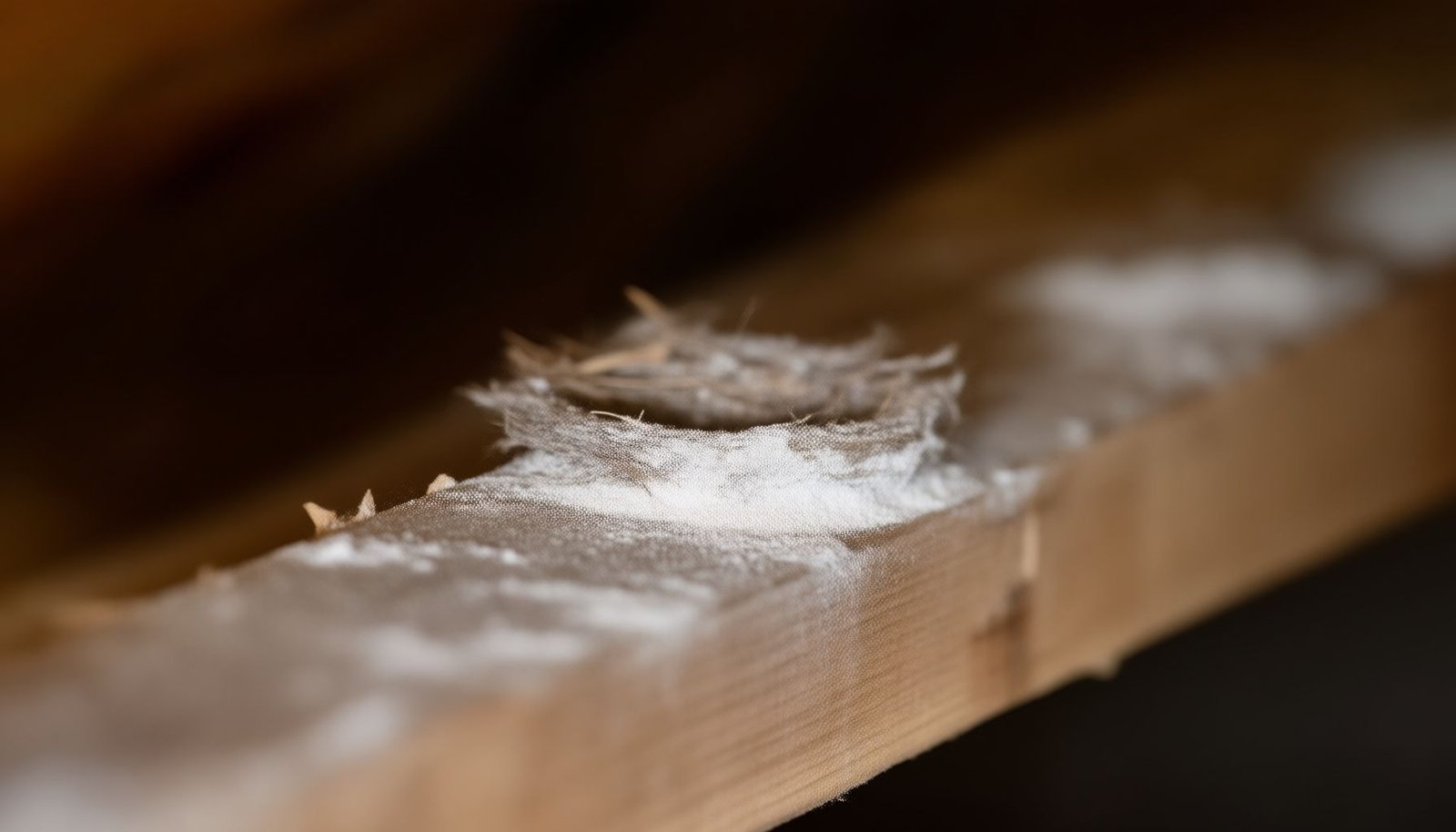
This close-up shows the layered application zones — nest site, insulation surface, and the attic floor perimeter — that any effective bird mite treatment needs to address, not just the visible nest area.
Which Sprays Actually Kill Bird Mites vs. Which Just Move Them
Not every insecticide labeled for mites behaves the same way in an attic environment. Some repel on contact but don’t kill eggs. Others have residual activity that lasts 30 to 90 days on porous surfaces — which is exactly what you need in a fiberglass insulation environment. The chemical class matters here: pyrethroid-based sprays (like those containing bifenthrin, permethrin, or cypermethrin) are your workhorses because they disrupt the mite’s nervous system on contact and leave a residual film on wood joists, vapor barriers, and around ceiling penetrations.
One product that field-tested pest control professionals keep coming back to is Temprid SC (beta-cyfluthrin + imidacloprid). It’s a dual-action concentrate that provides both fast knockdown and lasting residual — critical when you’re treating a space you won’t re-enter for weeks. Onslaught FastCap (esfenvalerate + prallethrin) is another solid choice for speed, especially if you’re dealing with an active dispersal event. For more budget-conscious applications across a large attic, Bifen IT (bifenthrin 7.9%) diluted at label rate handles large square footage without breaking the bank. None of these are aerosol cans from a hardware shelf — they’re concentrates you mix and apply with a pump sprayer or backpack sprayer.
“The biggest mistake I see homeowners make is treating only the nest and calling it done. Bird mites are micro-arthropods — they don’t need much of a gap to travel through. I always tell people: if you found a nest over a light can or HVAC penetration, treat a 10-foot radius around that point on the attic floor, then seal the gap before you come back down. Otherwise you’re just redirecting the infestation.”
Dr. Marcus Hale, Board-Certified Entomologist and Licensed Pest Management Professional, Southeast Extension Pest Advisory Group
When to Use Dust Instead of Spray (and Why Most People Skip This Step)
Dusts get overlooked because they feel low-tech. But in an attic — especially one with loose-fill insulation, rough-cut lumber, or hard-to-reach joist bays — dust is actually superior to liquid spray for long-term control. The reason is physics. Liquid spray sits on the surface it contacts and dries. Dust, when applied correctly with a hand duster or bellows duster, settles into cracks, around nail holes, into the edges of insulation, and along wall top plates where mites travel between the attic and wall cavities. A liquid spray literally cannot reach those spots.
Delta Dust (deltamethrin 0.05%) is the most consistently recommended dust for bird mites in attics by licensed pest professionals, and for good reason — it’s waterproof, which matters in attics with any humidity variation or minor condensation. Cimexa Dust (amorphous silica gel) is a non-pyrethroid option that works mechanically by absorbing the waxy coating on mites and causing dehydration — mites can’t develop resistance to it the way they sometimes can with chemical insecticides over repeated treatments. Use dust along the top plates of walls, in the corners of joist bays, around any ceiling penetration, and inside wall void areas accessible from the attic. Just as removing termites from structural wood requires targeting hidden voids — similar in principle to how to get rid of termites in furniture without fumigation — bird mite dust treatments are about reaching the places you can’t see.
Pro-Tip: Apply dust at a rate of about 0.5 oz per 100 square feet — a visible puff, not a heavy coating. Too much dust actually reduces effectiveness because mites walk over the surface clumps rather than picking up lethal particles. A light, even application that settles into cracks is far more effective than a visible white layer on the surface.
How to Apply Sprays and Dusts in the Correct Order (Steps That Actually Work)
Sequence matters as much as product selection. Applying dust before spray means the liquid can push the dust out of gaps and reduce its effectiveness. Applying spray in a random pattern means you’ll leave untreated corridors that the mites will find. Here’s the order that licensed pest professionals follow for attic bird mite treatments:
- Remove the nest and bag it — before any chemical is applied. Dead birds or active nest material left in place is a re-infestation source. Wear an N95 mask and disposable gloves; bag the nest in a sealed plastic bag and dispose of it outside.
- Apply liquid spray to the nest site and a 10-foot radius — soak the area where the nest sat, all surrounding joists, the subfloor above, and any insulation edges nearby. Let it dry 20 to 30 minutes before continuing.
- Treat ceiling penetrations from above — every recessed light, HVAC boot, plumbing vent, and wire chase is a mite highway. Spray around each one, and then dust inside the gap before sealing with fire-rated caulk or appropriate foam.
- Apply dust along all wall top plates — run a bead of dust along the entire perimeter where the attic floor meets the wall framing. This is where mites enter wall cavities and eventually reach living spaces.
- Seal entry points after treatment — don’t seal before you treat. Sealing first traps mites inside where they’ll keep searching for a host. Treat, then seal.
- Re-treat at 14 days — most pyrethroid sprays won’t kill mite eggs. A second treatment at two weeks catches the hatchlings before they can reproduce. Skip this step and you’ll likely see a resurgence.
This sequence isn’t arbitrary. Each step eliminates a specific route that mites use to survive or escape treatment. Doing them out of order — or skipping step 6 — is the most common reason DIY attic treatments feel like they “didn’t work.”
How to Choose the Right Product for Your Attic Type and Situation
Attics aren’t all the same, and the honest answer is that the best product depends on your specific setup. A finished attic with drywall and flooring is treated differently from a raw attic full of blown-in cellulose. High humidity in coastal regions affects how long residuals last on surfaces. If you have HVAC equipment in the attic, you need to be careful with sprays that can contaminate air handling units — stick to dusts in those zones and avoid spraying directly on or near air handler components.
| Product | Type | Best For | Residual Duration |
|---|---|---|---|
| Temprid SC | Liquid Concentrate | Active dispersal, large attics, wood surfaces | Up to 90 days on porous surfaces |
| Bifen IT | Liquid Concentrate | Budget large-area coverage, bare wood joists | 30–60 days |
| Delta Dust | Dust (deltamethrin) | Wall voids, top plates, humid attics | Up to 8 months (waterproof) |
| Cimexa Dust | Dust (silica gel) | Resistance-prone infestations, non-chemical approach | 10+ years if undisturbed |
One thing worth noting: if your attic birds were pigeons rather than sparrows or starlings, the mite load tends to be significantly higher — pigeons can host 20,000 to 50,000 mites per bird in severe cases. That scale calls for professional application of a concentrate like Temprid SC rather than a DIY aerosol, regardless of how handy you are. Severity changes the math. Just like tackling moles requires matching the tool to the size and layout of the yard — not just grabbing the first thing off the shelf, the way some people approach how to get rid of moles in the yard without poison — bird mite control rewards matching your product choice to your specific situation.
Here’s what to check before you buy anything:
- Attic access — can you safely move through the space to apply product evenly, or will you need an extension wand or duster for remote areas?
- Insulation type — blown-in cellulose or fiberglass batt absorbs liquid spray; use dust in and around insulation, spray on exposed wood surfaces only.
- HVAC presence — if return air ducts run through the attic, mites can be pulled into the system; treat around duct penetrations carefully and consider professional service in these cases.
- Prior treatments — if you’ve already sprayed a pyrethroid twice and the mites returned, switch to Cimexa; resistance to pyrethroids in mite populations is well-documented and a second chemical swap may be needed.
- Humidity level — above 60% relative humidity, some dust formulations clump and lose effectiveness; Delta Dust’s waterproof formula holds up better in these conditions than standard insecticidal dust.
The single most underestimated variable in DIY bird mite treatment is timing relative to bird activity. Treating an attic while a nest is still active — birds still present — is pointless. Mites won’t leave their host. You need the birds gone first, naturally or through exclusion, and then you treat within 48 hours of confirmed nest abandonment before the mite dispersal wave peaks. Treat too early, and the mites are still feeding on birds and won’t contact your spray. Treat too late, and they’ve already moved into wall cavities where your attic application can’t reach them.
If you’ve already confirmed the birds are gone, don’t wait. The 24-to-72-hour dispersal window is real, and closing it fast is what separates a one-and-done treatment from a three-month nightmare. Grab the right products, suit up with an N95 and disposable coveralls, and treat the same day you confirm the nest is empty. That timing discipline is worth more than any single product on this list.
Frequently Asked Questions
what kills bird mites in an attic?
Residual insecticide sprays containing permethrin or bifenthrin are your best bet for killing bird mites in an attic. Dusts like diatomaceous earth or deltamethrin-based products work well in hard-to-reach areas and keep working for weeks. You’ll want to treat the entire attic floor, rafters, and any nesting areas — not just where you see activity.
how long does it take for bird mite sprays to work in an attic?
Most residual sprays start killing bird mites on contact, but you’ll usually need 1-2 weeks to see the infestation fully collapse. If birds or nests are still present, mites will keep reproducing and sprays won’t keep up. Always remove the nest and block the entry point first, then treat — otherwise you’re fighting a losing battle.
can I use diatomaceous earth for bird mites in my attic?
Yes, food-grade or pest-control diatomaceous earth works well as a dust treatment for bird mites in attics. Apply a thin, even layer across the attic floor, insulation surfaces, and around any former nesting sites. It kills mites by damaging their exoskeleton and drying them out, but it loses effectiveness if it gets wet, so it’s best in dry attic environments.
do bird mites in the attic spread to the rest of the house?
They can, especially if the bird nest is close to living spaces or if there are gaps around light fixtures, vents, or ceiling penetrations. Once the host birds are gone, mites actively search for a new food source and can migrate down into bedrooms and living areas within days. Sealing those entry points between the attic and living space is just as important as spraying.
how many treatments does it take to get rid of bird mites in an attic?
Most infestations need at least 2-3 treatments spaced 7-10 days apart to break the mite life cycle and catch newly hatched mites. One treatment rarely does the job since eggs can survive the initial spray. Using a combination of a residual liquid spray and a dust product at the same time gives you better coverage and longer-lasting control.