
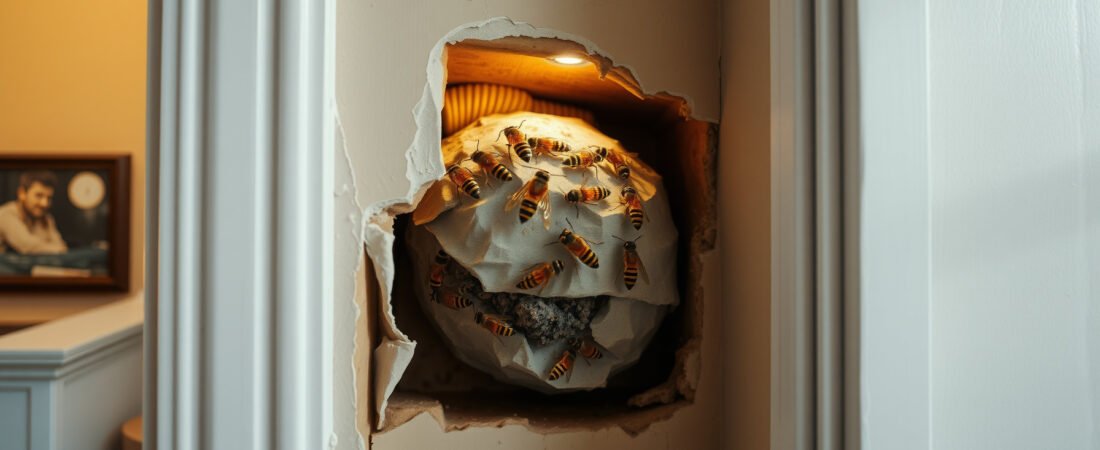
Spraying a wasp nest you can’t see is how most people get stung — and it’s exactly what makes wasps in the wall so different from every other wasp problem. The nest is hidden inside your wall cavity, the colony can grow to 3,000–5,000 workers before you even notice it, and every wrong move you make is amplified because those wasps have nowhere to escape except toward you. The counterintuitive truth here: the most common advice — spray the entry hole immediately — is the one thing most likely to turn a manageable infestation into a genuine medical emergency.
How Do You Know Wasps Are Actually Inside the Wall?
A lot of homeowners assume the wasps they see flying near a wall are just passing through. They’re not. If you’re watching 10 or more wasps per minute entering and exiting a single crack, gap around a utility pipe, or gap under a windowsill, you’ve got a nest inside — not a coincidence. Yellow jackets in particular are cavity nesters by nature, and wall voids are nearly perfect for them: protected from rain, insulated, and dark.
Press your ear flat against the drywall near the suspected entry point on a warm afternoon. A live nest inside the wall produces a dry, papery buzzing — almost like a quiet engine running at low RPM. You may also notice the wall surface feels faintly warm in that spot during peak activity hours (late morning to early afternoon). If you see wasps emerging from gaps around electrical outlets on an interior wall, the nest has likely been growing for 6–8 weeks and is already substantial.
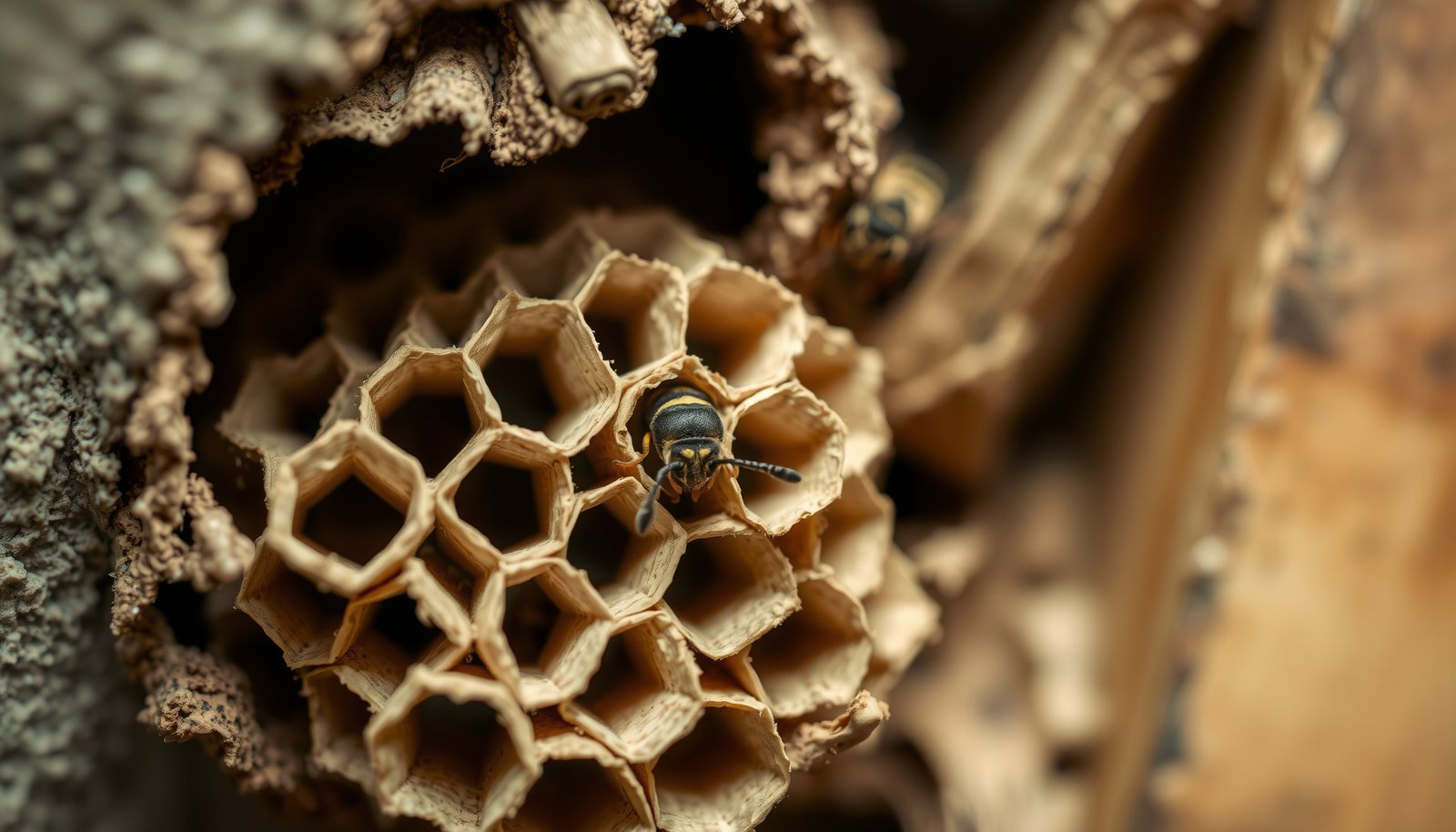
This close-up shows yellow jackets actively entering a wall void through a small gap — notice how tight the entry point is, which is exactly why spraying directly into it almost always backfires and forces wasps inward rather than out.
Why Spraying the Entry Hole First Is the Wrong Move
Here’s the part almost nobody tells you: when you spray insecticide directly into the entry hole, you don’t kill the nest — you panic it. Worker wasps inside the wall immediately detect the chemical threat and scatter. Some die near the hole, but hundreds more push deeper into the wall cavity or, worse, start chewing through the drywall on the interior side of your house. Picture this — a homeowner in a ranch-style house in suburban Georgia sprays a yellow jacket hole under the eave on a Saturday morning, seals it with spray foam two minutes later, and by Sunday afternoon there are wasps coming through the light switch cover in the living room. That’s not a rare story. It’s what happens when you trap a threatened colony with no exit.
The mechanism matters here. Yellow jackets and paper wasps both communicate alarm chemically — an alarmed worker releases a pheromone that recruits other guards within seconds. Sealing the entry hole before the colony is dead essentially sends a “we’re under attack from outside” signal while removing the only escape route, redirecting aggression inward. Dust insecticides work far better than sprays here precisely because dust travels through the void on air currents rather than pooling at the entry point — but even that needs to be applied correctly and at the right time of day.
“Most in-wall yellow jacket treatments fail because homeowners treat the symptom — the entry hole — rather than the nest itself. Insecticide dust applied at dusk, when forager wasps have returned and activity slows, penetrates the entire void and reaches the brood chamber. That’s what actually collapses a colony. Anything else just makes them angrier.”
Dr. Sandra Villanueva, Structural Pest Management Specialist, Texas A&M AgriLife Extension
What Actually Works: The Step-by-Step Method for Wall Nests
Timing is everything with in-wall wasps — and that’s not just a safety cliché. Wasp colonies are most vulnerable after dusk when the temperature drops and foragers have returned to the nest. At that point, the entire colony is present, movement is sluggish, and the risk of provoking an aerial attack drops significantly. Wear long sleeves, gloves, and eye protection regardless — even “calm” wasps can sting when a puff of dust hits the entry hole.
Here’s the correct sequence for treating wasps in a wall void yourself:
- Identify all entry and exit points first, in daylight. Mark them with painter’s tape without blocking them. Missing even one secondary hole means the colony has an escape route you haven’t treated.
- Wait until dusk or early dark (at least 30 minutes after sunset). Foragers return between 4–6pm on warm days; by dusk nearly the entire colony is inside the wall.
- Apply insecticide dust — not spray — directly into every entry hole using a hand duster. Delta dust (deltamethrin) or Drione dust (pyrethrin + silica) are the two most effective options for wall voids. Aim for 2–3 puffs per opening; the dust spreads on air currents through the void and coats the nest and brood chambers within 15–30 minutes.
- Do NOT seal the entry holes yet. Leave them open for 48–72 hours so returning foragers re-enter, contact the dust, and carry it further into the nest.
- Check activity on day 3. Zero or near-zero traffic at the entry holes means the colony is dead. Lingering activity means a second application is needed before sealing.
- Seal all entry holes with caulk or foam backer rod once activity has stopped completely. If you seal too early and leave dead nest material in the wall, it will attract dermestid beetles, rodents, and secondary pests within weeks.
Pro-Tip: Apply a thin ring of petroleum jelly around the entry hole rim before dusting. It prevents live wasps from crawling back out over the treated area and stinging you mid-application — a small detail that makes a real difference when you’re working in low light at close range.
Does the Type of Wasp Change How You Treat It?
Yes — and this is an honest nuance that most generic wasp articles skip over entirely. The species nesting in your wall affects colony size, aggression level, and whether the nest will reactivate next season. Yellow jackets (primarily Vespula and Dolichovespula species) are by far the most common wall-void nesters in the US, and they’re also the most dangerous. Their colonies can exceed 4,000 workers by late summer, they nest perennially in warm climates, and a single disturbed yellow jacket releases enough alarm pheromone to recruit 20–30 additional stinging workers within seconds.
European hornets (Vespa crabro) also nest in wall cavities in the eastern US and are actually nocturnal foragers — meaning dusk treatment is less effective for them. For European hornets, very early morning (before 6am) is the better window. Bald-faced hornets prefer aerial locations but will occasionally use wall voids, and their venom is notably more irritating than yellow jackets’. Here’s a quick comparison of what you’re likely dealing with:
| Species | Typical Colony Size | Best Treatment Window | Re-nesting Risk Next Year |
|---|---|---|---|
| Yellow jacket (Vespula spp.) | 1,500–5,000 workers | After dusk | Low in cold climates; moderate in South |
| European hornet | 200–400 workers | Before dawn | Low (queens overwinter elsewhere) |
| Bald-faced hornet | 400–700 workers | After dusk | Very low (new nest each year) |
One thing worth knowing: in USDA hardiness zones 8 and above (most of Texas, Florida, Georgia, California), yellow jacket queens sometimes overwinter inside wall voids rather than leaving. That means a “dead” nest in January can reactivate in March with the original queen still present, not a newly arriving one. If you’re in a warm-weather state, sealing the entry hole immediately after confirmed die-off in fall is non-negotiable.
When Should You Call a Professional Instead of DIYing This?
DIY treatment is genuinely viable for most in-wall wasp situations — but not all of them. The variables that push a situation into “call a pro” territory aren’t always obvious. Here’s what should give you pause:
- Anyone in the household has a known venom allergy. A single sting from a disrupted yellow jacket colony can trigger anaphylaxis — the risk-reward calculation changes completely when epinephrine autoinjectors are involved.
- The nest is behind finished drywall with no accessible entry from outside. If the wasps are entering from inside (through gaps behind cabinets, for instance), dust application becomes nearly impossible without opening the wall.
- You can hear multiple distinct buzzing zones in different parts of the wall. This sometimes indicates a nest large enough to span multiple stud bays — effectively multiple chambers connected through gaps in insulation, which requires treatment from several points.
- You’ve already tried spraying and sealed the hole within the last 72 hours. A trapped, chemically agitated colony is far more dangerous to retreat than a fresh infestation — this is the scenario most likely to produce interior incursion through drywall.
- The nest is near HVAC ductwork or in a crawl space with limited escape room for you. Tight spaces cut off your retreat options, which matters a lot if the treatment goes sideways.
Professional treatment for in-wall wasps typically runs $150–$400 depending on location, wall construction, and colony size — and that usually includes a follow-up visit if activity persists. The professional wasp nest removal cost breakdown on this site covers exactly what that price includes and when it’s justified, which is worth reading before you decide. For most straightforward exterior-entry wall nests on single-story homes, though, a $12 tube of insecticide dust and 20 careful minutes after dark will do the job cleanly.
One more thing that rarely gets mentioned: dead nest material left inside a sealed wall void doesn’t just smell bad for a few weeks. The honeycomb structure (in yellow jacket nests) and the protein-rich brood cells attract secondary infestations — dermestid beetles, wax moths, and rodents can all be drawn in through separate entry points by the scent of decaying nest material. It’s the same principle as leaving food debris in a sealed area — if you’re curious about how that kind of residual attractant works with other pests, the concept is explained well in the article on best boric acid products for cockroach and ant control, which covers how residual bait products exploit pest foraging behavior rather than just killing on contact.
Getting rid of wasps in a wall without getting stung comes down to one principle: work with the colony’s biology instead of against it. Treat at the right time, use the right formulation, leave the exits open until the colony is confirmed dead, and seal everything only after you’ve verified there’s nothing left to trap inside. Do it in that order and you’ll almost certainly never need to open that wall.
Frequently Asked Questions
How do I know if wasps are living inside my wall?
You’ll usually hear a faint chewing or buzzing sound coming from inside the wall, especially in warmer months. Look for wasps flying in and out of a small gap, crack, or hole in the siding, brick mortar, or trim — they’re not just passing by, they’re going home. A colony can grow to 5,000 or more wasps by late summer, so don’t ignore early signs.
What kills wasps inside walls without tearing them open?
Insecticide dust, like Delta Dust or Tempo Dust, is your best option — it gets deep into the void and coats the nest without requiring you to open the wall. Apply it directly into the entry hole using a hand duster, ideally after dark when wasps are least active and mostly inside. Avoid using foam or liquid sprays in wall voids since they can trap moisture and cause damage.
Is it safe to seal the hole in the wall to get rid of wasps?
Don’t seal the entry hole until you’re sure the colony is dead — if you trap live wasps inside, they’ll chew through drywall trying to escape and end up inside your home. Wait at least 3 to 5 days after treatment before checking for activity, then seal the hole once you’ve confirmed there’s no more movement. Use caulk or steel wool to close gaps permanently and prevent future nesting.
Should I call an exterminator for wasps in the wall or can I do it myself?
You can handle a small colony yourself if the entry point is accessible and you’re comfortable using protective gear and insecticide dust. But if the nest is deep in the wall, you’re dealing with yellow jackets (which are aggressive), or you’ve been stung before and have a reaction risk, call a licensed pest control professional. Exterminators typically charge between $100 and $400 depending on location and nest size.
What time of day is safest to treat wasps in the wall?
Treat after dark — ideally between 10 PM and early morning — when wasps are inside the nest and much less active. Wear long sleeves, gloves, and a hat with a veil even at night, because disturbing the entry hole can still trigger defensive behavior. Using a red-light flashlight instead of white light also helps since wasps can’t see red wavelengths well.
Disclaimer: This article is for informational purposes only and isn’t a substitute for professional pest control advice. Always read and follow the product label instructions exactly — label directions are legally binding and vary by brand and active ingredient. Keep all pesticides, baits and traps away from children and pets, ventilate treated areas as directed, and consider calling a licensed pest control professional if an infestation is large, recurring, or involves a structural pest like termites or carpenter ants.