
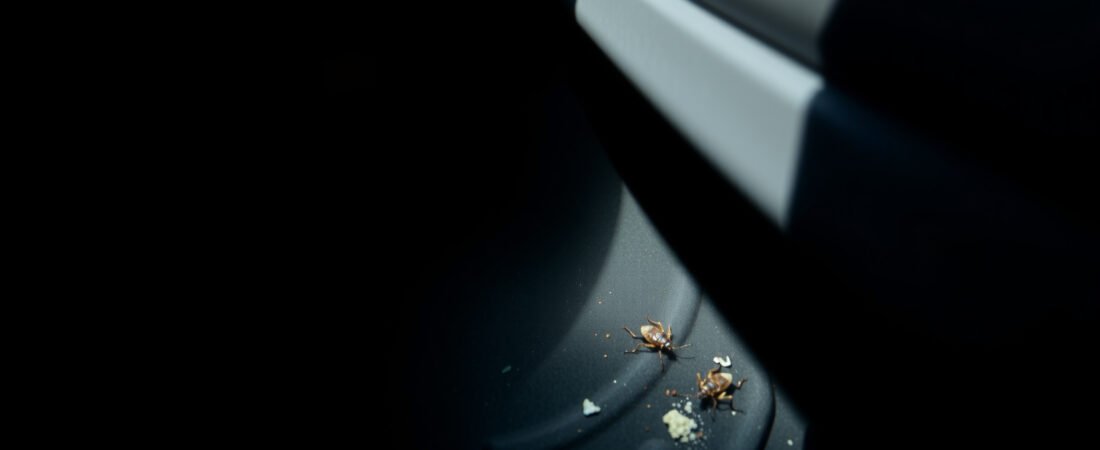
Roaches in a car are not a hygiene problem — they’re a harborage problem. That distinction matters more than anything else you’ll read in this guide, because if you treat your car like a dirty kitchen, you’ll keep failing to get rid of them.
Here’s the bottom line: the reason most people can’t eliminate roaches from their vehicle is that they attack the adults and completely ignore the egg cases. A female German cockroach produces 30–40 eggs per capsule, and those capsules are glued to the undersides of seats, inside door panel cavities, and behind the dashboard — places no spray ever reaches. Kill every adult today and you’ll have a fresh infestation in two to three weeks when the eggs hatch. The step-by-step process below fixes that.
Why Roaches Set Up in Cars in the First Place
A parked car sitting overnight hits nearly every condition cockroaches want: enclosed warmth, low foot traffic, and — here’s the part most people overlook — condensation. The underside of a dashboard and the foam inside seats trap moisture the same way a bathroom wall does. You don’t need food crumbs to attract roaches to a car, though crumbs definitely accelerate the problem.
Picture this: you stop at a grocery store, bring the bags into the car, and one roach hitchhikes in from a corrugated cardboard box in your trunk. Corrugated cardboard is one of the most common roach transport vectors in the country — the flutes inside the board are the exact size roaches like to shelter in. Within 24–48 hours of entry, that roach has already begun exploring harborage spots behind your glove box and under your back seat. By the time you see the second one, there’s likely already an egg case somewhere you can’t see.
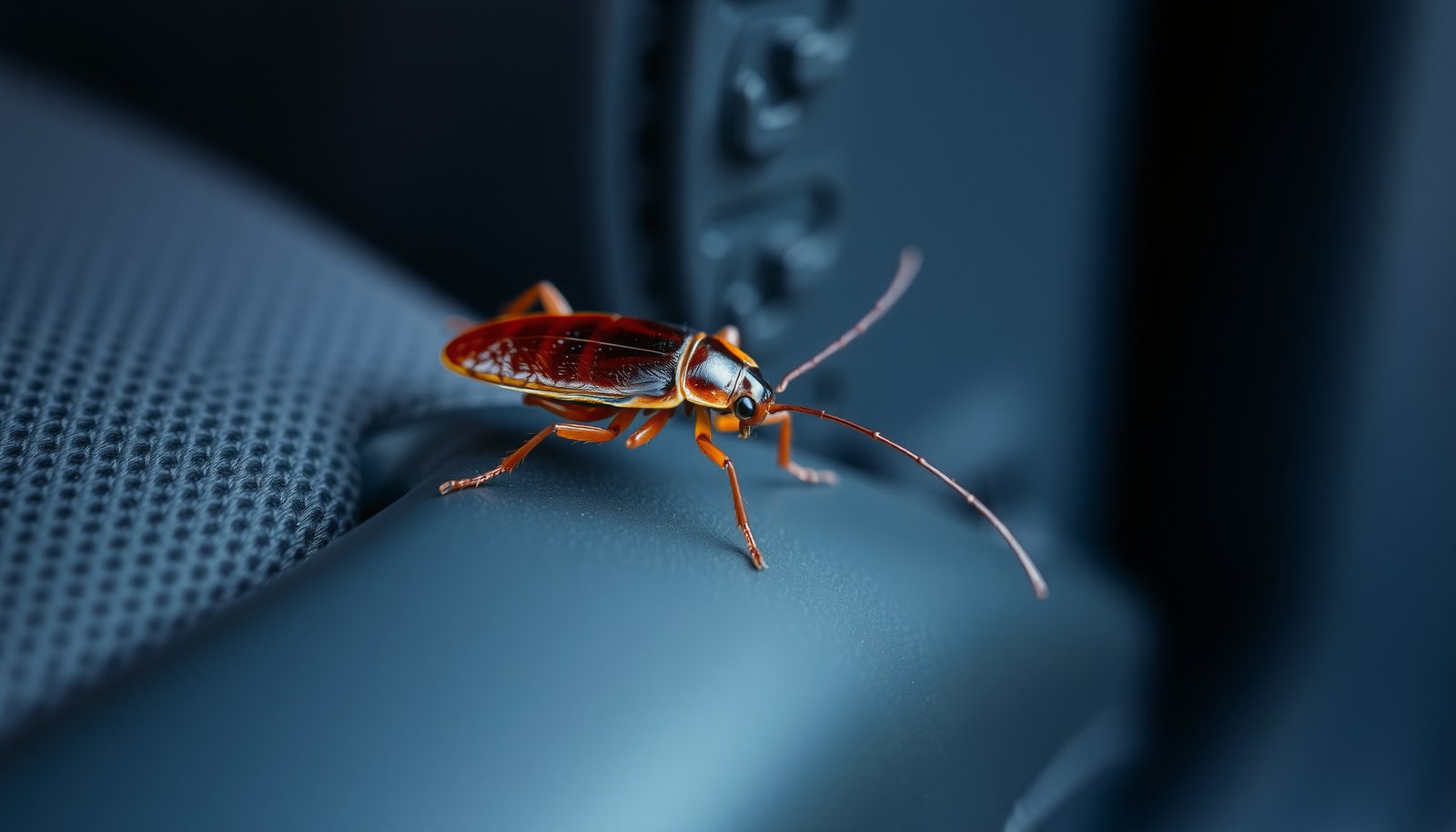
This close-up shows the tight gap between a car seat rail and the floor carpet — one of the most common and overlooked harborage zones where roaches deposit egg cases and spend daylight hours completely hidden from view.
How to Inspect Your Car and Find Every Roach Hiding Spot
Don’t start treating until you’ve inspected — this is the step most people skip, and it’s why they burn through three cans of spray and still have roaches. Grab a flashlight and work in a specific order. The goal is to identify where the population is centered before you choose your treatment approach.
Roaches in cars follow predictable harborage patterns. They cluster where warmth, darkness, and a surface to grip all meet at once. Knowing where to look saves you from wasting product on the wrong zones.
- Under and behind the seats: Slide the seat all the way forward, then all the way back. Look at the seat rails with a flashlight. Egg cases (oothecae) look like small brown purse-shaped capsules about 8–10mm long and are often glued to the rail itself.
- Inside the glove box and center console: Remove everything, including any paper, receipts, or forgotten napkins. Roaches use paper as both a food source and a hiding material.
- Under floor mats: Lift every mat completely. Check the carpet underneath for feces (small dark specks, like ground pepper), shed skins, or smear marks along the edges.
- Behind the dashboard: You won’t be able to see far here without removing panels, but you can check the vents. Shine your flashlight through the defroster vents and any open gaps near the steering column.
- In the trunk: Remove everything and check all corners and the spare tire well. If roaches entered via grocery bags, the trunk is often the original harborage point.
- Under the hood: Especially if the car sits for long periods. The engine bay provides warmth even hours after the car was last driven, and roaches will shelter near the firewall on the interior-facing side.
The Egg Case Problem: Why Sprays Alone Will Always Fail
This is the core issue that separates people who get rid of car roaches once and for all from people who keep fighting the same infestation for months. Cockroach egg cases — oothecae — have a protein shell that is genuinely resistant to most contact insecticides. You can spray directly on an ootheca and the eggs inside will still hatch. The solution isn’t a stronger spray. It’s a different class of product entirely.
Insect growth regulators (IGRs) are the tool most homeowners have never heard of, and they’re the reason pest professionals can clear an infestation that DIY attempts couldn’t touch. IGRs don’t kill adults on contact — they work by mimicking juvenile hormones in cockroaches, which prevents nymphs from molting into reproductive adults. Any nymph that hatches from a surviving egg case and contacts an IGR-treated surface will never reproduce. Over one to two generations, the population collapses. For a deep look at which IGR products actually work and how to apply them, the Best Insect Growth Regulators (IGR) for Flea and Roach Control guide covers the top options side by side.
“In a confined space like a vehicle, the combination of a gel bait for adult knockdown and an IGR for population suppression is genuinely the most effective protocol we have. Aerosol sprays alone are almost always a waste of time in cars because the roaches just retreat deeper into the dash cavity where the residual never reaches.”
Dr. Marcus Tello, Board-Certified Entomologist and former technical director at a national pest management firm
Step-by-Step Treatment: What to Use, Where, and in What Order
The sequence matters here. Apply products in the wrong order and you’ll repel roaches away from your bait before they eat it — a very common mistake when people use a repellent spray and a bait in the same session. Repellent sprays drive roaches into hiding; gel baits work by attracting them out. Use them together at the same time and they cancel each other out.
Follow this treatment order and give each phase its proper time to work before moving to the next.
| Treatment Phase | Product Type | Where to Apply | Timeframe |
|---|---|---|---|
| Phase 1 — Clean & Remove | Vacuum, steam cleaner | All surfaces, seat rails, carpet | Before any product goes in |
| Phase 2 — Bait | Cockroach gel bait (e.g., Advion, Vendetta) | Pea-sized dots under seats, inside console, near vents | Leave for 5–7 days undisturbed |
| Phase 3 — IGR | IGR spray or aerosol (e.g., Gentrol, Pivot) | Seat rail undersides, carpet edges, trunk corners | Apply after bait is established; reapply every 30 days |
| Phase 4 — Monitor | Sticky glue traps | Under seats, inside glove box | Check every 3–4 days to gauge activity |
Pro-Tip: When placing gel bait in a car, apply it in spots that won’t get direct sun exposure — intense heat dries out the bait matrix within hours, making it unpalatable to roaches. Stick to under-seat rails, the back of the console, and shaded spots near the footwell rather than on top of the dashboard.
One honest caveat here: if your infestation has been active for more than four to six weeks, or if you’re seeing roaches during the day (which means the population is dense enough that nighttime harborage is overcrowded), a single round of gel bait may not be enough. Severe car infestations sometimes require a professional hot-shot treatment with a pyrethroid aerosol forced into the dash cavity, followed by the bait-and-IGR protocol. Don’t feel like you failed if that’s where you end up — cars are genuinely harder to treat than rooms because of how inaccessible the harborage zones are.
How to Make Sure Roaches Don’t Come Back
Clearing the infestation is only half the job. Roaches return to cars for the same reasons they showed up in the first place, and the prevention steps that actually work are different from what most people assume. Spraying air freshener or leaving dryer sheets under the seat — a popular folk remedy — does essentially nothing. Roaches don’t care how your car smells as long as it offers warmth and cover.
The real prevention strategy is structural and behavioral, not chemical. Here’s what genuinely reduces the risk of reinfestation:
- Never transport corrugated cardboard in your car. Transfer groceries to reusable bags before loading them. Cardboard boxes — especially from grocery stores and warehouses — are among the highest-risk roach transport vectors in everyday life.
- Don’t eat in the car, or vacuum within 24 hours when you do. Crumbs under seats create exactly the food resource that sustains a small roach population long enough for it to establish and reproduce.
- Park away from dumpsters and wooded areas overnight when possible. American cockroaches — the large, reddish-brown species — forage outdoors at night and will enter any vehicle parked in their territory through gaps around door seals and hood vents.
- Maintain one IGR-treated glue trap under each front seat permanently. This gives you an early warning system. If activity picks up, you’ll see it on the trap before the population has time to establish.
- Check secondhand car seats, strollers, and used items before loading them. Items stored in garages or bought used are a common reinfestation source that people rarely connect back to their vehicle problem.
It’s worth noting that if you’ve had roaches in your car and you also park in an attached garage, there’s a meaningful chance the infestation is moving in both directions. A car can seed a garage, and a garage with roaches will keep reinfesting a car parked in it indefinitely. Treat both spaces simultaneously or you’re working against yourself. If you’re dealing with a rental situation where roaches are present in the building itself, understanding your rights around disclosure and treatment is worth looking into — the pest inspection required before move-out guide covers what landlords are legally required to document, which can matter if your infestation traces back to building-wide activity.
Roaches in a car feel uniquely violating — it’s your personal space, you’re inside it daily, and unlike a kitchen cabinet you can just stop opening, you can’t avoid your commute. The good news is that cars, precisely because they’re enclosed and finite, respond better to targeted treatment than most infested spaces do. Follow the sequence, don’t skip the IGR step, and pull those egg cases out manually wherever you can find them. You’ll be done with this faster than you think.
Frequently Asked Questions
how did roaches get in my car in the first place?
Roaches usually hitchhike into your car through grocery bags, fast food containers, or secondhand items you’ve transported. They’re also drawn in by food crumbs, spilled drinks, and trash left in the car — even a small wrapper is enough to attract them. Parking near dumpsters or in heavily infested areas can also give them easy access through gaps in doors and vents.
what kills roaches in a car fast?
Gel bait like Advion or Combat Max is one of the fastest and most effective options — place small dots under seats, in the trunk, and along door panels. Diatomaceous earth sprinkled in cracks and crevices works well too, though it takes a few days to kill. Avoid bug bombs inside your car since they leave residue on surfaces you touch daily and often don’t reach the tight spots where roaches hide.
how long does it take to get rid of roaches in a car?
With consistent treatment, most infestations clear up within 1 to 3 weeks. If you’re using gel bait, you should start seeing dead roaches within 3 to 5 days. Severe infestations — especially if there’s an egg case hidden somewhere — can take up to a month to fully eliminate, so keep treating even after you stop seeing live roaches.
can roaches lay eggs in my car?
Yes, they absolutely can. A female cockroach can deposit an egg case called an ootheca in hidden spots like under seats, inside door panels, or tucked into seat foam — and a single ootheca can contain anywhere from 14 to 48 eggs depending on the species. That’s why a thorough vacuuming and inspection is critical before you start any treatment, so you’re not leaving egg cases behind.
is it safe to use roach spray inside a car?
Most aerosol roach sprays aren’t ideal for use inside a car because the confined space concentrates fumes and the residue ends up on seats and surfaces you’re constantly touching. If you do use a spray, choose one labeled safe for indoor use, ventilate the car completely for several hours afterward, and wipe down all hard surfaces before getting back in. Gel baits and diatomaceous earth are generally safer and more effective alternatives for the interior.
Disclaimer: This article is for informational purposes only and isn’t a substitute for professional pest control advice. Always read and follow the product label instructions exactly — label directions are legally binding and vary by brand and active ingredient. Keep all pesticides, baits and traps away from children and pets, ventilate treated areas as directed, and consider calling a licensed pest control professional if an infestation is large, recurring, or involves a structural pest like termites or carpenter ants.