
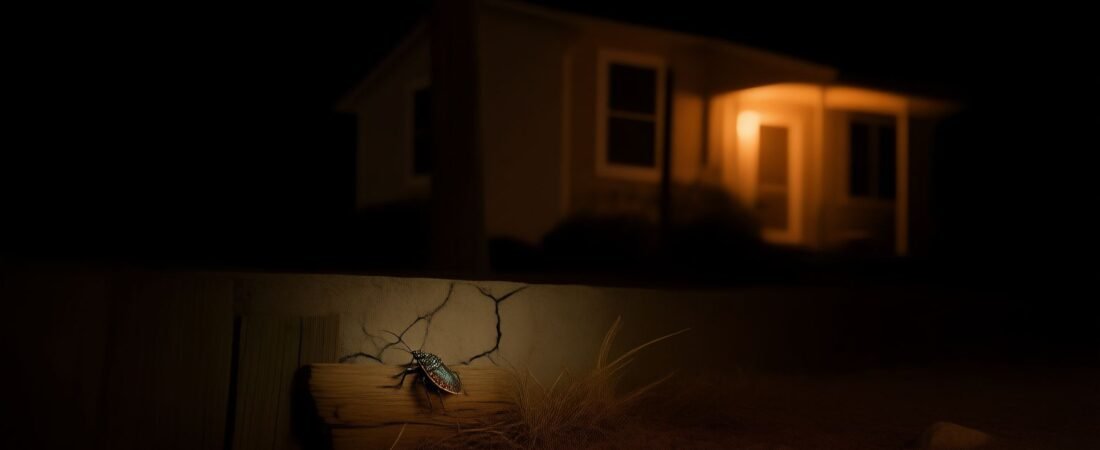
About 300,000 people in the United States are already living with Chagas disease — and the vast majority of them have no idea. That number isn’t a projection or a worst-case estimate; it comes from CDC surveillance data, and it points to something most kissing bug articles completely miss: the danger isn’t the bug bite itself. It’s the silent infection that follows, often for years, with zero symptoms until the heart or gut is already damaged. If you’ve found a kissing bug in your home or you live in the southern US, here’s what you actually need to understand about the risk.
What Does a Kissing Bug Actually Do to You?
Kissing bugs — formally known as triatomine bugs — don’t inject venom and they’re not venomous in the way a spider or scorpion is. What they do is feed on blood while you sleep, typically biting near the mouth or eyes (hence the nickname), and then defecate on your skin immediately after feeding. That detail matters enormously. The parasite Trypanosoma cruzi, which causes Chagas disease, lives in the bug’s feces — not in its saliva. Transmission happens when you unconsciously rub or scratch the bite site and push the feces into the wound, your eyes, or your mouth.
This fecal-transmission mechanism is why kissing bugs in the US are considered less efficient transmitters than their Latin American counterparts. Many of the triatomine species found in the US tend to defecate away from the bite site, reducing (but not eliminating) the chance of infection. That said, researchers have confirmed local transmission of Chagas disease in Texas, California, Louisiana, and other southern states — this isn’t a purely imported disease anymore, and treating it like one is exactly the kind of assumption that leads people to dismiss a real risk.
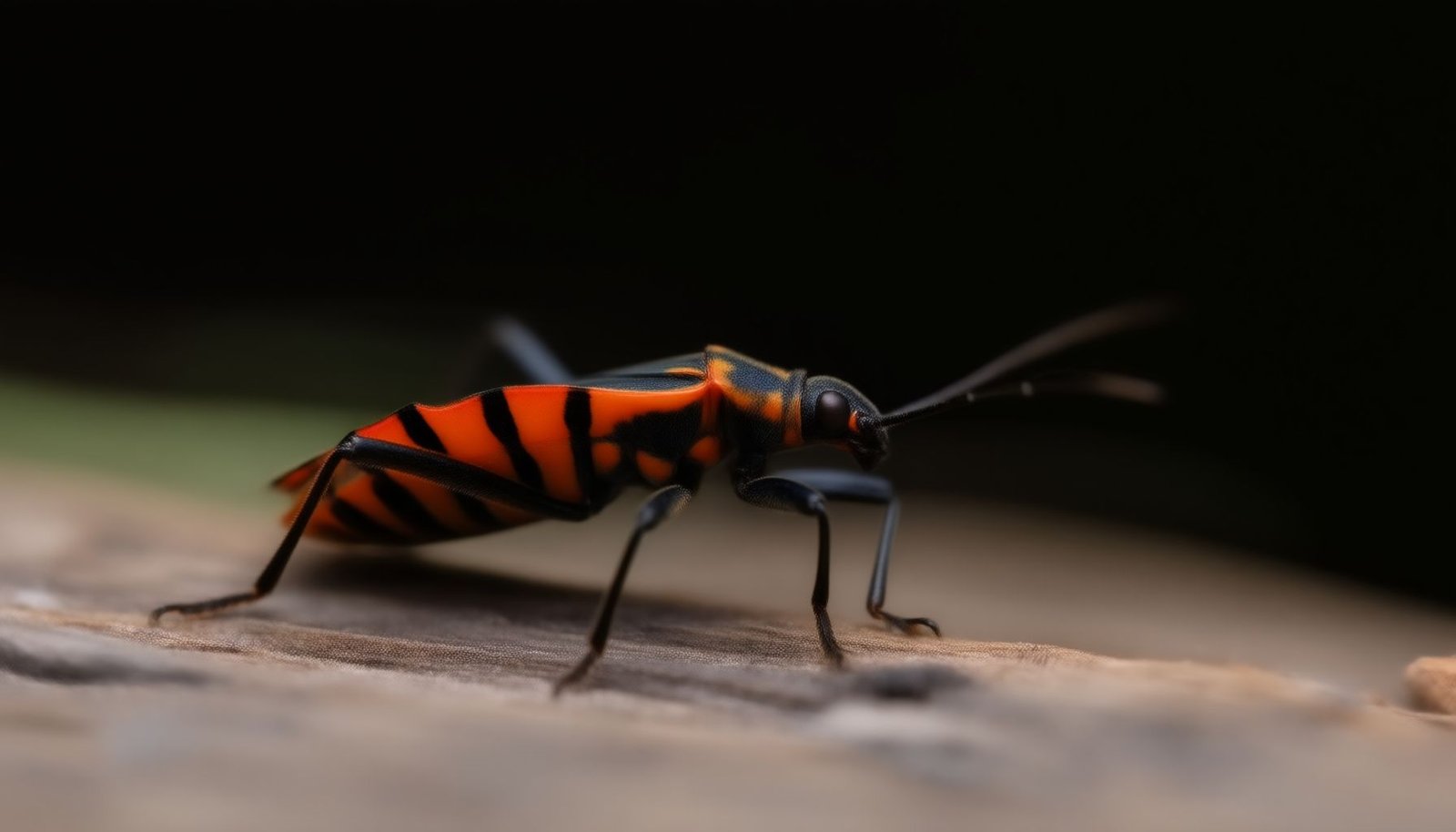
This close-up shows the distinctive cone-shaped head and dark banded abdomen that separate a true triatomine bug from the many lookalikes — including wheel bugs and western conifer seed bugs — that homeowners frequently misidentify as kissing bugs.
How Likely Is It That a Kissing Bug in Your Home Is Actually Infected?
Here’s the counterintuitive part that most pest control content glosses over: not every kissing bug carries T. cruzi. Studies across the southern US have found infection rates ranging from roughly 40% to 60% in wild-caught triatomines, depending on the region and species. That means your odds aren’t zero — but they’re also not a certainty. The infection rate in bugs is tied directly to whether local wildlife reservoirs (raccoons, opossums, armadillos, wood rats) are present, since the bugs pick up the parasite by feeding on infected animals before they ever wander into a human home.
Even if a bug is infected, transmission to a human requires that specific sequence of events: bite, defecation on skin, and feces entering a mucous membrane or wound. Each step reduces the probability. That doesn’t mean you should shrug it off — it means you should handle a found bug correctly (don’t crush it; that can spread feces), and if you’ve been bitten, contact a doctor who can test for T. cruzi antibodies. Early detection is the entire ballgame with Chagas disease.
“The acute phase of Chagas disease is frequently missed in the US because clinicians aren’t trained to look for it, and patients don’t connect a bug bite to cardiac symptoms that appear months or years later. Screening after a confirmed triatomine bite should be standard, not optional.”
Dr. Patricia Salinas, Board-Certified Infectious Disease Specialist and Vector-Borne Disease Researcher, University of Texas Health Science Center
Which US States Have the Highest Kissing Bug Risk?
Eleven triatomine species have been identified in the United States, and their ranges cover a much larger territory than most people realize. The species most associated with home intrusion and Chagas transmission include Triatoma gerstaeckeri (Texas, New Mexico), Triatoma protracta (California, Arizona, Nevada), and Triatoma sanguisuga (southeastern states from Florida to Maryland). These bugs are not exclusively a Texas problem — reports have come in from as far north as Pennsylvania and Delaware, though those are outlier sightings rather than established populations.
Your actual risk level depends on more than just your state. Rural and semi-rural properties near woodland edges, homes with rock piles or wood stacks against the foundation, and houses with pets that go outdoors all create conditions that attract triatomines. They follow light at night, which is how they end up indoors — a porch light left on near an unsealed gap is a more direct invitation than most homeowners realize. If you’ve been noticing other unusual insects getting into your upper floors or attic spaces at night, it’s worth reading about Bugs in My Attic: What They Are and When to Worry, because the entry points kissing bugs use are often the same ones other pests exploit.
| Region | Primary Species | Risk Level | Notes |
|---|---|---|---|
| Texas / New Mexico | T. gerstaeckeri | High | Most documented human cases of local transmission |
| California / Arizona | T. protracta | Moderate–High | Infection rates up to 55% in sampled bugs |
| Southeast (FL, GA, SC) | T. sanguisuga | Moderate | Expanding range; wildlife reservoirs well-established |
| Mid-Atlantic / Northeast | Various | Low | Occasional sightings; not established breeding populations |
What Are the Real Symptoms of Chagas Disease — and Why Do People Miss Them?
This is the section most people need and almost no pest control site provides in any depth. Chagas disease has two distinct phases, and the acute phase — the weeks immediately after infection — often looks like nothing more than a mild flu. Fatigue, low-grade fever, body aches, and swelling at the infection site (called Romaña’s sign if it’s near the eye) can all appear within 1–2 weeks of exposure. Many people sleep through the acute phase entirely, never connecting a bite wound to their symptoms.
The chronic phase is where the real danger lives, and it can begin silently anywhere from 10 to 30 years after the initial infection. Roughly 30% of people with untreated Chagas disease develop serious cardiac complications — arrhythmia, heart failure, or sudden cardiac death — or gastrointestinal problems like a severely dilated esophagus or colon. The parasite essentially remodels the nervous tissue in the heart and digestive tract over decades. Treatment with antiparasitic drugs (benznidazole or nifurtimox) is most effective when given during the acute phase, which is exactly when the infection is hardest to catch.
Pro-Tip: If you find a kissing bug in your bedroom and aren’t sure whether you’ve been bitten, don’t crush the bug. Instead, capture it in a sealed container or zip-lock bag and contact your state health department or a university extension office — some states will test the bug for T. cruzi at no cost, which gives you useful information before you need to decide whether to pursue blood testing yourself.
How Do You Know If the Bug You Found Is Actually a Kissing Bug?
Misidentification is rampant with this bug, and it creates two problems at once: people panic over wheel bugs and western conifer seed bugs that pose no Chagas risk, and occasionally people dismiss an actual triatomine as a “harmless beetle.” A true kissing bug has a few non-negotiable features. It’s oval-shaped, typically 3/4 inch to 1-1/4 inches long, with a narrow cone-shaped head — that elongated head is the most reliable field marker. The abdomen usually has a distinctive banded pattern of orange or red and black around the edges, which is visible when the bug’s wings are folded.
Here’s what distinguishes kissing bugs from their most common lookalikes:
- Wheel bug (Arilus cristatus): Similar size but has a dramatic cog-shaped crest on its thorax — no kissing bug has this feature. Wheel bugs also don’t have banded abdomens.
- Western conifer seed bug (Leptoglossus occidentalis): Has a flattened, leaf-like expansion on its hind legs; kissing bugs do not. Also much more common in northern states.
- Squash bug (Anasa tristis): Smaller, more oval, found on plants; lacks the cone-shaped head entirely.
- Masked hunter (Reduvius personatus): Entirely black with no abdominal banding; often found indoors but doesn’t transmit Chagas.
- Bat bug / bed bug: Much smaller (under 1/4 inch when unfed), flat and oval, no cone-shaped head, no wings as adults.
One more thing worth knowing about indoor pest detection: kissing bugs and other blood-feeding insects often show up in similar circumstances — entering a home at night, found near sleeping areas, associated with pets. If you’ve been trying to figure out whether you have a different biting insect problem, checking out the Signs of Fleas in Your Home Before You Get Bites guide can help you rule out a concurrent flea issue, since the two can occasionally coexist in homes with outdoor pets that also attract wildlife.
What Should You Actually Do If You Find a Kissing Bug Inside Your House?
Finding one kissing bug indoors doesn’t automatically mean you have an infestation, but it does mean you have a gap problem. Triatomines that enter homes are almost always following a food source — your body heat and carbon dioxide — after getting inside through cracks, gaps around windows or doors, or openings where utility lines enter the structure. They don’t breed and colonize indoors the way cockroaches do; a single bug found in a bedroom is more likely a lone wanderer than a sign of an established colony in your walls. That said, one entry means more can follow.
Take these steps in order after finding a kissing bug:
- Don’t crush it. Use a container or forceps to capture it alive if possible, or capture it dead without direct skin contact. The feces on a crushed bug can still be infectious.
- Wash the area thoroughly. If you touched the bug or suspect skin contact with its feces, wash with soap and water immediately. Avoid rubbing your eyes or mouth until you’ve washed your hands.
- Submit the bug for identification. Contact your county health department, state department of agriculture, or a university extension entomologist. Some states have formal submission programs specifically for triatomine surveillance.
- Get tested if you’ve been bitten. A blood test for T. cruzi antibodies can be done by most infectious disease physicians. Testing within the first few weeks of suspected exposure gives you the most useful window for treatment options.
- Seal entry points. Use caulk or weatherstripping around windows, doors, pipe penetrations, and foundation cracks. Pay particular attention to gaps near porch lights and exterior doors — these are the most common entry corridors.
- Reduce outdoor attractants. Move woodpiles, rock piles, and debris away from the foundation. If you feed pets outdoors, that food attracts the wildlife that hosts T. cruzi — which attracts the bugs that feed on those animals.
One honest nuance here: the actual risk calculus changes significantly depending on where you live. A homeowner in rural south Texas who regularly finds triatomines on their porch and has outdoor dogs is in a genuinely different situation than someone in Maryland who spotted one unusual bug near a window once. The practical response — seal gaps, capture and ID the bug, get tested if bitten — is the same in both cases. But the urgency and the likelihood of a repeat encounter are not.
The bigger picture on kissing bugs and Chagas disease in the US is this: the risk is real and underdiagnosed, but it’s also specific and manageable. The gap between “this bug can transmit a dangerous parasite” and “I am definitely infected” is wide, and it’s worth understanding that gap rather than either dismissing the bug entirely or catastrophizing over a single sighting. Know what you’re dealing with, handle it correctly, and talk to a doctor who takes your exposure seriously — that combination does more for your actual safety than any amount of generic pest advice.
Frequently Asked Questions
are kissing bugs dangerous to humans?
Kissing bugs can be dangerous because they’re capable of transmitting Chagas disease through their feces, which they often deposit near the bite wound while feeding. Not every kissing bug carries the Trypanosoma cruzi parasite, but roughly 50% of kissing bugs tested in some southern US states have come back positive. The real risk comes from scratching the bite and rubbing the feces into your skin or eyes.
what states in the US have kissing bugs?
Kissing bugs are found in at least 29 US states, but they’re most common in Texas, Arizona, New Mexico, and other southern and southwestern states. Texas has reported the highest number of human Chagas cases linked to local transmission. If you live in these regions, especially in rural or suburban areas near wildlife habitats, your risk of encountering one is higher.
how do you know if a kissing bug bit you?
A kissing bug bite often looks like a cluster of small, red, itchy welts — usually on the face, lips, or exposed skin while you’re sleeping. Some people have no reaction at all, while others develop swelling around the eye called Romaña’s sign, which can be an early indicator of Chagas infection. If you find the bug and notice bites in the morning, it’s worth saving the insect and contacting your doctor.
what are the chances of getting Chagas disease from a kissing bug in the US?
Your individual risk is relatively low but not zero — studies estimate that around 300,000 people in the US are already living with Chagas disease, most from travel or immigration, but local transmission does happen. The CDC has confirmed locally acquired cases in several southern states. The odds go up if you’re repeatedly exposed, sleep in infested areas, or accidentally rub bug feces into a wound or your eyes.
how do I get rid of kissing bugs in my house?
Start by sealing cracks in your foundation, walls, and around windows and doors, since kissing bugs squeeze through surprisingly small gaps. Remove woodpiles, rock piles, and debris from around your home’s exterior, and make sure outdoor lighting doesn’t attract them at night. If you’re finding them inside regularly, it’s worth calling a licensed pest control professional to do a perimeter treatment, especially if you’re in a high-risk state like Texas or Arizona.
Disclaimer: This article is for general informational purposes only and does not constitute medical advice. How a pest-related exposure, bite, or contaminant affects you can depend on age, pre-existing conditions, allergies, and the extent of exposure. If you’re experiencing symptoms you believe are linked to a pest problem in your home, please consult a licensed healthcare provider rather than relying on this article alone.