
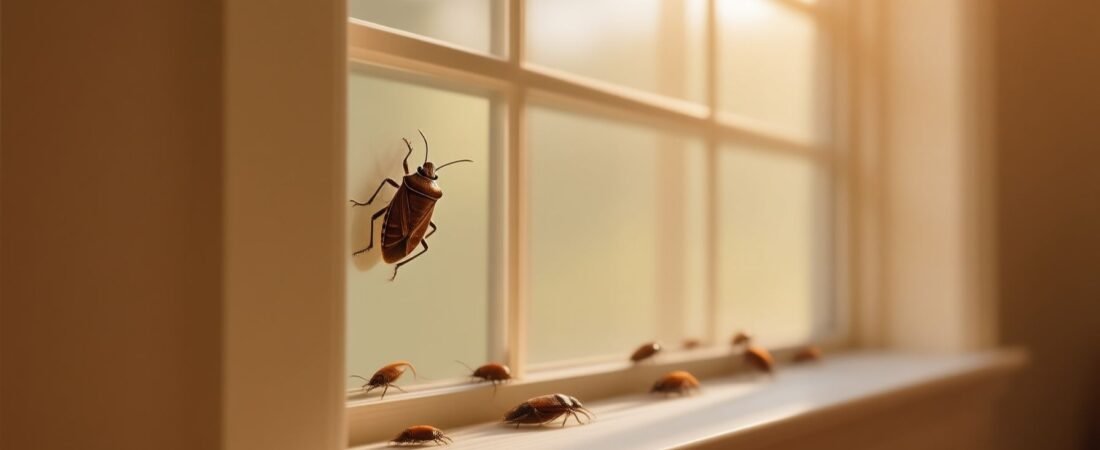
The stink bug smell won’t send you to the emergency room — but dismissing it as harmless is where most people get it wrong. The real issue isn’t the odor itself. It’s what happens when a large colony releases that chemical repeatedly in an enclosed space, and who’s in the room when it does. For most healthy adults, breathing stink bug odor is an annoyance. For people with asthma, chemical sensitivities, or allergies, it can trigger a genuinely miserable physical response — one that’s easy to misattribute to seasonal allergies or a head cold.
What Is Actually in Stink Bug Odor — and Why Does It Matter?
The smell stink bugs produce isn’t random. It’s a chemical defense secreted from glands located on the underside of their thorax, and the primary compounds involved are trans-2-decenal and trans-2-octenal — both aldehydes that are genuinely irritating to mucous membranes at sufficient concentrations. These compounds are also found in small amounts in some foods, which is why the odor has that strange cilantro-meets-industrial-cleaner quality that’s so hard to shake. The chemicals are designed to repel predators, and they’re surprisingly effective on human sinuses too.
What makes this more than a trivia point is that aldehyde compounds as a class are known irritants — not just unpleasant smells. At high concentrations, they can irritate the eyes, nose, throat, and respiratory tract. A single spooked stink bug releases a tiny amount. But a wall void or attic harboring 50 to 100 overwintering bugs, all disturbed at once during a renovation or the first warm day of spring, can release enough of the compound to cause real symptoms in sensitive individuals. That’s the exposure scenario most articles gloss over entirely.
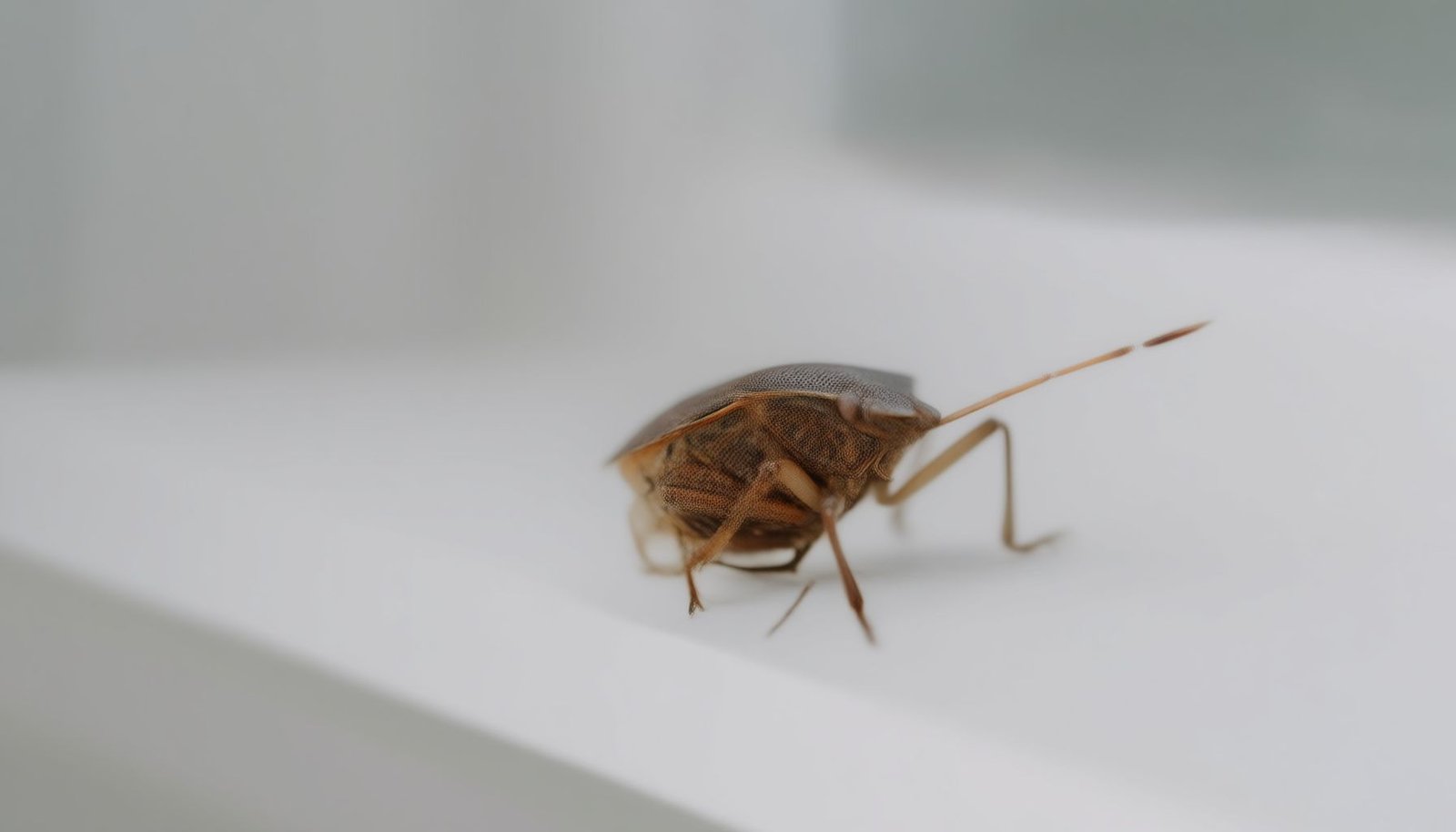
This close-up shows the thoracic scent glands on a brown marmorated stink bug — the exact structures responsible for releasing the aldehyde compounds that cause respiratory irritation in sensitive individuals.
Can Breathing Stink Bug Odor Actually Cause Symptoms?
Yes — and the symptom list is more specific than most pest control resources acknowledge. Runny nose, watery eyes, sneezing, and mild throat irritation are the most common responses, particularly in people who already have some degree of respiratory sensitivity. These aren’t imagined reactions. They’re a predictable mucosal response to aldehyde vapor exposure in a confined space. Think about it this way: if you’ve ever cut open a bag of strongly scented cleaning product and felt your eyes immediately start to water, you’ve experienced a similar mechanism at work.
The more clinically significant concern is for people with asthma. There are documented cases — not widespread, but real — of stink bug odor triggering bronchospasm in asthmatic individuals. A 2010 case report published in the Annals of Allergy, Asthma & Immunology described patients in the mid-Atlantic region experiencing asthma exacerbations that correlated with brown marmorated stink bug season. The researchers found that the bugs’ secretions could act as an inhalant allergen, not just an irritant — meaning the immune system, not just the airway lining, was involved. That’s a meaningful distinction.
Who Is Actually at Risk From Stink Bug Odor Exposure?
Not everyone in the house faces the same level of risk, and that’s where honest nuance matters. A healthy adult who catches a whiff of one stink bug and then airs out the room is almost certainly fine — mildly annoyed, maybe a bit sneezy, but not in any danger. The risk profile changes significantly based on a few specific factors.
Here’s who genuinely needs to pay attention to stink bug odor exposure:
- People with asthma — especially those with poorly controlled or exercise-induced asthma, where airway reactivity is already elevated
- People with chemical sensitivities or MCS — multiple chemical sensitivity can make even low-level aldehyde exposure genuinely debilitating
- Young children — their airways are narrower and their immune systems more reactive; they’re closer to the floor where bugs often crawl, too
- Elderly individuals — reduced respiratory reserve makes even mild irritation harder to bounce back from
- People with existing rhinitis or sinusitis — inflamed nasal passages are far more reactive to chemical irritants than healthy tissue
- Anyone in an enclosed, poorly ventilated space with a large infestation — square footage and air exchange rate matter enormously here
The honest answer is that stink bug odor is on a spectrum of harm, and where you land on that spectrum depends heavily on who you are and how many bugs you’re dealing with.
Does a Stink Bug Infestation Inside Your Home Change the Health Risk?
This is the question that really matters for homeowners, and it’s almost never asked clearly. One bug on a window screen is not the same as 200 bugs clustered behind your bathroom drywall. Brown marmorated stink bugs are gregarious overwintering insects — they find their way into structures in fall, aggregate in wall voids, attics, and crawl spaces, and release alarm pheromones that actually attract more bugs to the same location. A single entry point, if not sealed within the first week of fall, can result in dozens to hundreds of insects in the same wall cavity by mid-winter.
Picture this: you crank up the heat for the first time in November, the wall cavity warms up, and 80 stink bugs suddenly become active all at once — releasing their defense chemicals into gaps around electrical outlets and baseboards that feed directly into your living space. That concentrated burst of aldehyde vapor in an 800-square-foot apartment with the windows sealed for winter is a very different exposure than a single outdoor encounter. Understanding the difference is the key to deciding how seriously to treat an indoor infestation, especially if anyone in the household has respiratory issues. Just as you’d track down the source of bugs coming out of your drain rather than just swatting the ones you see, the real work with stink bugs is identifying where they’re congregating inside the structure.
“The trans-2-decenal in stink bug secretions is chemically reactive enough to cause direct irritation of mucous membranes — it’s not just a bad smell. In high enough concentrations in a sealed interior space, it behaves similarly to other low-level chemical irritants we take more seriously. For households with asthmatic members, a significant indoor infestation should be treated as a genuine air quality concern, not just a nuisance.”
Dr. Patricia Harlow, Ph.D. Entomology, Urban Pest Management Extension Specialist
How Do You Reduce Stink Bug Odor Exposure Without Making It Worse?
Most of the common responses to finding a stink bug make the odor problem worse, not better. Squishing them is the obvious mistake — crushing releases the full chemical load all at once. Vacuuming them is better, but a standard vacuum without a HEPA filter can aerosolize the compounds through the exhaust and distribute them through the room. Using chemical sprays near a cluster can cause mass defensive secretion before the bugs die. Even the reflex move of swatting one across the room deposits the chemical on whatever surface it lands on, where it can off-gas for 20 to 30 minutes. The common thread: any action that stresses or kills the bug rapidly tends to maximize your exposure to the exact thing you’re trying to avoid.
Here’s a practical approach that keeps exposure low:
- Use a sealed bag or jar method — slide the bug into a zip-lock bag or glass jar without touching it and seal immediately before disposal; this traps the chemical inside
- Use soapy water in a bowl — stink bugs drop straight down when disturbed, so holding a bowl of dish soap and water beneath them and tapping the surface above causes them to fall in and drown quickly with minimal secretion
- HEPA vacuum for larger numbers — if you’re dealing with a cluster, a vacuum with a sealed HEPA filter captures both the bugs and the chemical compounds; empty the canister outside immediately
- Ventilate the room first — opening windows before disturbing known clusters dilutes any released compounds before they can concentrate; cross-ventilation works faster than a single open window
- Seal entry points in early fall — brown marmorated stink bugs begin seeking overwintering sites when outdoor temperatures consistently drop below 50°F; sealing gaps around windows, pipes, and soffits before they enter is far safer than removing them once they’re inside
Pro-Tip: Cedar oil or neem oil applied around common entry points (window frames, door sweeps, utility penetrations) acts as a mild deterrent without triggering defensive secretion the way synthetic pesticides can when bugs encounter them mid-cluster. It won’t eliminate an existing infestation, but it reduces new arrivals during the active entry window in fall.
| Removal Method | Odor Exposure Level | Best Used When |
|---|---|---|
| Squishing by hand | High — full chemical release | Never recommended indoors |
| Standard vacuum | Moderate — exhaust dispersal risk | Small numbers, with caution |
| HEPA vacuum | Low — compounds contained in filter | Clusters of 5 or more bugs |
| Soapy water bowl | Very low — minimal disturbance | Individual bugs on flat surfaces |
One counterintuitive reality that most pest control content skips entirely: stink bugs release more chemical when they’re slowly dying than when they’re quickly submerged or contained. A bug that gets sprayed with pesticide and takes 10 to 15 minutes to die in your living room is releasing defense compounds continuously for that entire window. Speed and containment matter more than the method itself. This is why the slow-acting contact sprays that work well for other insects are a particularly poor choice for stink bugs indoors — they extend the exact exposure you’re trying to avoid. The same logic that makes you think twice about odd infestations — like noticing signs of a spider infestation before you find a single spider — applies here: the visible bugs are rarely the whole picture.
There’s also the question of lingering odor after the bugs are gone. The aldehyde compounds can absorb into soft materials — curtains, upholstered furniture, carpet — and continue to off-gas at low levels for hours. Running an air purifier with a carbon filter (not just HEPA, which captures particles but not volatile organic compounds) helps clear the chemical faster. Baking soda on affected fabric surfaces can absorb some of the residual odor, though nothing replaces ventilation as the primary clearance mechanism.
If you’re managing an infestation in a home with a sensitive household member and the bugs are established inside a wall void or attic, that’s a situation where the health calculus genuinely changes. DIY removal of a large cluster can spike indoor aldehyde levels briefly but significantly — enough to provoke symptoms in an asthmatic person even if they’re in another room. In those cases, having the work done while vulnerable household members are out of the house for several hours, with windows open afterward, isn’t overcaution. It’s just knowing what you’re actually dealing with.
Stink bug season is finite — they’re most active as overwintering invaders from late September through early November, and again briefly when they become active in late winter and early spring before exiting. Addressing entry points during that narrow fall window is the single highest-leverage action you can take, because the bugs already inside a wall void cannot be easily reached without opening the wall. Preventing the infestation is dramatically simpler than removing one, particularly if you care about minimizing odor exposure during the process.
Frequently Asked Questions
can stink bug odor make you sick?
For most people, stink bug odor is unpleasant but not dangerous. However, if you’re sensitive to the chemical trans-2-decenal — the main compound in their defensive spray — you might experience mild nausea, headache, or eye irritation after heavy exposure, like crushing dozens of bugs indoors.
can stink bugs cause allergic reactions?
Yes, some people do have allergic reactions to stink bug odor and their shed skin particles, including sneezing, runny nose, and watery eyes. In rare cases, people with pre-existing respiratory conditions like asthma have reported worsened symptoms during a bad stink bug infestation inside the home.
is stink bug smell harmful to breathe?
A brief whiff of stink bug odor isn’t going to harm you — the concentration indoors would need to be extremely high to cause real respiratory distress. That said, breathing it in a poorly ventilated space with a large number of bugs, like an attic or wall void harboring hundreds of them, can irritate your throat and sinuses.
can stink bugs make dogs or cats sick from the smell?
Pets can be more sensitive to stink bug odor than humans, and dogs or cats that sniff or mouth a stink bug may drool excessively, gag, or vomit. The reaction is typically short-lived and not life-threatening, but call your vet if symptoms last more than an hour or seem severe.
how do you get rid of stink bug smell in your house?
Don’t crush stink bugs — that releases the odor instantly. Instead, vacuum them up and immediately seal and dispose of the vacuum bag outside. To neutralize lingering smell indoors, wipe surfaces with a mix of dish soap and water, and use baking soda or white vinegar to absorb odor in soft materials like carpet or upholstery.
Disclaimer: This article is for general informational purposes only and does not constitute medical advice. How a pest-related exposure, bite, or contaminant affects you can depend on age, pre-existing conditions, allergies, and the extent of exposure. If you’re experiencing symptoms you believe are linked to a pest problem in your home, please consult a licensed healthcare provider rather than relying on this article alone.