

Lyme disease gets all the attention — and meanwhile, at least 16 other pathogens are hitchhiking around in tick saliva right now, waiting for a host who doesn’t know to look for them. That’s the part most people miss entirely. The real problem with tick-borne illness in the US isn’t that Lyme exists; it’s that many of the other diseases ticks carry look almost nothing like Lyme, don’t respond to the same antibiotics, and get misdiagnosed for weeks while the patient gets sicker. If you’ve ever pulled a tick off yourself or your dog and figured “I’ll just watch for a bull’s-eye rash,” this article will change how you think about tick exposure for good.
Why Most People Only Know About Lyme — and Why That’s Dangerous
Lyme disease dominates the conversation partly because it’s the most reported vector-borne illness in the United States, with the CDC documenting roughly 476,000 diagnoses annually. But that visibility creates a dangerous blind spot: people learn the bull’s-eye rash, they learn “tick equals Lyme,” and they stop there. The other diseases ticks carry don’t come with a handy visual cue like that rash — most of them just look like a bad flu.
There’s also a geography problem. Lyme gets outsized attention because it’s concentrated in the Northeast and Upper Midwest, where media coverage is thicker and research funding follows population density. But tick-borne diseases like Rocky Mountain Spotted Fever, ehrlichiosis, and tularemia are spreading into new regions as deer populations expand and tick ranges shift. A homeowner in Oklahoma or Georgia faces a very different tick risk profile than someone in Connecticut — and they’re often working with the same incomplete Lyme-centric information.
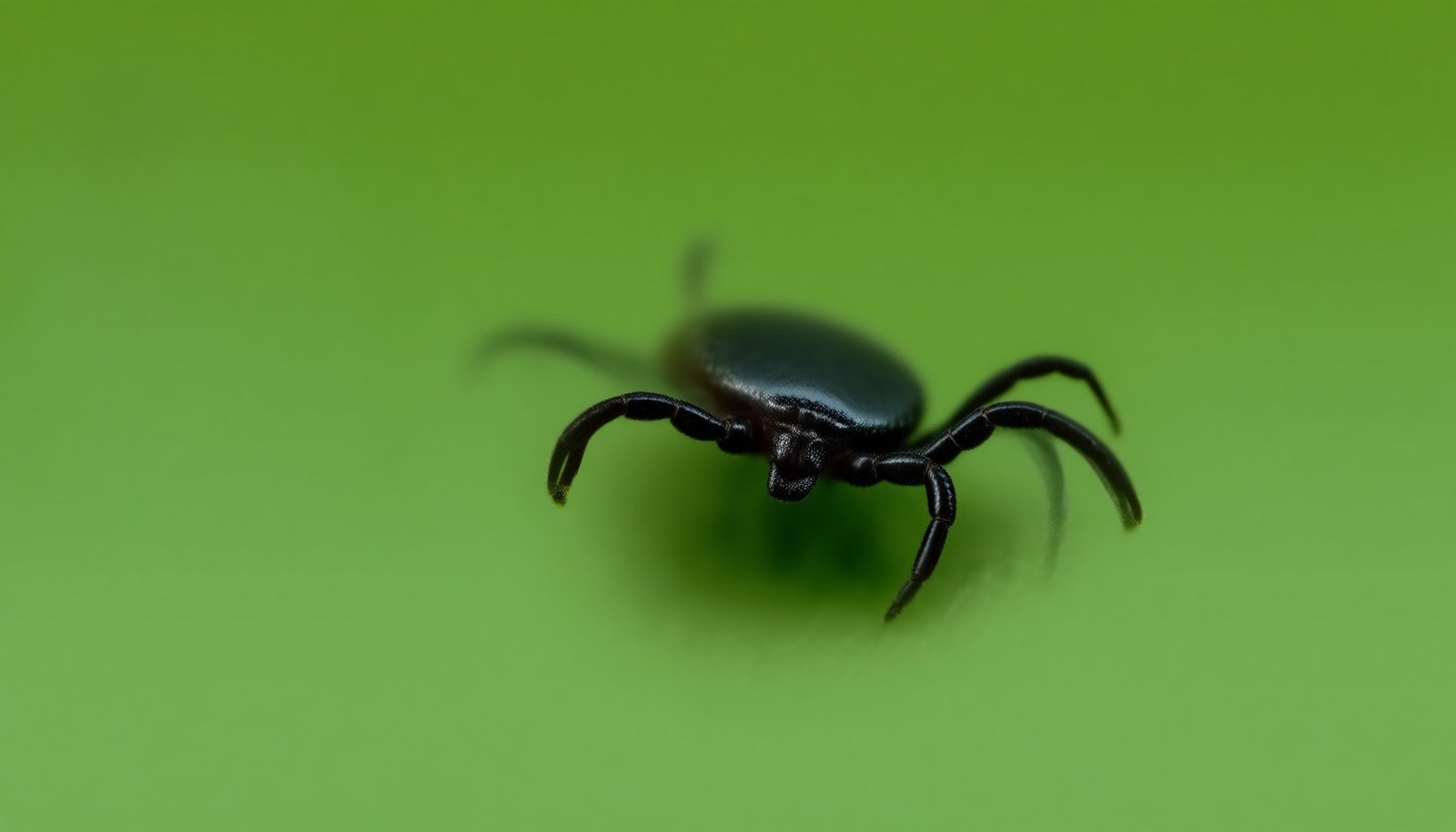
This close-up shows the small body size and feeding posture of an engorged tick — a reminder that by the time a tick is visibly swollen, it may have already been transmitting pathogens for 24 to 48 hours.
Which Tick-Borne Diseases Are Actually Common in the US?
The CDC tracks at least seven major tick-borne illnesses in the United States, and that number has grown over the past two decades as surveillance improves and new pathogens get identified. The ones you’re most likely to actually encounter — depending on where you live and which ticks are common in your area — include Rocky Mountain Spotted Fever (RMSF), ehrlichiosis, anaplasmosis, tularemia, babesiosis, Powassan virus disease, and Southern Tick-Associated Rash Illness (STARI). That’s a long list, and each one comes from a different tick species.
Here’s a quick breakdown of the major players and what carries them:
| Disease | Primary Tick Vector | Primary US Region |
|---|---|---|
| Rocky Mountain Spotted Fever | American dog tick, Rocky Mountain wood tick | Southeast, South-Central |
| Ehrlichiosis | Lone star tick | Southeast, South-Central |
| Anaplasmosis | Blacklegged tick (deer tick) | Northeast, Upper Midwest |
| Babesiosis | Blacklegged tick (deer tick) | Northeast, Upper Midwest |
| Powassan Virus Disease | Blacklegged tick, groundhog tick | Northeast, Great Lakes |
Notice that the lone star tick — increasingly common across the entire eastern US — doesn’t transmit Lyme disease at all. But it carries ehrlichiosis and STARI, and it’s arguably more aggressive about seeking hosts than the blacklegged tick. Knowing which ticks are in your yard matters more than most homeowners realize.
What Does Each Disease Actually Do to Your Body?
This is where it gets genuinely important — because the window for effective treatment is narrow for several of these illnesses, and you can’t watch for the right symptoms if you don’t know what they are. Rocky Mountain Spotted Fever is probably the most dangerous of the group. Despite the name, it’s most common in North Carolina, Oklahoma, Arkansas, Tennessee, and Missouri. Untreated RMSF has a fatality rate as high as 20–25%, and even with prompt treatment, the death rate is around 5–10%. The spotted rash people associate with it often doesn’t appear until day 5 or 6 of illness — after the most critical treatment window has already narrowed.
Powassan virus deserves more attention than it currently gets. Unlike most tick-borne bacteria that require a tick to feed for 24–36 hours before transmission, Powassan virus can transfer in as little as 15 minutes of feeding. There’s no specific antiviral treatment, about 10–15% of people who develop severe neurological symptoms die, and roughly half of survivors have permanent neurological damage. It’s rare — fewer than 50 cases are reported per year — but its transmission speed makes the standard “check for ticks after hiking” advice inadequate on its own.
“The mistake I see repeatedly is patients who get a tick bite, don’t develop a bull’s-eye rash, and assume they’re in the clear. Ehrlichiosis and anaplasmosis both cause high fever, severe headache, and low white blood cell counts — but neither produces a characteristic rash in most cases. By the time patients come in, they’ve often been sick for 10 days and are significantly worse than they needed to be.”
Dr. Patricia Hale, MS, PhD, Medical Entomologist and Vector-Borne Disease Specialist, University Extension Program
How to Tell If Your Symptoms Might Be a Non-Lyme Tick Disease
Here’s the counterintuitive thing about diagnosing tick-borne illness: a confirmed tick bite isn’t required for a doctor to consider it. Many people never find the tick that infected them — blacklegged tick nymphs are roughly the size of a poppy seed, and lone star tick larvae are even smaller. If you’ve spent time outdoors in a tick-prone area and develop a cluster of these symptoms in the following 2–14 days, tick-borne illness should be on the table regardless of whether you found a tick.
Symptoms that should prompt you to tell your doctor about potential tick exposure:
- Sudden high fever (above 102°F) with no obvious cause
- Severe headache that feels disproportionate to the illness
- Muscle aches and fatigue that come on within days of outdoor activity
- Low platelet or white blood cell count on a routine blood panel
- Any rash on the wrists or ankles (classic for RMSF, though not always present)
- Confusion, neck stiffness, or neurological changes after a tick bite (possible Powassan virus)
One thing that catches people off guard: doxycycline — the antibiotic used for Lyme — is also the first-line treatment for RMSF, ehrlichiosis, and anaplasmosis. So if your doctor suspects any of these, they’ll often start treatment before lab results come back because waiting even 24 hours can change outcomes significantly, especially with RMSF. This is one of the few situations in medicine where treating empirically without a confirmed diagnosis is considered best practice.
Pro-Tip: Save the tick if you find one attached to you — seal it in a zip-lock bag with a small piece of damp paper towel and bring it to your doctor or submit it to a tick-testing laboratory. Knowing the exact species narrows down which pathogens were realistically in play and helps your doctor prioritize which diseases to test for first.
What You Can Do Right Now to Reduce Your Household’s Actual Risk
Tick prevention conversations tend to collapse into two categories: use repellent and do tick checks. That’s not wrong, but it misses some of the highest-impact interventions that are specific to the diseases beyond Lyme. Because the transmission timing varies so dramatically by pathogen — 36–48 hours for Lyme, as little as 15 minutes for Powassan — the standard advice of “shower and check within 24 hours” is genuinely protective against Lyme but meaningfully less so for Powassan virus. That’s worth knowing before you head into tall grass.
Practical steps that actually address the full range of tick-borne illness risk — not just Lyme:
- Treat clothing with permethrin, not just skin. Permethrin binds to fabric fibers and kills ticks on contact before they can find skin — this is especially protective against fast-transmitting pathogens like Powassan. One treatment lasts through 6–10 washes.
- Check within 2 hours of coming inside, not just at bedtime. For Powassan virus, the standard “check before bed” window is too long. Inspect ears, scalp, groin, and armpits immediately after outdoor activity.
- Create a tick-safe zone in your yard. A 3-foot wood chip or gravel barrier between lawn and wooded areas significantly reduces tick migration. Ticks don’t jump or fly — they quest from vegetation and can’t easily cross a dry, sunny barrier.
- Know your tick species by region before symptoms start. If you’re in the Southeast and find a tick, lone star ticks — not blacklegged ticks — are the more likely culprit, which changes what diseases you’re watching for.
- Tell your doctor proactively. Mention tick exposure even if you’re not sure a bite occurred. Blood panels for ehrlichiosis and anaplasmosis look for specific cell count changes — your doctor won’t necessarily order those tests unless you bring up outdoor exposure in tick country.
It’s worth being honest about one honest nuance here: tick-borne disease risk varies enormously by state, season, and even individual yard conditions. Someone in suburban Phoenix faces almost no blacklegged tick risk, while someone with a wooded backyard in New Jersey or the Upper Midwest is in a genuinely high-exposure situation from early spring through late fall. Local extension offices and state health departments publish current tick activity maps — they’re more useful than a generic national risk assessment and they’re updated regularly. Just as you’d check an apartment for bed bugs before moving in rather than assuming it’s fine, checking local tick surveillance data before spending a lot of time in a new outdoor area is the smarter default.
One thing that rarely comes up in tick articles: pets are often the ones bringing ticks inside in the first place, and a tick that falls off a dog inside your home doesn’t die — it actively seeks another host. That host is frequently a human who had no direct outdoor exposure at all. Keeping up with veterinarian-recommended tick prevention for pets isn’t just about the animals; it’s one of the most effective ways to cut your own household’s tick exposure indoors. It’s the kind of connection that feels obvious in retrospect but most people don’t make until after they’ve had a problem. Much like the unexpected ways other household pests operate — the white worms that show up in kitchen trash are rarely what people initially assume — ticks in your house often trace back to a source you weren’t watching.
The bigger shift worth making is thinking about tick-borne illness the way you think about any household health risk: not as a fixed threat with one known outcome (Lyme), but as a category of diseases with different vectors, different transmission speeds, different symptoms, and different geographic footprints. Knowing that an unexpected late-summer fever in a family member who was gardening last week might be ehrlichiosis rather than a summer cold — and acting on that faster — is the kind of practical knowledge that actually changes outcomes.
Frequently Asked Questions
What diseases do ticks carry besides Lyme disease?
Ticks carry more than a dozen diseases in the US, including Rocky Mountain spotted fever, anaplasmosis, ehrlichiosis, babesiosis, tularemia, and Powassan virus disease. Rocky Mountain spotted fever is one of the most dangerous — it can be fatal within 8 days if not treated quickly. The specific diseases you’re at risk for depend heavily on what tick species live in your region.
Which tick species carries the most diseases?
The black-legged tick, also called the deer tick, carries the widest range of pathogens in the US, including Lyme disease, anaplasmosis, babesiosis, and Powassan virus. The American dog tick and lone star tick are also major disease carriers, responsible for Rocky Mountain spotted fever and ehrlichiosis respectively. Knowing which ticks are common in your state helps you understand your actual risk.
how quickly can a tick transmit disease after attaching?
It depends on the disease — Lyme disease typically requires a tick to be attached for 36 to 48 hours before transmission occurs, but Powassan virus can be transmitted in as little as 15 minutes. Rocky Mountain spotted fever transmission time isn’t fully pinned down but can happen within a few hours. That’s why checking for ticks daily and removing them promptly is so important, even if you don’t think you’ve been out long.
what are symptoms of tick-borne illness that isn’t Lyme disease?
Many tick-borne diseases share similar early symptoms — fever, headache, muscle aches, and fatigue — which makes them easy to confuse with the flu. Rocky Mountain spotted fever often causes a spotted rash that starts on the wrists and ankles within 2 to 4 days of fever onset. Babesiosis can cause sweating, chills, and anemia, and some people infected never show symptoms at all, especially if they’re otherwise healthy.
can ticks in my backyard spread diseases other than Lyme?
Yes, and it’s more common than most homeowners realize — your backyard can harbor multiple tick species depending on your region, landscaping, and local wildlife like deer, rodents, and birds. Lone star ticks, which are spreading across the eastern and central US, carry ehrlichiosis and can even trigger a red meat allergy called alpha-gal syndrome. Keeping grass trimmed short, removing leaf litter, and creating a wood chip or gravel barrier between your lawn and wooded areas can significantly reduce tick populations around your home.
Disclaimer: This article is for general informational purposes only and does not constitute medical advice. How a pest-related exposure, bite, or contaminant affects you can depend on age, pre-existing conditions, allergies, and the extent of exposure. If you’re experiencing symptoms you believe are linked to a pest problem in your home, please consult a licensed healthcare provider rather than relying on this article alone.