
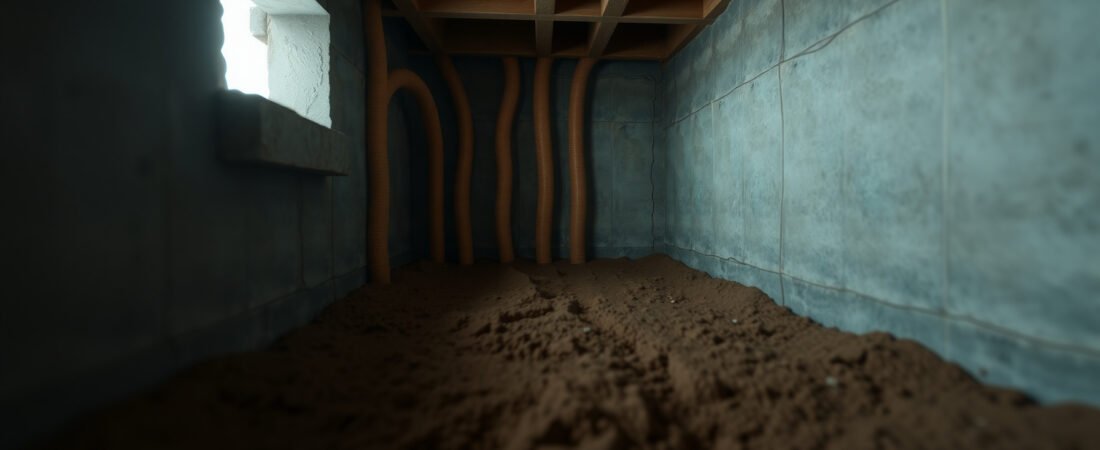
Termite mud tubes are not hard to find once you know what you’re actually looking for — the problem is that most homeowners walk right past them for months, sometimes years, because they’re looking in the wrong spots. Not on the foundation. Not near a doorframe. They’re inside a crawl space, behind drywall, tucked behind the water heater, or running straight up a interior wall that was never supposed to be inspected. By the time a mud tube shows up somewhere obvious, the colony behind it has often been active for well over a year.
What Do Termite Mud Tubes Actually Look Like Up Close?
Picture a thin strip of hardened dirt glued to a surface — about the width of a pencil, sometimes as wide as your thumb, running in a roughly straight or slightly wandering line. The color is usually a muddy brown or grayish-tan depending on the soil composition in your area, and the texture is rough, almost like dried papier-mâché. You can break off a piece and it crumbles between your fingers, feeling grainy and damp if the tube is still active.
The structure itself is built from a mixture of soil, termite feces, saliva, and wood particles — essentially a hand-crafted tunnel that subterranean termites construct to travel between the ground and their food source while staying protected from open air. They cannot survive long exposure to low humidity, so the tube maintains that moist microclimate as they travel. A single active tube can contain hundreds of workers moving simultaneously, and a mature termite colony can contain well over 1 million individuals funneling through a network of these structures.
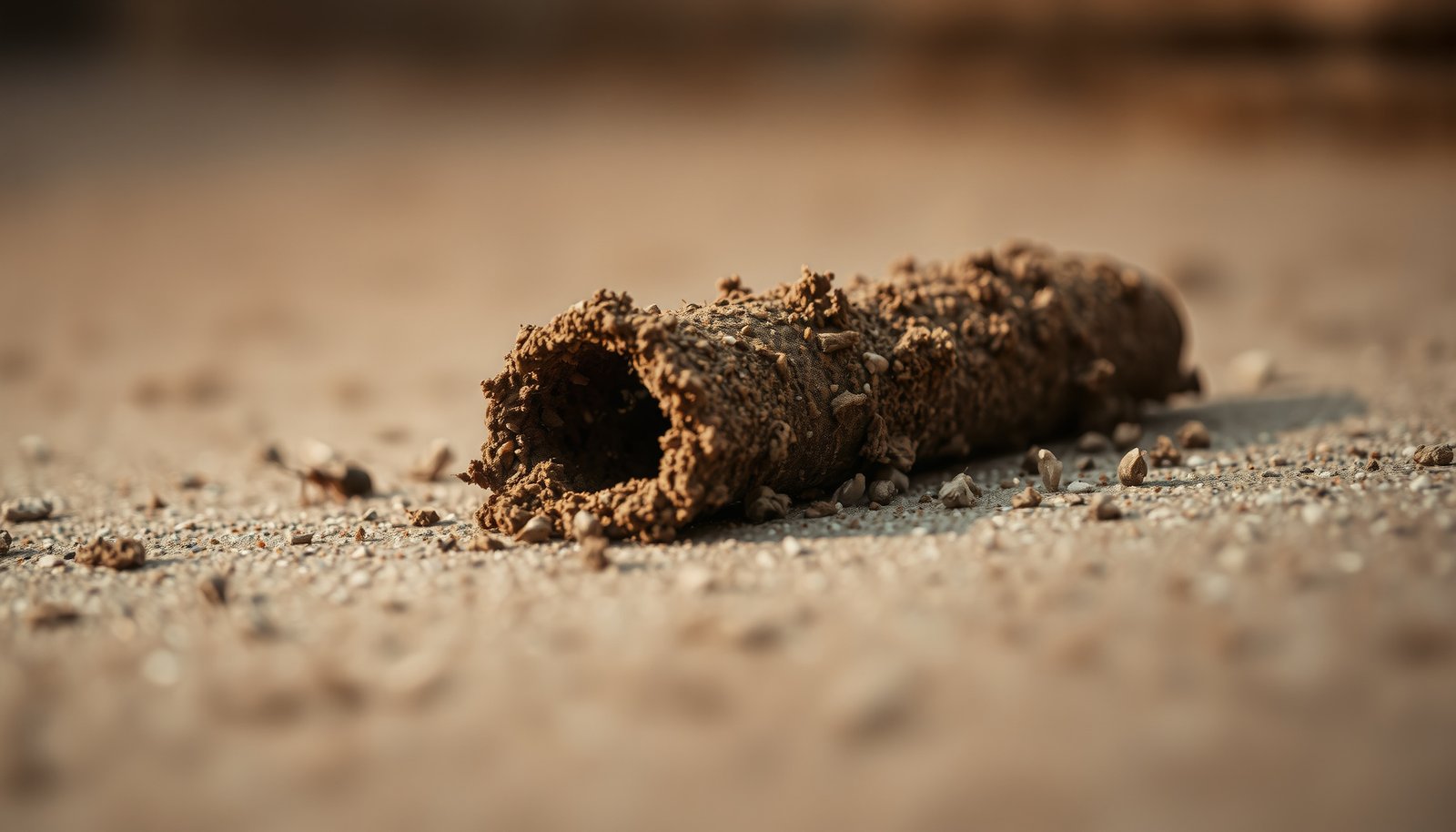
This close-up shows the characteristic pencil-thin width and uneven, gritty texture of an active subterranean termite mud tube running along a concrete block — details that distinguish it from rust streaks, caulk lines, or dried paint drips that homeowners frequently mistake for termite activity.
Are There Different Types of Mud Tubes and Do They Mean Different Things?
Yes — and this is where a lot of DIY termite inspections fall apart. There are actually four distinct types of mud tubes, and they tell you very different things about what the colony is doing and how serious the situation is. Most online guides treat all mud tubes as interchangeable, which leads homeowners to either panic unnecessarily or drastically underestimate a problem.
| Mud Tube Type | What It Looks Like | What It Signals |
|---|---|---|
| Working (utility) tube | Pencil-width, runs from soil to wood, typically straight | Active infestation — termites are currently feeding |
| Exploratory tube | Very thin, branching, fragile — often doesn’t reach wood | Scout activity; colony is searching for new food sources |
| Drop tube | Hangs down from wood toward soil, often wider | Colony is established above ground; potentially more severe |
| Swarm castle | Large, irregular mud mass near foundation or sill plates | Swarm season approach; colony is preparing to reproduce |
Finding an exploratory tube doesn’t automatically mean your structure is being eaten — it means termites are scouting. Finding a drop tube, on the other hand, is a signal that the infestation has progressed to the point where termites have established a food source above the soil line and are now building tubes back down. That distinction matters enormously when you’re deciding whether to call someone immediately or monitor the situation first.
Where Exactly Should You Be Looking for Mud Tubes in Your Home?
The foundation is the obvious answer, and yes — check every inch of exposed concrete, brick, or block along the exterior and interior perimeter. But the locations that get missed are the ones that actually matter most. Subterranean termites don’t always announce themselves on the exterior. They find the shortest, most protected route from soil to wood, which often runs through a garage floor crack, up behind a finished wall, through an expansion joint in a concrete slab, or along a plumbing pipe penetration in a bathroom floor.
Here’s a practical search sequence for a self-inspection — work through these zones in order:
- Crawl space piers and support beams — look at the base of every wooden post and along the underside of floor joists, especially where they connect to beams. Mud tubes here are often missed entirely because crawl spaces are dark and cramped.
- Interior basement walls — run your flashlight along the top of every block or poured-concrete foundation wall where it meets the mudsill (the wooden sill plate sitting on top of the foundation). This junction is the highway.
- Expansion joints and cracks in concrete slabs — get down and look closely. Termites build tubes right through hairline cracks that are easy to overlook.
- Garage walls at floor level — attached garages are one of the most common entry points because the concrete is often thinner, the slab cracks more, and the area is rarely inspected.
- Around plumbing penetrations — anywhere pipes enter through a slab or foundation, especially under sinks, around toilet bases, and near water heaters. Soil moisture near pipes attracts termites.
- Behind and beneath bath traps — the access panel behind a bathtub in a slab home is one of the most termite-active spots in the Southeast US, and most homeowners have never opened it.
Pro-Tip: Before any self-inspection, grab a flathead screwdriver and a flashlight. Probe any wood you find near a suspected tube — if the screwdriver sinks in easily or the wood sounds hollow when tapped, termites have likely been active in that spot far longer than the mud tube itself suggests.
How Can You Tell If a Mud Tube Is Active or Old and Abandoned?
This is the question that causes more unnecessary panic — and more dangerous false reassurance — than almost anything else in termite identification. An old mud tube is just as alarming-looking as a fresh one. They don’t dissolve or fall off on their own. A tube that’s been sitting untouched on your foundation for three years looks nearly identical to one that workers passed through this morning.
The most reliable field test is the break-and-wait method. Break off a 2–3 inch section of the tube and leave it alone for 3 to 5 days without disturbing the area. If termites are still active, workers will repair the break — often within 24 to 48 hours of the breach. If the tube stays broken and open, it may be dormant or abandoned. That said, a dormant tube doesn’t mean the colony is gone; it may mean the termites shifted their foraging path. Never assume an unrepaired tube equals a resolved infestation.
“Homeowners frequently knock down a mud tube themselves and feel relieved when it doesn’t come back right away. What they don’t realize is that an established colony may have multiple active tubes they’ve never found — and breaking one tube just redirects traffic, it doesn’t stop the feeding. The tubes you see are almost never the whole picture.”
Dr. Sandra Villanueva, Board-Certified Entomologist and Urban Pest Management Specialist, Texas A&M AgriLife Extension
What Gets Mistaken for Termite Mud Tubes — and How to Tell the Difference?
A surprising number of homeowner termite scares turn out to be something else entirely. Dried caulk that’s discolored, dirt dauber wasp nests, spider egg sacs coated in debris, efflorescence on concrete, and even dried paint runs have all been sent to pest control companies as “termite tube photos.” That’s not a knock on homeowners — some of these look remarkably similar at a glance.
Here’s how to distinguish mud tubes from the most common lookalikes:
- Dirt dauber nests — these are also muddy and tube-like, but they’re typically fatter, rounder, occur in clusters, and are found in sheltered spots like under eaves or inside garages rather than running vertically from the ground. They also have a smooth exterior compared to the rougher texture of termite tubes.
- Efflorescence — the white or grayish mineral deposits that leach out of concrete and masonry look nothing like a tube up close, but homeowners sometimes see streaking patterns along block walls and mistake them for mud tubes. Efflorescence is powdery, not structural, and you can wipe it off with your finger.
- Old caulk or sealant — discolored or dirty caulk lines along expansion joints and wall-floor transitions can look like a flattened mud tube. The giveaway is consistency: caulk is uniform in width and color, while mud tubes vary and show a rough, composite texture.
- Carpenter ant frass — carpenter ants don’t build mud tubes, but they do push debris and sawdust out of galleries, which can create small dirt-like accumulations. You won’t see a continuous tube; you’ll see a pile or scattered material near a crack.
- Spider webbing with debris — funnel and sheet web spiders sometimes construct silky structures packed with dust and soil particles along foundation edges. These feel silky and collapse when touched, unlike the firm, gritty structure of a genuine mud tube.
One honest nuance worth knowing: if you live in a high-humidity climate like the Gulf Coast, Florida, or the Pacific Northwest, termite tube activity is year-round and can be significantly more aggressive than in drier states. In arid climates, you might see tubes appear seasonally following rain events, then go dormant. The same physical structure can represent very different threat levels depending on where your home sits. That context should absolutely factor into how urgently you act — and whether you ask the right questions when hiring a pest control company to do a formal inspection.
What most termite articles skip over is this: the absence of visible mud tubes doesn’t mean you’re in the clear. Subterranean termites infesting a slab-on-grade home can travel entirely through interior wall voids and never build a tube you’d ever see without opening the wall. The tube is evidence of activity, but lack of a visible tube is not evidence of absence. Dry-wood termites, a completely separate species common in coastal and southern states, don’t build mud tubes at all — they live entirely inside the wood they’re eating and leave only tiny fecal pellets called frass as a calling card.
If you’ve found what looks like mud tube activity and you’re renting your home, the responsibility chain gets complicated fast. Documenting what you’ve found thoroughly — photos with timestamps, location notes, the break-and-check test results — matters more than most tenants realize. Understanding your options when a landlord delays action is worth knowing before a termite problem becomes a structural one; there’s solid guidance on tenant rights when pest control doesn’t actually work that applies directly to situations like this.
A mud tube is a message. The colony that built it has been in communication with your home’s wood structure potentially for years before you noticed it. Finding one — even if it turns out to be inactive — is your cue to inspect the rest of the structure thoroughly, not to relax because you found only one. The colonies that do the most damage are almost never ones that gave visible, easy-to-spot warning signs early on.
Frequently Asked Questions
What do termite mud tubes look like?
Termite mud tubes look like narrow, brown tunnels made of dirt, wood particles, and termite saliva. They’re usually about the width of a pencil — roughly 1/4 to 1/2 inch across — and have a rough, muddy texture. They can run in straight lines or branch out as termites expand their tunneling network.
Where do termites build mud tubes in a house?
Termites most commonly build mud tubes along foundation walls, in crawl spaces, and up concrete block walls in basements. You’ll also find them running along floor joists, inside wall gaps, and around plumbing pipes where they enter the slab. Anywhere that gives them a protected path from soil to wood is fair game.
How do I tell if a termite mud tube is active or old?
Break off a small section of the tube and check back in a few days — if termites have repaired it, the colony is still active. An old, inactive tube tends to be dry, crumbly, and lighter in color, while an active one stays moist and darker. Don’t rely on looks alone; the break test is the most reliable way to know for sure.
Can termite mud tubes go through concrete?
Termites can’t chew through solid concrete, but they don’t need to — they build mud tubes over the surface of it instead. They’ll also exploit existing cracks, expansion joints, or gaps as small as 1/32 of an inch to get through. That’s why foundation mud tubes are so common even on homes with concrete slabs.
What’s the difference between termite mud tubes and dirt dauber nests?
Dirt dauber nests are usually found on exterior walls, ceilings, or inside garages and they look like clusters of smooth, cylinder-shaped mud cells — not long tunnels. Termite mud tubes are flat, ribbon-like trails that run along surfaces in a continuous path from the ground toward wood. If it’s a tube running upward along your foundation, it’s almost certainly termites, not a wasp.