
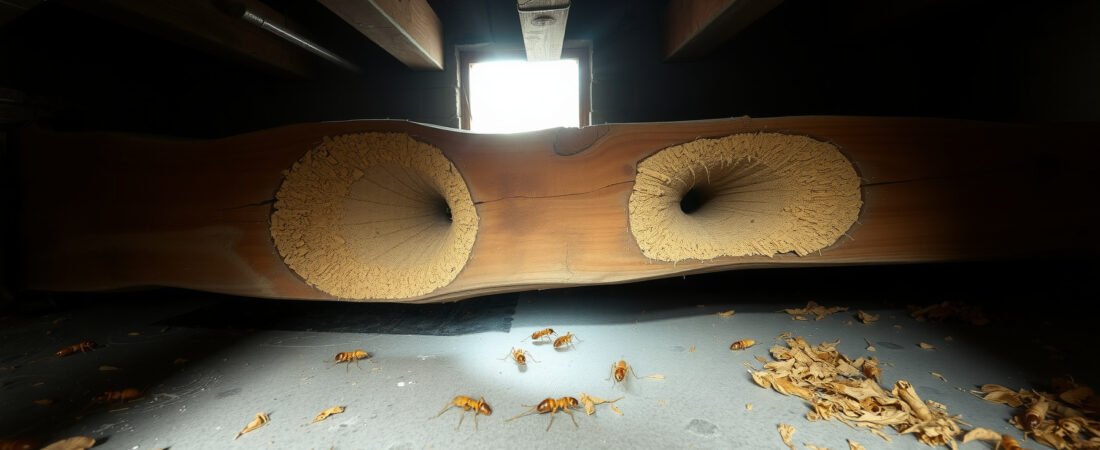
The damage is in the wood — but the treatment plan depends entirely on which insect made it. Termite damage and carpenter ant damage look similar enough to fool a lot of people, including some pest control technicians at first glance. The real problem isn’t that homeowners can’t tell them apart — it’s that almost every article online focuses on what the insects themselves look like, when the smarter diagnostic approach is to read the wood itself. The damage has a story. Here’s how to understand it.
Why Most People Misread the Damage (And What That Mistake Costs Them)
Here’s something that surprises a lot of homeowners: carpenter ants don’t eat wood. They excavate it. Termites actually consume wood as a food source because they can digest cellulose. That single biological difference is responsible for every visible distinction between the two types of damage — and once you understand it, the damage patterns start to make complete sense instead of looking like random destruction.
The practical cost of getting this wrong is real. A homeowner who spots hollowed-out wood near a window frame might buy a bottle of ant bait and call it done, when the actual culprit is a subterranean termite colony that can contain over 1 million individuals and has been working that wood for months. Misidentifying the damage doesn’t just delay treatment — it can direct you toward the completely wrong product category, wasting both money and time while the actual infestation expands.
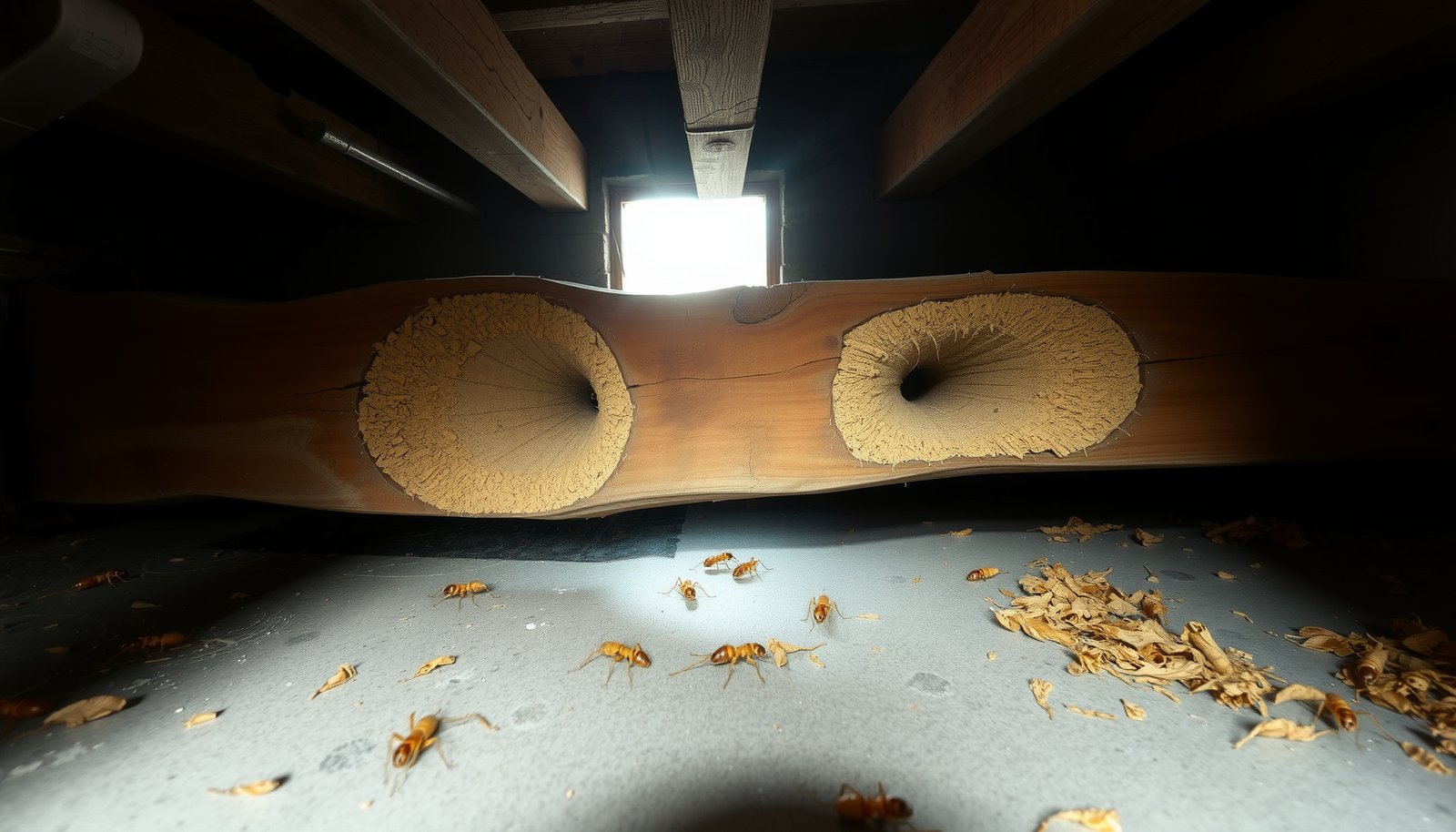
This close-up comparison shows the textural difference that separates termite-damaged wood from carpenter ant galleries — details that are easy to miss from a distance but become obvious once you know what to look for.
What Does Termite Damage Actually Look Like Inside Wood?
Termite galleries — the tunnels they carve while feeding — have a very specific character: they follow the grain of the wood, they’re packed with a gritty mixture of soil, feces, and partially digested wood called frass, and the walls feel soft or papery to the touch. Subterranean termites, the most destructive species in North America, almost never break through the outer surface of wood. They eat from the inside out, which is why you can tap a beam that looks structurally fine and hear that hollow, papery thud that signals serious internal damage.
Drywood termites behave slightly differently — they don’t use soil in their galleries, and they push their fecal pellets (called frass) out of tiny “kickout holes” in the wood surface. Those pellets are a distinctive six-sided shape, roughly the size of a poppy seed, and they pile up in small mounds on surfaces below the infested wood. If you’re seeing tidy little piles of what looks like coarse sand or sawdust near wood surfaces, that’s drywood termite frass — not sawdust, and not ant debris.
What Does Carpenter Ant Damage Look Like Compared to Termites?
Carpenter ant galleries are architecturally different in a way that’s genuinely striking once you’ve seen it. Their tunnels are smooth — almost sanded-looking — and they run both with and against the wood grain. Because carpenter ants don’t eat the wood, they have to remove the debris they excavate. That material gets pushed out through small openings called “frass holes,” and what falls out is coarse sawdust mixed with dead ant body parts, insect fragments, and soil particles. It’s messy and varied. Think of it as a little pile of garbage rather than a uniform granular material.
Picture this: you pull back a piece of rotting siding on an older home and find a network of smooth, clean channels running through the wood — some of them wide enough to fit a finger. The galleries have a polished quality, almost as if someone ran a fine rasp through them. There’s no mud, no packed material inside. Just clean, excavated wood. That’s carpenter ants. The absence of filler material inside the tunnels is one of the most reliable field diagnostics available, and it’s one most guides don’t emphasize nearly enough.
How to Tell Them Apart: A Step-by-Step Damage Inspection
A systematic look at the damage — rather than a quick glance — will give you a much clearer answer. Work through these steps in order, because each one rules out or confirms a suspect.
- Probe the surface first. Press a screwdriver or key into the wood. Termite-damaged wood will give way with very little pressure, sometimes caving in entirely. Carpenter ant damage may feel hollow but the outer shell often holds together longer because ants only remove the soft inner wood.
- Look for mud tubes. Subterranean termites build distinctive mud tubes — pencil-width tunnels made of soil and saliva — along foundations, walls, and joists to travel between the soil and their food source. Carpenter ants build nothing like this. A mud tube is a termite signature, full stop.
- Examine the frass closely. Collect a small sample on a white piece of paper. Termite frass (from drywood termites) is uniform in size and shape — oval, six-sided pellets. Carpenter ant frass is irregular, coarser, and contains visible insect debris. If you’re dealing with subterranean termites, you’ll find packed mud and soil inside galleries rather than loose frass at all.
- Check the gallery walls. Shine a flashlight into any exposed tunnels. Termite galleries look rough and packed, often with a grayish-brown muddy lining. Carpenter ant galleries look clean and smooth, sometimes with a slightly shiny appearance from the ant’s mandible work.
- Note the wood condition going in. Carpenter ants almost always establish colonies in wood that was already compromised by moisture damage or decay — they prefer soft wood. Termites will attack structurally sound, dry wood (especially drywood and Formosan species). If the wood was visibly rotting before the damage began, carpenter ants are the more likely culprit.
- Time your observation. Carpenter ants are most active between dusk and midnight. If you sit quietly near suspected damage after dark and hear faint rustling or crinkling sounds inside the wood, that’s consistent with active carpenter ants moving through their galleries. Termites are quieter, though you may hear a faint clicking sound from soldier termites if the colony is large and active.
One honest nuance worth naming: in humid climates like the Southeast and Pacific Northwest, you may find both species present in the same structure simultaneously. A beam that started with moisture damage attracted carpenter ants first, and termites moved in later — or vice versa. In those situations, the damage patterns overlap in confusing ways, and a professional inspection becomes genuinely necessary rather than optional.
Termite vs Ant Damage: Side-by-Side Comparison
A direct comparison makes the diagnostic differences easier to reference quickly. The table below focuses specifically on the physical evidence left in wood — not on what the insects look like, which is covered elsewhere and frankly less useful when you’re staring at damage in a dark crawl space.
| Feature | Termite Damage | Carpenter Ant Damage |
|---|---|---|
| Gallery texture | Rough, packed with mud/feces (subterranean) or clean but gritty (drywood) | Smooth, clean, almost polished |
| Frass appearance | Uniform oval pellets (drywood) or packed mud — no loose debris | Coarse, irregular — mixed with insect parts and soil |
| Mud tubes present? | Yes (subterranean species only) | Never |
| Wood condition required | Will attack sound, dry wood | Strongly prefers already-softened, moisture-damaged wood |
The mud tube row alone resolves a large percentage of cases. If you find a mud tube anywhere on a foundation wall, rim joist, or crawl space pier, you have subterranean termites — no further debate needed. The rest of the table becomes relevant when mud tubes aren’t present and you’re working with drywood termites or carpenter ants.
“The most common diagnostic error I see is homeowners assuming that visible sawdust-like material means carpenter ants. Drywood termite frass gets mistaken for sawdust constantly. The shape of the pellets is the giveaway — they have six distinct sides under a hand lens, which no sawdust ever has. Spend thirty seconds with a magnifying glass before you decide what you’re dealing with.”
Dr. Marcus Hale, Board-Certified Entomologist and University Extension Specialist in Urban Pest Management
Does It Matter Which One You Have, or Is the Treatment the Same?
The treatment difference is enormous, and this is where misidentification has real financial consequences. Termite treatment — particularly for subterranean species — typically involves liquid termiticides applied to the soil around the foundation, bait stations, or in severe cases, structural fumigation. Carpenter ant treatment targets the nest directly, often with residual sprays and baits placed along foraging trails. A termiticide soil treatment does nothing for a carpenter ant infestation. A carpenter ant bait won’t touch a termite colony.
Beyond treatment type, the structural assessment differs too. Carpenter ant damage — even extensive damage — rarely requires structural repair in the same way termite damage does, because ants don’t weaken wood fibers the way termites do when they consume cellulose. A carpenter ant colony working a single beam for two years will leave that beam looking worse than termites at first glance, but the termite-damaged beam may actually be more compromised structurally. If you’re a renter dealing with discovered damage and there’s any dispute over responsibility or prior knowledge, it’s worth understanding your rights — some of the same documentation principles that apply to security deposit and pest damage deductions are relevant when structural pest damage is discovered mid-tenancy.
Pro-Tip: Before calling any pest control company, photograph the damage in good light from multiple angles, collect a small frass sample in a zip-lock bag, and note exactly where in the structure you found it (foundation level, above a window, in a crawl space, etc.). This information dramatically shortens the diagnostic process for any professional you hire, and it protects you if there’s ever a dispute about what was present before treatment began.
Here’s a counterintuitive point that most pest guides skip over entirely: finding carpenter ant damage in your home is sometimes a more urgent structural signal than finding termite damage — not because ants are more destructive, but because carpenter ants are almost always a symptom of a moisture problem. They didn’t create the decay; they moved into wood that was already failing. That means somewhere in your structure there’s a water intrusion, a leak, or a chronic condensation problem that will keep attracting carpenter ants (and eventually termites) until it’s fixed. Treating the ants without fixing the moisture is like draining a bathtub with the faucet still running.
The following signs, taken together, point toward one insect over the other when you’re doing your own initial assessment:
- Mud tubes along a foundation or crawl space wall → subterranean termites, not ants
- Tiny uniform oval pellets below a wood surface → drywood termites, not ants
- Coarse, mixed debris including insect fragments → carpenter ants
- Smooth, clean gallery walls with no packed filler → carpenter ants
- Damage in sound, dry structural lumber → more consistent with termites
- Damage concentrated near a plumbing leak, roof penetration, or chronically wet area → strongly suggests carpenter ants as the primary actor
These aren’t absolute rules — they’re probability weights. Use them to form a working hypothesis, then test it against the other evidence before you spend money on a treatment.
One more thing worth knowing: pest inspection costs vary widely depending on region and whether it’s a stand-alone inspection or bundled with a treatment quote — similar to how professional tick yard treatment costs can swing dramatically based on property size and local market rates. Getting two or three opinions on wood damage identification, particularly if the evidence is ambiguous, is almost always worth the time investment before committing to a major treatment program.
Once you’ve correctly identified the damage, you’re not just solving the immediate problem — you’re protecting the structural integrity of a building that probably represents your single largest financial asset. Read the wood carefully. It’s telling you exactly what moved in, how long ago, and what needs to happen next.
Frequently Asked Questions
How do I tell if wood damage is from termites or ants?
Termite damage looks smooth and has a honeycomb pattern inside the wood, often with mud or soil packed into the galleries. Carpenter ant damage is cleaner — the tunnels look almost sandpapered, with no dirt or mud inside, and you’ll often find sawdust-like frass piled nearby. If you see mud tubes running along the wood surface, that’s a strong termite indicator, not ants.
What does carpenter ant frass look like compared to termite frass?
Carpenter ant frass looks like coarse sawdust mixed with insect body parts and debris — it’s usually found in small piles outside the nest entrance. Termite frass from drywood termites looks like tiny uniform pellets, almost like mustard seeds, and tends to collect in neat mounds below kick-out holes. Subterranean termites don’t leave frass outside at all since they use it to build their mud tubes.
Can carpenter ants cause as much damage as termites?
Carpenter ants don’t eat wood the way termites do — they only excavate it to nest, which makes their damage slower and usually less severe. That said, a large colony left untreated for several years can hollow out structural beams and joists enough to compromise them. Termites are generally considered the bigger threat because they actively consume wood 24/7 and a single subterranean colony can contain over 1 million workers.
How do I know if I have termites or ants without calling an exterminator?
Start by probing the damaged wood with a screwdriver — termite-damaged wood will sound hollow and the tool will punch through easily, often revealing muddy galleries inside. If the wood is clean and smooth inside with no soil, you’re more likely dealing with carpenter ants. You can also check for discarded wings near windowsills — both swarmers shed wings, but termite wings are equal in length, while ant wings have a noticeably larger front pair.
Where in the house do termites vs carpenter ants typically damage wood?
Carpenter ants are almost always found in wood that’s already been softened by moisture — think window frames, door sills, decks, and wood near leaky pipes. Subterranean termites usually attack from the ground up, targeting floor joists, sill plates, and support beams first. Drywood termites are different — they can infest wood anywhere in the structure, including attic framing and furniture, with no moisture or soil contact needed.