
Aphids aren’t green. Not always, anyway — and that single assumption is why so many people misidentify them, miss the early signs, and watch a small problem turn into a full-blown infestation before they realize what they’re looking at. The truth is aphids come in at least a dozen colors, change appearance mid-season, and can look completely different depending on which plant they’re feeding on. If you’re only scanning for tiny green specks, you’re going to miss the yellow ones, the black ones, the woolly white ones, and the reddish-brown ones that are quietly draining your plants right now.
What Does an Aphid Actually Look Like Up Close?
Aphids are soft-bodied, pear-shaped insects measuring roughly 1/16 to 1/8 of an inch long — about the size of a pinhead. Their bodies are segmented, slightly translucent, and often have a waxy or powdery coating that dulls their color. Two small tube-like projections called cornicles stick out from the rear of the abdomen, and while they look like tiny exhaust pipes, they’re actually used to release defensive chemicals when the aphid is threatened.
Up close, you’ll notice they have six legs, bent antennae, and a rounded head with piercing mouthparts tucked underneath — not visible without magnification. Most aphids you’ll encounter on houseplants or garden vegetables are wingless, but winged forms do exist and they look noticeably different: slimmer body, darker coloring, and clear wings folded flat over the back. That dimorphism confuses a lot of people who assume the winged one is a different insect entirely.
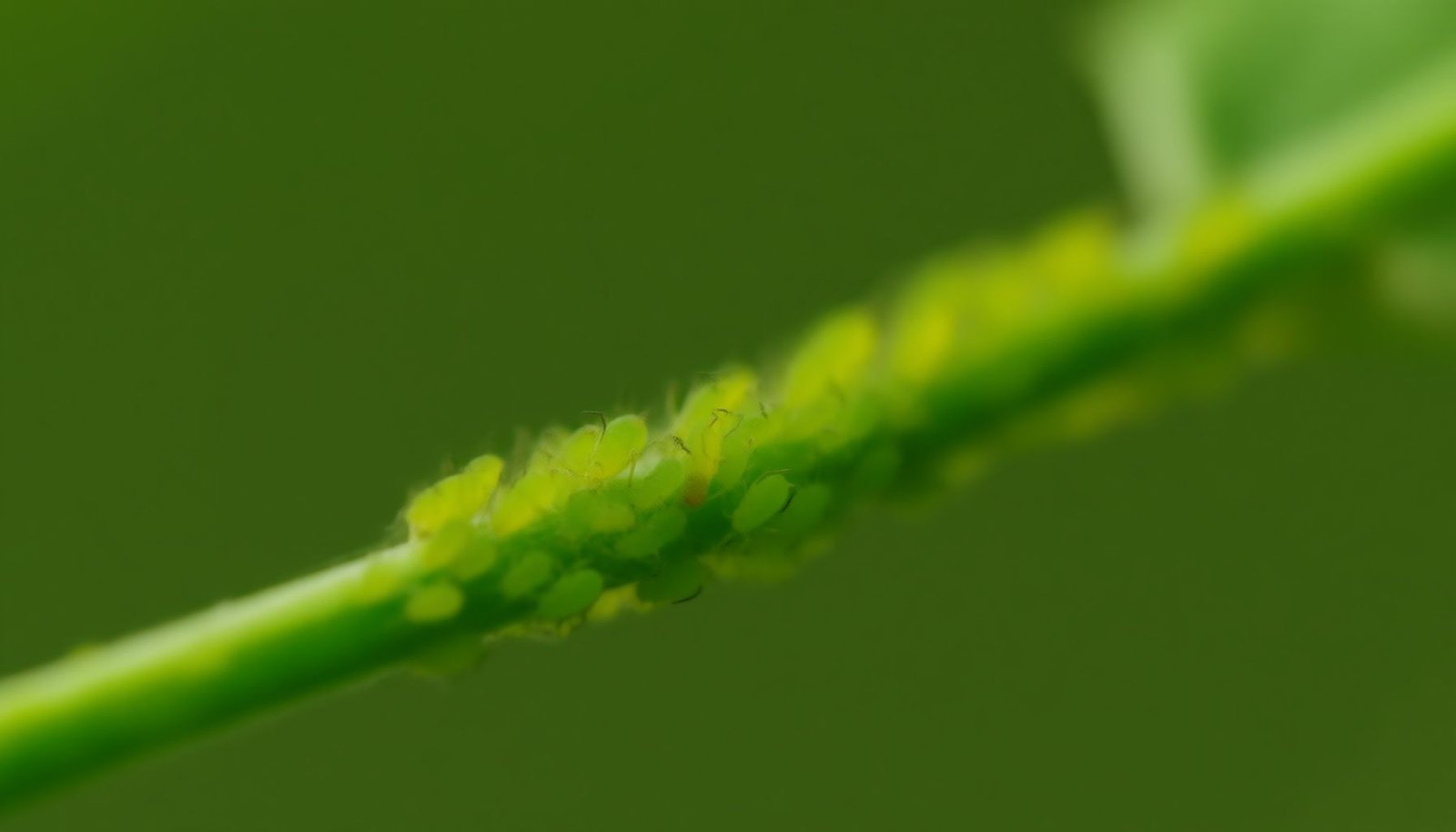
This close-up shows the pear-shaped body, visible cornicles at the rear, and the clustered feeding posture that makes aphids easier to identify once you know exactly what to look for.
Why Are Aphids So Many Different Colors?
Color in aphids isn’t random — it’s tied to species, host plant, season, and even the age of the individual insect. The green peach aphid (Myzus persicae) is one of the most common and starts pale green before shifting to yellow-green or even pinkish as temperatures drop. The black bean aphid (Aphis fabae) is dark brown to jet black and clusters so densely on stems that the plant looks scorched. Woolly apple aphids (Eriosoma lanigerum) look nothing like a traditional aphid — they’re covered in white waxy filaments that make them resemble a tiny piece of fluff or mold.
Here’s the part most articles skip: the same aphid species can look different depending on what generation you’re looking at. Early-season aphids born in spring are often different in color and body structure than the fall generation of the exact same species. Add in the fact that nymphs — immature aphids — are paler and smaller than adults, and you’ve got a pest that genuinely changes its appearance across a single season on a single plant.
| Aphid Species | Color | Common Host Plants |
|---|---|---|
| Green Peach Aphid (Myzus persicae) | Pale green to yellow-green, sometimes pink | Peach, roses, peppers, tomatoes |
| Black Bean Aphid (Aphis fabae) | Dark brown to black | Beans, beets, nasturtiums |
| Woolly Apple Aphid (Eriosoma lanigerum) | Reddish-purple under white waxy wool | Apple, elm, hawthorn |
| Cabbage Aphid (Brevicoryne brassicae) | Gray-green with waxy powder | Broccoli, kale, Brussels sprouts |
How Do You Tell Aphids Apart From Other Tiny Bugs on Plants?
This is where most misidentifications happen. Aphids get confused with whitefly nymphs, spider mite eggs, mealybug crawlers, thrips, and even springtails — all of which can appear on the same plants. The key physical difference: aphids are always soft and squishy when you press them (they’ll leave a streak), have visible legs even to the naked eye, and cluster tightly on new growth, stems, and the undersides of leaves rather than spreading evenly across the leaf surface.
Spider mites are smaller, produce fine webbing, and don’t have the pear-shaped abdomen. Mealybugs are larger, fluffier, and slower-moving. Whitefly nymphs are flat and scale-like, not rounded. Thrips are elongated rather than pear-shaped and tend to cause silvery streaking on leaves rather than curling. If you see clusters of soft, round, slow-moving insects on new stem tips — especially with sticky residue on the leaves below — that’s almost certainly an aphid colony.
“One of the biggest mistakes I see is people treating for whiteflies when they actually have aphids, or vice versa. The control methods overlap somewhat, but if you’re not identifying correctly first, you’re wasting time and product. The cornicles on the rear of the aphid body are the definitive ID marker — no other common plant pest has them.”
Dr. Sandra Reeves, Extension Entomologist, University of Georgia Cooperative Extension
What Signs Do Aphids Leave Behind Before You Spot the Bugs?
By the time you see the insects themselves, you’ve usually been seeing their damage for days without connecting it. Aphids feed by piercing plant tissue and extracting phloem sap — the plant’s equivalent of a sugar transport system. As they feed, they excrete a sticky substance called honeydew, which coats leaves, attracts ants, and grows a sooty black mold that’s often the first thing people notice. If your plant leaves look shiny or sticky for no obvious reason, check the undersides immediately.
Leaf curling is the other early warning sign that gets ignored. Aphids inject saliva that disrupts normal cell growth, causing new leaves to cup downward and curl inward around the feeding colony — essentially giving them a shelter. By the time the curl is visible, there can be hundreds of aphids hidden inside. Picture this: you’re checking a rose bush and notice a few leaves have curled at the tips. You assume it’s drought stress or a fungal issue. You water more, nothing changes. Two weeks later you unfurl one of those leaves and find it packed with hundreds of aphids and their offspring. That scenario plays out constantly in home gardens.
Pro-Tip: Ants are one of the most reliable early warning signs of an aphid infestation. Ants actively protect aphid colonies from predators because they harvest the honeydew aphids produce. If you see ants marching repeatedly up a plant stem with no obvious food source, look for aphids at the top — there’s nearly always a colony there.
Here’s the full list of signs to check for before you ever see an actual aphid:
- Sticky, shiny residue on leaves or surfaces below the plant
- Black sooty mold growing on that sticky residue
- Leaves curling, cupping, or puckering inward, especially on new growth
- Stunted or distorted new shoots
- Ants patrolling up and down plant stems repeatedly
- Yellowing leaves with no obvious nutrient deficiency or watering issue
How Fast Do Aphids Reproduce and Why Does That Matter for Identification?
Aphid reproduction is genuinely one of the more bizarre things in the insect world, and understanding it changes how you think about identification. During warm months, aphids reproduce asexually through a process called parthenogenesis — females give birth to live nymphs without mating, and those nymphs are already pregnant at birth. A single aphid can produce 80 to 100 offspring over the course of a week, and those offspring reach reproductive maturity within 7 to 10 days. A colony that starts with one or two aphids in early spring can reach several thousand individuals within a month.
This matters for identification because a “new” colony looks completely different from an established one. Early on you’ll see mostly nymphs — tiny, pale, barely visible — clustered loosely near growing tips. Two weeks later the same spot will be covered in adults of varying sizes and ages, some winged individuals preparing to fly to new plants, and a layer of shed white exoskeletons (called cast skins) that look like dust or dandruff on the leaves. That white dusty residue is often what finally catches a gardener’s eye — and by that point, the colony has already been there for weeks. Unlike some pest problems where you’re racing to identify something before it enters your home — the way you might with signs of fleas in your home before you get bites — with aphids, the damage timeline is almost entirely outdoors and visible if you know what residue to look for.
The identification steps, in the order that makes the most sense:
- Check new growth first. Aphids almost always colonize the softest, most nutrient-rich tissue — stem tips, flower buds, and unfurled leaves. That’s where you’ll find them before they spread.
- Flip the leaves. At least 80% of aphid colonies feed on the undersides of leaves, not the tops. Most people look at the top of the leaf and find nothing.
- Look for cornicles. Use a 10x loupe or the macro setting on your phone camera. Two small tubes projecting from the rear of the abdomen confirm it’s an aphid and not a lookalike.
- Check for cast skins. White translucent shed exoskeletons stuck to the leaf surface or clustered near the colony indicate an established, actively reproducing population.
- Press one gently. Aphids crush easily and leave a colored smear — green, yellow, red, or black depending on species. Mites leave a reddish smear. Mealybugs don’t smear cleanly. This one physical test eliminates most lookalikes.
It’s worth noting that identification difficulty varies by situation. On outdoor garden plants with good light, finding aphids is relatively easy once you know where to look. On dense, bushy houseplants or plants kept in low-light corners, colonies can grow for weeks entirely out of view on interior stems — which is a different challenge from an identification standpoint than the typical “check the undersides” advice covers. Just as you’d approach the mystery of white worms in your kitchen trash differently from a standard fly problem, dense indoor plant infestations need a more methodical stem-by-stem inspection rather than a quick leaf check.
The counterintuitive truth about aphid identification is this: the insect itself is often the last piece of evidence you find. Gardeners who learn to read the plant — sticky leaves, curled new growth, ants on stems, sooty mold, white cast skins — catch infestations two to three weeks earlier than those who wait to spot the bugs themselves. At reproduction rates of up to 100 offspring per week per female, those two to three weeks are the difference between a minor annoyance you knock out with a garden hose and a full-colony collapse of an otherwise healthy plant. Learn the residue, and you won’t need to wait for the bugs to show themselves.
Frequently Asked Questions
What do aphids look like on plants?
Aphids are tiny, soft-bodied insects that are usually 1/16 to 1/8 inch long — about the size of a pinhead. Most are green, but they can also be yellow, black, brown, or even pink depending on the species. You’ll typically spot them clustered on new growth, the undersides of leaves, or along stems, often in groups of dozens or hundreds.
How do I know if I have aphids or just dirt on my plants?
Aphids move — slowly, but they do move — which is the easiest way to tell them apart from soil specks or debris. You’ll also notice other signs like sticky residue (called honeydew) on the leaves, yellowing or curling foliage, and sometimes a black sooty mold that grows on the honeydew. If you see tiny white shed skins on the leaves, that’s another dead giveaway.
Are aphids harmful to humans or pets?
Aphids don’t bite, sting, or transmit diseases to humans or pets, so they’re not a direct health threat indoors or outdoors. The real damage they do is to your plants — a heavy infestation can stunt growth, spread plant viruses, and cause leaves to yellow and drop. They’re a plant problem, not a people problem.
What is the sticky stuff on my plants from aphids?
That sticky coating is called honeydew, and it’s essentially the sugary waste aphids excrete as they feed on plant sap. It coats leaves and stems, and if left untreated, it attracts ants and encourages a black fungal growth called sooty mold. If your plant leaves feel tacky and look shiny, check the undersides immediately for aphids.
How do I get rid of aphids on indoor plants?
Start by spraying the plant with a strong stream of water to knock aphids off, then apply insecticidal soap or neem oil directly to the affected areas — repeat every 5 to 7 days until they’re gone. For heavy infestations, you may need 3 or 4 treatments before you see full control. Make sure to treat the undersides of leaves, since that’s where aphids hide and lay eggs.