
A free pest control inspection is not a service — it’s a sales call with a flashlight. That’s not cynicism, that’s just the business model, and understanding it upfront will save you from signing a $1,200 annual contract you didn’t need. The counterintuitive truth most homeowners miss: the inspection itself can be genuinely useful, but only if you know what the technician is actually doing versus what they’re strategically choosing to show you.
What Is the Technician Actually Doing During the Walk-Through?
A trained technician will spend 20 to 45 minutes walking your home, checking specific harborage zones — behind appliances, inside cabinet voids, along baseboards, in crawl spaces, and around exterior entry points. They’re looking for physical evidence: live insects, droppings, cast skins, gnaw marks, mud tubes, or moisture damage. That part is real, and a thorough inspector can spot things you’d never notice on your own, like termite frass in a window sill groove or mouse rub marks along a baseboard that’s been traveled for months.
What they’re simultaneously doing — and this is the part no company will tell you — is mentally categorizing your home’s “scare factor” for the upsell conversation. High moisture under the sink? That’ll come up. A single dead cockroach near the garage? That’ll come up too. A skilled technician knows that homeowners respond emotionally to visual evidence, and part of the inspection process involves surfacing findings in a sequence designed to build concern before presenting solutions. That doesn’t mean the findings aren’t real — it means the framing is deliberate.

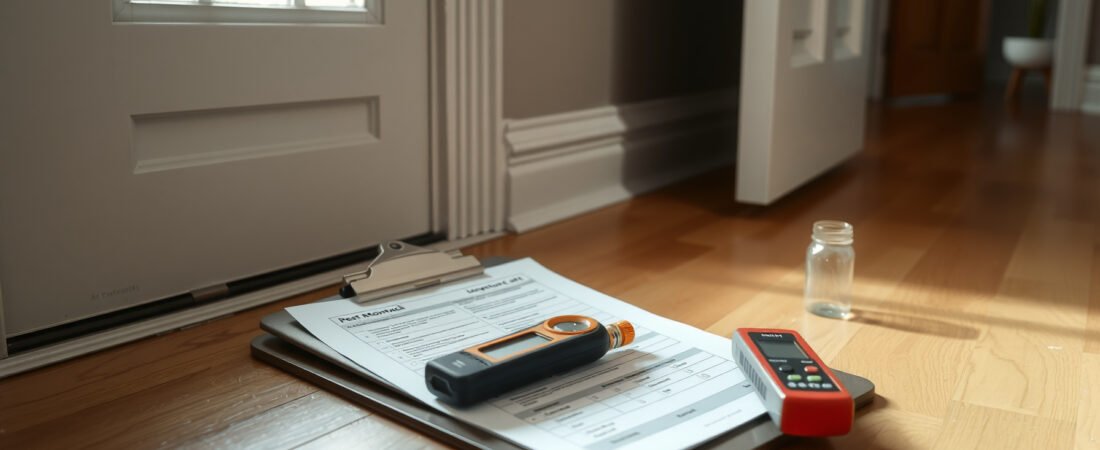
This close-up view of a technician’s inspection process shows the specific areas — wall voids, pipe entry points, and moisture-prone zones — that reveal the difference between a surface-level sales visit and a genuinely diagnostic pest assessment.
What Does a Legitimate Free Inspection Include vs. a Sales-Only Visit?
There’s a real difference between a thorough diagnostic inspection and a 12-minute walk where a guy glances under the sink and hands you a quote. Legitimate inspections include checking the attic, crawl space, garage, and exterior perimeter — not just the kitchen and bathrooms. If a technician finishes in under 20 minutes and never opened a cabinet, looked behind the refrigerator, or went outside to check the foundation, you got a sales pitch, not an inspection.
Here’s what a real inspection should cover, and what it tells you:
- Exterior perimeter check — looks for entry points, cracks in the foundation, gaps around utility penetrations, and wood-to-soil contact that invites termites and carpenter ants
- Crawl space or basement inspection — checks for moisture, wood rot, termite mud tubes, and rodent burrow evidence; a technician who skips this is leaving out the most important zone in many homes
- Kitchen and bathrooms — under-sink cabinets, behind appliances, inside door hinges, and along the toe-kick of cabinetry where German cockroaches typically concentrate
- Attic access — rodent activity, wasp or yellow jacket nests, and signs of wildlife entry are commonly found here and commonly skipped during quick visits
- Garage and utility room — heavily trafficked by rodents and occasional cockroaches, with wall voids that connect directly to living spaces
- Written findings summary — a legitimate inspection produces a written report, even a basic one; if all you get is a verbal pitch and a price sheet, that tells you everything
How Does the Upsell Actually Work — and What Are They Selling?
Picture this: a technician finds two small German cockroach droppings behind your stove. What you see is two specks. What you hear is “you have a German cockroach problem, and these spread fast — a single female can produce 30,000 offspring in a year under the right conditions.” That’s technically true (a female produces an egg case every 3-4 weeks, each containing 30-40 eggs, and with overlapping generations the math gets alarming quickly). But two droppings behind a stove could mean a single hitchhiker from a grocery bag, not a full infestation requiring a quarterly treatment plan.
The standard upsell structure follows a predictable arc: findings presentation, severity framing, solution options with a good/better/best pricing tier, and a same-day discount that expires when the technician leaves. That same-day pressure is the part worth resisting most aggressively. Legitimate pest problems don’t become catastrophically worse in 24 hours — with the exception of active termite swarms or a confirmed bed bug infestation spreading between rooms, you have time to get a second quote. Anyone who tells you otherwise is leveraging urgency as a closing tool, not giving you accurate pest biology information.
“The inspection itself is often the most valuable part of the entire interaction — a trained eye can catch things homeowners genuinely miss. The problem is that the findings are almost always presented in a way that inflates severity, because the technician’s job isn’t just to diagnose, it’s to close a sale. Ask for a written findings report before any pricing conversation. If they won’t provide one, that tells you a lot about how the rest of the relationship will go.”
Dr. Marcus Ellery, Board-Certified Entomologist and NPMA-Certified Pest Management Professional
What Do the Different Service Packages Actually Mean?
Most companies structure their offerings into one-time treatments, quarterly plans, and annual contracts — sometimes with a “pest-free guarantee” layered on top. Understanding what you’re actually buying versus what the label implies is the difference between getting useful service and paying for things you don’t need. The word “guarantee” in pest control almost always comes with conditions buried in the contract: you must maintain the service plan, you must allow re-treatments within a specific window, and some pest categories (termites, bed bugs, wildlife) are explicitly excluded.
| Service Type | What It Actually Covers | Watch Out For |
|---|---|---|
| One-Time Treatment | Single visit, specific pest, no follow-up | No callback guarantee; if the problem returns in 3 weeks, you pay again |
| Quarterly Plan | 4 visits/year, general pest maintenance | Often includes auto-renewal; cancellation fees can run $150–$300 |
| Annual Contract with Guarantee | Unlimited callbacks for covered pests within contract period | Covered pest list is narrower than implied; termites and bed bugs almost always excluded |
The honest nuance here is that quarterly plans do make sense for some households — particularly in warm, humid climates where roach and ant pressure is genuinely year-round, or in older homes with structural gaps that are too expensive to seal completely. For a well-sealed newer home in a northern climate, paying $400–$600 a year for preventive general pest service is often money spent on peace of mind rather than on any measurable pest reduction. That’s a personal decision, but it should be a conscious one.
Pro-Tip: Before the technician arrives, do your own 10-minute walk of the kitchen, bathrooms, and garage and note what you already see. If they “discover” something you missed, that’s valuable. If their entire findings list consists of things you already knew about, the inspection added nothing — and you should feel zero pressure to act on their pricing that day.
What Should You Actually Do After the Inspection?
Get the written report, thank them for their time, and tell them you’ll follow up. Then do three things before calling anyone back: look up the specific pest they identified and confirm the evidence they cited actually matches that pest (not just their verbal description of it), get one more quote from a different company, and assess whether the problem they found is something you can address yourself first. A single German cockroach sighting, for example, is something you can aggressively tackle with gel bait and monitoring traps before committing to a service plan — if you want to go that route, check out How to Get Rid of German Cockroaches in 2 Weeks for a DIY approach that actually works.
The situations where you should move quickly after an inspection — without waiting for a second quote — are genuinely narrow. Active termite swarms inside the home, a confirmed bed bug infestation in multiple rooms, or structural rodent entry with live activity in the walls all warrant faster action. Everything else: take 48 hours. During that window, cross-reference the technician’s findings, compare their recommended treatment to what the pest actually responds to, and if they’re recommending a broad general pest plan for a specific single-pest problem, that mismatch tells you the recommendation is service-plan-driven, not problem-driven.
One thing worth knowing if you’re dealing with cockroaches specifically: not all trap types are equal for all species, and the wrong monitoring tool will give you a false negative — making you think the problem is smaller than it is, or gone when it isn’t. If you’re in an apartment setting and want no-poison options while you assess, Best Cockroach Traps for Apartment Use: No-Poison Options breaks down which products actually catch what’s there versus which ones miss the infestation entirely.
Here’s what to take away from any free inspection, regardless of who conducts it:
- Ask for written findings before any pricing discussion — a legitimate company will provide this without hesitation
- Ask what pest species specifically they identified and what physical evidence supports that identification, not just what they suspect
- Ask what happens if the problem isn’t resolved — what does the callback process look like, and what’s excluded from any guarantee
- Ask whether a one-time treatment is an option — if they push back hard on anything less than a quarterly plan for a minor issue, that’s a red flag
- Never sign during the first visit — the same-day discount is a sales tool; any reputable company will honor reasonable pricing if you call back the next day
Free pest control inspections can be genuinely useful tools — a trained technician walking your home will see things you won’t, and early identification of a real problem is worth something. The issue isn’t the inspection itself, it’s walking in without understanding the structure of the visit. Once you know that the flashlight and the clipboard are connected to a sales goal, you can extract the diagnostic value without getting carried along by the upsell momentum. Use the inspection to get information, then make the decision on your own timeline.
Frequently Asked Questions
What happens during a free pest control inspection?
A technician walks your property — inside and out — looking for signs of pest activity, entry points, moisture issues, and conditions that attract pests. It usually takes 30 to 60 minutes depending on your home’s size. They’ll check common hotspots like the attic, crawl space, garage, kitchen, and the foundation perimeter.
Is a free pest control inspection really free or is there a catch?
It’s genuinely free upfront, but the inspection is designed to lead to a service quote. Most companies won’t charge you just to walk through your home, but expect a sales pitch for a recurring treatment plan — often priced between $40 and $150 per month depending on your region and pest type. You’re not obligated to buy anything on the spot.
How do I prepare my home for a pest inspection?
Clear clutter from under sinks, in closets, and along baseboards so the technician can actually see what’s going on. Pull appliances slightly away from walls if you can, and make sure the inspector has access to your attic, crawl space, and garage. The more access they have, the more accurate the assessment.
What do pest control companies look for during an inspection?
They’re looking for droppings, gnaw marks, grease trails, shed skins, live or dead insects, nesting materials, and structural entry points like gaps around pipes or cracks in the foundation. They’ll also flag moisture problems since standing water and wood rot attract termites, roaches, and rodents. Any of these findings become leverage for their service recommendation.
Should I get multiple free pest inspections before choosing a company?
Yes — getting 2 to 3 inspections from different companies is a smart move, especially if they find something serious like termites or a rodent infestation. Different inspectors may assess the severity differently, and quotes can vary by hundreds of dollars for the same job. Comparing reports also helps you spot inflated findings or unnecessary upsells.
Disclaimer: This article is for informational purposes only. Pest control costs, timelines, and outcomes vary widely depending on the pest, the severity of the infestation, your location, and the company you hire. Always get multiple quotes and ask for a written inspection report before agreeing to a treatment plan.