
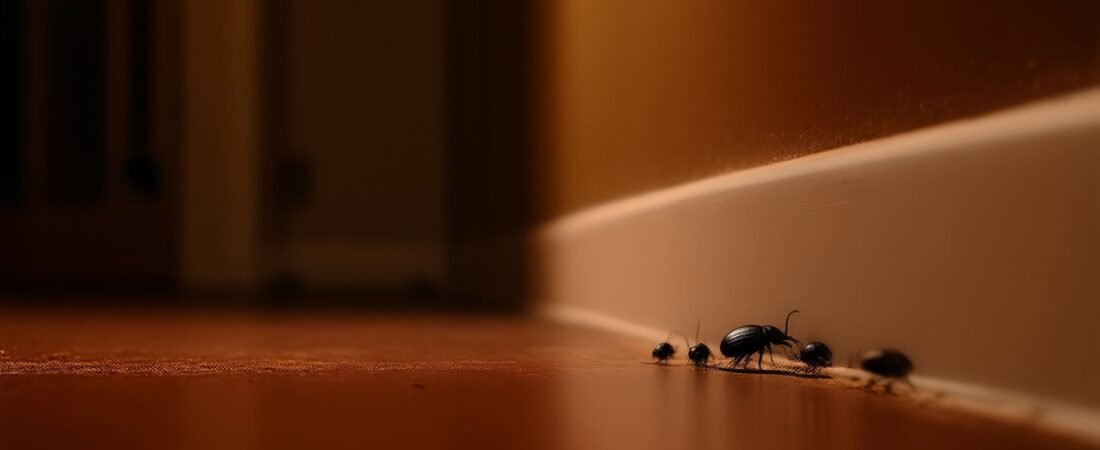
There are at least a dozen different beetle species that commonly end up inside US homes — and the one you’re looking at right now matters more than you think, because the fix for each one is completely different. Grabbing a can of bug spray and calling it done is exactly the wrong move if you haven’t figured out which black beetle you’re actually dealing with. The species determines the source, and the source determines whether you have a minor nuisance or a growing infestation quietly destroying your belongings.
Why “Black Beetle” Isn’t One Problem — It’s At Least Six
The most common mistake people make is treating “black beetle in the house” as a single pest situation. It isn’t. What looks identical to the untrained eye — a small, dark, hard-shelled bug — could be a carpet beetle adult, a ground beetle that wandered in, a larder beetle, a drugstore beetle, a black vine weevil, or a black flour beetle. Each one is attracted to a completely different food source, breeds in a different location, and causes a different kind of damage.
Size is your first filter. A beetle under 3mm is almost certainly a stored-product pest living inside something in your pantry or kitchen. A beetle between 5-15mm is more likely a ground beetle or weevil that came in from outside. Anything bigger than that is probably an accidental invader — a stag beetle, a May beetle, something that bumped through an open door or damaged screen and has no real interest in staying. Getting that size estimate right before you do anything else will save you hours of searching in the wrong rooms.
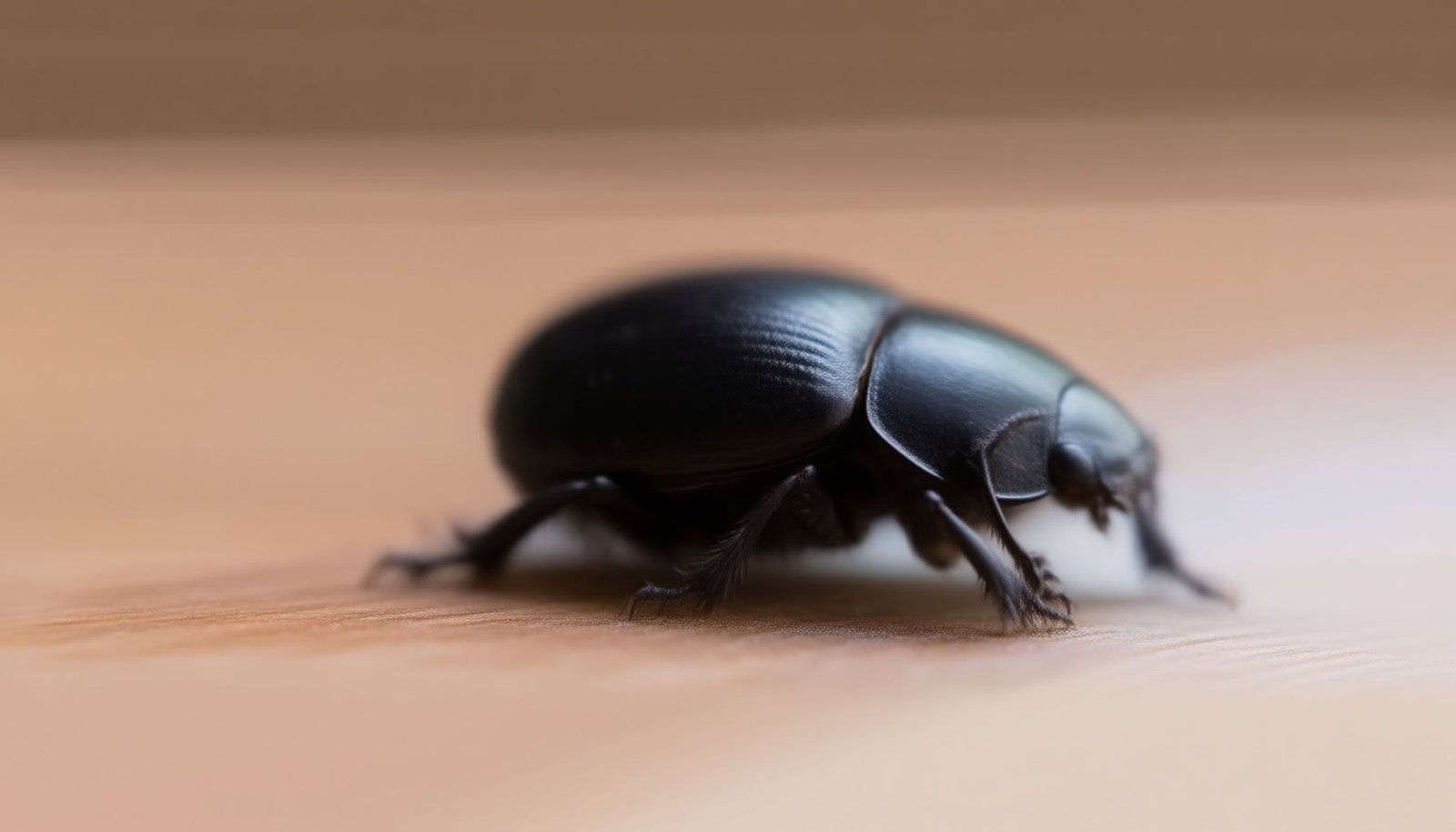
This close-up shows the key physical differences between the most commonly confused black beetles found indoors — paying attention to shell texture, antenna shape, and body proportions is how you make the correct ID before deciding on a treatment approach.
Which Black Beetle Is Actually in Your House?
Here’s a quick identification breakdown of the six beetles most likely to show up inside a US home. Work through this methodically rather than guessing — where you found the beetle is just as useful as what it looks like.
- Black carpet beetle (Attagenus unicolor): Oval-shaped, shiny black, 3-5mm long, often found near baseboards, closets, or vents. The adult itself doesn’t cause damage — it’s the larvae, which look like tiny hairy worms, that eat wool, silk, leather, and dried pet food. Finding adults usually means larvae are already somewhere nearby.
- Ground beetle (family Carabidae): Shiny black, fast-moving, 10-25mm, with long legs and visible mandibles. These are outdoor predators that hunt at night and wander inside through gaps in doors and foundations. They don’t reproduce indoors and won’t start a colony — but they can enter in large numbers if conditions outside are driving them in, like heavy rain or soil disruption from landscaping work.
- Black flour beetle / confused flour beetle (Tribolium confusum): Tiny, 3-4mm, reddish-black rather than pure black, found almost exclusively in dry goods like flour, cereal, cornmeal, or pasta. If you’ve spotted small dark beetles near your pantry or actually inside a food package, this is the most likely candidate.
- Larder beetle (Dermestes lardarius): Oval, 7-9mm, mostly dark brown to black with a pale yellowish band across the upper wing covers. Found near stored meat products, dried fish, dog kibble, or even taxidermy. Their larvae bore into soft materials to pupate and can damage wood, cork, and foam insulation in the process.
- Black vine weevil (Otiorhynchus sulcatus): Dull black, 8-10mm, with a distinctive snout and elbowed antennae. Primarily a plant pest, but adults commonly walk indoors from gardens and potted plants, especially in fall. They’re slow-moving and can’t fly, so they’re usually found crawling on floors near windows or exterior walls.
- Drugstore beetle (Stegobium paniceum): Tiny, 2-3.5mm, brown to nearly black, cylindrical shape. One of the most underestimated pantry pests — it infests not just food but also books, dried herbs, spices, and even prescription medication packaging (hence the name). A single female can lay up to 75 eggs across her short lifespan, and eggs hatch within 8-10 days in warm conditions.
That last point about the drugstore beetle is worth sitting with. Most people assume beetles found near their bookshelf or medicine cabinet are harmless wanderers. They’re often not. The drugstore beetle has one of the broadest diets of any stored-product pest, and because it’s so small, infestations are well-established before anyone notices.
Where You Find Them Tells You More Than What They Look Like
Picture this: you find a small black beetle on your bathroom floor. Your instinct says “it probably came in from outside.” But bathroom infestations of stored-product beetles are more common than people expect — because bathrooms often have dried flowers, potpourri, scented soaps with botanical ingredients, or even a bag of old pet food stored nearby. The location of a find narrows the source, but don’t let it blind you to less obvious possibilities in adjacent rooms.
Use location as a starting point, not a conclusion. Beetles found near windows and exterior walls in fall are almost always outdoor species coming in as temperatures drop — ground beetles, vine weevils, and the occasional stag beetle do this regularly. Beetles found inside cabinets, near baseboards in bedrooms, or anywhere near fabric, rugs, or stored clothing skew heavily toward carpet beetle species. Finding beetles inside sealed food packages or in the corners of your pantry shelf points directly to flour beetles or drugstore beetles, and that means you need to check every single dry good in that cabinet, not just the one where you found the bug. Speaking of pantry pests, if you’ve also noticed dusty webbing or tiny insects in your grains, it’s worth reading about what weevils look like in flour and pantry foods — they’re often sharing the same infested container as small black beetles without anyone realizing there are two separate pests present.
The Species That’s Probably Causing the Most Damage Without You Knowing It
Black carpet beetles deserve their own section because they’re almost uniquely good at going undetected. The adult beetles are visible and that’s usually what homeowners see — but the adults don’t eat your wool sweaters or your down comforter. They’re outdoors-capable and feed on pollen. It’s the larvae that destroy things, and carpet beetle larvae are small, slow-moving, and spend most of their time deep inside materials rather than out in the open where you’d spot them.
“Most homeowners discover a carpet beetle infestation only after the damage is done — a ruined rug, holes in a wool coat, or damaged taxidermy. The adults are a red flag, but they’re not the problem. If you’re seeing black carpet beetle adults indoors, assume larvae are already present somewhere in the structure and start looking systematically, especially in dark undisturbed areas like closets, under furniture, and around HVAC vents.”
Dr. Patricia Mercer, Extension Entomologist, Urban Pest Management Program
Here’s the counterintuitive part that most pest control content skips: carpet beetle larvae can survive on surprisingly little. Dead insects inside wall voids, mouse droppings, shed pet fur, lint buildup in duct registers — all of it is potential larval food. A home doesn’t need to have wool carpets or fur coats for carpet beetles to thrive. The larvae have been found feeding on synthetic fabrics contaminated with human skin flakes, dried food residue on clothing, and even old insulation materials made with natural fibers. This is why people in seemingly “beetle-proof” modern apartments still find carpet beetle damage.
What’s Bringing Black Beetles Into Your House in the First Place?
Entry and attraction are different problems, and confusing them leads to ineffective fixes. Ground beetles and vine weevils are attracted to light sources visible through windows and gaps — switching to yellow or sodium vapor exterior bulbs reduces attraction significantly, since beetles are far less sensitive to those wavelengths than to white or blue-spectrum lighting. But attraction isn’t the same as entry, and a beetle that can’t find a gap to squeeze through doesn’t become your problem.
Stored-product beetles — flour beetles, drugstore beetles, larder beetles — almost never walk in from outside. They arrive inside infested products you bring home from the grocery store, a feed store, or even a bulk food retailer. A single infested bag of flour or bird seed introduced to a pantry can seed an entire infestation within weeks. The honest nuance here is that how fast this escalates depends heavily on your home’s temperature — beetles breed significantly faster above 70°F, so a climate-controlled home in the South gives an infestation a much shorter runway before it’s established than an unheated garage or storage shed in the Northeast would. That’s not just trivia; it changes how urgently you need to act once you find the source.
Pro-Tip: Before you throw out every item in your pantry, check dry goods in this specific order: products stored in cardboard boxes first (beetles penetrate these easily), then bags with any small tears or resealed tops, then anything that’s been sitting open for more than 60 days. Glass and hard plastic containers with tight-fitting lids are nearly impenetrable to stored-product beetles, so start your search with the most vulnerable packaging rather than pulling everything.
How to Confirm the Infestation Source and Actually Solve It
Killing the beetles you can see without addressing the source is the single most common reason black beetle problems persist for months. People vacuum up the adults, spray a surface treatment, and consider it handled — then find more beetles two weeks later and assume the spray “didn’t work.” The spray worked fine on what it touched. The larvae in your untouched closet corners didn’t care.
| Beetle Type | Where to Find the Source | Key Elimination Step |
|---|---|---|
| Black carpet beetle | Under rugs, in closets, inside HVAC vents, behind baseboards | Deep vacuuming + steam treatment on fabric surfaces; discard heavily infested items |
| Flour / drugstore beetle | Inside dry goods packaging, pantry shelf corners, pet food containers | Remove and bag all infested products; wash shelves with hot soapy water; store replacements in sealed glass or hard plastic |
| Ground beetle | No indoor source — they entered from outside | Seal entry points (door sweeps, foundation gaps); reduce exterior lighting attraction; they’ll die indoors naturally |
| Larder beetle | Near stored meat products, dog kibble, dried animal material, or old taxidermy | Identify and remove the protein source; check for dead animals in wall voids or attic if no obvious food source |
One thing that’s genuinely worth knowing: if you’re finding black beetles in a bedroom and you’re also dealing with unexplained scalp irritation or hair breakage, it’s not always unrelated. Some beetle larvae produce fine irritating hairs — carpet beetle larvae in particular are well-documented as a source of skin and scalp reactions when people come into contact with shed larval hairs in bedding or upholstered furniture. It’s not common, but it happens, and it’s the kind of connection most people don’t make. If that sounds like your situation, it’s worth reading about what bugs can cause hair loss and scalp problems — carpet beetle larvae are covered there specifically.
For beetles confirmed to be coming from outside, the fix is structural: door sweeps on all exterior doors (a gap of even 4-5mm is enough for most ground beetles to enter), weatherstripping on windows, and caulk or expanding foam in foundation gaps. These beetles don’t benefit from pesticide application indoors because they’re not establishing — they’re just lost. Sealing entry points is what stops the cycle, not spraying.
For carpet beetles, the treatment has to include heat or direct contact insecticide on fabric surfaces, but equally important is persistent vacuuming — including the vacuum bag disposal, because larvae and eggs inside the machine will survive otherwise. Larvae can take 9 months to over 3 years to complete their development depending on conditions, which means a low-level infestation can persist almost invisibly for years if you’re only doing surface-level treatments without finding every food source.
Once you’ve confirmed the source and eliminated it, give yourself a 30-day window before declaring victory. Most beetle eggs hatch within 8-12 days under warm conditions, and any eggs you missed will produce new larvae shortly after. A second round of inspection and cleaning at the 3-4 week mark catches what the first pass didn’t. That’s not overkill — that’s just how beetle biology works, and skipping the follow-up is how people end up dealing with the same infestation twice.
Frequently Asked Questions
What are the tiny black beetles in my house?
The most common small black beetles found in US homes are carpet beetles, ground beetles, and black vine weevils. Carpet beetles are usually 1/16 to 1/8 inch long and are the most likely culprit if you’re finding them near rugs, clothing, or stored food. Seeing just one or two doesn’t mean you have an infestation, but finding them repeatedly in the same area usually signals a nearby breeding source.
Are black beetles in the house harmful to humans?
Most black beetles in houses aren’t dangerous to people — they don’t bite, sting, or spread disease. However, carpet beetle larvae can cause skin irritation or a rash in some people who are sensitive to their tiny hairs. The real damage is to your belongings: carpet beetles destroy wool, silk, leather, and stored pantry goods, so you’ll want to deal with them quickly.
Why do I suddenly have black beetles in my house?
Black beetles typically get inside through gaps around doors, windows, or utility lines, and they’re often drawn in by outdoor lights or the smell of food. Carpet beetles can also hitch a ride on cut flowers, used furniture, or secondhand clothing. If you’re seeing a sudden spike in numbers, check for an entry point near where you keep finding them and look for a food source like an undisturbed wool item or spilled dry goods.
How do I get rid of black beetles in my house fast?
Start by vacuuming thoroughly in the areas where you’re spotting them, including along baseboards, under furniture, and inside closets. Wash any affected fabrics in hot water at 120°F or higher, and seal and toss infested pantry items. For persistent infestations, a residual insecticide spray along baseboards or a call to a pest control professional is usually the most effective next step.
How do I tell the difference between a black carpet beetle and a black ground beetle?
Ground beetles are larger, typically 1/2 to 3/4 inch long, shiny, and fast-moving — they’re usually just accidental invaders that wandered in from outside and won’t reproduce indoors. Carpet beetles are much smaller, oval-shaped, and move slowly; you’ll often find their shed larval skins nearby, which look like small brown husks. If you’re seeing damage to fabric or stored food along with the beetles, carpet beetles are almost certainly what you’re dealing with.