

Your dog is scratching like crazy, you’ve pulled the bed out to check it, and now you’re staring at tiny moving specks wondering what exactly you’re dealing with — and whether it’s going to spread to the rest of your house. Here’s the answer most sites bury: the bug type matters less than knowing where on the bed you’re finding them, because fleas, mites, and lice each leave a completely different footprint — and treating the wrong one wastes weeks. This article tells you how to tell them apart fast, starting from the evidence you can actually see.
Why Most People Misdiagnose Bugs in a Dog Bed (and Why It Costs Them)
The single biggest mistake pet owners make is treating their dog for fleas when the dog actually has mites — or vice versa. Flea shampoo does nothing to sarcoptic mites. Anti-mite treatments won’t touch a flea infestation. You end up spending money on the wrong product, your dog keeps suffering, and the bugs keep reproducing in the bed while you chase the wrong diagnosis. It’s a more common cycle than most vets will tell you outright.
The counterintuitive part: the dog’s bed is often the best place to make the correct ID — better than looking at the dog itself. Lice stay on the host almost exclusively. Mites may or may not be visible in the bedding depending on species. Fleas, meanwhile, leave unmistakable flea dirt in the fabric whether or not you ever catch one in the act. Knowing what to look for in the bed fabric, seams, and padding can save you two vet visits and a lot of frustration.
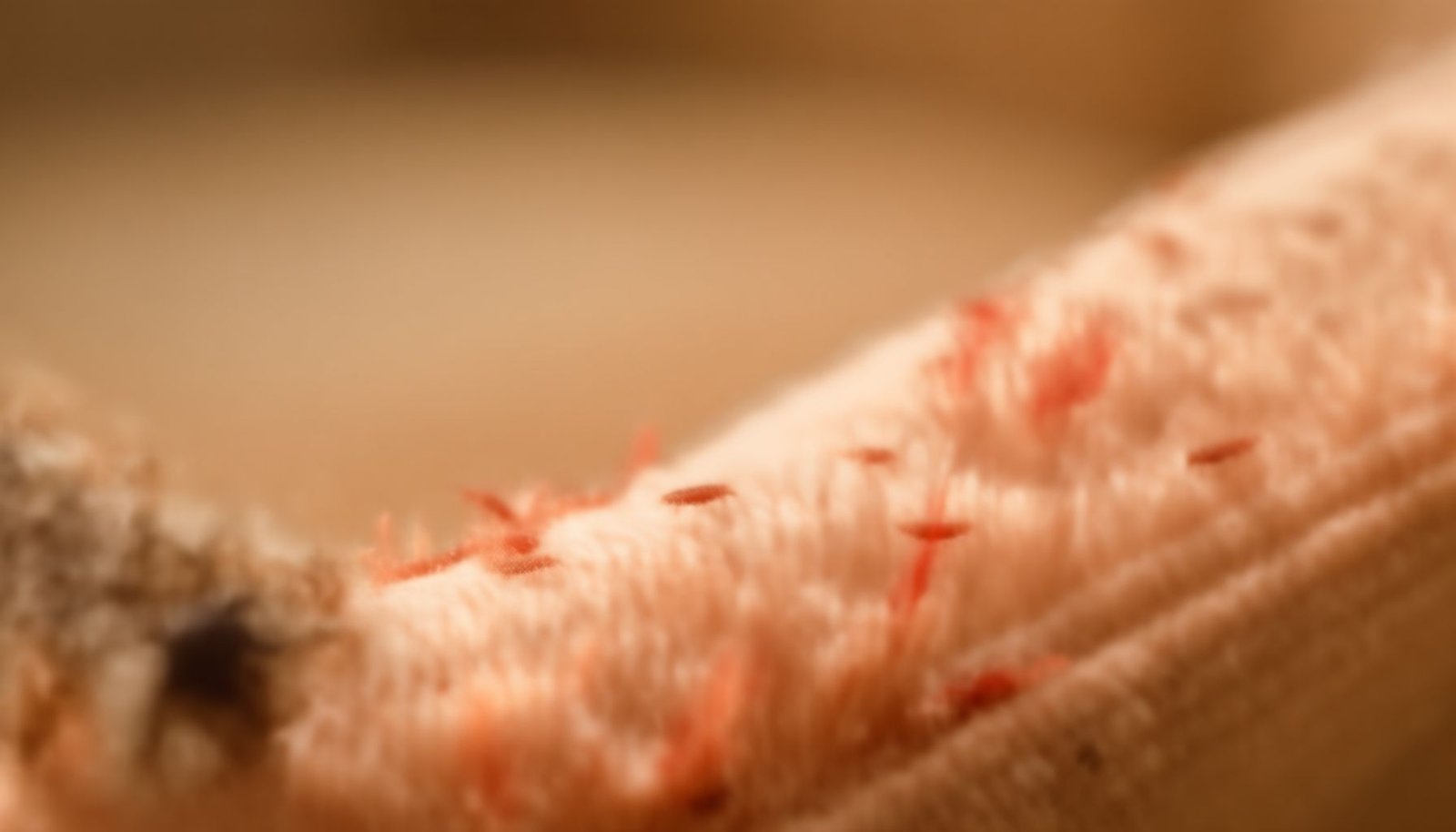
This close-up shows the kind of debris — dark specks, shed casings, and tiny moving bodies — that distinguish a flea infestation from mite or lice activity in dog bedding, and it’s exactly what you should be scanning for before reaching for any treatment.
What Do Fleas Look Like in a Dog Bed vs on a Dog?
Adult fleas are small — about 1 to 3 mm long — reddish-brown, and laterally flattened, meaning they look almost paper-thin from the front. They don’t fly, but they jump up to 13 inches vertically, which is why you’ll spot them launching off the surface of the bed when you disturb it. Their bodies are shiny and hard, almost like a tiny sesame seed that just launched itself across the room.
But here’s what actually confirms a flea infestation faster than finding a live bug: flea dirt. These are the digested blood droppings left by adult fleas, and they collect in the seams and surface of a dog bed like coarse black pepper. Take a damp white paper towel and press it against the bed fabric — if the specks turn reddish-brown when wet, that’s blood, and that’s flea dirt. A dog with just 20 fleas on its body can produce enough flea dirt to visibly contaminate bedding within 48 hours. You might never catch a flea jumping, but the dirt doesn’t lie.
How Can You Tell If It’s Mites Instead of Fleas?
Mites are where misidentification gets really messy, because most mite species are completely invisible to the naked eye. Sarcoptic mange mites — the ones causing intense itching and skin crusting — are around 0.2 to 0.4 mm in size. You will not see them in bedding without magnification. What you will see is the result: yellowish crust, skin flakes, and hair loss debris in the bed fabric, combined with a dog that’s scratching obsessively at elbows, ears, and face rather than the base of the tail (which is more typical flea behavior).
Cheyletiella mites — sometimes called “walking dandruff” — are slightly more visible and appear as moving white flakes across a dog’s back and bedding surface. Demodectic mange mites live inside hair follicles and don’t really shed onto bedding in meaningful numbers, so if the vet suspects demodex, the bed itself won’t give you much diagnostic information. The location of your dog’s itching and the texture of what you’re finding in the bed (fine dusty debris vs. dark pepper-like specks) is the fastest triage before a vet can confirm with a skin scraping.
Pro-Tip: To check for Cheyletiella “walking dandruff” mites in bedding, hold a piece of black paper or dark tape firmly against the bed fabric for a few seconds. If tiny whitish specks start moving on the paper, you likely have Cheyletiella — and both the dog and the bedding need treatment simultaneously, or you’ll keep reinfecting one from the other.
Can Dogs Even Get Lice, and What Does That Look Like?
Yes — dogs can get lice, though it’s far less common than fleas or mites, and dog lice are species-specific, meaning they cannot transfer to humans or cats. There are two types: Trichodectes canis (a chewing louse) and Linognathus setosus (a sucking louse). Both are about 1 to 2 mm long, flat, and pale yellow to tan in color — slower-moving than fleas and wingless. If you see something crawling sluggishly through your dog’s fur and it doesn’t jump, lice is a real possibility.
Here’s the thing about lice and bedding though: unlike fleas, lice spend virtually their entire life cycle on the host. They don’t hang out in the bed waiting to re-infest. You might find a few stray lice or their nits (eggs cemented to fur shafts) in recently used bedding, but the bed is not the reservoir the way it is with fleas. Treating only the dog is more effective for lice than the whole-environment approach you need for fleas. That distinction alone changes your entire treatment plan.
“People almost always reach for environmental flea sprays when they see any small bug in a dog bed, but lice and some mite species require a completely different protocol. Treating the environment aggressively for a lice infestation just wastes product and delays the dog’s recovery. A proper ID — ideally confirmed by a vet or a licensed pest professional — should always come before any treatment decision.”
Dr. Karen Mossberger, Board-Certified Veterinary Parasitologist and NPMA-affiliated pest health consultant
Side-by-Side: How to Tell Fleas, Mites, and Lice Apart in the Bed
Visual comparison is where most guides fail — they describe each pest separately, leaving you to do the mental math yourself. The table below collapses the key differences into a format you can actually use while standing over the dog bed trying to figure out what you’re looking at.
| Pest | Visible to Naked Eye? | What You Find in the Bed | Dog’s Behavior |
|---|---|---|---|
| Fleas | Yes — tiny, dark, jumping | Flea dirt (reddish-brown when wet), eggs (white, oval), larvae (thread-like) | Scratches base of tail, groin, belly; restless at night |
| Mites (Sarcoptic) | No — microscopic | Skin flakes, yellowish crust debris, hair loss clumps | Intense scratching at ears, elbows, face; skin thickening |
| Mites (Cheyletiella) | Barely — white moving flakes | Whitish debris that moves; visible with magnification | Mild to moderate scratching, heavy dandruff along back |
| Lice | Yes — slow-moving, pale | Stray lice or nits (rare); not a true environmental reservoir | Rubbing, scratching; coat looks dull and matted |
One thing the table can’t capture: timing. Fleas tend to be worse in warm months (peak reproduction between 70–85°F), while mite infestations on dogs can flare year-round and are often mistaken for seasonal allergies. If your dog’s scratching seems to track with seasons, fleas are a stronger suspect. If it’s constant and the coat is deteriorating, think mites first.
What Should You Actually Do Once You’ve Identified the Bug?
The response for each pest is different enough that getting the ID right first genuinely matters. Here’s a step-by-step approach that works across all three, starting with what you should do before any product goes on anything:
- Bag and wash the bedding immediately. Use the hottest water the fabric can handle — 140°F or above kills flea eggs, larvae, and Cheyletiella mites on contact. For lice or sarcoptic mites, hot washing plus a hot dryer cycle (minimum 30 minutes) is enough to handle what little may be present in the bedding.
- Vacuum the surrounding area thoroughly. Flea eggs and larvae fall off the dog and concentrate within 6 to 8 feet of wherever the dog sleeps. Flea larvae are photophobic — they burrow deep into carpet fibers and cracks. Vacuuming pulls them up before they develop into biting adults. For mites or lice, vacuuming still removes skin debris and reduces the irritant load, even though it’s not the primary control method.
- Treat the dog first, not the environment. For lice and sarcoptic mites, the dog is the infestation — not the room. For fleas, both need simultaneous treatment or you’ll have re-infestation within days. Talk to your vet about species-appropriate options: selamectin, imidacloprid, or spinosad for fleas; lime sulfur dips or ivermectin for mange mites; insecticidal shampoos or fipronil for lice.
- Use an IGR (Insect Growth Regulator) for fleas only. Products containing methoprene or pyriproxyfen prevent flea eggs and larvae from developing into adults. This is the step most people skip — and it’s why DIY flea treatments seem to work for two weeks before the problem rebounds. The adult flea you kill today was already laying 40 to 50 eggs per day in your carpet.
- Confirm the ID with a vet if you’re not sure. A skin scraping takes about five minutes and definitively identifies mite species. If you’ve treated for fleas twice without improvement, stop assuming fleas and get a scraping done — sarcoptic mange is frequently misdiagnosed as a flea problem for months, causing real damage to the dog’s skin.
- Recheck the bedding two weeks after treatment. Flea pupae are resistant to insecticides and can remain dormant in carpet and bedding for up to 5 months, hatching when vibration (foot traffic, the dog lying down) signals a host is present. A second check and potentially a second treatment round at the 10 to 14 day mark catches the hatch.
It’s also worth noting that the severity of what you need to do scales with how far the infestation has spread. A dog that picked up a few fleas from the backyard last week needs a very different response than one that’s been untreated for two months while sleeping in a carpeted bedroom. In the latter case, a whole-room approach — including treating baseboards, under furniture, and any other soft surfaces the dog contacts — is not optional.
What Other Bugs Might You Find in a Dog Bed That Aren’t Fleas, Mites, or Lice?
Not everything in a dog bed is a parasite. Pet bedding is warm, humid from body heat, and often accumulates skin cells, food debris, and organic matter — which makes it attractive to a range of incidental visitors that have nothing to do with your dog specifically. Identifying these as harmless (or at least non-parasitic) is just as useful as identifying the dangerous ones.
Here are bugs commonly found in dog beds that are often misidentified as parasites:
- Springtails: Tiny, jumping bugs (1 to 2 mm) that can look alarming because of how they move. They feed on mold and organic debris, not on dogs or people. If you’re finding what looks like tiny jumping insects in a damp area near the bed, What Do Springtails Look Like and Why Are They in My Bathroom? can help you rule them out or confirm them — they show up anywhere moisture and organic matter combine.
- Carpet beetle larvae: Small, hairy, slow-moving larvae (about 4 to 5 mm) that eat natural fibers, pet hair, and dried skin cells. They won’t bite your dog but they’ll damage the bed fabric itself. Look for shed skins and irregular fabric damage.
- Psocids (booklice): Tiny, pale, soft-bodied insects that appear in high-humidity environments where mold is present. A dog bed that rarely gets washed in a humid room can develop a psocid population. They don’t parasitize dogs or humans.
- Dust mites: Not visible to the naked eye (0.2 to 0.3 mm) and technically always present in soft furnishings at some level. They feed on shed skin cells, not on living animals. They don’t bite, but their waste particles are one of the most common indoor allergens — something worth knowing if anyone in the house has asthma or respiratory symptoms. The connection between microscopic arthropods in soft furnishings and airborne allergens is similar to what’s explored in discussions about Are Silverfish Harmful to Breathe? Allergens and Asthma Risk Explained, where shed particles from insects trigger immune responses even without direct contact.
- Ants: Occasionally scouts wander into a dog bed, especially if the dog eats near the sleeping area. They’re not parasites and they’ll move on once the food source is removed. Persistent ants suggest a nest nearby, not a dog bed infestation.
Picture this: you’re convinced your dog has fleas because you see tiny jumping specks near the bed — but they’re actually springtails that moved in because the bed sits on a concrete floor in a basement with a humidity problem. You treat the dog twice, the specks keep appearing, and it takes three weeks to realize the dog was never the issue. Misidentification in the opposite direction (assuming parasites when it’s environmental pests) is just as frustrating as confusing flea dirt for regular debris.
The honest nuance here is that multi-pest situations are real. A neglected dog bed can simultaneously host flea larvae in the filling, dust mites in the fabric, and carpet beetle larvae along the seams. If you’ve washed the bed, treated the dog, and still see debris or damage, it’s worth working through each category rather than assuming one treatment fixed everything. Stubborn cases often have more than one variable in play.
Once you’ve identified what’s actually in that bed and treated accordingly, the single best thing you can do going forward is make the bed an inhospitable environment for repeat problems: wash it every one to two weeks in hot water, keep the area around it vacuumed, and if the bed has a removable cover, replace the inner fill once a year. Parasites are opportunists — they colonize the spaces that go unattended longest. Take that away from them and you rarely have to go through this diagnosis process twice.
Frequently Asked Questions
how do I know if my dog has fleas or mites in their bed?
Fleas leave behind tiny black specks called flea dirt that turn reddish-brown when wet — that’s a dead giveaway. Mites are nearly invisible to the naked eye and don’t leave droppings you can see, but they cause intense itching and skin irritation, especially around your dog’s ears and face. If you can actually see small jumping bugs in the bedding, those are almost certainly fleas.
can bugs in my dog’s bed infest my whole house?
Fleas absolutely can — a single flea can lay up to 50 eggs per day, and those eggs roll off your dog and into carpets, furniture, and baseboards within days. Lice are species-specific and won’t live on humans or spread much beyond your pet and their bedding. Mites like Sarcoptes scabiei can spread to humans and cause a condition called sarcoptic mange, so they’re worth taking seriously fast.
what do dog lice look like in a dog bed?
Dog lice are tiny, flat, six-legged insects about 1–2mm long — roughly the size of a sesame seed. They’re tan or grayish and don’t jump, so they move slowly through fur and bedding. You’re more likely to spot their eggs, called nits, which are white oval specks firmly attached to fabric fibers or your dog’s hair shafts.
how do I get rid of bugs in my dog’s bed without throwing it away?
Wash the bed in hot water — at least 130°F — and dry it on the highest heat setting for at least 30 minutes, which kills fleas, lice, and most mites at all life stages. Vacuum the surrounding area thoroughly and dispose of the vacuum bag immediately. If mites are the culprit, some beds may need to be bagged and treated with a pet-safe miticide spray since mites can burrow deep into fabric.
how long can fleas survive in a dog bed without a dog?
Adult fleas can survive up to 2 weeks without a host, but flea pupae — the cocoon stage — can lie dormant in bedding for up to 6 months waiting for a host to appear. This is why you can treat your dog and still see fleas weeks later. You need to treat the bedding and home environment at the same time as the pet, not just one or the other.