
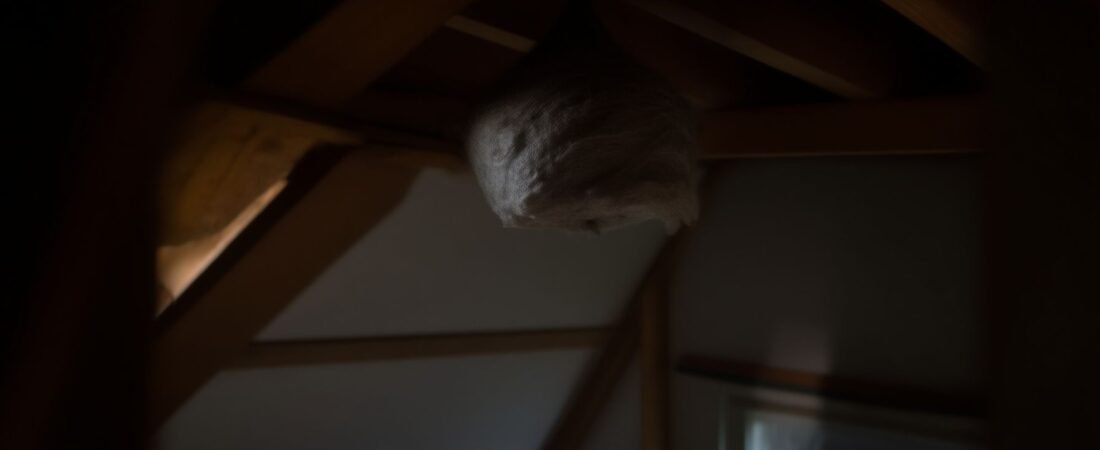
A single wasp nest in your attic can house anywhere from 200 to over 5,000 workers by late summer — and the instinct most people have is to grab a can of chemical spray. But here’s the part almost no one talks about: spraying a wasp nest in a confined attic space without proper ventilation can be more dangerous to you than the wasps themselves. The good news is that chemical sprays are not your only option, and for attic situations specifically, non-chemical methods often work better because the enclosed space works in your favor, not against you.
Why Attic Wasp Nests Are Different From Every Other Wasp Problem
Most wasp nest advice is written for outdoor eaves or ground-level situations — and it doesn’t translate well to attics. An attic creates a completely different set of conditions: limited airflow, dark tight spaces, heat that concentrates to 120°F or more in summer, and structural features like rafters, insulation, and stored items that give wasps dozens of anchoring points. That heat, ironically, is one of your biggest allies when you know how to use it.
The other overlooked factor is that attic wasps almost always mean there’s an entry point from outside — a gap under a soffit, a loose fascia board, a missing vent screen — and that entry point is what actually needs to be addressed. Treating the nest without sealing the entry is like mopping the floor while the faucet is still running. You’ll have another colony establishing within a season, sometimes within weeks.
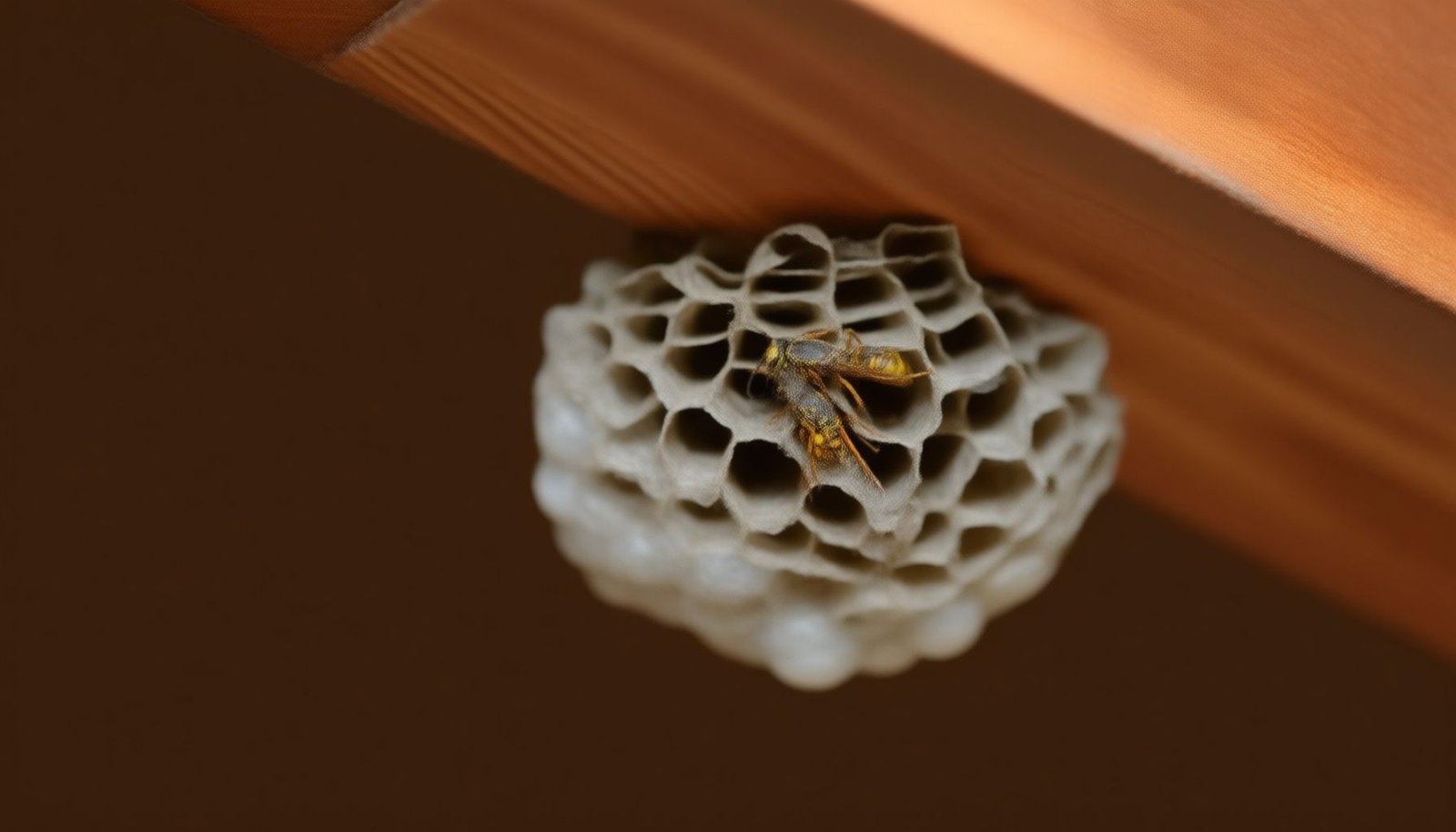
This close-up shows a paper wasp nest anchored to an attic rafter — note how the nest is oriented horizontally, which is typical of paper wasps versus the enclosed teardrop shape of yellow jacket nests, and knowing the difference changes how you approach removal.
Which Wasp Species Is Actually in Your Attic?
This matters more than most guides admit, because the species determines how aggressive the colony will be, how large it can grow, and which non-chemical methods will actually work on it. Treating a yellow jacket nest the same way you’d treat a paper wasp nest is a fast way to end up at urgent care.
| Species | Nest Appearance | Max Colony Size | Aggression Level |
|---|---|---|---|
| Paper Wasp | Open comb, umbrella-shaped, no outer envelope | 20–100 workers | Low–Moderate (defensive only) |
| Yellow Jacket | Enclosed papery ball, gray/tan layers | 1,000–5,000+ workers | High (will chase and sting repeatedly) |
| Bald-Faced Hornet | Large enclosed gray football shape | 400–700 workers | Very High |
Paper wasps are by far the most common attic species and the most manageable without chemicals. Yellow jackets in attics are rarer but significantly more dangerous — if you find a gray, layered enclosed nest the size of a basketball, do not attempt removal yourself regardless of what method you’re using. That’s a job where even professionals suit up completely.
How to Remove a Wasp Nest in the Attic Without Chemicals
The single most effective non-chemical method for attic wasp nests is cold-based removal — and it works because wasps are cold-blooded insects whose muscle function drops sharply below 50°F. At that temperature, they can’t fly, can’t sting effectively, and can barely move. Your attic in early morning during fall or winter drops to outdoor ambient temperatures, which in most of the US means the wasps are essentially immobilized from roughly 5 AM to 7 AM on cold days.
Picture this: it’s a 38°F November morning, and you head up into the attic before sunrise with a headlamp, heavy leather gloves, a sealed plastic bag, and a long-handled tool. The nest — a small open-comb paper wasp nest about the size of a dinner plate — has maybe 30 sluggish wasps on it. You slide the bag over the entire nest from below, seal it while it’s still attached, then detach the nest with a flat tool. The wasps inside never get warm enough to respond. You’ve just removed a nest without a single sting and without a drop of insecticide. This isn’t a fantasy scenario — it’s a method that works reliably when timed correctly.
Pro-Tip: If you can’t wait for cold weather and the nest is small (under 6 inches, fewer than 30 visible wasps), place the bag over the nest the night before and seal it shut around the attachment point using twist ties or rubber bands — wasps that return overnight will enter the bag and be trapped by morning. Remove the whole sealed bag in one motion at dawn.
Here’s the step-by-step process for cold-method attic nest removal:
- Time it right. Choose a morning when outdoor temps have been below 45°F for at least 4–5 hours. Check temps at 4 AM — if it’s cold, you’re good. Enter the attic before sunrise while temperatures are still at their lowest.
- Gear up properly. Wear a long-sleeve shirt tucked into gloves, eye protection, and if you have one, a simple mesh face shield. Tape any gaps at wrists and ankles. You’re not paranoid — you’re prepared.
- Use a red-lens flashlight or headlamp. Wasps have limited sensitivity to red wavelengths, so red light is far less likely to disturb them than white light. Standard headlamps can agitate a colony even in cold conditions.
- Bag the nest completely before detaching it. Slide a heavy-duty garbage bag or ziplock bag over the entire nest from below, pushing it up so the nest is fully inside. Then detach the nest from the rafter or surface with a flat scraper or butter knife.
- Seal and remove immediately. Twist the bag shut and exit the attic without delay. Place the sealed bag in a bucket with a lid or in your outdoor trash bin. Do not leave the bag open — as wasps warm up, they become active again within 15–20 minutes.
- Clean the attachment point. Wasps leave a chemical pheromone trace at former nest sites that attracts new queens the following spring. Scrub the spot with soapy water and, if accessible, apply a small amount of peppermint castile soap to the area — this disrupts the residual scent signal.
What Actually Keeps Wasps From Coming Back to Your Attic
Here’s the counterintuitive part that almost no pest control article mentions: removing the nest solves today’s problem, but the same queen’s offspring — or a completely different queen who picks up on residual pheromones — can establish a new nest in the same attic spot within one season. The nest is a symptom. The entry point is the disease.
“Homeowners consistently underestimate how small a gap wasps need to enter a structure. Paper wasps can squeeze through an opening as narrow as 3/8 of an inch — that’s a standard pencil width. Soffit vents with damaged or corroded screens, gaps where fascia boards have pulled away from the roofline, and unscreened gable vents are responsible for the vast majority of attic wasp infestations I see. Treat those gaps and you solve the problem at the source.”
Dr. Marcus Ellery, Board-Certified Entomologist and Structural Pest Management Specialist, University Extension Program
Sealing entry points is where the long-term solution actually lives. The specific spots to inspect and address include:
- Soffit vents: Replace any vent with a torn, corroded, or bent screen. Use 1/8-inch galvanized hardware cloth stapled behind existing vent covers for extra protection.
- Gable vents: These are large and often have wide-spaced louvers. Add a layer of fine aluminum mesh behind the louvers — this is one of the top three entry points for attic wasps and one of the most overlooked.
- Fascia and soffit gaps: Run your hand along the roofline and feel for air movement. Any gap you can feel is a gap a wasp can use. Fill with paintable exterior caulk rated for wood-to-wood contact.
- Ridge vents: Ridge vent filters degrade over time. Inspect them from inside the attic and replace any filter material that’s crumbling or has visible gaps.
- Utility penetrations: Electrical conduits, plumbing vents, and HVAC lines that pass through the exterior wall often have gaps around them. Seal with expanding foam or copper mesh plus caulk.
For the exterior perimeter of your home — not just the roofline — a well-chosen barrier treatment applied around the foundation and entry points can also reduce the number of wasps patrolling near your structure. If you’re looking at options that don’t involve broad chemical spraying, this guide on Best Outdoor Perimeter Pest Control Sprays for Homeowners covers products that vary significantly in their environmental profile, including some with lower toxicity that are appropriate for use near sensitive areas.
When Non-Chemical Methods Won’t Be Enough
Honest answer: the cold-removal method works excellently for paper wasp nests and for any nest you catch early — meaning before July, when colonies are still small. A nest started in spring by a single overwintering queen might have only 15–25 workers in May or June. That same nest in August could have 300–800 workers and be the size of a basketball, fully enclosed, with foragers actively defending a 10-foot radius.
Size, species, and timing are the three variables that determine whether you can handle this yourself. A small open-comb paper wasp nest found in October? That’s a weekend project with good planning. A large enclosed yellow jacket nest found in August in a low-clearance attic with poor access? That’s genuinely a professional situation — not because chemicals are required, but because the combination of restricted movement, high temperatures, and an aggressive species at peak colony strength creates real physical danger. Some pest removal companies do offer non-chemical removal for wasp nests, though availability varies significantly by region. The same logic applies broadly to fogger-type products — they’re often suggested for enclosed spaces but create their own set of problems, as explored in our look at Best Roach Fogger Alternatives for Apartments, where the chemistry of enclosed-space treatment creates problems that non-chemical approaches sidestep entirely.
One thing that genuinely surprises people: a wasp nest left completely alone in late October or November will die off naturally in most of the continental US. Worker wasps don’t overwinter — only mated queens do, and they leave the nest to hibernate in bark, soil, or structural crevices. The entire colony, nest and all, is completely dead and abandoned by first hard frost. If you discover a nest in fall, have no immediate access need to that part of the attic, and the colony isn’t entering your living space, waiting it out is a legitimate, zero-intervention option. You still need to remove the abandoned nest and seal the entry point before spring — but the wasps will have done half the work for you.
Getting rid of wasps in your attic without chemicals is less about finding the perfect product and more about understanding the biology at play. Use the cold, use the timing, seal what needs sealing, and treat the entry points as seriously as the nest itself. Do that, and you’ll likely never deal with the same attic colony twice.
Frequently Asked Questions
how do I get rid of wasps in the attic without chemicals?
The most effective chemical-free methods include sealing entry points, using peppermint oil-soaked cotton balls near nest sites, and hanging decoy nests to discourage new colonies. Wait until late fall or early winter when the colony dies off naturally, then remove the abandoned nest and seal any gaps larger than 1/4 inch to prevent reinfestation.
what time of year is it safe to remove a wasp nest in the attic?
Late November through February is the safest window in most US states, since wasp colonies die off once temperatures consistently drop below 45°F. By then the nest is abandoned, and you can remove it without protective gear — though wearing gloves and a dust mask is still a smart move.
how can I tell if wasps are nesting in my attic vs just flying in?
If wasps are nesting, you’ll typically hear a low buzzing or crackling sound near the eaves or insulation, and you may see 10 or more wasps entering and exiting the same small gap repeatedly. Random wasps just flying in usually show no consistent entry point and don’t cluster in one area of the attic.
does peppermint oil actually work to repel wasps in the attic?
Peppermint oil won’t eliminate an existing colony, but it’s a legitimate deterrent that can discourage scouts from building new nests. Soak cotton balls in undiluted peppermint oil and place them every 2 to 3 feet along rafters and near potential entry points — reapply every 2 weeks since the scent fades.
is it dangerous to have a wasp nest in my attic long term?
Yes — a mature yellow jacket or paper wasp colony can grow to 5,000 or more insects by late summer, and any disturbance near the nest risks a serious sting attack. Beyond the sting risk, nests built inside insulation or wall cavities can attract other pests like beetles and moths once the colony dies and the old comb starts to decay.
Disclaimer: This article is for informational purposes only and isn’t a substitute for professional pest control advice. Always read and follow the product label instructions exactly — label directions are legally binding and vary by brand and active ingredient. Keep all pesticides, baits and traps away from children and pets, ventilate treated areas as directed, and consider calling a licensed pest control professional if an infestation is large, recurring, or involves a structural pest like termites or carpenter ants.