
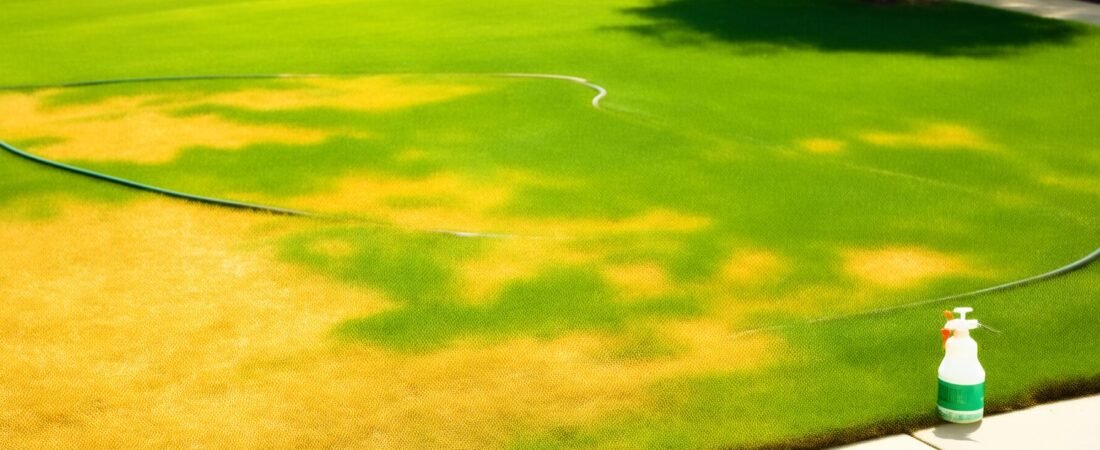
Your lawn isn’t dying from drought or disease — chinch bugs are quietly draining it from the inside out, and most people treat the wrong thing for months before figuring that out. The burnt, straw-colored patches spreading across your St. Augustine or zoysia grass in midsummer aren’t heat stress. They’re the feeding signature of an insect smaller than a watermelon seed that can kill a 25-square-foot section of turf in under two weeks. Here’s the part that trips everyone up: by the time you see the damage, the bugs have already moved on to the green grass bordering the dead zone. That’s the detail that makes chinch bug control fail over and over again — people treat where the lawn is dead instead of where the bugs actually are.
Why Your Lawn Dies in Patches (And Why It’s Probably Not What You Think)
Chinch bugs use a two-stage attack that most lawn owners don’t know about. First, they pierce individual grass blades and inject a salivary toxin that blocks the plant’s ability to transport water — essentially causing it to suffocate from the inside even when there’s moisture in the soil. Then they drain the plant’s fluids. That’s why chinch bug damage looks so much like drought stress: the grass is literally failing to use available water because the vascular system has been chemically disrupted.
The second reason diagnosis gets so botched is that chinch bugs prefer the hottest, driest, most sun-exposed areas of your yard — along sidewalks, driveways, and south-facing slopes. Picture this: you’ve been hand-watering a dead patch near your front walkway every evening for three weeks, wondering why it won’t green up, while a colony of several hundred chinch bugs is actively feeding on the healthy grass six inches away. The dead zone doesn’t recover because the toxin damage is already done. Watering it more doesn’t fix chemical injury.
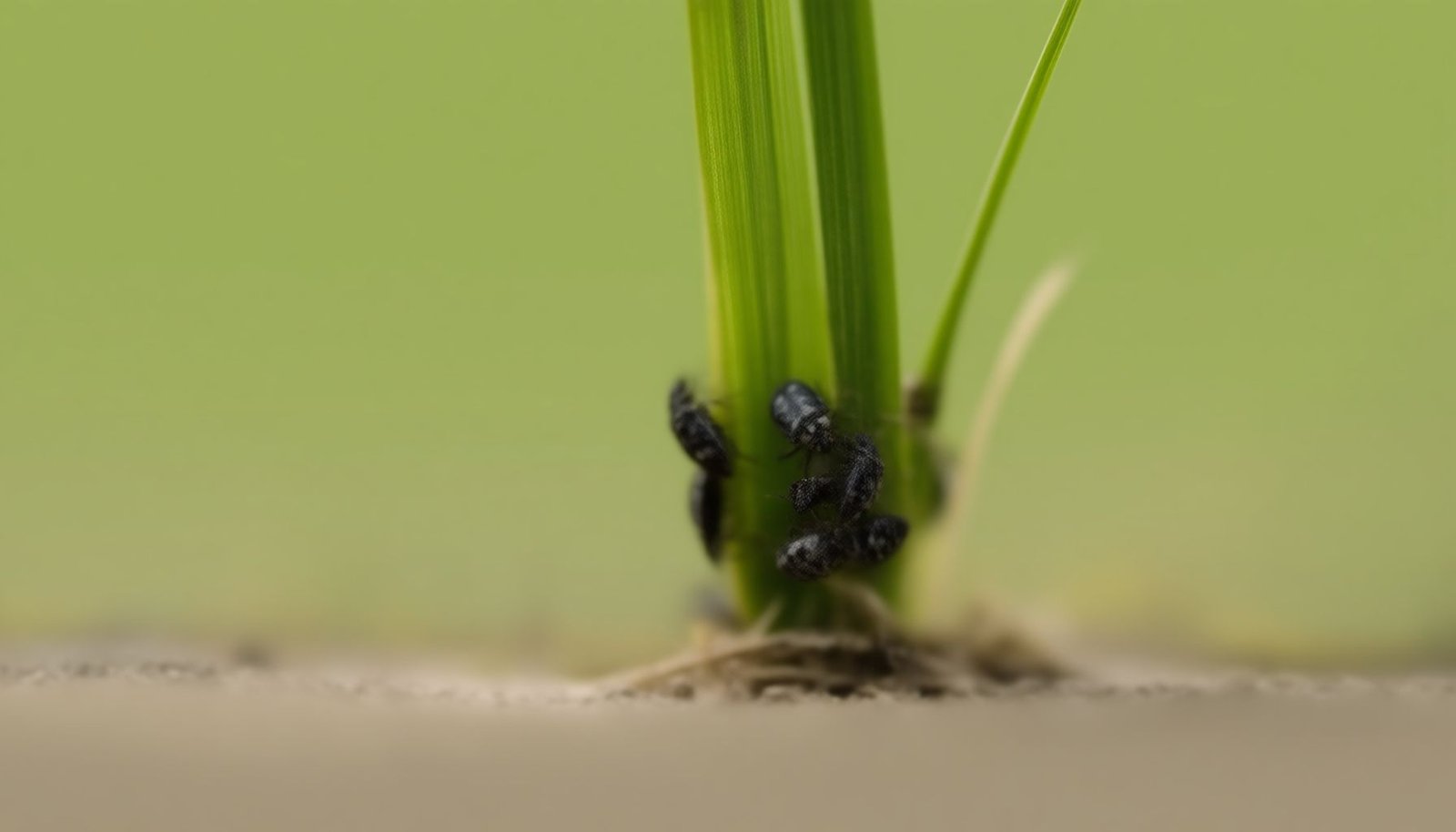
This close-up shows the size difference between chinch bug nymphs (orange-red with a white band) and adults (black with white wings), which matters because nymphs and adults require slightly different timing for effective chemical control.
How to Actually Confirm You Have Chinch Bugs Before You Treat
Don’t spend $80 on insecticide until you’ve confirmed the infestation — because sod webworms, billbugs, and fungal diseases all create nearly identical damage patterns. The fastest confirmation method is the coffee can test: remove both ends from a large metal can, push it 3–4 inches into the soil at the edge of a damaged area (where green meets dead), fill it with water, and watch for 10 minutes. Chinch bugs float. If you’ve got them, you’ll see tiny black-and-white adults and reddish nymphs bobbing to the surface within a few minutes.
The threshold number matters too. Finding 1–2 chinch bugs per square foot generally isn’t enough to cause visible lawn damage. The treatment threshold most turf specialists use is around 15–20 bugs per square foot — anything below that and a healthy, well-irrigated lawn can usually outpace the feeding. If you’re seeing 25 or more per square foot, you’re at the stage where treatment is genuinely urgent and the lawn will not recover on its own.
The Treatment Timing Mistake That Makes Chinch Bug Sprays Fail
Here’s the counterintuitive part that almost never makes it into standard lawn care advice: the best time to spray for chinch bugs is NOT when you see the worst damage. It’s 4–6 weeks earlier, when the first-generation nymphs are hatching in late spring and are still small, soft, and concentrated in a tight area. Adult chinch bugs have partially developed wings and can scatter and reinfest from neighboring lawns within days of treatment. Nymphs can’t do that — they’re stuck in place and die faster from contact insecticides.
Timing also depends heavily on your climate zone. In Florida and the Gulf Coast, chinch bugs may produce three generations per season, meaning effective control requires two properly timed spray cycles, not one. In the mid-Atlantic or transition zones, you’re typically dealing with one or two generations, which changes the strategy significantly. Treating once in July because that’s when you noticed the patches — without a follow-up in late August — is why so many homeowners think insecticides don’t work.
Pro-Tip: Always treat a 3–5 foot buffer of visibly healthy green grass surrounding every dead patch. That’s where the live bugs are actively feeding. If you only spray the dead zone, you’re treating a crime scene with no criminals left in it.
Which Products Actually Work — and Which Ones Chinch Bugs Have Learned to Ignore
Pyrethroid resistance in chinch bug populations is a real and documented problem, particularly in Florida where bifenthrin and permethrin have been used heavily on St. Augustine lawns for decades. If you’ve applied a pyrethroid product twice and seen no reduction in bug counts within 5–7 days, resistance is likely the culprit — not application error. Switching chemical classes isn’t optional at that point; it’s the only thing that will work.
“Pyrethroid-resistant chinch bug populations have spread across much of the southeastern US, and homeowners often keep reapplying the same chemistry and wondering why the damage keeps expanding. The single most important thing a homeowner can do is rotate between insecticide classes — use a product containing clothianidin or trichlorfon as your second application if pyrethroids aren’t delivering results within a week.”
Dr. Adam Thelen, Turfgrass Entomologist and Extension Specialist, University of Florida IFAS
Here’s a breakdown of the most effective active ingredients by chemical class, so you’re not accidentally buying the same chemistry twice under a different brand name:
| Active Ingredient | Chemical Class | Best Use Case |
|---|---|---|
| Bifenthrin, Permethrin | Pyrethroid | First application on resistant-free populations |
| Clothianidin, Imidacloprid | Neonicotinoid | Systemic option; apply before heavy rain for soil uptake |
| Trichlorfon | Organophosphate | Rotation choice for confirmed pyrethroid resistance |
| Beauveria bassiana | Biological fungicide | Organic option; slower-acting, best for low-to-moderate populations |
One thing worth knowing about neonicotinoids: imidacloprid and clothianidin are taken up through the roots, which means they work best when watered in within 24 hours of application. They’re not a fast knockdown — expect 7–14 days for visible population decline. If you need rapid control of a heavy infestation, use a contact pyrethroid for immediate knockdown and follow up with a systemic neonicotinoid to catch what survives.
Long-Term Prevention: What Changes in Your Lawn Care Routine Actually Reduce Chinch Bugs
Chinch bugs aren’t just opportunistic — they’re specifically drawn to lawns that are stressed, over-fertilized with nitrogen, and allowed to build up thick thatch. A thatch layer deeper than ½ inch creates the perfect protected habitat for chinch bug eggs and nymphs: warm, insulated, difficult to penetrate with sprays, and right at the base of the grass blades they feed on. Dethatching every 2–3 years isn’t just good turf practice — it’s one of the most effective long-term chinch bug deterrents you can do.
Here’s what a prevention-focused lawn routine looks like in practice, especially if you’ve already dealt with chinch bugs once:
- Dethatch annually or bi-annually — Thatch deeper than ½ inch shelters eggs and makes insecticide penetration nearly impossible
- Reduce high-nitrogen fertilizer in summer — Lush, fast-growing turf is more attractive to chinch bugs and more vulnerable to toxin damage; switch to a balanced slow-release formula after June
- Water deeply and infrequently — Frequent shallow watering keeps the top inch of soil moist, which is exactly where chinch bugs live and breed; deep watering 1–2 times per week encourages root depth and dries the surface
- Overseed with resistant grass varieties — If you’re growing St. Augustine, ‘Floratam’ has well-documented resistance to chinch bug feeding; mixing in resistant cultivars over time reduces long-term pressure
- Preserve beneficial insect habitat — Big-eyed bugs (Geocoris species) are natural chinch bug predators and look almost identical; broad-spectrum pesticide overuse wipes them out and lets chinch bug populations rebound faster
One genuinely underappreciated point: the lawns that get hammered by chinch bugs year after year are almost always lawns that also have a spider mite or other surface pest problem that triggered repeated broad-spectrum spraying. Every time you nuke the yard with a pyrethroid to handle a different pest — even something as minor as occasional surface ants — you’re reducing the population of big-eyed bugs and other predators that would otherwise cap chinch bug numbers naturally. Pest problems in the lawn rarely exist in isolation, and managing one pest aggressively can quietly set the stage for another. If you’ve been dealing with nuisance pests on the property edges — the kind of small flying insects that make outdoor time miserable, like the ones covered in our guide on how to get rid of no-see-ums on a porch or patio — it’s worth thinking about whether your control approach is collateral-damaging the beneficial insects in your lawn at the same time.
Step-by-Step Treatment Plan to Actually Clear a Chinch Bug Infestation
A one-and-done spray approach almost never eliminates chinch bugs from a lawn that’s already showing visible damage. What works is a coordinated sequence that targets adults, nymphs, and eggs across two treatment windows, combined with cultural changes that make re-infestation harder. Skipping steps — especially the buffer zone spraying and the follow-up — is why most DIY attempts fail by week three.
- Confirm with the coffee can float test — Do this at the green-to-dead border in at least 3 locations before buying anything. Count bugs per square foot to establish whether you’re at the treatment threshold (15–20 per sq ft minimum).
- Mow and dethatch before spraying — Mow to your grass type’s recommended height and dethatch if the layer exceeds ½ inch. This dramatically improves insecticide penetration to the soil surface where bugs live.
- Apply a contact insecticide to the active zone — Spray the green grass in a 3–5 foot perimeter around every dead patch. Use a hose-end sprayer for even coverage. Apply in the early morning when chinch bugs are near the soil surface and temperatures are below 85°F — heat drives them deeper, reducing contact efficacy.
- Water in a systemic product 3–5 days later — Apply a neonicotinoid granule or spray to the same area and water it in within 24 hours. This catches nymphs that survived the first application and any eggs that hatched afterward.
- Repeat the float test at day 10 — If populations are below 5 per square foot, you’re winning. If counts are still high and you used a pyrethroid first, switch to an organophosphate or biological product for your second round.
- Overseed or resod the dead zones in fall — Chinch bug toxin damage is permanent on a cell level. Dead patches won’t green up regardless of what you do — they need to be physically replaced once the infestation is controlled.
The honest nuance here is that in severe infestations — especially in Florida or Texas where chinch bugs produce multiple generations and pyrethroid resistance is widespread — DIY control has real limits. If you’re still seeing population counts above 20 per square foot after two properly timed treatments with rotated chemistry, a professional with access to commercial-grade systemic products is the more cost-effective path at that point. The lawn damage bill from another full generation of unchecked feeding will far outpace the cost of a single professional application.
It’s also worth checking the perimeter of your property carefully, because chinch bug infestations rarely start in the middle of a lawn — they typically enter from edges, particularly from neighboring lawns, landscaping beds, or leaf litter along fence lines. Pest pressure on the exterior of a property can come from multiple directions at once; the same systematic thinking that applies to managing entry points for something like roof rats in the attic applies here — find where they’re coming from, not just where they are now.
Chinch bugs are one of those pests where knowing the mechanism — the toxin injection, the active feeding zone migration, the resistance patterns — genuinely changes what you do and when. Get the timing right, treat the live edge not the dead center, and rotate your chemistry if the first round doesn’t cut the population by at least 80% within 10 days. Do those three things and you’ll be in a completely different position than homeowners who just spray and hope.
Frequently Asked Questions
how do I know if I have chinch bugs in the lawn?
Look for irregular yellow or brown patches that spread outward from sunny, dry areas — chinch bugs thrive in heat and drought stress. To confirm, do the flotation test: push an open-ended coffee can 2–3 inches into the soil at the edge of a damaged patch, fill it with water, and watch for tiny black-and-white bugs floating to the surface within 10 minutes. Adult chinch bugs are only about 1/5 of an inch long, so look closely.
what kills chinch bugs in the lawn fast?
Insecticides containing bifenthrin, carbaryl, or lambda-cyhalothrin are among the fastest-acting options for chinch bugs in the lawn. Apply the product to the damaged area and at least a 5-foot buffer zone around it, since chinch bugs move outward quickly. Water the lawn lightly before applying a liquid insecticide so the bugs come up toward the surface, which improves contact and kill rate.
can chinch bugs in the lawn go away on their own?
They won’t go away on their own — chinch bug populations grow fast, and a single female can lay 200–300 eggs over her lifetime. Once you’ve got more than 20–25 chinch bugs per square foot, the damage accelerates and untreated areas will keep spreading. Without treatment, what starts as a small brown patch can wipe out a large section of lawn within a few weeks.
what is the best time of year to treat chinch bugs?
The best time to treat chinch bugs in the lawn is late spring through early summer, when nymphs are young and most vulnerable to insecticides. You’ll typically see the first signs of damage when soil temperatures consistently hit 70–80°F. A second treatment in midsummer may be needed if you’re in a region with overlapping chinch bug generations, which is common in the southern US.
will watering my lawn get rid of chinch bugs?
Watering alone won’t eliminate chinch bugs, but keeping your lawn properly irrigated — about 1 inch of water per week — makes the grass more resilient and less attractive to them. Chinch bugs prefer hot, dry, stressed turf, so drought conditions essentially roll out the welcome mat for an infestation. Think of irrigation as prevention support, not a treatment — if you already have an active infestation, you’ll still need an insecticide to knock them back.
Disclaimer: This article is for informational purposes only and isn’t a substitute for professional pest control advice. Always read and follow the product label instructions exactly — label directions are legally binding and vary by brand and active ingredient. Keep all pesticides, baits and traps away from children and pets, ventilate treated areas as directed, and consider calling a licensed pest control professional if an infestation is large, recurring, or involves a structural pest like termites or carpenter ants.