
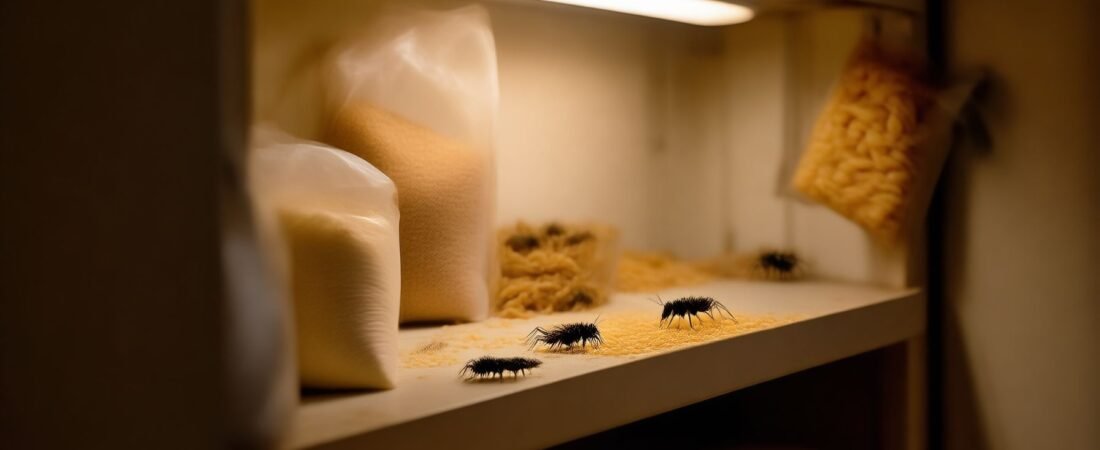
Eight different bugs can show up in your kitchen — and the one you’re most worried about is probably not the one causing the actual damage. Most people fixate on fruit flies or ants and completely overlook the beetles, mites, and psocids quietly destroying their pantry staples. That’s the real problem with tiny kitchen bugs: misidentification leads to the wrong treatment, and the infestation keeps going while you keep spraying the wrong thing.
Why Does Your Kitchen Have So Many Tiny Bugs in the First Place?
The honest answer that most pest guides skip: your kitchen doesn’t have bugs because it’s dirty. It has bugs because it’s warm, humid, and full of food — and even the most immaculate kitchen checks all three boxes. A bag of flour sitting in your cabinet for four months is a five-star hotel for at least three different species, sealed bag or not, because many pantry beetles can chew through plastic and cardboard packaging.
The other factor nobody talks about is that most tiny kitchen bugs arrive inside your groceries, not through your walls. Grain beetles, weevils, and Indian meal moth larvae are often already living inside packaged goods when you bring them home from the store. By the time you see adults crawling around, there’s usually been a second or third generation developing in your cabinet for weeks.
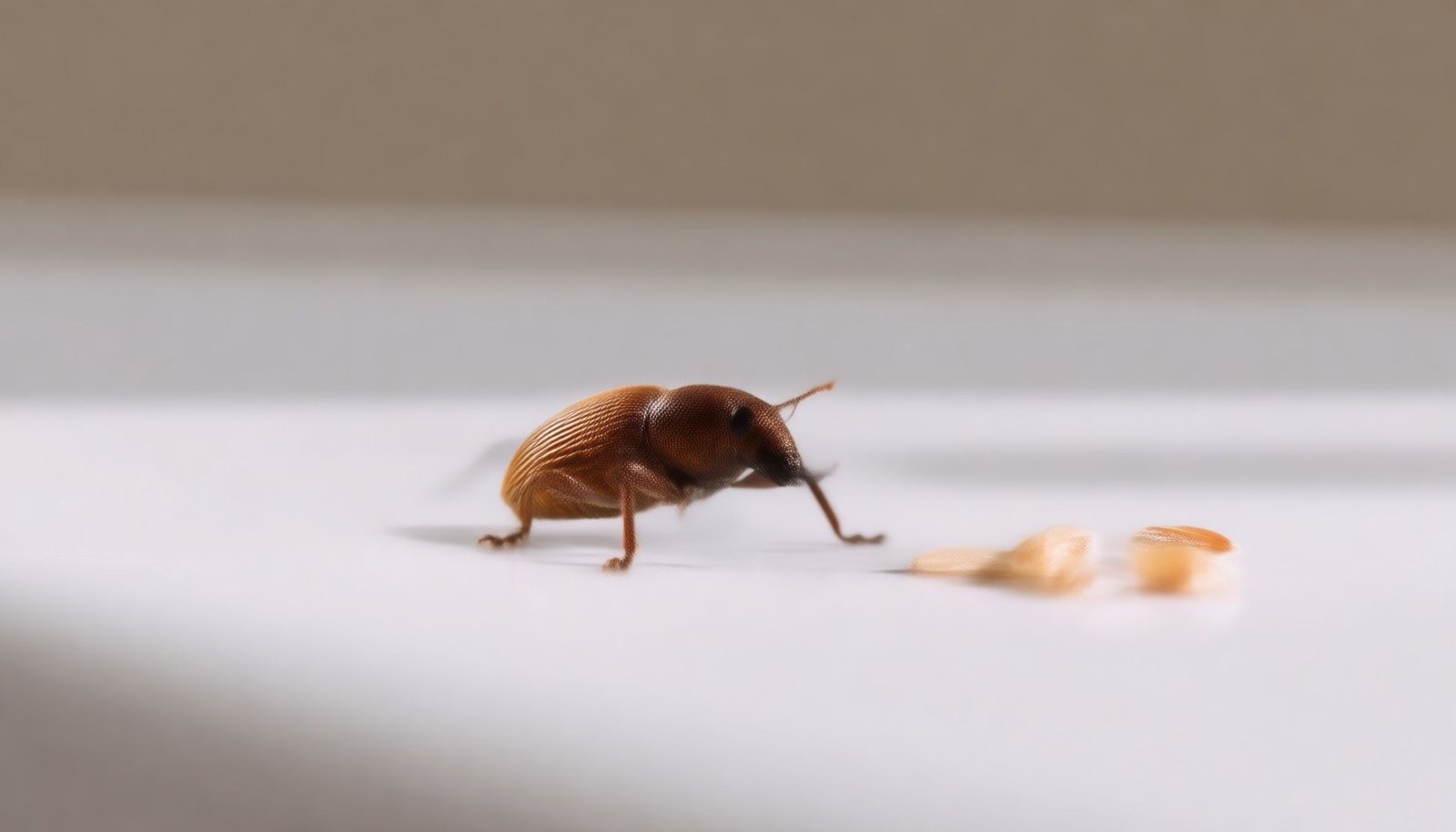
This close-up view shows how small and easily overlooked these kitchen insects are side by side — which is exactly why so many homeowners treat for the wrong bug and wonder why the problem keeps coming back.
Which 8 Tiny Bugs Are Most Commonly Found in Kitchens?
Identification is everything here, because a fruit fly trap does nothing for a grain beetle and a roach bait station won’t touch a psocid. Here are the eight bugs you’re most likely dealing with, and the one detail about each that actually helps you tell them apart from a lookalike.
- Fruit flies (Drosophila spp.) — Tiny, 1/8-inch, tan-bodied with red eyes. Almost always hovering near drains, overripe fruit, or the trash. They breed in any moist organic film, not just fruit — a damp mop left leaning against the wall is enough.
- Fungus gnats — Look nearly identical to fruit flies but originate from overwatered houseplants near the kitchen window, not food. The telltale sign: if the flying bugs are concentrated near a plant, you’ve got fungus gnats.
- German cockroach nymphs — First-instar nymphs are under 3mm, dark-colored, and fast. Most people don’t recognize them as roaches at all. A female German cockroach produces 30–40 eggs per capsule, so what looks like a single tiny bug is almost always a sign of dozens more in your walls and under appliances.
- Sawtoothed grain beetles — Flat, elongated, about 1/10-inch long with serrated edges on their thorax (you’ll need a magnifying glass). Found inside cereal, pasta, dried fruit, and pet food. They’re one of the most common pantry pests in the US and one of the most misidentified.
- Weevils (flour and rice weevils) — Slightly larger than grain beetles at 1/8 inch, with a distinctive long snout. If the tiny bug has what looks like a little beak, it’s a weevil. They lay eggs inside individual grain kernels, so infested rice or wheat can look completely normal until adults emerge.
- Psocids (booklice) — Extremely small, soft-bodied, pale white to gray. Often found in groups on walls, countertops, and inside dry goods in humid climates. They feed on mold spores and fungi — finding them in your kitchen usually means you have a moisture problem behind a cabinet or under the sink, not a food storage problem.
- Ants (sugar ants / pharaoh ants) — Pharaoh ants are 1/16 inch and yellowish-tan, nearly translucent. They’re often confused for something else entirely because they look nothing like the black ants most people picture. They’re also one of the hardest kitchen pests to eliminate because splitting their colony under pressure actually makes the infestation spread.
- Carpet beetle larvae — Bristly, slow-moving, about 1/4 inch. They don’t belong in food but they end up near kitchen baseboards because they’re following protein sources like crumbs, pet food, and dead insects. If you’re finding small, hairy-looking larvae on the floor or counters, don’t assume they’re a food pest — What Do Carpet Beetles Look Like and Where Do They Hide? breaks down exactly what to look for so you don’t confuse them with something else.
Picture this: you open your pantry and see what looks like a smear of dust moving across a shelf. That moving dust is almost certainly psocids — and nine homeowners out of ten reach for a food-grade spray or pantry moth trap that does absolutely nothing for them because psocids aren’t after your food at all.
How Do You Tell Pantry Beetles Apart From Roach Nymphs at a Glance?
This is the misidentification that causes the most wasted time and money. Grain beetles and German cockroach nymphs are both tiny, brownish, and found in the same cabinets — but the treatment for one is completely useless against the other. The key physical difference is movement: grain beetles move slowly and in straight lines, while roach nymphs are fast, erratic, and immediately run toward darkness when disturbed. If whatever you’re looking at sprints away when you open the cabinet door, it’s almost certainly a roach nymph.
Body shape is the second thing to check. Roach nymphs are distinctly flattened and oval, even at 3mm. Grain beetles are elongated and slightly cylindrical with visible segmentation. A magnifying glass or even the zoom on your phone camera makes this call easy. Don’t try to identify them on the run — knock one into a white container and look at it still.
| Bug | Size | Movement | Where Found |
|---|---|---|---|
| Grain beetle | 1/10 inch | Slow, straight | Inside dry goods packaging |
| German roach nymph | 1/8–1/4 inch | Fast, scatter toward dark | Under appliances, cabinet hinges |
| Psocid | 1/16 inch | Slow, clustering | Walls, damp shelves, bulk grains |
| Pharaoh ant | 1/16 inch | Trail-following | Near grease, protein sources |
What Conditions in Your Kitchen Are Actually Driving the Infestation?
Most pest guides tell you to clean more. That’s genuinely good advice, but it misses the structural reasons kitchens harbor bugs that have nothing to do with how often you wipe your counters. Humidity is the underrated driver — a kitchen that runs above 55% relative humidity creates conditions where psocids, fungus gnats, and grain mold (which attracts grain beetles) all thrive simultaneously. Running your exhaust fan for 20 minutes after cooking and fixing any slow drain leak under the sink does more for bug prevention than most sprays.
Cracks around the base of your cabinet kickplates are also a bigger deal than most people realize. German cockroaches can compress their bodies to fit through gaps as thin as 1/16 inch — roughly the thickness of a credit card — which means a perfectly sealed-looking kitchen can still be actively connected to the wall void behind your appliances. Caulking those gaps, especially around plumbing penetrations under the sink, cuts off both entry and harborage in one step.
Pro-Tip: Before you throw out every item in your pantry, put questionable dry goods in the freezer at 0°F for at least four days. That temperature kills all life stages of grain beetles, weevils, and Indian meal moth larvae — so you can salvage expensive items like specialty grains, nuts, and dried herbs without any chemicals near your food.
Are Any Tiny Kitchen Bugs Actually Dangerous to Your Health?
Most of them aren’t — and that’s genuinely true, not a reassurance. Fruit flies, grain beetles, weevils, and psocids are disgusting but they don’t bite, sting, or carry pathogens in the way people fear. The one exception worth taking seriously is German cockroaches. Even tiny nymphs shed allergen-loaded skin and produce feces that trigger asthma attacks and allergic reactions in sensitive individuals, particularly children. The What Diseases Do Cockroaches Carry and Spread in the Home? article goes into the specific mechanism behind that — it’s more serious than most people assume from what looks like a harmless little bug.
The honest nuance here is that severity really does depend on building type and climate. A humid apartment building in a southern state creates compounding risk: cockroach populations build faster in heat and humidity, cross-unit migration is common, and the same conditions that let cockroaches thrive also breed mold that attracts psocids and grain beetles simultaneously. A single-family home in a dry northern climate is dealing with a completely different set of pest pressures, usually concentrated around pantry beetles in winter when windows stay closed and stored goods sit longer.
“The biggest mistake I see homeowners make is treating visible insects as the problem. What you see crawling around your counter represents maybe 10 to 15 percent of the actual population. For every grain beetle you spot, there are likely larval stages buried deep in the back of your pantry that no surface spray will ever reach. You have to eliminate the source — the infested food item — before any chemical treatment makes sense.”
Dr. Patricia Nguyen, PhD Entomology, University Extension Specialist in Stored Product Pests
What Actually Works to Get Rid of Tiny Kitchen Bugs for Good?
The approach depends almost entirely on which bug you have — which is exactly why correct identification comes first, not last. That said, there’s a base protocol that works regardless of species because it attacks the conditions all eight of these bugs share.
- Remove the source first. Bag and discard any infested dry goods immediately. Don’t just move them — seal them in a bag and take them out of the house. Leaving infested food in the trash can under the sink reseeds the problem within 24–48 hours.
- Vacuum before you spray. Use a vacuum with a crevice tool along every shelf edge, cabinet hinge, and baseboard seam. This physically removes eggs, larvae, and shed skins that sprays can’t penetrate. Dispose of the vacuum bag outside immediately.
- Address moisture. Fix any drips, run the exhaust fan, and check that the seal around your sink base is intact. Eliminating standing moisture takes psocids and fungus gnats off the table entirely.
- Store dry goods correctly. Glass or hard plastic airtight containers with gasket seals stop grain beetles, weevils, and meal moths from accessing new food. Twist-top containers don’t cut it — grain beetles can work their way through the thread gap.
- Use the right bait for ants and roaches. For pharaoh ants specifically, never use a repellent spray — it fragments the colony and spreads the infestation into new areas. Slow-acting gel bait carried back to the nest is the only approach that actually works long-term.
The counterintuitive reality is that a kitchen can be essentially bug-free within two to three weeks using nothing more than thorough removal, moisture control, and proper storage — no pesticides required — as long as you correctly identified what you had and pulled the infested material out completely. Chemical treatments become necessary only when the population is large, the harborage is inside walls or under flooring, or you’re dealing with cockroaches, which need a more aggressive and sustained approach.
Get the identification right first, match your response to the actual pest, and you’ll stop cycling through treatments that feel like they should work but don’t. The bugs in your kitchen are telling you something specific about what’s available to them — figure out what that is, take it away, and most of these infestations resolve faster than you’d expect.
Frequently Asked Questions
what are the tiny bugs in my kitchen that are too small to see clearly?
The most common culprits are grain mites, psocids (booklice), or fungus gnats — all under 1/16 of an inch, which makes them nearly impossible to identify without a magnifying glass. Grain mites are usually white or tan and show up in flour, oats, or cereals, while booklice are grayish and tend to cluster near damp walls or cabinets. If you’re seeing them near drains or houseplants, fungus gnats are the more likely suspect.
tiny bugs in kitchen where do they come from?
Most tiny kitchen bugs either hitchhike in through infested pantry goods from the grocery store or breed in moisture-prone areas like under the sink, near leaky pipes, or in overwatered houseplants. Pantry pests like weevils and Indian meal moth larvae are almost always introduced through contaminated food packages, even brand-new ones. Sealing dry goods in airtight containers and fixing any leaks are the two most effective ways to cut off their entry points.
are tiny bugs in the kitchen dangerous to eat if they got into my food?
Accidentally eating small amounts of pantry bugs like weevils or grain mites isn’t typically harmful to healthy adults — most pass through without causing any illness. That said, grain mites can trigger allergic reactions or respiratory symptoms in people with sensitivities, and heavily infested food should always be thrown out. As a rule, if you can see visible movement or webbing throughout a package, don’t eat it.
how do I get rid of tiny bugs in my kitchen fast?
Start by pulling everything out of your pantry and tossing any open or infested packages — that removes the breeding source immediately. Vacuum all shelves thoroughly, wipe them down with white vinegar or soapy water, and transfer all remaining dry goods into sealed glass or hard plastic containers. For drain flies or fungus gnats, pour boiling water down drains and let them dry out completely; most infestations clear up within 1 to 2 weeks once the food or moisture source is gone.
tiny bugs in kitchen only at night what are they?
If you’re only noticing bugs after dark, you’re most likely dealing with cockroach nymphs, which are tiny — sometimes under 1/8 of an inch — and stick to dark, warm spots near appliances during the day. German cockroaches are the most common kitchen species in US homes and apartments, and even one or two at night can signal a larger hidden population. Set sticky traps along baseboards near the stove and refrigerator to get a better count before deciding whether to treat yourself or call a pest control professional.