
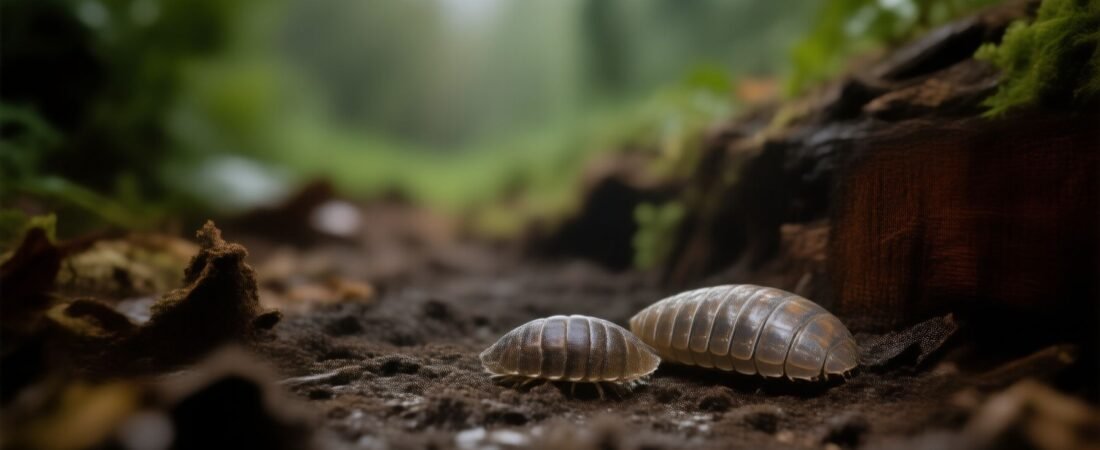
Sowbugs and pillbugs are not insects. That single fact trips up more homeowners than almost anything else in pest identification — and it matters, because misidentifying them changes how you understand why they’re in your home and what you should actually do about it. Both are crustaceans, more closely related to shrimp and crabs than to any beetle or bug you’ve seen crawling across your floor. They breathe through gills. They need moisture to survive. And once you understand that, the whole picture snaps into focus.
The confusion between sowbugs and pillbugs is understandable — they look almost identical at a glance, they show up in the same damp places, and plenty of people use the names interchangeably. But they’re different species with different behaviors, and that difference tells you something specific about your moisture problem. This article is going to give you the real diagnostic tool: not just what each one looks like, but what their presence — individually — is telling you about your home.
Are Sowbugs and Pillbugs Actually the Same Thing?
No — and conflating them is the core mistake most homeowners make. Sowbugs (family Porcellionidae, most commonly Porcellio scaber) and pillbugs (family Armadillidiidae, most commonly Armadillidium vulgare) are both isopods, but they’re distinct species with notably different anatomy. The most reliable field test takes about two seconds: drop it onto a flat surface and watch what it does. Pillbugs roll into a perfect, tight ball — a defensive behavior called conglobation. Sowbugs can’t roll up at all. They’ll flatten slightly or run, but they physically lack the ability to curl into a sphere. That one behavioral test tells you which you’re dealing with, every single time.
Visually, there are structural differences too, though they require a closer look. Sowbugs have two small tail-like appendages called uropods that stick out from the back end of the body — pillbugs don’t have these visible projections. Sowbugs also tend to be slightly flatter in profile. Both range from about 3/8 to 5/8 of an inch long and share the same segmented, armored appearance with 7 pairs of legs. The gray-to-slate-brown coloring is nearly identical, which is exactly why the roll-or-no-roll test is more reliable than trying to eyeball the difference from a foot away.
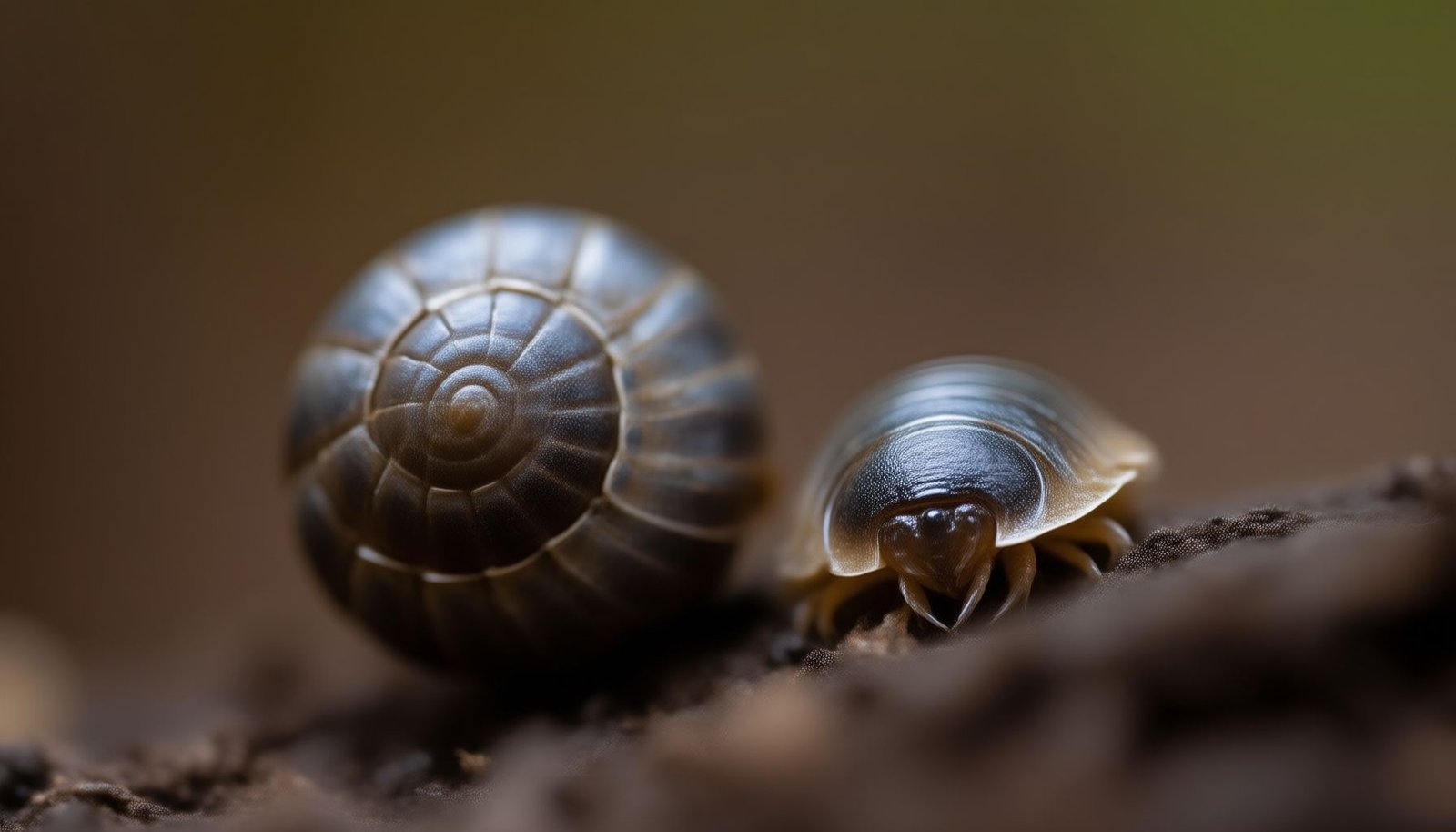
This side-by-side view highlights the uropod appendages visible on the sowbug (left) versus the rounded, smooth rear end of the pillbug (right) — the structural detail that makes visual identification possible without waiting to see rolling behavior.
What Does Each One Look Like Up Close?
Getting a confident ID means knowing what you’re actually looking at when one of these crawls across your basement floor at 11pm. Here’s a breakdown of the specific features to check on each species:
- Body shape: Pillbugs are more dome-shaped and convex from the side. Sowbugs are noticeably flatter — almost like a pressed version of the same creature.
- Tail appendages: Flip the specimen or look at the rear under a flashlight. Two small protruding uropods = sowbug. Clean, rounded rear end = pillbug.
- Rolling behavior: This is your fastest confirmation. Place it on a dry surface. Pillbugs curl into a ball within seconds of feeling threatened. Sowbugs stay flat.
- Coloring: Both are typically slate gray or mottled brownish-gray, but pillbugs occasionally show slightly more uniform gray coloration. This is a soft indicator, not a definitive ID feature.
- Size: Both species max out around 5/8 of an inch. Juveniles of both look identical and extremely small — roughly the size of a sesame seed — which is when you must rely on the uropod check instead of behavior.
One thing that catches people off guard: a pillbug curled into a ball looks almost nothing like a pillbug moving across a surface. First-time observers sometimes think the curled ball is a completely different pest — a small beetle, a seed, even a spider egg. It’s not. That tight gray sphere, about the size of a small pea, is a perfectly healthy pillbug doing exactly what it evolved to do over 300 million years of survival.
Why Are They Inside Your Home — and What’s the Real Problem?
Here’s the counterintuitive part that most pest articles gloss over: sowbugs and pillbugs don’t want to be inside your house. They thrive in damp soil, under mulch, beneath rotting wood, and inside decomposing leaf litter. They eat decaying organic matter, fungi, and plant debris. Your living room has nothing they actually want. When you find them indoors — especially in numbers — it’s not an infestation in the traditional sense. It’s a symptom. Something about your home’s perimeter, foundation, or moisture situation is so severely off that they’re accidentally migrating in.
Picture this: a homeowner in the mid-Atlantic region notices a dozen or so gray bugs near the sliding door to the patio every morning for two weeks straight. She assumes they’re breeding inside. They’re not. What she actually has is a 4-inch mulch layer butted directly against her foundation, saturated from recent rain, with a gap under the door sweep that’s letting them wander in overnight. The bugs are dying inside, not thriving — they’re out of their habitat. The mulch and the gap are the actual problem. Inside finding is an alarm bell, not an infestation in its own right. That framing changes everything about how you respond.
Pro-Tip: Pull mulch, soil, or ground cover back at least 6 inches from your foundation — this single step eliminates the most common harborage zone that drives sowbugs and pillbugs toward entry points. If you’re also noticing other unexpected critters near the same areas, it may be worth checking whether moisture is attracting a wider range of pests; Signs of Mice in the Kitchen: 7 Things to Check Tonight covers how moisture and food access drive different pests toward the same zones.
How Do Sowbugs vs. Pillbugs Differ in Behavior and Habitat Preference?
The behavioral differences between these two species are subtle but meaningful for diagnosis. Sowbugs are slightly more moisture-dependent than pillbugs — they lose body water faster through their exoskeleton and die more quickly in dry conditions. That means finding sowbugs inside (rather than pillbugs) is a stronger signal that your moisture problem is more severe and closer to the structure. Pillbugs have marginally better water retention and can tolerate slightly drier conditions, though both will die within 24–48 hours in a typical heated indoor environment without a water source nearby.
Sowbugs also tend to be more active across a wider range of temperatures and are often found under rocks, boards, or debris directly against structures. Pillbugs are more commonly found in open composting areas and garden beds. Neither species bites, stings, transmits disease, or causes structural damage — they don’t eat wood, fabric, stored food, or anything you care about indoors. The only thing they can technically do is feed on seedlings or very tender plant tissue in a garden setting, but even that’s low-impact compared to real garden pests. They’re ecologically useful decomposers stuck in the wrong environment.
“Most homeowners assume sowbugs and pillbugs are spreading through their house like a cockroach would — establishing, breeding, multiplying. That’s almost never what’s happening. These animals need specific moisture and organic material conditions to reproduce. When I find them inside a home, my first question is always ‘what’s happening at the foundation?’ not ‘how do I kill what’s inside?’ The exterior environment is the infestation, not the interior sighting.”
Dr. Patricia Helm, Board-Certified Entomologist and Extension Urban Pest Specialist, Mid-Atlantic Region
Sowbugs vs. Pillbugs vs. Similar-Looking Bugs: Comparison Table
One of the more common misidentification problems is confusing sowbugs or pillbugs with other small gray or brown critters that show up in basements and bathrooms. Clover mites, springtails, and even small beetles sometimes get lumped in with isopods by homeowners who don’t have a reference point. The table below lays out the key distinctions clearly so you can rule things out fast.
| Pest | Size | Legs | Rolls into ball? | Key identifier |
|---|---|---|---|---|
| Pillbug | 3/8–5/8 in. | 14 (7 pairs) | Yes | Perfect ball shape, no tail appendages |
| Sowbug | 3/8–5/8 in. | 14 (7 pairs) | No | Two visible uropod “tails” at rear |
| Springtail | 1/16–1/8 in. | 6 | No | Jumps when disturbed, much smaller |
| Clover Mite | Under 1/16 in. | 8 | No | Red-brown color, leaves red smear when crushed |
Springtails in particular share the same damp habitat preferences and sometimes appear alongside sowbugs near drains, basement walls, and potted plants. If you’re seeing tiny jumping creatures in those same areas — not crawlers — that’s a springtail situation, not an isopod one. The moisture fix is similar, but the entry points and harborage zones may differ. For other small pest puzzles near plants indoors, What Are the Tiny Flying Bugs Around My Indoor Plants? can help you rule out fungus gnats and similar moisture-attracted species that often appear in the same conditions.
One honest nuance worth flagging: in genuinely humid climates — the Gulf Coast, Pacific Northwest, parts of the Southeast — sowbugs and pillbugs can establish surprisingly persistent semi-indoor populations in spaces like unfinished crawl spaces, damp concrete block basements, or areas with ongoing water intrusion. That’s the exception, not the rule, and it’s specific to environments where humidity levels stay above 70% year-round even indoors. In those cases, the approach shifts from “seal the exterior” to also managing interior humidity with a dehumidifier alongside fixing the source.
What Does Finding Them Inside Actually Tell You About Your Home?
The pest itself is essentially a living moisture meter. Finding 1 or 2 sowbugs or pillbugs near a door once in a season means very little — they wandered in. Finding them repeatedly, in multiple rooms, or in numbers greater than 5–10 at a time means you have a persistent moisture situation at the building envelope that needs attention. The specific location inside the home narrows it down further: near sliding doors suggests a gap at the threshold or mulch buildup against the exterior; in a basement corner suggests a foundation crack or efflorescence problem; near a sump pump means the pump area is staying damp enough to attract them through a gap nearby.
The conditions that bring sowbugs and pillbugs toward your home also create favorable environments for other moisture-dependent problems — wood rot, mold, and in worse cases, termites and carpenter ants. Finding isopods inside isn’t a cause for panic, but it is a prompt to do a systematic exterior inspection. Walk the perimeter of your home and check for:
- Mulch, soil, or ground cover touching the foundation or siding
- Downspouts that discharge water less than 4–6 feet from the foundation
- Rotting wood in contact with soil — old railroad ties, wood borders, decaying stumps
- Low-clearance crawl spaces with no vapor barrier or inadequate ventilation
- Gaps under doors, around pipe penetrations, or along poorly sealed expansion joints in the slab
- Condensation on basement walls or consistently damp concrete floors
Fix what you find on that list, and you’ll almost certainly eliminate the sowbug or pillbug problem without spraying a single thing. That’s the other fact most articles skip: pesticides work poorly against isopods because they die quickly indoors anyway, and chemical treatments don’t address the entry conditions. A tube of door sweep weatherstripping and an afternoon with a rake pulling mulch off the foundation will outperform any spray application against these specific pests.
The more you understand what sowbugs and pillbugs are actually reacting to — moisture, decomposing organic material, soil temperature — the more useful their presence becomes as a diagnostic signal. They’re not your enemy. They’re essentially telling you something is wet that shouldn’t be. Listen to that information, address the underlying condition, and they’ll stop showing up. That’s the kind of pest control that actually solves the problem instead of just managing the symptom.
Frequently Asked Questions
what is the difference between sowbugs and pillbugs?
The easiest way to tell them apart is the roll-up test — pillbugs curl into a tight ball when threatened, while sowbugs stay flat and can’t roll up at all. Sowbugs also have two small tail-like appendages at the rear end that pillbugs don’t have. Both are about 1/2 inch long and gray, so those two features are your quickest ID clues.
are sowbugs and pillbugs harmful to humans or pets?
Neither sowbugs nor pillbugs bite, sting, or carry diseases, so they’re not a direct threat to people or pets. They don’t damage wood or fabric either, which separates them from pests like termites or silverfish. The main issue is that large numbers indoors usually signal a moisture problem that could lead to mold or structural damage over time.
why do I have sowbugs or pillbugs in my house?
They wander indoors because they need high moisture to survive — they’ll die within a day or two in dry indoor air. Common entry points include gaps under doors, cracks in foundation walls, and openings around basement windows. If you’re seeing them regularly inside, there’s almost always a damp area nearby like a leaky pipe, wet mulch up against the foundation, or poor drainage around the house.
how do I get rid of sowbugs and pillbugs in my basement?
Start by reducing moisture — run a dehumidifier and fix any leaks, since these bugs can’t survive long without humidity above 50%. Pull mulch, leaf piles, and wood debris at least 6 inches away from your foundation to remove their outdoor harborage. If numbers are high, a perimeter treatment with a residual insecticide containing bifenthrin or cyfluthrin applied around entry points will knock them back fast.
are pillbugs the same as roly polies?
Yes, pillbugs and roly polies are the exact same creature — roly poly is just the common nickname most people use because of how they roll into a ball. The scientific name is Armadillidium vulgare, and they’re actually crustaceans, not insects, which makes them more closely related to crabs and shrimp than to ants or beetles. Sowbugs are also crustaceans but belong to a different family and go by names like woodlice or slaters depending on the region.