
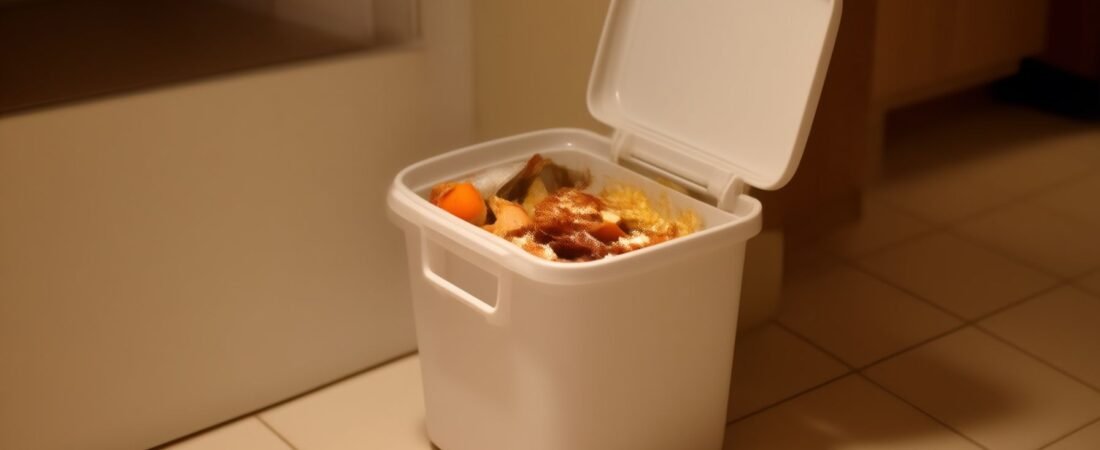
Those white worms aren’t random — they’re maggots, and they got there because a fly laid eggs in your trash before you even noticed a problem. That’s the part most people miss: by the time you see the worms, the infestation is already a day or two old. A single house fly can lay 75 to 150 eggs in one batch, and in warm kitchen temperatures those eggs hatch in as little as 8 to 12 hours. The worm stage isn’t the beginning of the problem — it’s already the middle of it.
Are the White Worms in Your Trash Actually Maggots?
Yes, almost certainly. The white, legless, tapered worms you’re seeing in kitchen trash are fly larvae — specifically maggots from common blow flies (Calliphora spp.) or house flies (Musca domestica). They’re creamy white to yellowish, range from about 1/8 inch when newly hatched to nearly 3/4 inch as they near pupation, and they move in a distinctive head-first burrowing motion. If you’re seeing worms that are smaller, brownish, and found in dry pantry items rather than the trash bin itself, those are more likely Indian meal moth larvae — a different problem entirely.
The confusion happens because people assume “worm in the kitchen” means some kind of beetle or moth larva. But maggots have a very specific shape: one pointed end (the head), one blunt end (the rear), and no visible legs whatsoever. They’re also almost always found in clusters, not wandering alone. If you’re seeing a single worm crawling across the floor, it may be a maggot that has left the trash to find a dry spot to pupate — which means the main colony is still inside the bin.
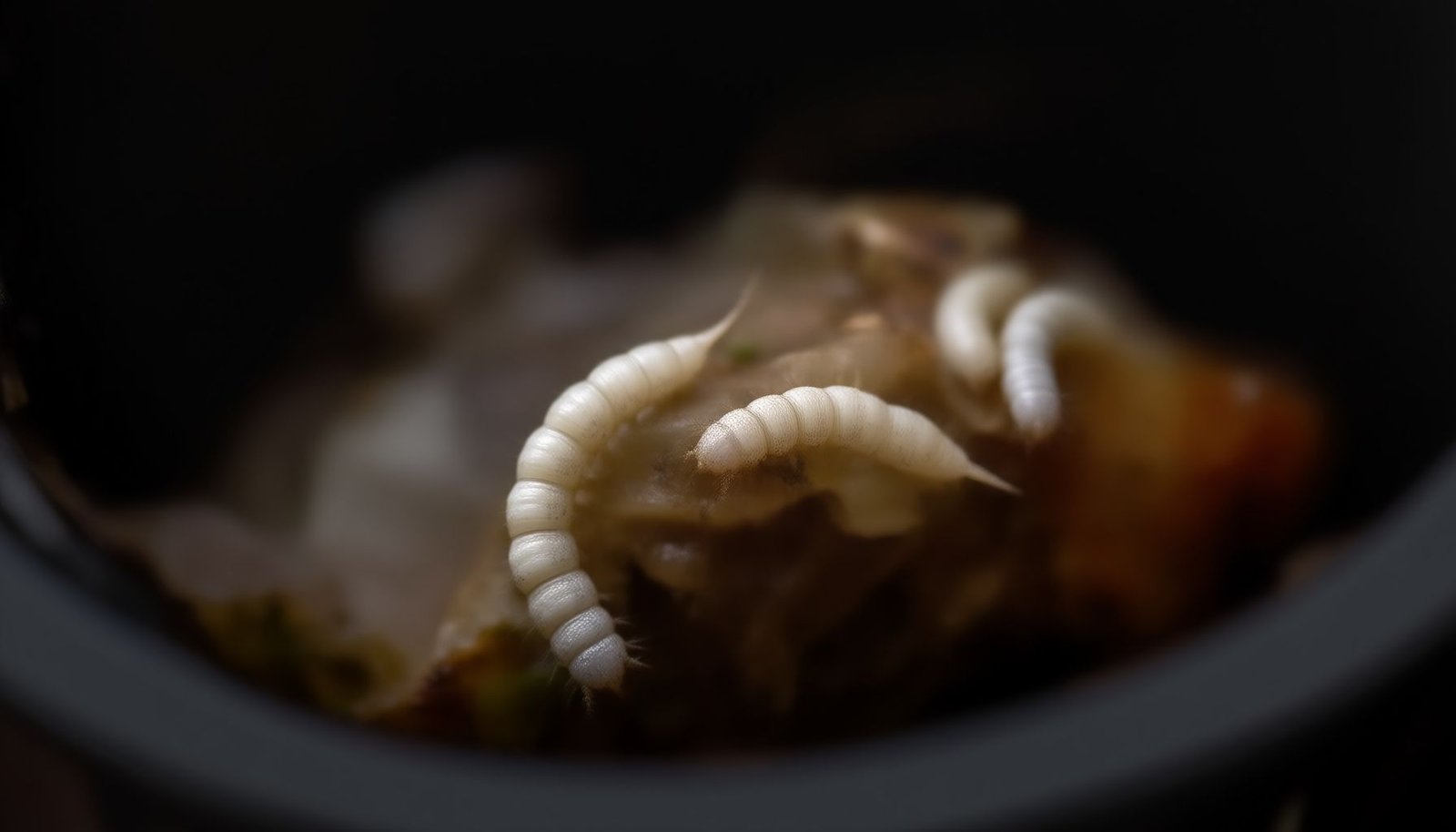
This close-up shows the classic creamy-white coloring and tapered body shape of blow fly maggots in a kitchen trash environment — notice how they cluster together near moist organic material, which is exactly the condition that accelerates their development.
How Did Flies Get Into a Closed Trash Can?
Here’s the thing that surprises most people: flies don’t need long access. A blow fly can detect the odor of decomposing food from over a mile away, and all it takes is a few seconds with the lid open — when you’re tossing something in — for a female to lay a full batch of eggs. She doesn’t crawl inside and hang around. She hovers, detects the target, and deposits eggs on the lip, the inside rim, or directly on food waste in one fast pass. You’d never notice it happening.
Trash cans with swing-top lids, pedal-operated lids, or even tight-fitting lids are not as secure as you’d think. Odor escapes through micro-gaps, which is enough to attract flies even when the bin looks sealed. Warm kitchens make this worse — at temperatures above 70°F, egg-to-larva development accelerates dramatically. A batch of eggs laid Monday morning can be visibly wriggling maggots by Tuesday afternoon. The speed is what catches people off guard every time.
Why Do Maggots Keep Coming Back Even After You Clean the Bin?
This is the question most pest control articles skip right over, and it’s the most useful one. Maggots return because the bin itself retains biological residue even after you’ve emptied and rinsed it. Fly eggs are microscopic — about 1mm long — and they stick to surfaces, especially plastic seams, lid hinges, and the underside of the rim. A quick rinse with water does nothing to those eggs. They survive, hatch, and you’re back to square one within a week.
The other reason for repeat infestations is that maggots that crawl out of the bin to pupate don’t always make it far. They often pupate in the dark gap between the trash can and the cabinet, under the rubber foot of the bin, or inside a floor crack nearby. Those pupae develop into adult flies inside your kitchen — and those flies immediately know where the food source is. Cleaning the trash bag contents without also sanitizing the bin itself and its immediate surroundings just resets the cycle without breaking it.
Pro-Tip: After emptying your trash bin, spray the interior with undiluted white vinegar or a diluted bleach solution (1 tablespoon of bleach per gallon of water), let it sit for 5 minutes, then scrub and rinse. Pay special attention to the lid hinge, the rim seam, and the bottom interior — those are the spots where fly eggs and residue accumulate and survive a standard rinse.
Picture this: you’ve cleaned the bin twice, replaced the bag, and four days later you lift the lid and find another cluster of small white worms near a piece of discarded chicken packaging. The bin looks clean. The problem isn’t visible food waste anymore — it’s a few surviving pupae that matured behind the bin while it was sitting against the wall. That’s not bad luck. That’s just the biology doing exactly what it’s designed to do.
What Specific Conditions Make Kitchen Trash a Breeding Ground?
Not every kitchen trash can becomes a maggot nursery. There are specific conditions that tip the balance, and understanding them is more useful than just saying “keep your trash clean.” Temperature is the biggest driver. Below 50°F, fly eggs don’t hatch. Above 80°F, the entire egg-to-maggot cycle can complete in under 24 hours. Kitchens in summer, or any kitchen near a stove or sunny window, can hit those temperatures regularly.
Moisture matters just as much as heat. Maggots need a moist protein source to feed and develop. Dry trash — cardboard, paper, plastic — rarely produces infestations. The trigger items are almost always meat scraps, fish, dairy products, or wet organic waste. Some homeowners are surprised to find that a compostable bag with vegetable peelings and a few days of warmth is enough. This is also why sealed trash bags inside the bin don’t always prevent the problem — if the bag has even a small puncture, odor escapes and flies find it.
| Condition | Effect on Maggot Development |
|---|---|
| Kitchen temp below 50°F | Eggs fail to hatch; development halted |
| Kitchen temp 70–80°F | Eggs hatch in 8–20 hours; larvae ready to pupate in 4–6 days |
| Kitchen temp above 85°F | Full egg-to-maggot cycle possible in under 24 hours |
| Moist protein waste present (meat, fish, dairy) | Dramatically increases attractiveness and larval survival rate |
How Do You Get Rid of Maggots in Kitchen Trash — and Keep Them Gone?
Getting rid of an active infestation is the easy part. Keeping them gone takes a slightly different approach than most people try. The goal isn’t just removing the maggots you can see — it’s interrupting the fly breeding cycle so the next generation never gets started. That means addressing the bin, the surrounding area, and the waste disposal habits simultaneously.
One thing that genuinely surprises people is that fly strips and zappers placed near the trash can actually make the problem worse in a specific way: they attract more flies into the kitchen zone, some of which will inevitably find the bin before they reach the trap. If you’re going to use a trap, place it farther from the trash — near a window or door — to intercept flies before they reach the food waste area. That’s a small but meaningful tactical shift that most articles don’t mention. It’s also worth noting that the same logic applies to soft-bodied pests on houseplants — treatment aimed at the wrong stage of the lifecycle rarely solves the underlying problem.
Here’s a step-by-step process that actually breaks the cycle rather than just buying you a few clean days:
- Remove and bag all current waste immediately. Seal it in a heavy-duty garbage bag and take it outside — don’t leave it sitting in a closed garage or porch where flies can still access it through gaps.
- Kill any visible maggots in the bin by pouring boiling water over them or applying a diluted bleach solution directly. Salt also kills maggots on contact by dehydrating them.
- Scrub the entire bin — interior, lid underside, rim seam, and exterior base — with a stiff brush and a disinfecting cleaner. Let it air-dry completely before relining it.
- Inspect the floor area around and under the bin for pupae. These are small, brown, seed-shaped casings about 1/4 inch long. Vacuum them up and dispose of the bag outside.
- Change how high-risk waste is handled going forward. Meat scraps, fish packaging, and dairy should go into a sealed freezer bag before entering the trash — or directly into the outdoor bin. The freezer trick keeps odor and moisture contained until trash day.
- Consider a bin liner with fly deterrent. Cedar-scented bin liners or a small sachet of dried lavender placed inside the bin lid can deter flies without chemicals. It won’t stop a determined blow fly, but it reduces casual egg-laying significantly.
An honest nuance here: how often you need to deep-clean the bin depends heavily on your climate, your kitchen temperature, and what you’re throwing away. In a cool northern climate in winter, weekly emptying with an occasional rinse may be entirely sufficient. In a warm southern kitchen in summer, with meat and fish waste going in daily, you may need to sanitize every 3–4 days to stay ahead of the fly cycle. There’s no universal schedule that works for every household.
It’s also worth keeping in mind that flies entering your kitchen to reach the trash are a broader entry-point issue. Flies getting indoors easily enough to find your trash bin means your window screens, door gaps, or ventilation openings may need attention — especially if the problem is recurring despite good bin hygiene. This is a different kind of pest problem than something like vector insects that enter homes through structural gaps, but the underlying principle — seal entry points, don’t just treat the symptom — is the same.
“Most homeowners focus entirely on the maggots themselves when they should be thinking about the fly population that produced them. If you’re seeing maggots repeatedly in the same location, you almost certainly have adult flies breeding somewhere nearby — and the trash bin is the destination, not the origin. Finding where flies are entering and resting in your kitchen is the more effective long-term intervention than any amount of bin cleaning alone.”
Dr. Patricia Hale, Board-Certified Entomologist and Urban Pest Management Specialist, University Extension Program
Here’s the detail most articles bury or skip entirely: blow fly maggots aren’t just unpleasant — they can accelerate the bacterial decomposition of waste in a way that dramatically amplifies odor and increases the risk of cross-contamination if the bin is near food prep surfaces. Research on blow fly larvae has shown they harbor and spread bacteria including Salmonella and E. coli from waste to surfaces they crawl across. So maggots that escape the bin and cross a kitchen floor aren’t just a gross inconvenience — they’re a genuine hygiene concern, especially in households with young children or immunocompromised individuals.
The good news is that this is one of the more solvable household pest problems once you understand the actual mechanism. Flies need warmth, moisture, protein waste, and brief access. Eliminate enough of those conditions and the biology stops working in their favor. You don’t need pesticides, you don’t need expensive bin upgrades, and you don’t need a pest control professional for a standard kitchen trash maggot problem. What you do need is a clear-eyed understanding of the fly lifecycle — because cleaning up the worms without changing the conditions that produced them is exactly how people end up back at the same problem two weeks later.
Frequently Asked Questions
What are the white worms in my kitchen trash?
Those white worms are almost certainly maggots — the larvae of common house flies or blow flies. A single fly can lay up to 150 eggs at a time on rotting food, and those eggs hatch into maggots within 24 hours under warm conditions. They’re most commonly found in trash that contains meat scraps, fish, or other protein-rich food waste.
Are maggots in kitchen trash dangerous to humans?
Maggots themselves won’t bite you or cause direct harm, but they’re a sign that flies have been laying eggs in your trash, and those same flies spread bacteria like Salmonella and E. coli by landing on food surfaces. If your trash can is inside the kitchen, that’s a real contamination risk you don’t want to ignore. Clean the can thoroughly and check nearby food prep areas after a maggot infestation.
How do I get rid of white worms in my trash can fast?
Pour boiling water directly into the trash can to kill the maggots on contact — this works within seconds and doesn’t require any chemicals. Follow up by scrubbing the can with a bleach solution (1 cup bleach per gallon of water) to kill any remaining eggs and bacteria. Let the can dry completely in direct sunlight before using it again, since maggots thrive in dark, moist environments.
Why do I keep getting maggots in my trash even after cleaning it?
If maggots keep coming back, flies are still finding a way to reach your garbage before you seal it. Make sure your trash can has a tight-fitting lid, take out food waste — especially meat and fish — every 1 to 2 days during warm months, and double-bag raw protein scraps before tossing them. Even a small gap in the lid is enough for a fly to get in and lay eggs.
How do I tell the difference between maggots and other white worms in my kitchen?
Maggots are legless, cream or white colored, and taper to a point at the head end — they’re typically 3 to 9mm long and move with a distinctive wriggling motion. Pantry moth larvae look similar but are usually found inside food packaging like flour or cereal, not in the trash itself. If the white worms are very tiny and thread-like, they could be drain fly larvae, which typically live in the slime buildup inside floor drains rather than in the trash can.