

Signing a lease before you check for bed bugs isn’t just a risk — it’s one of the most expensive mistakes a renter can make. Here’s the bottom line: a clean, freshly painted apartment can still have an active bed bug infestation, and most renters walk right past the evidence because they’re looking in the wrong places. This article is about fixing that.
The angle almost nobody talks about is this: bed bug inspections before move-in aren’t about finding live bugs. Adult bed bugs can survive over 300 days without a single blood meal, which means a vacant unit that’s been sitting empty for months can still harbor a thriving population. What you’re actually hunting for is evidence — and knowing exactly where that evidence hides changes everything about how you approach a walkthrough.
Why a “Clean” Apartment Tells You Almost Nothing About Bed Bugs
Landlords repaint walls, replace carpets, and deep-clean units between tenants. That’s the standard turnover process — and it creates a genuinely dangerous illusion of freshness. Fresh paint covers cast skins and fecal staining on baseboards. New carpeting hides evidence in the tack strips underneath. The cosmetic reset does nothing to eliminate bugs tucked inside wall voids, electrical outlets, or the hollow legs of built-in furniture that never left the unit.
Here’s the counterintuitive part: a heavily worn, unchanged apartment with beat-up baseboards and scuffed walls is often easier to inspect accurately than a freshly renovated one. You can actually see what’s been living there. The pristine unit gives you confidence you haven’t earned yet. Walk in suspicious of anything that looks too clean around the edges.
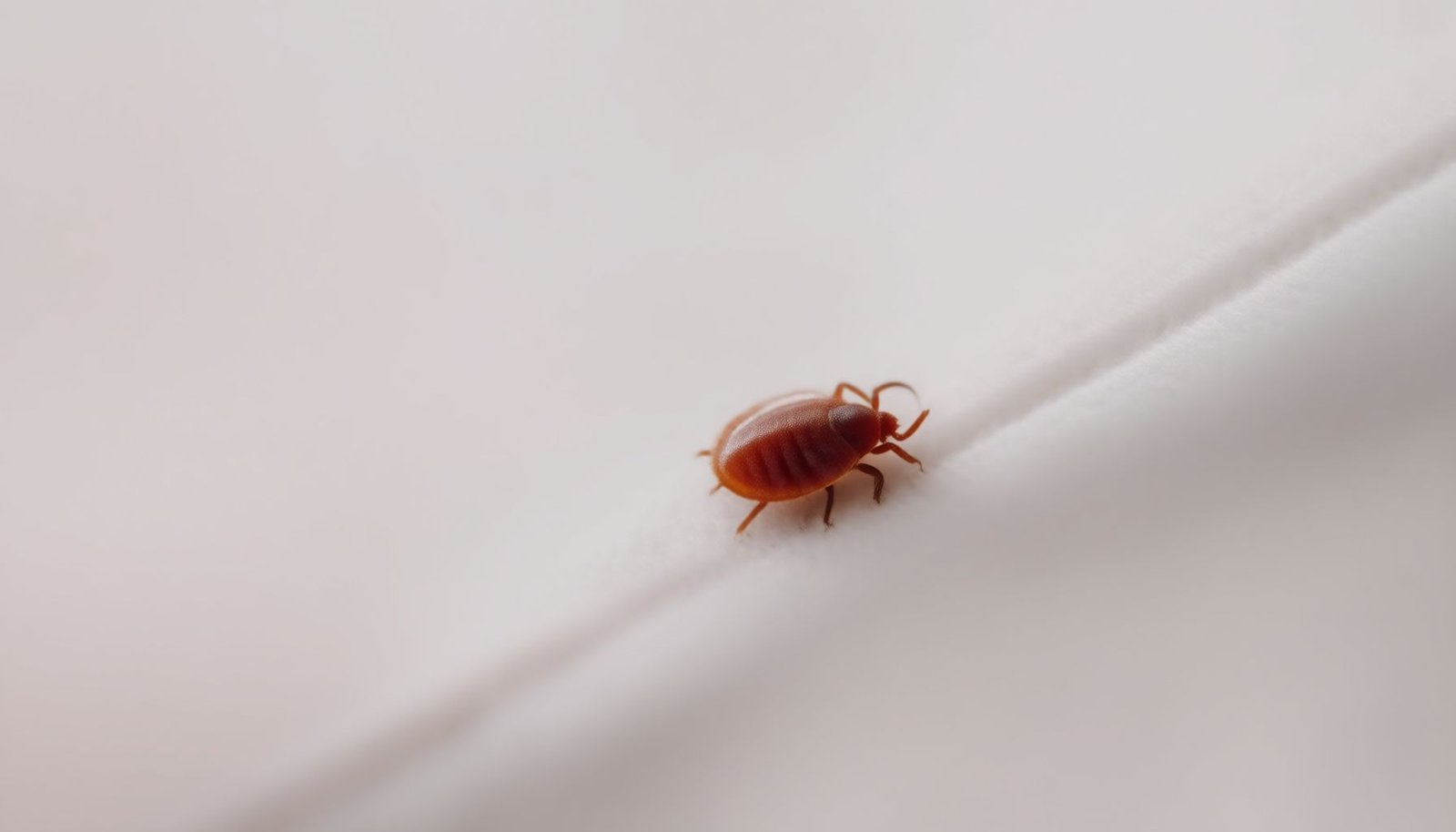
This close-up shows the kind of dark fecal spotting and shed exoskeletons found along a baseboard seam — the exact type of evidence that gets painted over during unit turnover but reappears within weeks once a surviving population starts feeding again.
Where Do Bed Bugs Actually Hide in an Empty Apartment?
Picture this: you’ve scheduled a walkthrough for a second-floor unit. The place looks great — no mattress on the floor, no clutter, no obvious problems. But behind the electrical outlet cover in the bedroom, tucked inside the gap where the baseboard meets the drywall, and deep in the screw holes of the closet shelf brackets, there are clusters of eggs and nymphs that your landlord has no idea about. This is not a hypothetical. It’s the standard hiding pattern of a population that’s been disturbed by cleaning activity and retreated deeper into harborage points.
Bed bugs don’t just live on mattresses — that’s the assumption that gets renters into trouble. In an empty unit, they concentrate in structural harborage: wall voids, behind switch plates, inside door hinges, along the seam where carpet tack strips meet the wall, and in any hollow furniture left behind by the previous tenant. The further a population is from a food source, the deeper they burrow. An empty apartment for 60 days means bugs that have retreated as far from open space as possible.
Pro-Tip: Bring a small flathead screwdriver and a flashlight to every apartment walkthrough. Remove one or two electrical outlet covers in the bedroom and shine your light inside the wall cavity. Dark reddish-brown specks or tiny pale oval eggs along the inside edge of the box are a definitive red flag — no professional inspection required to recognize that.
What Does Real Bed Bug Evidence Look Like — and What Gets Mistaken for It?
There are four categories of physical evidence that matter, and only one of them requires you to find an actual living bug. Knowing the difference between confirmed evidence and a false alarm will keep you from either signing a lease you’ll regret or walking away from a perfectly good unit over old coffee stains.
- Fecal staining: Small dark brown or black dots, roughly the size of a pen tip, that appear in clusters. Unlike a dirt smear, these stain into fabric and paper — press a damp white cloth against the spot and it will bleed rusty brown. Found most often along mattress seams, baseboard edges, and behind headboard mounting hardware on walls.
- Cast skins (exuviae): Bed bugs molt five times before reaching adulthood, leaving behind translucent, hollow shells that look like a pale version of the bug itself. These are lightweight and get blown into corners or trapped in carpet fibers. Finding multiple shed skins of different sizes confirms an established, multi-generational infestation — not just a brief introduction.
- Eggs and egg casings: About 1mm long, pearl-white, and sticky enough to adhere to surfaces. A female can lay 1 to 5 eggs per day and up to 500 over her lifetime, so even a small cluster suggests the infestation has been active long enough to reproduce. Empty casings (darker, slightly crushed) mean eggs have already hatched.
- Live bugs or recently dead ones: Adult bed bugs are mahogany-brown, about the size of an apple seed, flat and oval when unfed, and bloated and reddish when recently fed. Nymphs are nearly transparent when freshly hatched. Finding even one live bug in an empty unit is enough — there is no such thing as a single bed bug infestation.
- Rusty bloodstains: Reddish smear marks on walls, baseboards, or the inside of closet door frames. These happen when bugs are crushed — often by the previous tenant rolling over in bed or pressing against a wall — and are more common than most people expect in a well-established infestation.
What gets falsely flagged: regular dirt in baseboard grooves, old paint drips that look dark, furniture scuff marks, and carpet beetle skins (which are fuzzy and banded, not smooth). Take your time. False positives cost you a good apartment; false negatives cost you months of sleep and hundreds of dollars.
Which Rooms and Surfaces Should You Prioritize During Your Walkthrough?
Not every surface deserves equal attention. Bed bugs concentrate where people sleep and rest for extended periods — biology, not randomness, determines their distribution. Spending equal time in the kitchen and the bedroom is a waste of your inspection window. Here’s how to allocate your time and attention intelligently.
| Location | What to Check | Risk Level |
|---|---|---|
| Bedroom baseboards and crown molding | Fecal dots, cast skins, live bugs along wall-floor seam | High |
| Electrical outlets and switch plates (bedroom) | Remove cover, check inside box edges with flashlight | High |
| Closet interior — shelf brackets, rod ends, door hinges | Shed skins, egg clusters in screw holes and bracket gaps | Medium-High |
| Living room couch area (if any furniture remains) | Under cushions, in frame joints, along dust cover fabric | Medium |
The closet is the most underinspected location in any pre-move-in walkthrough. Renters focus on the bed area because that’s what they’ve been told to check — but in a vacant unit with no mattress present, the closet becomes the primary harborage zone. It’s dark, undisturbed, and full of small gaps. Shelf bracket screw holes are a favorite nesting point because they’re warm and protected from air movement. Check every single one.
“The vacancy period between tenants is one of the most misleading factors in bed bug assessment. People assume that if a unit has been empty for two months, any infestation has died off. But bed bugs in a dormant state, at room temperature, can easily outlast a standard lease turnover. The absence of a food source doesn’t eliminate them — it just makes them harder to find during a casual walkthrough.”
Dr. Patricia Kimura, Board-Certified Entomologist and Urban Pest Management Consultant, Pacific Northwest Extension Program
How to Ask Your Landlord the Right Questions — and What Their Answers Actually Mean
Most renters either don’t ask about bed bugs at all, or they ask in a way that lets a landlord off the hook with a technically accurate non-answer. “Have there been any pest issues?” is a question that practically begs for the response “nothing major.” You need to ask differently — and you need to know how to read what comes back.
It’s worth knowing that many states have bed bug disclosure laws that require landlords to provide written notice of any known infestation history in the unit or in adjacent units within a certain period — but those laws only compel disclosure of known history, and enforcement varies widely. Just as you’d want to research the actual risk of disease transmission when learning about kissing bugs and Chagas disease before making decisions based on fear alone, you want to base your landlord conversation on specific, documentable questions rather than general reassurances.
Here are the specific questions that actually surface useful information:
- “Was there ever a pest control treatment performed in this unit or the units directly above, below, or beside it?” Heat treatment or professional chemical treatment in adjacent units strongly suggests a building-wide problem that may not be fully resolved.
- “Can I see any pest inspection or treatment records for this unit in the last 18 months?” A landlord who has nothing to hide will typically produce these without hesitation. Vague answers about “regular maintenance” aren’t the same thing.
- “Why did the previous tenant leave?” This won’t always be answered honestly, but it’s worth asking. A lease that ended abruptly mid-term is a flag worth noting.
- “Is there a building-wide pest control protocol, and who is the contracted provider?” Buildings with an active professional contract are generally lower risk than those handled reactively. Ask for the name of the company — you can often call them directly.
- “Will you put in writing that the unit has been inspected and found free of bed bugs before my move-in date?” This request alone is clarifying. A landlord who refuses to put that in an email or lease addendum is telling you something important.
One honest nuance here: in large apartment complexes with professional management companies, pest control documentation is usually readily available and the systems are more formalized. In smaller buildings with individual landlords, you’re more likely to encounter gaps in record-keeping that don’t necessarily mean there’s an active problem — just that there’s no paper trail either way. Adjust your scrutiny accordingly, and lean harder on your physical inspection when the documentation is thin.
What to Do If You Find Evidence — Before You Sign Anything
Finding fecal staining or cast skins during a walkthrough doesn’t automatically mean you should walk away from the apartment. It means you have leverage, and how you use it matters. The worst thing you can do is sign the lease and then report the problem — at that point, you’re the tenant, and proving the infestation predated your arrival becomes your burden to meet. Document everything before you sign, and document it in a way that’s timestamped and undeniable.
Use your phone to photograph every piece of evidence you find, with the date and time stamp visible. Send those photos to the landlord via email or text — not a phone call, never a phone call — so there’s a written record that you identified the issue before move-in. Just as careful identification matters with any pest situation (the same way you’d want to correctly distinguish whether small insects on a plant are aphids or something else entirely before treating), you want to be certain about what you’ve found before making any demands or decisions.
Once you’ve documented and notified the landlord in writing, you have three real options: request a professional inspection by a licensed pest management company before signing (get this in writing as a condition of the lease), negotiate a remediation clause into the lease that specifies the landlord’s responsibility and timeline if bed bugs appear within a defined period after move-in, or walk away entirely. None of those options are available to you after the lease is signed and you’ve taken possession of the keys.
The forward-looking reality is this: even a thorough self-inspection has limits. If the building has had bed bug activity in adjacent units, the most likely path of reinfestation is through shared wall voids and plumbing chases — vectors that no walkthrough can assess. The best long-term protection isn’t just checking before you move in. It’s knowing your state’s disclosure and remediation laws cold, so that if bugs appear in the first 30 to 60 days, you’re positioned to hold the right person accountable. That knowledge, more than any single inspection technique, is what actually protects you.
Frequently Asked Questions
how do I check for bed bugs in an apartment before moving in?
Start by pulling back the mattress and box spring seams and looking for dark rust-colored stains, tiny white eggs, or live bugs about the size of an apple seed. Also check the headboard, bed frame joints, and any upholstered furniture. Bring a flashlight — bed bugs hide in tight, dark spaces and you won’t spot them in a quick glance.
what do bed bug stains look like on a mattress?
Bed bug stains are small, dark brown or reddish smears that look almost like ink dots or dried blood. They’re caused by crushed bugs or fecal matter and usually cluster near seams, corners, or tags. If you see more than a few of these spots grouped together, that’s a strong sign of an active or past infestation.
can you smell bed bugs in an apartment?
Yes — a heavy bed bug infestation has a distinct musty, sweet smell that’s often compared to coriander or overripe raspberries. It’s not always noticeable in a light infestation, but if a room smells strangely sweet or stale and there’s no obvious reason for it, that’s worth investigating further. Don’t rely on smell alone, but combine it with a visual inspection for a more reliable check.
should I ask the landlord about bed bugs before signing a lease?
Absolutely — and in many US states, landlords are legally required to disclose known pest infestations before you sign. Ask directly whether the unit or any adjacent units have had bed bugs in the past 12 months. Get the answer in writing if you can, and check your state’s tenant disclosure laws since rules vary by state.
what are the first signs of bed bugs in a new apartment?
The earliest signs are usually tiny bloodstains on sheets, itchy welts on your skin that appear in clusters or a line, and small dark spots on the mattress or nearby walls. You might also notice shed bug skins, which are translucent and roughly 1–5mm long depending on the life stage. If you’re waking up with unexplained bites in a new place, inspect the bed frame and surrounding baseboards immediately.