
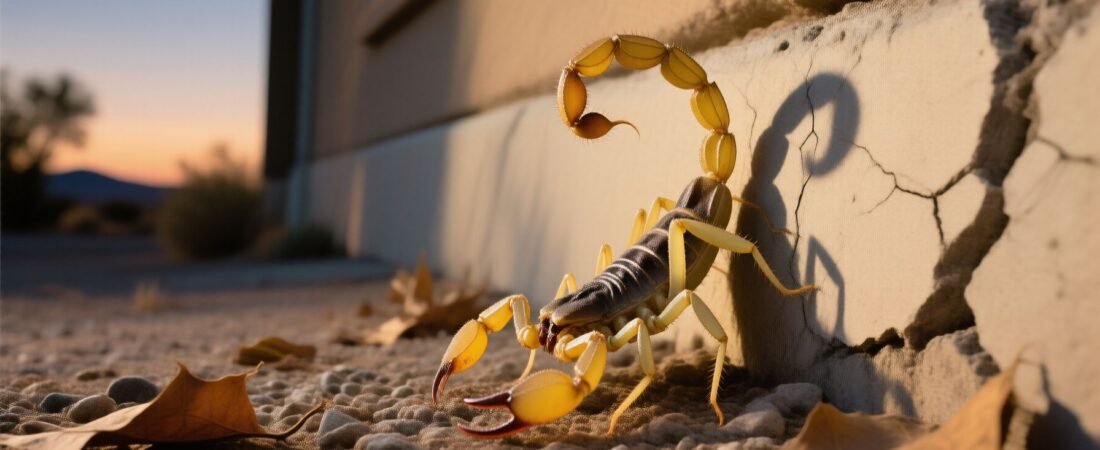
Only one scorpion species in the United States can kill a healthy adult — and it’s not the one most people are most afraid of. That’s the fact that changes everything about how you should think about scorpion stings. Most homeowners in scorpion country spend their energy worrying about the wrong things: whether a sting hurt a lot, whether the scorpion looked scary, whether it was big. None of those things reliably predict danger. The real risk factors are almost entirely about who got stung, not which scorpion did the stinging.
The dangerous species is the Arizona Bark Scorpion (Centruroides sculpturatus), and it’s concentrated in the Sonoran Desert region — primarily Arizona, parts of New Mexico, and far west Texas. Every other scorpion in the US can deliver a painful, miserable sting, but it’s medically comparable to a bad bee sting for most adults. That distinction matters enormously when you’re deciding whether to rush to the ER at midnight because your kid just got stung in the garage.
Does a Scorpion Sting Hurt More Mean It’s More Dangerous?
This is the assumption that sends the most people down the wrong path. Pain level and venom toxicity are almost completely unrelated in scorpions. The striped bark scorpion (Centruroides vittatus), common across Texas, Oklahoma, Kansas, and surrounding states, delivers a sting that many people describe as burning and intense — sometimes for hours. It looks alarming. But its venom is not life-threatening to a healthy adult.
Meanwhile, the Arizona Bark Scorpion produces a sting that sometimes starts with relatively mild local pain, before neurological symptoms — tingling, numbness, muscle spasms — develop 15 to 30 minutes later. People occasionally dismiss those early signs because the sting didn’t seem that bad at first. That delay is exactly why Arizona Bark Scorpion envenomations can become dangerous: the window where treatment is most effective gets missed. If you’re in bark scorpion territory and someone gets stung, the mildness of initial pain is not reassurance.
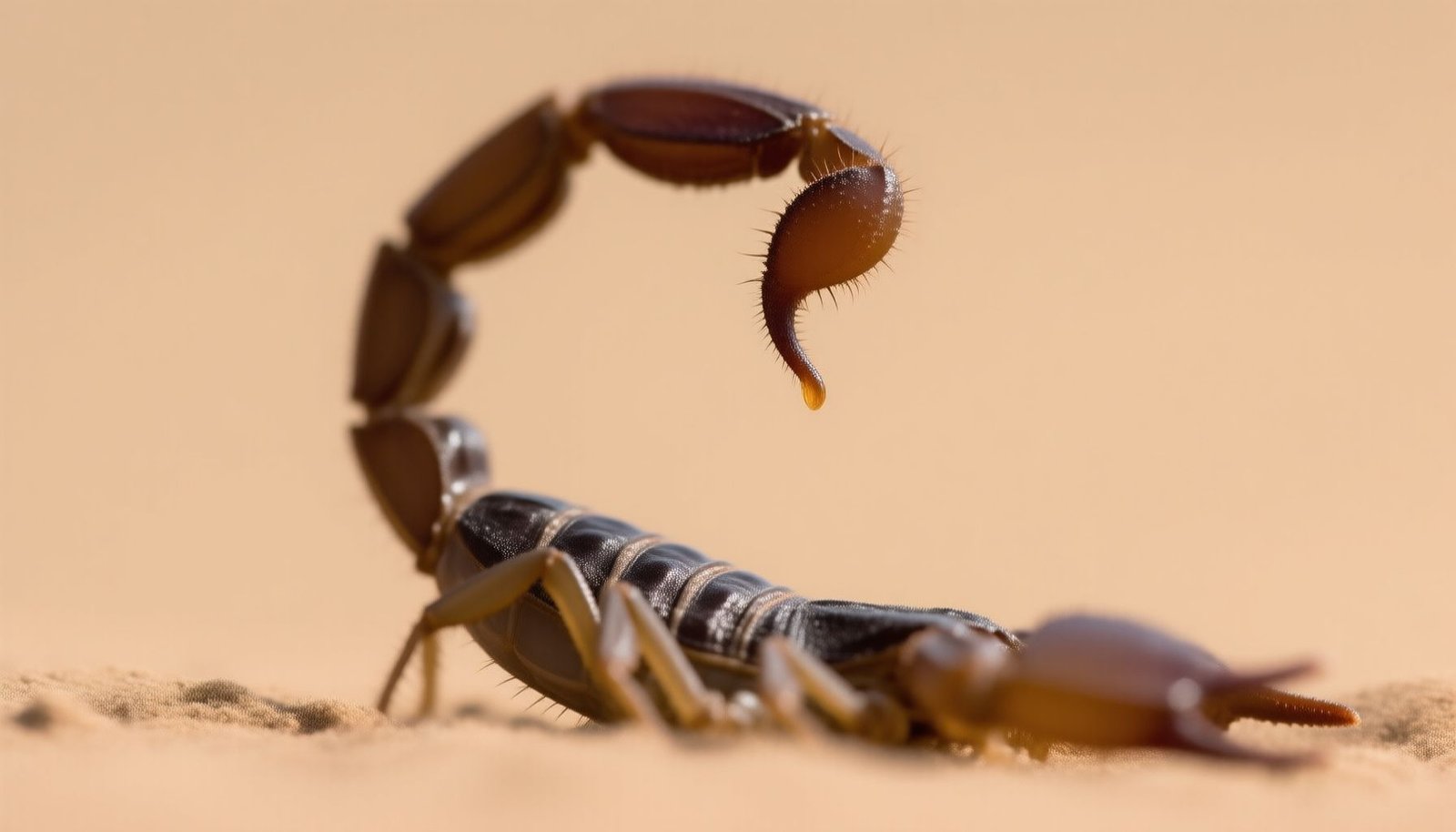
This close-up shows the stinger and telson of a scorpion — the venom apparatus that matters far less than the species behind it, a distinction that can save you from either panicking unnecessarily or underreacting when it counts.
Are Scorpion Stings Dangerous to Healthy Adults?
For the vast majority of adults stung by non-bark scorpions, the answer is no — not in a life-threatening way. You’ll have localized pain, possible swelling, redness, and discomfort that can last anywhere from a few hours to a full day. Some people experience mild nausea. It’s genuinely unpleasant, but it doesn’t require emergency intervention beyond basic first aid in most cases.
The complication that changes the calculus for adults is allergic reaction. Just like bee stings, a small percentage of people have or develop hypersensitivity to scorpion venom. Someone stung multiple times over years — say, a homeowner in a high-scorpion desert area — can develop an increasingly severe immune response over time. Anaphylaxis from a scorpion sting is rare but real, and it doesn’t require an Arizona Bark Scorpion to trigger it. If you’re in scorpion territory and have a known history of severe allergic reactions to insect stings, carrying an epinephrine auto-injector isn’t an overreaction.
Pro-Tip: After any scorpion sting, capture or photograph the scorpion if it’s safe to do so. Poison control (1-800-222-1222) can give you much faster, more accurate guidance if they know the exact species involved — and in Arizona especially, that identification can determine whether antivenom is indicated.
Are Scorpion Stings Dangerous to Children and Infants?
This is where the risk picture changes substantially, and where the “it’s just a painful sting” framing breaks down. Children — especially those under 6 years old — are genuinely at higher risk of serious complications from Arizona Bark Scorpion stings, specifically because of body mass. Venom dose that a 160-pound adult can metabolize without life-threatening effects can be a much more significant neurological burden for a 25-pound toddler. Before antivenom became widely available in Arizona, Arizona Bark Scorpion stings were a leading cause of childhood fatality in the state.
The symptoms to watch for in children after any scorpion sting — not just bark scorpion territory — go beyond the sting site. Unusual eye movements (called opsoclonus, a roving, jerky motion), drooling or difficulty swallowing, muscle twitching, and extreme agitation or inconsolable crying are neurological warning signs. A child who gets stung and starts showing any of those symptoms within 30 to 60 minutes needs emergency medical care immediately, not a wait-and-see approach. Those symptoms can escalate quickly in small children.
Here’s the specific breakdown of what warrants a call to Poison Control versus a direct ER trip, by age group and situation:
- Infants under 2 years old, any scorpion sting: Go to the ER, don’t wait for symptoms. The venom-to-body-mass ratio is too unfavorable to watch and wait at home.
- Children 2–5 years old in bark scorpion territory: Call Poison Control immediately while heading to the ER. Time to antivenom matters.
- Children 6–12 years old, non-bark scorpion: Call Poison Control (1-800-222-1222), monitor for neurological symptoms, and follow their guidance.
- Teens, healthy adults, non-bark scorpion: Basic first aid, Poison Control if concerned, ER only if allergic symptoms develop (throat tightening, difficulty breathing, hives beyond the sting site).
- Any person, any age, known Arizona Bark Scorpion sting: Contact Poison Control and get to emergency care — antivenom (Anascorp) can reverse neurological symptoms effectively when given early.
“The mistake I see parents make is waiting until a child is visibly distressed before seeking care after a bark scorpion sting. By that point, neurological symptoms are already progressing. The window for the most effective antivenom administration is in the first two hours. If you’re in Maricopa or Pima County and your young child was stung, that’s an ER call, not a Poison Control-only call.”
Dr. Leslie Tobin, Pediatric Emergency Medicine Physician and Medical Toxicology Consultant, Southwest Regional Poison Center
Are Scorpion Stings Dangerous to Dogs, Cats, and Other Pets?
Dogs and cats actually tolerate scorpion venom better than you might expect — which surprises most pet owners who’ve seen their dog yelp and start limping after a backyard encounter. For large and medium dogs stung by common species like the striped bark scorpion, the sting is painful and will cause localized swelling, but it’s rarely a medical emergency. The dog will be miserable for a few hours. That’s about it in most cases.
Small dogs and cats change the equation. A 5-pound Chihuahua or a small cat stung by an Arizona Bark Scorpion is in a comparable position to a young child — the venom dose relative to body weight is significant. Watch for excessive drooling, difficulty walking (ataxia), muscle tremors, labored breathing, or unusual eye movements. Those are signs of systemic envenomation, and a small pet showing those symptoms after a scorpion sting needs a veterinarian, not home monitoring. One thing that rarely gets mentioned: cats tend to hunt and play with scorpions, which makes them more likely to get stung multiple times or on the face and mouth — which complicates swallowing and breathing more than a limb sting would.
| Who Was Stung | Scorpion Type | Risk Level | Recommended Action |
|---|---|---|---|
| Healthy adult | Non-bark scorpion | Low | First aid, Poison Control if concerned |
| Healthy adult | Arizona Bark Scorpion | Moderate | Poison Control + ER evaluation |
| Child under 6 | Any scorpion | Moderate to High | ER immediately, call Poison Control en route |
| Small pet (under 10 lbs) | Any scorpion | Moderate | Veterinarian same day, ER vet if symptomatic |
| Immunocompromised adult or elderly | Any scorpion | Moderate to High | Poison Control + medical evaluation |
What Symptoms After a Scorpion Sting Actually Signal Danger?
The local stuff — pain, burning, redness, minor swelling at the sting site — is expected and not the warning sign. What you’re watching for is anything that travels. Numbness or tingling that starts moving up the limb, away from the sting site, is a signal that venom is affecting your nervous system, not just your tissue. That distinction is the one most first-aid guides gloss over, and it’s the one that matters most in the first 30 to 90 minutes after a sting.
Symptoms that mean you need emergency care — not a wait-and-see approach — include the following:
- Difficulty swallowing or excessive drooling — indicates pharyngeal muscle involvement, which can progress to airway issues
- Blurred or double vision, roving eye movements — classic neurological sign of bark scorpion envenomation
- Muscle twitching or uncontrolled jerking — not at the sting site, but elsewhere in the body
- Rapid or irregular heartbeat, high blood pressure — venom can trigger a catecholamine surge that affects cardiovascular function
- Throat tightening, hives spreading beyond the sting site, or difficulty breathing — these are anaphylaxis signs, requiring epinephrine, not just antihistamine
- Extreme restlessness or inconsolable crying in young children — often dismissed as a pain response, but in young children it can signal neurological involvement
One honest nuance worth naming: the severity of these symptoms depends heavily on where you live, your overall health, and the specific scorpion involved. A 35-year-old healthy adult stung by a striped bark scorpion in central Texas who develops only local pain and discomfort has a very different clinical picture than a 68-year-old with a compromised immune system stung by an Arizona Bark Scorpion in Phoenix. Treatment decisions should factor in all of that — which is exactly why a call to Poison Control is so useful. They’ll ask the right questions and give you guidance specific to your situation, not generic advice.
It’s also worth noting that scorpions frequently end up indoors through the same structural gaps that other pests exploit — gaps around pipe penetrations, cracks in foundation walls, and openings around utility entries. The same detective work you’d apply to other hidden pest problems, like checking for signs of termite damage in hardwood floors during a home inspection, applies to scorpion-proofing: you’re looking for structural access points that need sealing. Scorpions can squeeze through a gap as narrow as 1/16 of an inch — roughly the thickness of a credit card — which makes weatherstripping and sealant maintenance genuinely important in desert regions.
Scorpions also follow their prey indoors, primarily crickets and other small insects. If you’re seeing scorpions inside the house, it’s a reliable sign that the scorpion has found a steady food source there. Pest pressure from multiple species tends to cluster around the same structural vulnerabilities — the kind of overlooked entry points you’d also investigate if you discovered, say, why there are ants in your electrical outlets, since both pests exploit gaps around wiring and plumbing penetrations in walls.
The bottom line on scorpion stings is this: for most adults outside Arizona, it’s a painful experience that doesn’t require emergency care unless you develop systemic symptoms or a known allergy response. For young children anywhere scorpions are present, and for anyone stung by an Arizona Bark Scorpion specifically, treat it as a medical event from the start — don’t wait for things to get worse before making the call. That gap between “it’s just a scorpion sting” and “this needs attention now” is exactly where the real danger lives, and closing that gap is entirely about knowing who got stung, not how much it hurt.
Frequently Asked Questions
are scorpion stings dangerous to healthy adults?
For most healthy adults, a scorpion sting is painful but not life-threatening. The main exception is the Arizona bark scorpion, the only US species considered medically significant — its sting can cause severe symptoms like muscle spasms, difficulty breathing, and numbness. If you’re stung and symptoms go beyond local pain and swelling within 30 minutes, call Poison Control at 1-800-222-1222 immediately.
how dangerous are scorpion stings to children?
Kids are at much higher risk than adults because their smaller body size means venom hits harder relative to their weight. Children under 6 are most vulnerable and can develop serious neurological symptoms like uncontrolled eye movements, drooling, and muscle twitching after a bark scorpion sting. Any sting on a young child should be treated as a medical emergency — go to the ER rather than waiting to see how symptoms develop.
can a scorpion sting kill a dog or cat?
It’s unlikely to be fatal for a healthy adult dog or cat, but small pets and young animals face a higher risk of serious reactions. Bark scorpion stings can cause tremors, trouble walking, and respiratory distress in dogs and cats, so you shouldn’t take a wait-and-see approach. Call your vet right away if your pet is stung and starts showing any neurological symptoms beyond initial yelping or pawing at the site.
what does a dangerous scorpion sting feel like?
A sting from a dangerous scorpion like the bark scorpion typically causes intense burning or electric-shock pain at the site, but the real warning signs are what happens next. If you notice tingling or numbness spreading away from the sting, muscle twitching, blurry vision, or trouble swallowing within an hour, those are red flags for systemic envenomation. Normal stings stay localized and feel similar to a bee sting — pain and mild swelling that fades within a few hours.
which states have the most dangerous scorpions in the US?
Arizona is home to the bark scorpion, the most venomous scorpion in the United States and the one responsible for the vast majority of serious stings. New Mexico, Texas, Nevada, Utah, and parts of California also have bark scorpion populations, so homeowners in the Southwest need to take scorpion prevention seriously. If you don’t live in those states, the scorpion species in your area are generally considered non-dangerous, though any sting can still cause a painful local reaction.
Disclaimer: This article is for general informational purposes only and does not constitute medical advice. How a pest-related exposure, bite, or contaminant affects you can depend on age, pre-existing conditions, allergies, and the extent of exposure. If you’re experiencing symptoms you believe are linked to a pest problem in your home, please consult a licensed healthcare provider rather than relying on this article alone.