
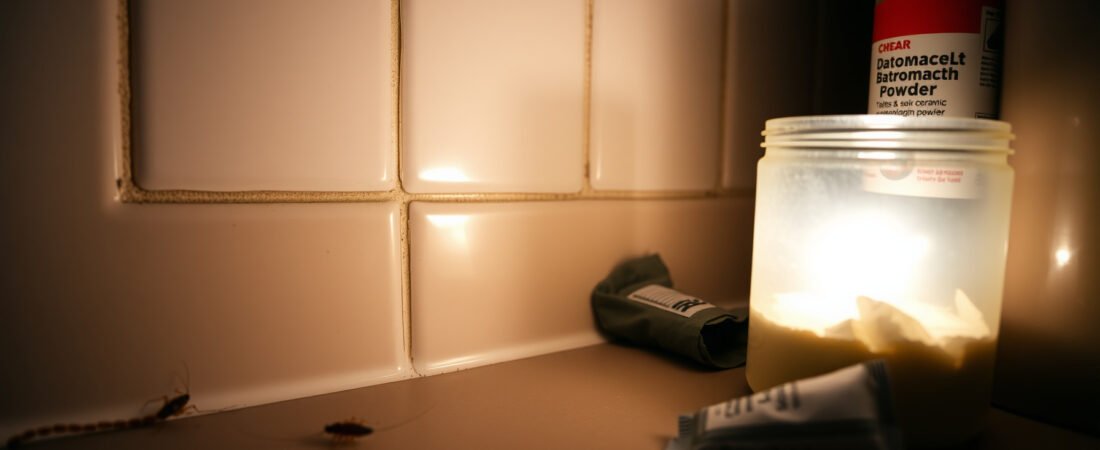
Silverfish don’t actually care about your bathroom or bedroom specifically — they care about humidity levels between 75–95% and starchy materials to eat. The reason they keep showing up in those two rooms is that most homes deliver exactly those conditions there, and killing the ones you see does nothing about the conditions that keep producing new ones. That’s the fix most people never make.
Why Silverfish Keep Coming Back Even After You Kill Them
Picture this: you spray a silverfish you find behind the toilet, feel satisfied, and forget about it. Three weeks later, five more show up along the baseboard of your bedroom. That cycle isn’t bad luck — it’s what happens when you treat symptoms instead of causes. A female silverfish lays up to 100 eggs in her lifetime, depositing them in tiny crevices in batches of 2–20, and those eggs hatch in 19–43 days depending on temperature and humidity. The ones you’re killing are rarely the ones doing the reproducing.
The deeper problem is that silverfish are long-lived insects — they can survive 2–8 years, which is extraordinary for a bug this small. They’re also capable of going without food for up to a year under the right conditions, so starving them out by removing a shampoo bottle or two isn’t going to cut it. Unless you address the moisture that’s making your bathroom and bedroom livable for them, you’re just running on a treadmill.
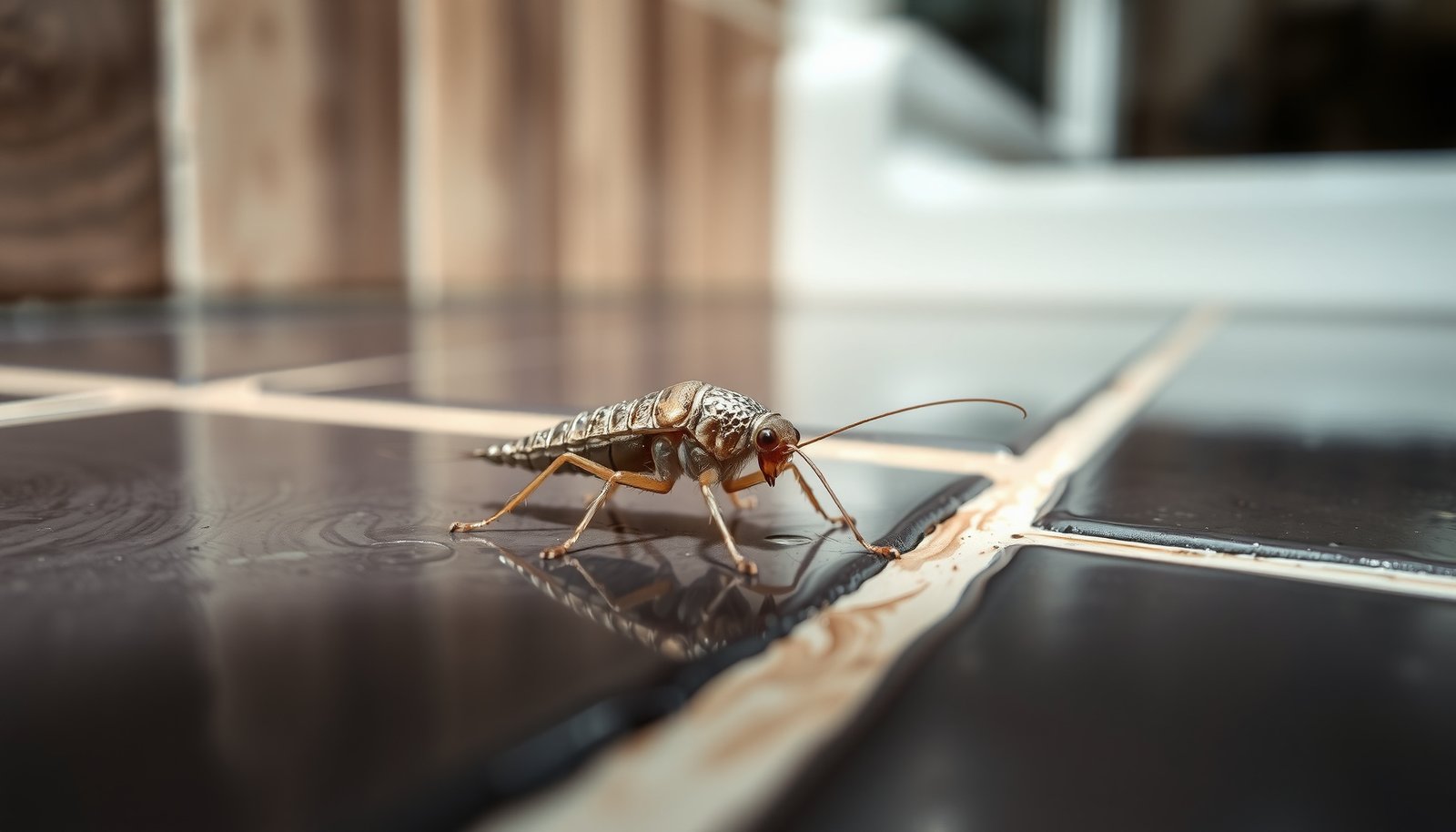
This close-up shows the characteristic teardrop body shape and three tail filaments of a silverfish — details worth knowing so you’re not confusing them with firebrats or earwigs before you start treatment.
What’s Actually Attracting Silverfish to Your Bathroom and Bedroom?
Bathrooms are obvious — steam from showers raises relative humidity fast, pipe condensation keeps wall voids damp even when the room itself feels dry, and grout lines trap organic debris that silverfish eat. Bedrooms are less intuitive, but think about what’s actually in there: books on a nightstand, cardboard storage boxes in the closet, wallpaper adhesive, sizing in cotton and linen fabrics, and dust that contains shed skin cells. Silverfish eat all of it. They’re not randomly wandering in — they’re following a food trail that most homeowners don’t even think of as food.
One counterintuitive thing worth knowing: silverfish are photophobic, meaning they avoid light and move almost exclusively at night or in dark spaces. This means the one you spot on a bathroom wall at midnight is probably just the tip of the population — dozens more are sitting in the wall void behind your vanity mirror or tucked inside the cardboard box of old magazines in your bedroom closet. Relying on visual confirmation to gauge the size of an infestation will almost always cause you to underestimate it.
How to Eliminate the Moisture Problem That’s Keeping Silverfish Alive
Controlling humidity is the single most effective long-term intervention — more than any spray, trap, or powder. Silverfish can’t thrive when ambient relative humidity drops below 50%, so the goal is to get your bathroom and bedroom consistently below that threshold. In a humid climate like the Gulf Coast or Pacific Northwest, this takes real equipment, not just cracking a window. A dehumidifier rated for the square footage of your bedroom, combined with consistent exhaust fan use during and for 20 minutes after every shower, makes a measurable difference within a few weeks.
Beyond humidity, seal the physical entry points. Silverfish move through gaps as small as 1/16 of an inch — pipe penetrations under the bathroom sink, gaps where the tub surround meets the drywall, and spaces behind baseboards are all common entry routes from wall voids. Silicone caulk costs about three dollars and seals faster than any chemical intervention. Don’t overlook the closet where your bedroom wall meets the floor — that’s one of the highest-traffic corridors in most infested bedrooms, and it almost never gets addressed.
Pro-Tip: Buy a cheap hygrometer (under $15 at any hardware store) and place it in your bathroom and bedroom for 48 hours before you start treatment. If either room reads above 60% relative humidity consistently, no topical treatment will produce lasting results — fix the moisture first, then treat.
The Right Treatment Sequence for Bathrooms vs. Bedrooms
Treatment isn’t one-size-fits-all between these two rooms — the products and placement strategies differ because the environments are different. Bathrooms are wet, which limits where you can apply desiccant dusts effectively. Bedrooms are drier and contain more fabric and paper, which changes the food-removal strategy significantly. Treating both rooms identically is one of the most common DIY mistakes, and it’s why people feel like nothing is working.
Follow this sequence for each room to build a treatment approach that actually stacks:
- Remove food sources first. In the bathroom, this means storing cotton balls, toilet paper rolls, and magazines somewhere dry and sealed. In the bedroom, move cardboard boxes to plastic bins with lids, and store books in enclosed shelving rather than open stacks.
- Apply diatomaceous earth (food-grade) in dry zones. Behind the vanity cabinet, inside the bedroom closet along the baseboard, and under the bed frame are ideal spots. Diatomaceous earth damages the silverfish’s waxy outer layer and causes fatal dehydration — it works mechanically, not chemically, so there’s no resistance buildup.
- Use boric acid powder in wall voids where accessible. If you have access points like outlet covers or pipe gaps, a small puff of boric acid into the void creates a long-lasting barrier. Don’t use it in areas where pets or kids might contact it directly.
- Place sticky traps along baseboards in both rooms. Traps won’t eliminate an infestation, but they tell you where activity is highest, which tells you where your caulking and dusting needs to be concentrated. Check them every 3–4 days for the first two weeks.
- Apply a residual perimeter spray around the exterior base of bathroom cabinetry. Products containing deltamethrin or bifenthrin are effective. Spray only on hard, non-porous surfaces — avoid fabrics and anything that stays wet, since the residual breaks down faster in high-moisture environments and requires reapplication every 4–6 weeks.
- Reapply and reassess at 30 days. Silverfish eggs are protected inside crevices and are not killed by surface sprays. A second pass at 30 days catches the juveniles that hatched after your initial treatment, breaking the reproductive cycle.
How Long Does It Actually Take to Get Rid of Silverfish?
Honestly, the timeline depends heavily on how established the population is and how thoroughly you’ve addressed the moisture situation. A light infestation caught early — say, a few individuals showing up in a newly damp bathroom after a rainy season — can often be resolved in 3–6 weeks with consistent treatment. A bedroom closet that’s been harboring silverfish for a year or more, with cardboard boxes, wallpaper, and a plumbing leak behind the wall, is a different situation entirely and can take 2–3 months to fully resolve even with diligent treatment.
Here’s a realistic timeline breakdown based on infestation severity:
| Infestation Level | Signs | Realistic Timeline to Resolve |
|---|---|---|
| Light (1–5 seen per week) | Occasional sighting, no visible damage to materials | 3–6 weeks with moisture control + dusting |
| Moderate (6–20 seen per week) | Irregular yellow stains or small holes in paper/fabric, shed skins in closets | 6–10 weeks with full treatment sequence |
| Heavy (20+ seen per week) | Widespread paper/fabric damage, multiple rooms affected, egg cases visible | 2–3 months; consider professional application of residual sprays in wall voids |
One honest nuance worth acknowledging: if you’re renting and the infestation is in shared wall voids or coming from a neighboring unit, your DIY treatment in your bedroom and bathroom alone may control the population but won’t eliminate the source. That’s a building-level problem. Depending on your state, your landlord may have a legal obligation to address it — the rules around this are more specific than most renters realize, and it’s worth knowing what applies to your situation before you spend money on products that can only do so much. Habitability Laws and Pest Infestations: What Renters Should Know covers exactly which scenarios trigger landlord responsibility and how to document the issue correctly.
“Most people underestimate how quickly a silverfish population can stabilize in a home environment. What I see consistently is that homeowners treat for two or three weeks, stop when sightings drop, and then the population rebounds from eggs that survived in wall cavities. The 30-day retreat is not optional — it’s the step that actually breaks the cycle. And none of it matters if you haven’t dropped that relative humidity below 60%.”
Dr. Renata Solís, Urban Entomologist and Extension Specialist, Texas A&M AgriLife
When DIY Isn’t Enough and What a Pro Actually Does Differently
A professional pest control technician isn’t just applying stronger versions of the same products you can buy — the real difference is access and diagnostic equipment. Pros use moisture meters to identify hidden damp zones inside wall cavities that you can’t detect from the surface, and they have application equipment that can inject boric acid or pyrethroid dust into wall voids through small drill holes without requiring demolition. That interior wall void treatment is what makes a persistent infestation collapse, because that’s where the bulk of a mature silverfish population actually lives.
The decision to call a professional generally makes sense when: you’ve done two full treatment cycles without a significant reduction in sightings, you’re finding shed skins or tiny pepper-like fecal pellets in multiple rooms, or you’ve identified a structural moisture issue (like a slow pipe leak or inadequate subfloor ventilation) that you can’t repair yourself. Some infestations also exist because a home has the kind of construction features — plaster walls, old pipe chases, dense insulation batt that traps moisture — that create ideal silverfish habitat no matter what you do at the surface level. Interestingly, the same structural investigation process that pest professionals use to trace pest pathways in walls is similar to what’s used for wood-destroying insects — if you want to understand what that kind of structural assessment involves, What Do Termite Swarmers Look Like After They Land? gives good context on how inspectors think about wall void access and entry points.
The silver lining — if you’ll forgive the pun — is that silverfish don’t spread disease, don’t bite, and don’t cause structural damage the way termites do. They’re a quality-of-life and property-damage problem (ruined books, stained fabrics, damaged wallpaper), not a safety emergency. That means you have time to do this right rather than just throwing everything at the wall and hoping something sticks.
What separates people who actually solve this problem from people who fight it indefinitely is a willingness to treat the environment rather than just the insects. Fix the humidity. Seal the gaps. Remove the food. Then use chemistry to finish what those three changes started. Do it in sequence, not all at once in a panic, and you’ll get there — usually faster than you’d expect.
Frequently Asked Questions
what causes silverfish in bathroom and bedroom?
Silverfish are attracted to moisture, warmth, and food sources like paper, glue, and fabric. Bathrooms are a hotspot because humidity often sits above 75%, which is their sweet spot for survival. Bedrooms attract them when there’s stored cardboard, books, or clothing made from natural fibers nearby.
how to get rid of silverfish in bathroom and bedroom fast?
Start by reducing humidity — run a bathroom exhaust fan and use a dehumidifier in the bedroom to get moisture below 50%. Lay diatomaceous earth along baseboards, under sinks, and in closet corners, since it kills silverfish within 24–48 hours of contact. For faster results, combine that with cedar sachets or boric acid in cracks and crevices.
are silverfish in bedroom dangerous to humans?
Silverfish don’t bite, sting, or transmit disease, so they’re not a direct health threat. That said, they can trigger allergies in some people because their shed scales and feces become airborne. They’re more of a property concern — they’ll quietly chew through books, wallpaper, and clothing if you let an infestation go unchecked.
how do I know if I have a silverfish infestation or just one or two bugs?
Spotting one silverfish occasionally isn’t necessarily an infestation, but finding them regularly — especially during the day — usually means there are more hiding nearby. Look for yellow stains, tiny pepper-like droppings, or irregular holes chewed in paper and fabric as signs of a larger population. If you’re seeing 3 or more per week, it’s worth treating aggressively rather than waiting.
what do pest control companies use to get rid of silverfish?
Professionals typically apply residual insecticides containing pyrethrin or deltamethrin along baseboards, inside wall voids, and in crawl spaces. They’ll also use insect growth regulators (IGRs) to stop silverfish from reproducing, which is something most DIY products don’t include. A single professional treatment usually runs between $100 and $300 depending on the size of your home and severity of the problem.
Disclaimer: This article is for informational purposes only and isn’t a substitute for professional pest control advice. Always read and follow the product label instructions exactly — label directions are legally binding and vary by brand and active ingredient. Keep all pesticides, baits and traps away from children and pets, ventilate treated areas as directed, and consider calling a licensed pest control professional if an infestation is large, recurring, or involves a structural pest like termites or carpenter ants.