
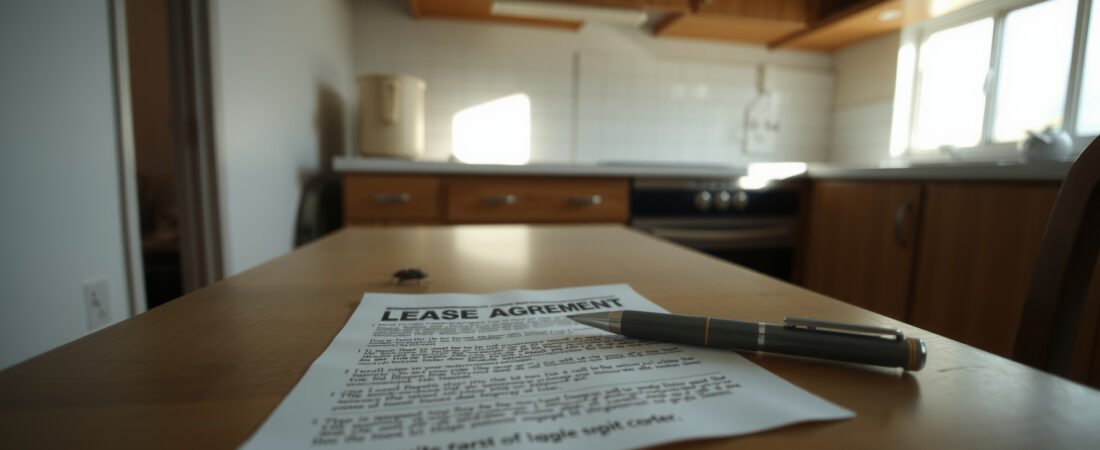
Forty-six states have explicit habitability laws that cover pest infestations — yet most renters who are living with roaches, mice, or bed bugs have no idea their landlord may already be in violation of one. That’s the part nobody tells you upfront. The gap isn’t in the law itself; it’s in knowing how to use it correctly before you spend money out of pocket or get pressured into handling something that was never your problem to fix.
Does Your Landlord Actually Have to Fix a Pest Problem?
Here’s the answer most renters never get clearly: yes, in the vast majority of U.S. states, landlords are legally required to provide a dwelling free of pest infestations as part of the implied warranty of habitability. This warranty exists whether or not it’s written into your lease — it’s a baseline standard imposed by state law. Pests like cockroaches, mice, rats, and bed bugs aren’t just an inconvenience; courts have consistently ruled that active infestations can render a unit legally uninhabitable.
The catch — and this is where renters consistently get tripped up — is that landlord responsibility typically hinges on the source of the infestation. If pests were present before you moved in, or if they’re entering from shared building infrastructure (walls, pipes, crawlspaces), that’s almost always on the landlord. If a judge finds you brought in bed bugs on luggage from a hotel, or that your household conditions attracted the problem, the calculus shifts. The burden of proof matters enormously here, which is why documentation from day one isn’t optional — it’s your legal foundation.

This image shows a close-up of cockroach activity along a wall baseboard — exactly the kind of photographic evidence that can make or break a habitability claim when a landlord disputes whether an infestation existed before move-in.
What “Habitability” Actually Means in Pest Law — and What It Doesn’t
Most articles about tenant rights paint habitability as a simple on/off switch: either your landlord fixes it or they don’t. The reality is more granular than that, and understanding the mechanics of the law protects you from making expensive mistakes. Habitability in the context of pests doesn’t mean zero bugs ever — it means freedom from infestations that materially threaten health or safety. A single ant near a window is different from 200 German cockroaches behind your refrigerator. A female German cockroach produces 30–40 eggs per capsule and can generate multiple capsules in her lifetime, meaning even a small initial population can become a serious infestation within weeks. That scale is what habitability law is designed to address.
One thing that surprises many renters: habitability law covers not just the presence of pests but also conditions that cause infestations — things like water-damaged walls that attract rodents, gaps in the building envelope that mice use as entry points (mice can squeeze through a gap as small as 1/4 inch), or shared trash infrastructure that draws roaches from neighboring units. This means even if you can’t prove the bugs came from somewhere specific, you may still have a valid habitability argument if you can show structural deficiencies that your landlord failed to address. That’s a much broader legal hook than most renters realize.
How to Build a Paper Trail That Actually Holds Up
Picture this: you report cockroaches to your landlord in a phone call on a Tuesday. They say they’ll “look into it.” Three weeks later, nothing has happened. You call again. More vague promises. Six months in, you’re still dealing with roaches and now you want to pursue rent withholding — but you have zero documentation of any of this. That situation plays out constantly, and it’s the single biggest reason tenants lose habitability disputes that they should have won.
Building a paper trail isn’t bureaucratic busywork. It’s the difference between a landlord taking you seriously and a landlord’s attorney dismantling your claim in small claims court. Here’s what an airtight documentation process actually looks like:
- Report in writing, always. Send every pest complaint via email or a written letter delivered with delivery confirmation. Text messages are acceptable in many jurisdictions but email creates a cleaner timestamp. Never rely on a phone call alone.
- Photograph with metadata intact. Smartphone photos automatically embed date and time data. Take photos of live pests, droppings, entry points, and any structural damage. Don’t crop or edit — metadata is part of your evidence.
- Keep a written log. Date, time, location in the unit, and a description of what you observed. “Saw 5 cockroaches in kitchen cabinet, approx. 9:15 PM” is useful. “Saw roaches again” is not.
- Request a written response. In your complaint email, explicitly ask your landlord to confirm receipt and provide a timeline for remediation. Their silence or vague response becomes part of your record.
- Contact your local housing authority. A formal inspection report from a housing inspector carries significantly more legal weight than tenant testimony alone. In many cities, this is a free service.
- Save receipts for related expenses. If you’ve bought traps, sprays, or sealed your own gaps because your landlord failed to act, document those costs. You may be entitled to deduct them from rent or seek reimbursement in court.
Pro-Tip: Send your initial pest complaint via email AND follow up with a physical letter sent certified mail, return receipt requested. Landlords sometimes claim they never received emails — a signed return receipt makes that defense nearly impossible.
What Can You Legally Do If Your Landlord Ignores the Problem?
This is where most tenant rights articles stop at “you can withhold rent” — which is technically true in many states but dangerously incomplete advice without context. Rent withholding done incorrectly can get you evicted even if your habitability claim is valid. The law gives tenants several remedies, but each one comes with specific procedural requirements that vary by state, and skipping steps can invalidate your entire position.
Here’s a breakdown of the main legal remedies available to renters in habitability disputes involving pests:
- Repair and deduct: Available in roughly 46 states, this allows tenants to hire a pest control professional themselves and deduct the cost from rent — but usually only after giving the landlord written notice and a reasonable time to respond (typically 14–30 days depending on state law).
- Rent withholding: Legal in many states, but almost always requires placing withheld rent in an escrow account and following a formal notification process. Pocketing the money while withholding rent is a fast path to eviction.
- Rent reduction: Some states allow tenants to petition for reduced rent proportional to the reduction in livability caused by an ongoing infestation. This often requires a housing court filing.
- Constructive eviction: If the infestation is severe enough that the unit is genuinely uninhabitable, tenants may be able to break their lease without penalty. This is a high bar and usually requires supporting documentation including an official inspection.
- Small claims court: For reimbursement of pest-related expenses your landlord caused and refused to cover. Small claims limits vary by state ($5,000–$25,000 typically), but most pest-related disputes fall well within that range.
“The most common mistake I see renters make is acting before they’ve established a clear timeline of notice. Landlords have a legally reasonable window to respond — usually between 7 and 30 days depending on the state and severity. If a tenant withholds rent or abandons a unit before that window closes, they can actually undermine a claim they would have otherwise won. Document first, escalate second, act third.”
Dr. Maria Calloway, J.D., Housing Law Consultant and former tenant rights attorney specializing in habitability litigation
State-by-State Differences That Change Everything About Your Case
Here’s the counterintuitive part that almost no pest-focused article acknowledges: the same cockroach infestation in the same type of apartment building can result in completely different legal outcomes depending entirely on which state you’re renting in. Some states have explicit pest-specific statutes. Others rely on general habitability language that courts then interpret. A handful of states have almost no statutory protection and leave renters nearly entirely dependent on lease language or local municipal code.
The table below shows how dramatically tenant protections around pest infestations can vary across a few key states. This isn’t a substitute for legal advice — local ordinances and case law add another layer — but it illustrates why “check your state law” isn’t just a disclaimer. It’s the actual answer.
| State | Landlord Pest Obligation | Repair & Deduct Allowed? | Notice Required Before Action |
|---|---|---|---|
| California | Strong — explicit habitability statute includes pests; landlords must disclose known infestations | Yes (up to one month’s rent) | Reasonable time after written notice |
| Texas | Moderate — landlord must remedy conditions affecting health/safety; pest coverage varies by lease | Yes, with conditions | Written notice + reasonable time (typically 7 days) |
| Florida | Moderate — applies to multi-unit buildings; single-family homes largely exempt | No explicit repair-and-deduct statute | 7-day written notice required |
| Arkansas | Weak — one of the few states with minimal implied warranty protections; lease terms govern | No | Depends on lease language |
One honest nuance worth flagging: even within states with strong habitability laws, enforcement depends heavily on local housing court practices, whether your city has a proactive housing inspection program, and how your specific lease is written. A tenant in San Francisco dealing with bed bugs has access to significantly more enforcement infrastructure than a tenant in a rural county of the same state. The law on paper and the law in practice aren’t always the same thing, and knowing that ahead of time helps you calibrate your expectations and strategy.
It’s also worth knowing that some pest issues — like Pest Control Contracts: Are Monthly Plans Worth the Money? — are sometimes written into lease addendums that shift responsibility to tenants for routine maintenance. If your lease includes a pest control addendum requiring you to maintain a service contract, that doesn’t eliminate the landlord’s habitability obligation, but it does complicate the conversation about who pays when things escalate.
The Move-In Inspection Is Your Strongest Legal Tool — and Almost Nobody Uses It Right
Here’s the angle that almost every tenant rights article completely buries: the most powerful moment in your entire tenancy, from a habitability standpoint, is the 48 hours before you move a single box in. A thorough move-in inspection documented in writing, signed by both parties, is what transforms a future pest dispute from “your word against theirs” into an airtight record. If the inspection shows no evidence of infestation and cockroaches appear six months later, you have a baseline. If the inspection missed existing droppings under the stove — or worse, if you signed off without looking — you’ve handed your landlord a defense.
Most renters treat the move-in inspection form as paperwork to get through. Flip that. Look inside cabinet interiors for roach droppings (small, dark, cylindrical pellets). Pull out the stove if possible and check behind it. Look along baseboards with a flashlight for mouse droppings. Check under bathroom sinks for moisture damage — water intrusion attracts both roaches and rodents. If your building has a history with bed bugs (a question worth asking explicitly before you sign a lease), inspect the mattress seam areas and the headboard wall. Adult bed bugs can survive over 300 days without feeding, meaning a unit that’s been vacant for months can still harbor an active population. Don’t assume vacancy means safe.
And while we’re on the subject of tenant preparedness — it’s smart to understand what’s pest-owner responsibility versus what’s genuinely a building-level problem. Something like fruit flies might seem minor, but a recurring infestation tied to a drain issue in shared plumbing is a landlord maintenance problem, not a tenant hygiene problem. A resource like Best Fruit Fly Traps: 7 Options Tested and Compared can help you manage short-term while you pursue the structural fix — but don’t let a landlord convince you that a drain fly infestation in a 40-unit building is your personal problem to solve.
The bottom line for renters dealing with habitability pest issues: the law is often on your side, but the law rewards people who act methodically. Know your state’s specific protections, report in writing before you do anything else, document with timestamps, and give your landlord a proper written notice period before escalating. If you do those four things correctly, you’re no longer just a frustrated tenant — you’re someone with a documented legal claim. That changes the conversation entirely, usually faster than you’d expect.
Frequently Asked Questions
can a landlord evict you for complaining about pest infestation?
No — retaliatory eviction is illegal in most U.S. states. If your landlord tries to evict you within 60 to 90 days of a written pest complaint, courts often presume it’s retaliation. Document every complaint in writing and keep copies, because that paper trail is your main protection.
how long does a landlord have to fix a pest infestation?
Most states require landlords to respond to pest complaints within 24 to 48 hours and complete extermination within 7 to 30 days depending on the severity. Some states like California treat rodent or cockroach infestations as urgent habitability violations requiring faster action. Always send your complaint by certified mail or email so there’s a timestamped record.
can I withhold rent because of roaches or mice in my apartment?
Rent withholding is legal in many states when a landlord fails to fix a serious habitability problem like a pest infestation, but you usually have to follow a specific legal process first. Most states require you to give written notice and wait a set period — often 14 to 30 days — before withholding or placing rent in escrow. Skipping that process can get you evicted even if the landlord is clearly at fault.
who is responsible for pest control in a rental apartment tenant or landlord?
Landlords are responsible for pest infestations that existed before move-in or that result from building conditions like gaps, cracks, or poor sanitation in common areas. Tenants can be held responsible if the infestation is caused by their own actions, like leaving food out or failing to take out trash. The lease matters here, so read it carefully — some landlords try to shift all pest control costs to tenants, which may not hold up legally depending on your state.
what counts as uninhabitable living conditions due to pests?
Courts generally consider an infestation uninhabitable when it poses a real health or safety risk — things like rodents, cockroaches, bed bugs, or stinging insects in large numbers typically qualify. A single ant trail near a window probably doesn’t meet that threshold, but a rodent infestation with droppings in the kitchen almost certainly does. Most states use the implied warranty of habitability to set this standard, and pest problems that damage food, spread disease, or disrupt normal living are taken seriously.
Disclaimer: This article is for general informational purposes only and does not constitute legal advice. Landlord-tenant laws and pest-related disclosure or habitability requirements vary significantly by state and even by city, and they change over time. Before withholding rent, breaking a lease, or taking other legal action over a pest infestation, consult a licensed attorney or your local tenant rights organization familiar with the laws in your area.