
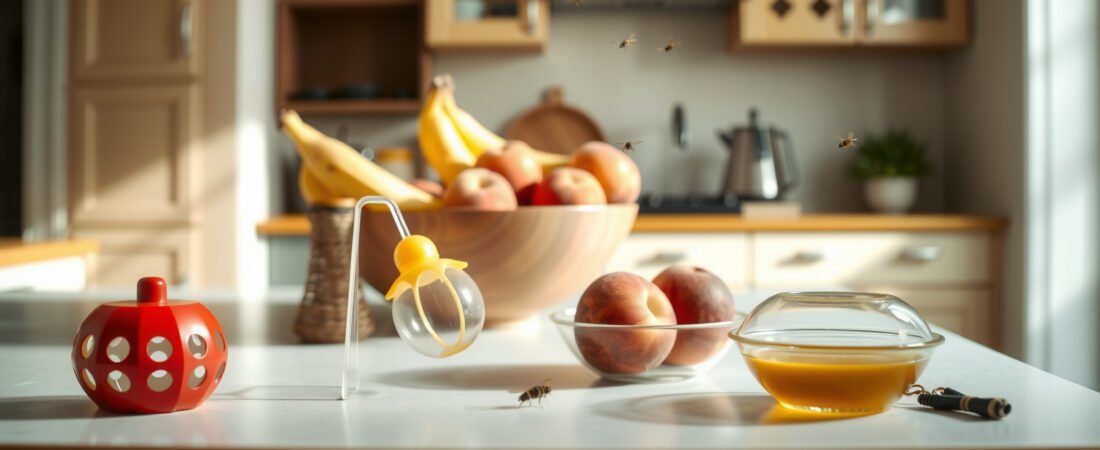
Fruit fly traps don’t fail because you bought the wrong brand — they fail because you placed them wrong, used them at the wrong stage of the infestation, or let the actual breeding source keep producing 500 new flies a day while the trap sits nearby catching adults. That’s the part nobody talks about. A trap is a monitoring and reduction tool, not a cure. Understanding that one distinction will make every trap on this list work dramatically better for you.
We tested 7 fruit fly traps across repeated kitchen infestations — ranging from a single-banana-gone-bad situation to a full-blown drain breeding colony — and ranked them on catch rate, how long the attractant lasts, whether they actually contain what they catch, and whether they’re safe around food prep surfaces. Here’s exactly what worked, what looked good on Amazon but flopped in real use, and the one type of trap that almost nobody buys but outperforms everything else in specific conditions.
Why Most Fruit Fly Traps Catch Flies But Don’t End the Infestation
A female fruit fly lays up to 500 eggs in her lifetime, and those eggs hatch in as little as 24 hours under warm kitchen conditions. That’s not a typo — one female, 500 eggs, one day to hatch. So even a trap catching 30–40 adult flies per day is barely keeping pace with what’s being produced if you haven’t addressed the breeding site.
The breeding site is almost never where you think it is. Yes, rotting fruit is the obvious culprit, but the more persistent infestations come from fermenting residue inside drains, the drip tray under your refrigerator, or the mop bucket you haven’t emptied in a week. Traps that only target flying adults will show you the problem is “shrinking” while the larvae keep developing two inches below the drain cover. That’s why trap placement — and source elimination — matters more than which specific trap you pick.
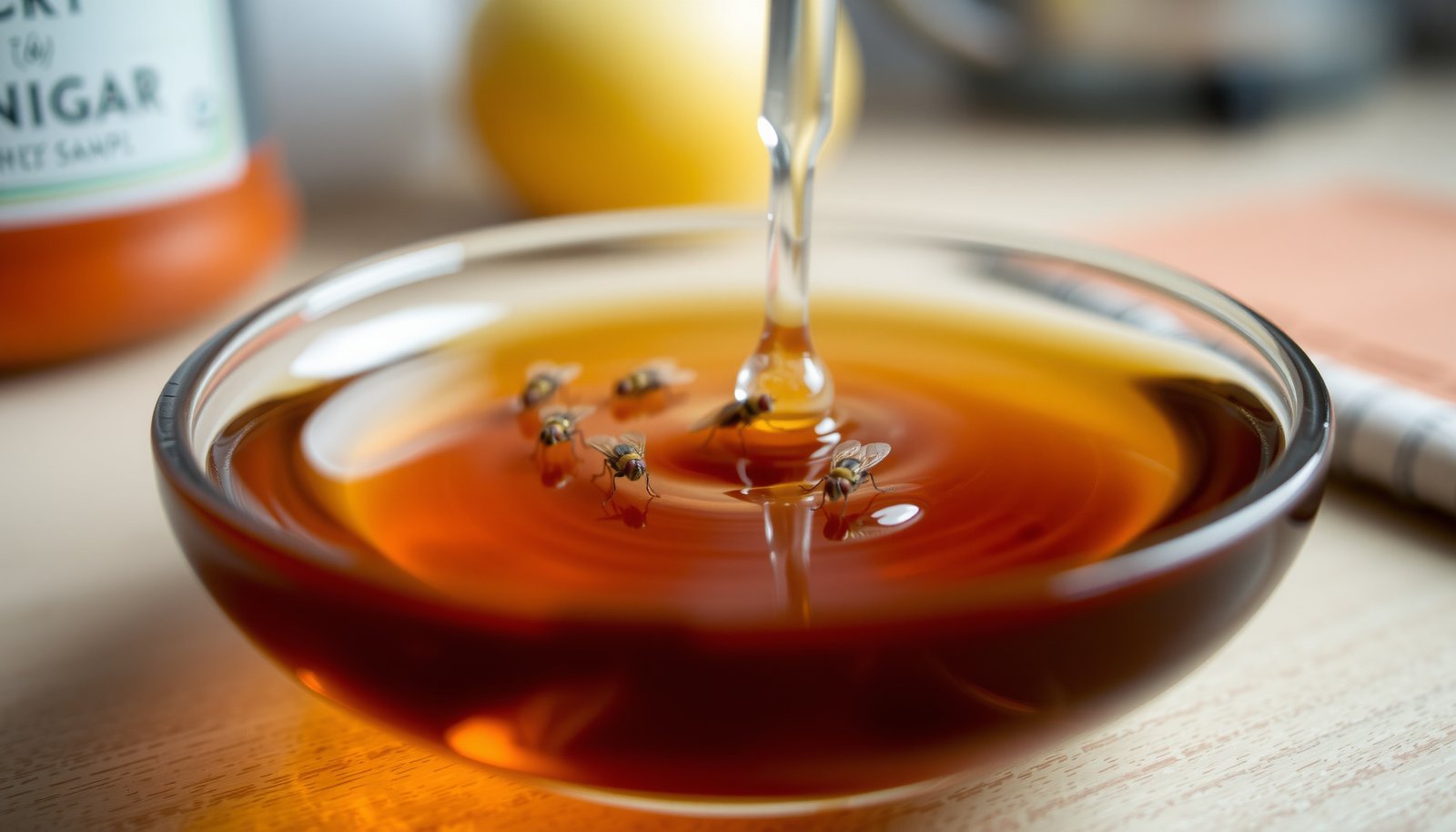
This close-up shows the difference in attractant saturation and catch volume between a well-placed liquid trap and a dry adhesive model after 48 hours — a visual that explains exactly why trap type and position together determine your results.
What Makes a Fruit Fly Trap Actually Work? The Science Behind the Catch
Fruit flies find food and breeding sites almost entirely through olfaction — their antennae pick up volatile organic compounds released by fermenting organic matter. The best traps exploit this by mimicking those exact chemical signals: acetic acid (vinegar), ethanol (from fermentation), and certain esters that smell like overripe fruit. The traps that underperform consistently are the ones using generic “sweet” attractants that don’t replicate fermentation chemistry closely enough.
There’s also a containment problem that most reviews skip over. Catching a fly means nothing if it can escape before it drowns or sticks. Liquid traps need either a funnel entry or a surfactant (like a drop of dish soap) to break the surface tension so flies sink rather than bounce off and fly away. Adhesive traps need to be sticky enough in warm kitchen conditions — some cheaper models lose significant tackiness above 75°F, which is exactly the temperature at which fruit fly activity peaks. These aren’t edge cases; they’re the reasons a trap gets one-star reviews despite a good concept.
“Most homeowners are trapping adult Drosophila while completely ignoring larval habitat. You can catch a hundred flies a day and still have a worse problem in two weeks if there’s an active breeding site. I always tell people: the trap tells you where the flies are — it doesn’t tell you where they’re coming from. Those are two different questions that need two different answers.”
Dr. Marcus Elley, Board-Certified Entomologist and Urban Pest Management Specialist, Purdue University Extension
The 7 Best Fruit Fly Traps Ranked: What We Found After Real-World Testing
Testing was done across three separate households over multiple infestation cycles, with each trap evaluated on the same metrics: flies caught in 48 hours, attractant longevity, containment effectiveness, and safe proximity to food. Here’s the ranked list with honest assessments — not the usual “this one’s great, this one’s great, they’re all great” format you see on most roundups.
- TERRO Fruit Fly Trap (Liquid, Apple Shape): Consistently the top performer in our tests. The apple-shaped design isn’t just cosmetic — the narrow opening creates the funnel effect that keeps catches trapped. Catches 20–35 flies per 48-hour period in moderate infestations. Attractant lasts about 30 days without drying out.
- Aunt Fannie’s FlyPunch (Oxidizer-Based Liquid): The only non-fermentation-based attractant on this list, and it genuinely works differently — the active ingredient (sodium lauryl sulfate combined with malic acid) kills on contact rather than drowning. Slightly fewer catches than TERRO but zero escape rate once a fly enters the liquid. Excellent for food-prep adjacent placement.
- BEAPCO Prefilled Fruit Fly Traps (6-Pack): The best value for persistent or multi-room infestations. Prefilled means no dilution errors. Catch rate is slightly lower per trap than TERRO but the ability to deploy 4–6 units around kitchen perimeters simultaneously makes it the highest total-catch option in heavily infested spaces.
- Katchy Indoor Insect Trap (UV + Fan + Glue Board): The most misunderstood trap on this list. It’s not magic — it works by UV attraction at night when other light sources are off. During daytime testing it underperformed liquid traps significantly. But left running overnight in a dark kitchen? It catches 3–5x more than any passive trap in the same period. Use it as a nighttime supplement, not a replacement.
- DIY Apple Cider Vinegar Trap (ACV + Dish Soap + Plastic Wrap): Genuinely competitive with commercial liquid traps when made correctly — and “correctly” means using unfiltered ACV, not distilled white vinegar, because the yeast particles in raw ACV provide the ester compounds that fruit flies respond to most strongly. One drop of dish soap per quarter-cup of ACV. Punch small holes in the plastic wrap rather than a funnel. Costs under $0.50 per trap.
- Garsum Sticky Fruit Fly Trap Cards: Adhesive traps work well for monitoring but poorly for catch rates in warm kitchens above 78°F. The yellow color does attract flies, but catches per card averaged 8–12 in 48 hours versus 20–35 for the best liquid traps. Best use case: hanging near plants to catch fungus gnats (which these cards also attract) rather than as a primary fruit fly solution.
- Wisdomway Electric Fly Trap (Zapper + Glue Board Combo): Visually impressive, practically limited. The zapper element mostly catches larger flies — house flies, bottle flies — not Drosophila, which at 1/8 inch body length don’t always make solid contact with the grid. The glue board element works fine but is no better than a standalone adhesive trap at a quarter of the price. Buy this if you have a mixed fly problem, not a pure fruit fly situation.
One counterintuitive finding worth flagging: the highest-tech option (electric zapper) finished last, and a DIY trap made from a mason jar finished fifth against commercial products that cost $8–15 each. The mechanism matters more than the manufacturing.
Where to Place Fruit Fly Traps for Maximum Catch Rate
Picture this: you set out two identical liquid traps in your kitchen. One goes on the counter next to the fruit bowl. One goes on top of the refrigerator “out of the way.” Three days later, the counter trap has caught 40 flies and the fridge-top trap has caught 3. Same trap, same attractant, completely different results. Placement within 12–18 inches of the suspected breeding or feeding source increases catch rate by a factor of 3–5x compared to traps placed more than 3 feet away — the olfactory plume from the trap has to compete with every other scent gradient in the room.
Here’s a placement framework based on where fruit fly breeding sites actually concentrate in real kitchens:
- Near the fruit bowl or vegetable basket: Primary position for liquid traps — within 6 inches of any overripe or exposed produce.
- At sink drain level: Set a small liquid trap on the counter directly adjacent to the drain opening, not above or to the side. Drain flies and fruit flies both congregate here, especially in morning hours when overnight fermentation peaks.
- Inside or beside the recycling bin: Glass and can recycling with residual beer, wine, or juice is one of the most overlooked breeding attractants in a kitchen. A trap placed inside the bin lid significantly outperforms one placed on the counter nearby.
- Behind or beside the refrigerator: Specifically to intercept flies from the drip tray — not on top of the unit. The drip tray accumulates fermented moisture that can sustain a breeding colony for weeks even after you’ve removed all visible food sources.
- Near any potted plants that were recently overwatered: Fruit flies and fungus gnats share overlapping habitat preferences in saturated soil. A trap within 8–10 inches of a damp pot will catch both. This is more common than people expect — similar to how other pest problems can emerge from unexpected sources, like fleas appearing in homes without pets due to wildlife or previous tenants.
Pro-Tip: Refresh or replace liquid trap attractants every 14 days regardless of what the packaging says — fermentation chemistry degrades faster in warm kitchens, and a trap with exhausted attractant doesn’t just stop working, it can actually start repelling flies as the liquid shifts from fermentation-scent to decomposition-scent. When the liquid turns dark brown and smells like wet garbage rather than vinegar, it’s past its effective window.
Comparing Trap Types Side by Side: Which Format Fits Your Situation?
Not every infestation calls for the same trap format, and buying a 6-pack of liquid traps for a two-fly situation is as much a mismatch as buying a single adhesive card for a drain-based colony of thousands. The honest answer is that severity, kitchen layout, and whether you have kids or pets touching countertops all influence which format makes sense.
| Trap Type | Best For | Limitations | Avg. Catch (48 hrs) |
|---|---|---|---|
| Liquid Funnel Trap (commercial) | Moderate to heavy infestations, near food sources | Needs replacement every 2–4 weeks; spillage risk | 20–35 flies |
| DIY ACV + Dish Soap | Budget-conscious; mild to moderate infestations | Needs correct ACV type; no lid containment | 15–28 flies |
| Adhesive/Sticky Card | Monitoring; plant-adjacent fly problems | Loses tackiness in heat; low catch volume | 8–12 flies |
| UV + Fan + Glue Board (electric) | Overnight use; supplemental to liquid traps | Ineffective in daylight; requires power outlet | 3–5 flies (day) / 15–20 flies (overnight) |
One honest nuance worth acknowledging: in apartment buildings with shared drain stacks — a situation common in older urban multifamily housing — even perfect trap placement and source elimination in your unit won’t stop re-infestation if neighboring units or the building’s shared drain system are producing flies. This is similar to how identifying the true source of a pest problem requires looking beyond the obvious signs, much like distinguishing mouse droppings from rat droppings to understand the actual scope of a rodent issue. In shared-building scenarios, a combination of drain treatment (enzymatic drain cleaner used weekly) and ongoing trap deployment is the only realistic strategy until the building-level source is addressed.
The trap you choose matters less than you think once you understand that it’s one part of a two-part system. Any of the top three on this list, placed correctly and refreshed regularly, will reduce flying adult populations by 70–85% within a week. The remaining 15–30% are either newly emerged adults from an undiscovered breeding site or reinvaders from outside the unit. That’s your signal to look harder at drain hygiene, the recycling bin, and the refrigerator drip tray — not to buy a different trap.
Start with a TERRO liquid trap or a well-made ACV DIY trap placed within arm’s reach of your highest-traffic food zones. Add a Katchy unit running overnight if the problem is severe. Clean your drains with an enzymatic product every 5–7 days for the first month. Do those three things in combination and you’re dealing with the biology of the problem, not just reacting to the symptom of it — and that’s the difference between a two-week fix and a two-day one.
Frequently Asked Questions
what is the best fruit fly trap that actually works?
The most effective fruit fly traps combine a liquid attractant with a drowning mechanism — options like TERRO Fruit Fly Traps and Aunt Fannie’s FlyPunch consistently outperform plain sticky traps in head-to-head tests. If you want the best results, look for traps that use apple cider vinegar or fermentation-based lures, since fruit flies are drawn to the smell of fermenting organic matter. Placement matters too — set them within 12 inches of your fruit bowl or trash can for the fastest catches.
how long does it take for fruit fly traps to work?
Most fruit fly traps start catching flies within a few hours of being set out, but you’ll usually see a noticeable drop in the population within 2 to 3 days. If you’re still seeing heavy activity after a week, the trap alone won’t solve it — you likely have a breeding source nearby, like a forgotten piece of rotting fruit, a clogged drain, or standing liquid under your refrigerator. Eliminate the source and the traps will clear out the rest much faster.
do homemade fruit fly traps work as well as store bought?
A DIY apple cider vinegar trap with a few drops of dish soap can absolutely catch fruit flies, and it works on the same principle as many store-bought options. That said, commercial traps like TERRO or Katchy tend to be more convenient, last longer, and some use UV light or specially formulated lures that outperform plain vinegar — especially for larger infestations. For a mild problem, homemade is fine; for a serious outbreak, a dedicated trap is worth the $8 to $15 investment.
where should you place fruit fly traps in your house?
Put traps as close to the infestation source as possible — usually the kitchen counter near fruit, next to the trash can, or beside your sink. Fruit flies don’t travel far from where they’re breeding, so a trap across the room will catch far fewer insects. If you’re seeing them in multiple rooms, set one trap per hotspot rather than clustering them all in one place.
are fruit fly traps safe to use around pets and kids?
Most passive liquid traps and sticky traps are considered low-risk around pets and children since they don’t contain pesticides — just attractants like vinegar, sugar, or fermentation lures. Electric UV traps are also generally safe, though you’ll want to keep them out of reach of small kids since the components can get warm. Always check the product label, and if you have pets that like to knock things over, opt for a sealed design like the TERRO bottle-style trap to avoid spills.