
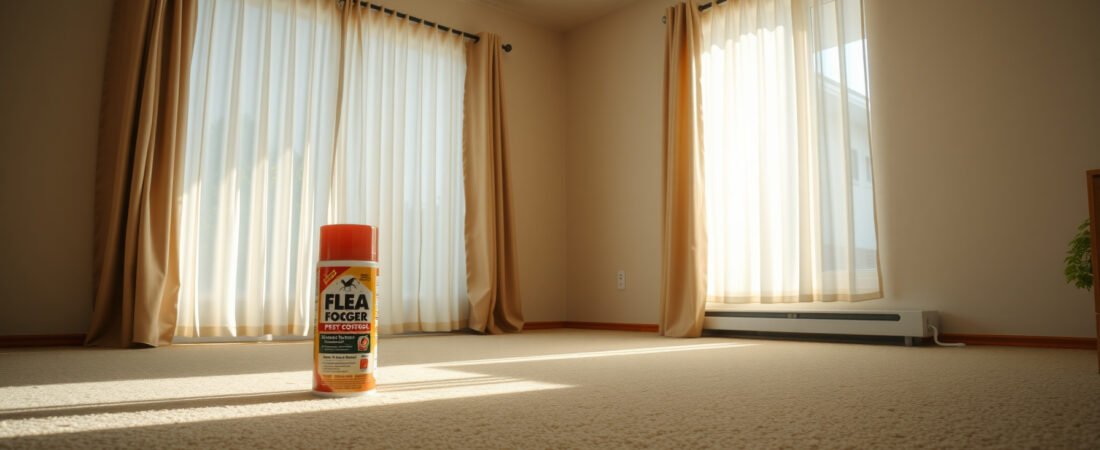
Fleas without a pet are actually harder to get rid of — not easier. That’s the part nobody tells you upfront, and it’s why people spend weeks treating a flea problem that keeps coming back. Without a host animal in the house, adult fleas are desperate, they’re biting you constantly, and the usual pet-focused advice (treat the dog, treat the cat, done) doesn’t apply. The real answer here starts with understanding that the fleas you see are maybe 5% of the problem. The other 95% — eggs, larvae, and pupae — are hiding in your carpets and furniture right now, invisible, just waiting.
Why Do You Have Fleas If You Don’t Have a Pet?
This is the question that stops most people cold. You don’t have a dog. You don’t have a cat. You’ve never owned a pet in this house. And yet you’re waking up with bites around your ankles and seeing tiny dark specks jumping near the baseboards. The explanation is almost always one of three things: a previous tenant or homeowner had pets, wildlife is using your crawl space or attic, or you moved into a space where flea pupae were already dormant — sometimes for months.
Flea pupae can survive inside their cocoons for up to 5 months without a host. They don’t hatch until they detect warmth, vibration, and carbon dioxide — the exact signals that say “a warm-blooded animal just walked in.” So a house can sit empty after a pet-owning family moves out, seem totally fine during the showing and inspection, and then explode with fleas within 48 hours of a new occupant moving in. If you’re a renter dealing with this situation, it’s worth knowing your rights — what to do if your landlord ignores a pest problem is a separate but very related issue that catches a lot of tenants off guard.
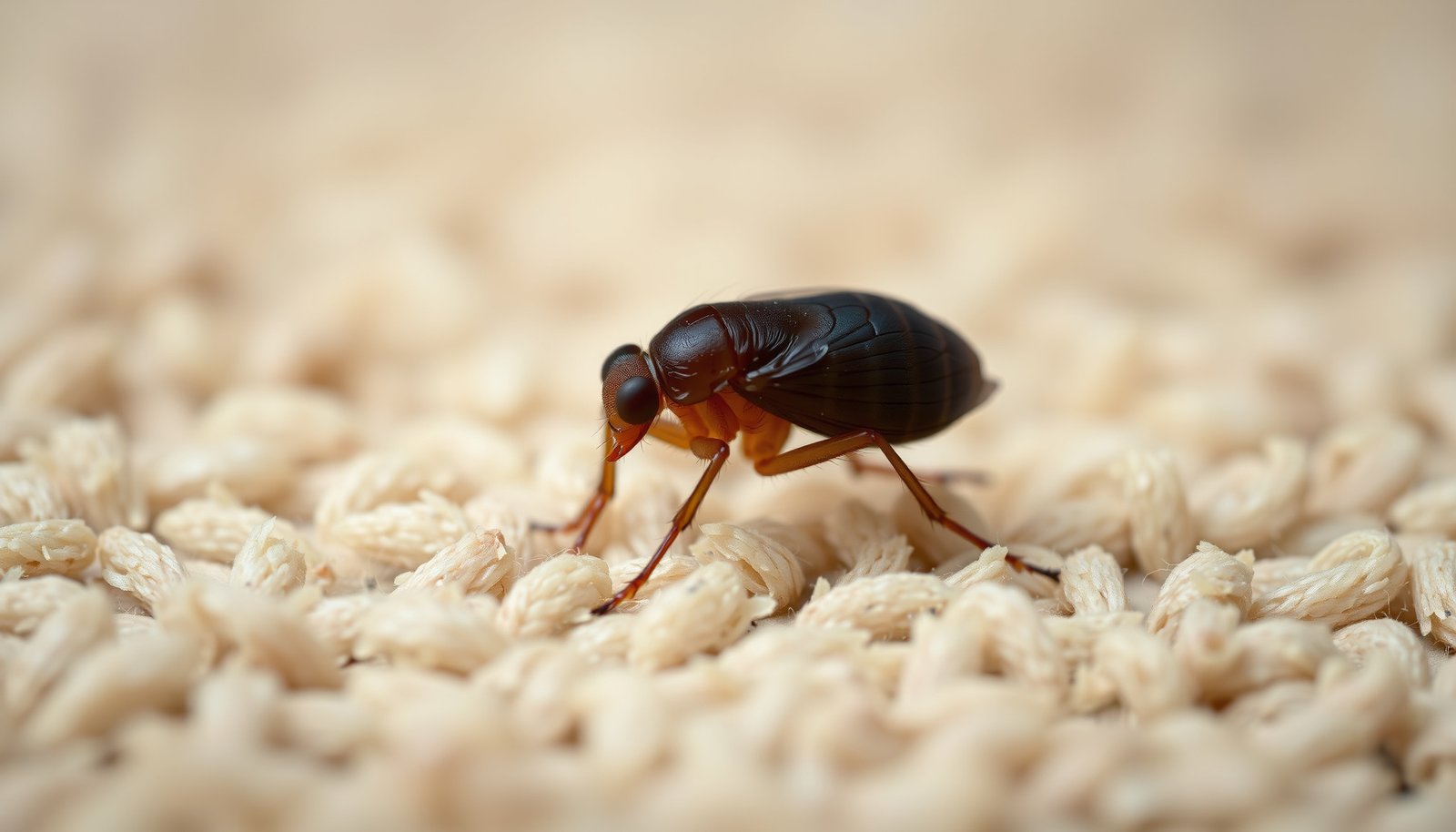
This close-up shows flea dirt (dark specks of digested blood) mixed with flea eggs (tiny white ovals) collected from carpet fibers — the two signs most people mistake for regular dust, which is exactly why infestations go undetected until they’re already severe.
What’s the Actual Flea Life Cycle — and Why Does It Change Your Strategy?
Here’s the counterintuitive part that almost every “how to get rid of fleas” article glosses over: adult fleas represent less than 5% of a typical infestation. A single female flea can lay 40 to 50 eggs per day and up to 2,000 eggs over her lifetime. Those eggs aren’t sticky — they fall off whatever surface they’re on and scatter into carpet fibers, couch cushion seams, and floor cracks within minutes. What you’re dealing with isn’t just an adult flea problem. It’s a full developmental pipeline hiding in your soft furnishings.
The four life stages — egg, larva, pupa, adult — each respond differently to treatment. Insecticide sprays kill adults on contact but do nothing to pupae, which are protected inside a sticky, debris-covered cocoon that physically blocks chemical penetration. That’s not a product failure. That’s biology. Any treatment plan that doesn’t account for all four stages will result in a “reinfestation” that was never actually gone — the pupae just waited you out and hatched on schedule.
“The pupa stage is the single biggest reason flea treatments fail. Homeowners treat once, see dead adults, and assume it’s over. Then two to three weeks later the next generation hatches and they think the product didn’t work. The product worked fine — it just can’t touch a cocooned pupa. You have to treat repeatedly within that hatch window, or you’re just resetting the clock.”
Dr. Karen Vail, Extension Entomologist, University of Tennessee Institute of Agriculture
How to Confirm You Actually Have Fleas (Not Something Else)
Before you spend money on treatment, you need to confirm fleas are actually the culprit. Bites alone aren’t reliable — flea bites, bed bug bites, and even bird mite bites look nearly identical on skin. The fastest confirmation method is the white sock test: put on a pair of white knee socks and slowly walk through every carpeted room in the house, especially along baseboards and in front of furniture. Fleas are drawn to the warmth and movement, and they’ll jump onto the socks where you can see them clearly against the white fabric.
The second confirmation test is for flea dirt. Collect some dark specks from your carpet or pet bedding (if previous occupants left any), place them on a damp white paper towel, and press. If the specks dissolve into reddish-brown streaks, that’s digested blood — flea feces, confirming an active or recent infestation. Regular dirt doesn’t do this. This test takes 30 seconds and saves you from treating the wrong pest entirely. If something else seems off — like you’re also finding small dark droppings near walls — it’s worth cross-checking against other possibilities, like what mouse droppings look like versus rat droppings, since multiple pest problems in the same home aren’t uncommon.
Pro-Tip: Place a shallow dish of water with a drop of dish soap under a lamp on the floor overnight. The light attracts adult fleas, and the soapy water traps them. Check it in the morning — even 3 or 4 fleas in the dish confirms an active adult population and tells you it’s time to treat aggressively, not wait and see.
How to Get Rid of Fleas in the House Without a Pet — The Right Treatment Order
Treatment order matters more than product choice. Most people grab a spray and hit the visible areas, which is roughly equivalent to mowing the top inch of weeds and calling the lawn fixed. A no-pet infestation needs a systematic, layered approach that attacks the population at multiple life stages simultaneously. The good news: without a living host animal, every generation of fleas that hatches has to feed on you to survive — and if you’ve treated your environment properly, they won’t make it to reproduction.
Work through the following steps in sequence, not randomly. Skipping or reordering them — especially skipping the vacuuming before chemical treatment — significantly reduces effectiveness. The vacuuming step isn’t just cleanup. Vibration from the vacuum physically triggers dormant pupae to hatch, pulling them out of the most insecticide-resistant stage and into one where they’re vulnerable.
- Vacuum every soft surface aggressively before any chemical treatment. Hit all carpets, rugs, upholstered furniture, and the spaces under furniture and along baseboards. Use a crevice tool on floor cracks and couch seams. Immediately seal the vacuum bag in a plastic bag and take it outside to the trash — don’t leave it in the machine.
- Wash all bedding, throw rugs, and fabric items in hot water (at least 140°F), then dry on high heat. Fleas at all life stages die within 10 minutes at this temperature. Don’t set this pile aside to “do later” — it’s a breeding reservoir sitting in your bedroom.
- Apply an IGR (Insect Growth Regulator) spray throughout the house. Products containing methoprene or pyriproxyfen don’t kill adult fleas — they work by mimicking juvenile hormones that prevent eggs and larvae from developing into reproducing adults. This is the step that breaks the cycle. Spray carpets, furniture, and baseboards and let it dry completely before the next step.
- Apply an adulticide spray or fogger targeting adult fleas. Look for products containing permethrin, bifenthrin, or pyrethrin. Follow label instructions precisely — coverage matters more than concentration. Treat the same areas as the IGR, then vacate for the time listed on the product label.
- Repeat vacuuming every 2 days for 3 weeks. This isn’t optional maintenance. Continued vibration keeps triggering pupal hatch, pulling new adults out into a treated environment where they’ll die before they can reproduce. Stop vacuuming early and you’re giving the remaining cocoons a chance to outlast your treatment window.
- Address the wildlife entry point if that’s the source. If you found fleas but no previous pet history, check your attic, crawl space, and any gaps in the foundation or roofline. Raccoons, opossums, and feral cats all carry fleas, and if they have consistent access to part of your home, you will keep getting reinfested no matter how well you treat the interior.
Which Flea Products Actually Work — and Which Ones Are a Waste of Money?
The flea product market is genuinely cluttered with things that work, things that half-work, and things that are essentially overpriced placebo. The honest answer is that effectiveness depends almost entirely on whether the product targets the right life stage for your situation. If you’re in the first week of a new infestation where adults are actively biting, an adulticide gets you fast relief. If you’re two weeks in and seeing fleas reappear after treatment, you almost certainly need an IGR — not more of the same spray.
Here’s a quick breakdown of the main product categories and what they actually do:
| Product Type | What It Kills | What It Misses |
|---|---|---|
| Adulticide spray (permethrin, pyrethrin) | Adult fleas on contact | Eggs, larvae, pupae |
| IGR spray (methoprene, pyriproxyfen) | Prevents larvae from maturing; sterilizes some adults | Does not kill existing adults |
| Diatomaceous earth (food grade) | Larvae and adults through physical abrasion | Pupae (cocoon is protective); ineffective when wet |
| Flea fogger / bomb | Adult fleas in open air | Anything under furniture, in cracks, or in cocoons |
Flea bombs are probably the most overpurchased product in this category. They produce a fog that settles on flat surfaces and open air — but fleas live in carpet fibers, couch cushion seams, and floor cracks, none of which a fog penetrates effectively. They’re not useless, but using a fogger as your primary treatment and skipping the IGR step is one of the main reasons people end up treating the same infestation three or four times.
A few additional factors worth knowing about specific products and conditions:
- Diatomaceous earth works best in dry conditions. In humid climates or during summer months, moisture reduces its effectiveness significantly — the sharp particles clump and lose their abrasive action. Use it in dry, low-traffic areas like underneath furniture or along dry baseboards.
- Spray IGRs remain effective in carpet for 7 months or more after application, which is why a single thorough IGR treatment during the process can provide lasting protection even after active adults are gone.
- Boric acid powder is effective against flea larvae and adults when worked into carpet fibers, but it can bleach some carpet types — test a hidden corner first and keep children and pets (if any) off treated areas until vacuumed up.
- Natural/essential oil products (cedar oil, peppermint, neem) have some repellent properties but almost no knockdown ability on an active infestation. They’re fine as a preventive layer but not as a treatment once fleas are established.
- Professional treatment is genuinely worth considering for severe infestations in multi-room homes, especially when the source is wildlife and the infestation has been present for more than 4-6 weeks. At that point, the pupal reservoir is enormous and DIY treatments require near-perfect execution to succeed.
Picture this: you move into a rental in July — it’s warm, the previous tenants had two large dogs, the landlord says it was “professionally cleaned.” Two days after you’ve moved all your boxes in, you start getting bitten. That scenario is almost textbook. Your movement and warmth triggered a massive pupal hatch from eggs that had been waiting in the carpet since the previous tenants moved out. You didn’t bring fleas in. They were already there, dormant, waiting for exactly the conditions you provided. The cleaning did nothing because no cleaning product affects flea pupae.
One honest nuance worth mentioning: how long treatment takes varies considerably by home type and severity. A one-bedroom apartment with hardwood floors and minimal soft furnishings can often be cleared in two treatment cycles over three weeks. A multi-room house with wall-to-wall carpet, multiple upholstered pieces, and a wildlife access point in the crawl space might take 6-8 weeks of consistent effort. There’s no single timeline that fits every situation, and anyone who tells you “one treatment and it’s done” is either selling something or hasn’t dealt with a serious infestation.
Fleas without a pet host are under more pressure to feed, which actually works in your favor once you’ve broken the reproductive cycle. Every adult that hatches into a treated environment and can’t reproduce is a dead end for that bloodline. Keep the treatment window consistent, don’t let up on vacuuming before the three-week mark, and address any exterior wildlife access — do those three things and the infestation will collapse. The biology that makes fleas so persistent is the same biology that makes a properly executed treatment so final.
Frequently Asked Questions
how did I get fleas in my house if I don’t have a pet?
Fleas can hitch a ride into your home on your clothing, shoes, or luggage after you’ve been in an infested area like a park, yard, or someone else’s house. They can also come in through gaps in walls, floors, or screens carried by wildlife like rats, squirrels, or opossums that nest near your home. If you recently moved into a new place, fleas can survive in carpets and floorboards for up to 6 months without a host.
how long does it take to get rid of fleas in a house without a pet?
Getting rid of fleas typically takes 2 to 4 weeks even with consistent treatment, because flea eggs and pupae are resistant to most pesticides. You’ll need to treat multiple times since the pupal stage can last anywhere from a few days to several months before fleas emerge. Vacuuming daily and washing bedding weekly in hot water above 140°F speeds up the process significantly.
what kills fleas in carpet instantly?
No product kills fleas in carpet truly instantly, but IGR sprays containing methoprene or pyriproxyfen combined with an adulticide like permethrin come closest — they kill adults on contact and prevent eggs from hatching. Diatomaceous earth is a non-chemical option that damages fleas’ exoskeletons, though it takes 24 to 48 hours to work. For fastest results, vacuum thoroughly before applying any treatment so you’re not wasting product on debris.
can fleas live in a house with no pets or humans?
Yes, fleas can survive in an empty house for up to 6 months by going dormant in the pupal stage, waiting for vibrations, warmth, or carbon dioxide that signal a host is nearby. This is why people often get swarmed by fleas immediately after moving into a vacant home. If you’re dealing with a vacant property, running the heat above 95°F for several days or hiring a pest control company to do a complete treatment is the most reliable fix.
does vacuuming get rid of fleas without an exterminator?
Vacuuming alone won’t eliminate a flea infestation, but it’s one of the most effective tools you have — it removes up to 30% of larvae and 60% of flea eggs from carpet fibers. You need to vacuum every day during an active infestation and immediately seal and dispose of the vacuum bag or empty the canister outside. Combine daily vacuuming with a home spray or flea fogger to actually break the flea life cycle and clear out the infestation.
Disclaimer: This article is for informational purposes only and isn’t a substitute for professional pest control advice. Always read and follow the product label instructions exactly — label directions are legally binding and vary by brand and active ingredient. Keep all pesticides, baits and traps away from children and pets, ventilate treated areas as directed, and consider calling a licensed pest control professional if an infestation is large, recurring, or involves a structural pest like termites or carpenter ants.