
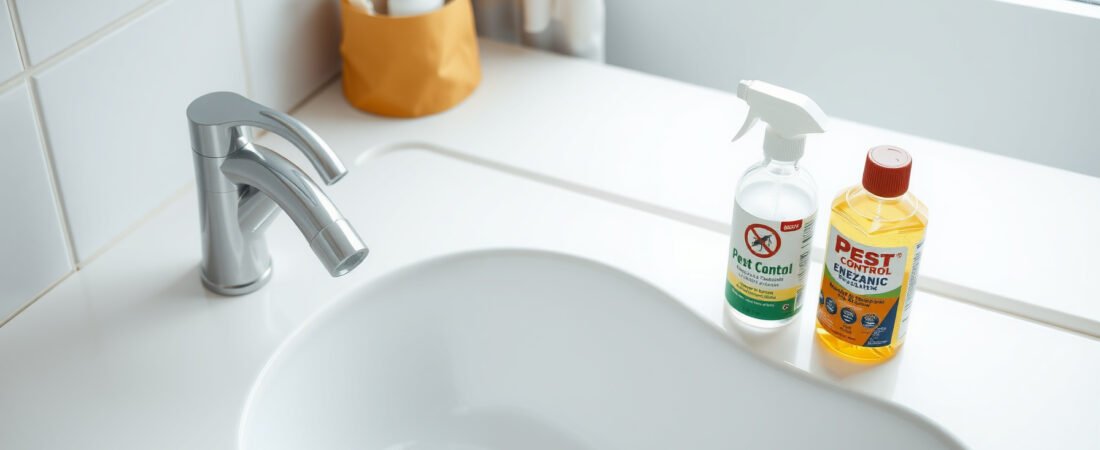
Enzyme cleaners, drain gels, and bio-foam treatments will fail every single time if you skip one step — and almost every product review article on the internet forgets to tell you what that step is. The products themselves aren’t the problem. The biofilm is. Drain flies don’t live in your drain so much as they live in the organic slime coating the inside of it, and until you physically break that layer apart, no liquid treatment — no matter how concentrated — can fully penetrate and eliminate the breeding site underneath.
That’s the core issue most homeowners miss. They pour enzyme cleaner down a drain, see fewer flies for a few days, and assume the problem is solved. Then the flies come back, usually within 7–10 days, because a female drain fly can lay 30–100 eggs at a time directly into undisturbed biofilm — and even a thin remaining layer is enough to restart the cycle. Getting the right product matters, but getting the right sequence matters more. This article covers both.
Why Most Drain Fly Treatments Stop Working After a Few Days
Drain fly larvae are not floating freely in your drain water. They embed themselves inside a gelatinous biofilm — a sticky mat of decomposing organic matter, grease, hair, and bacteria that clings to pipe walls, drain covers, and the underside of pop-up stoppers. This biofilm can be 1–3 centimeters thick in a neglected drain and is largely impermeable to water-based treatments unless it’s been physically disrupted first. Pouring even the best enzyme product over intact biofilm is roughly like pouring water on a sealed plastic bag — the active ingredients just can’t get through.
That’s why the product you choose matters less than the prep work you do before applying it. A $12 enzyme gel used after a proper drain scrubbing will outperform a $40 professional-grade bio-foam applied to an untouched drain every time. The larvae also have a surprisingly narrow moisture requirement — they can’t survive if biofilm is fully removed and the drain dries out between uses, which explains why guest bathrooms and vacation properties tend to develop infestations faster than daily-use drains.
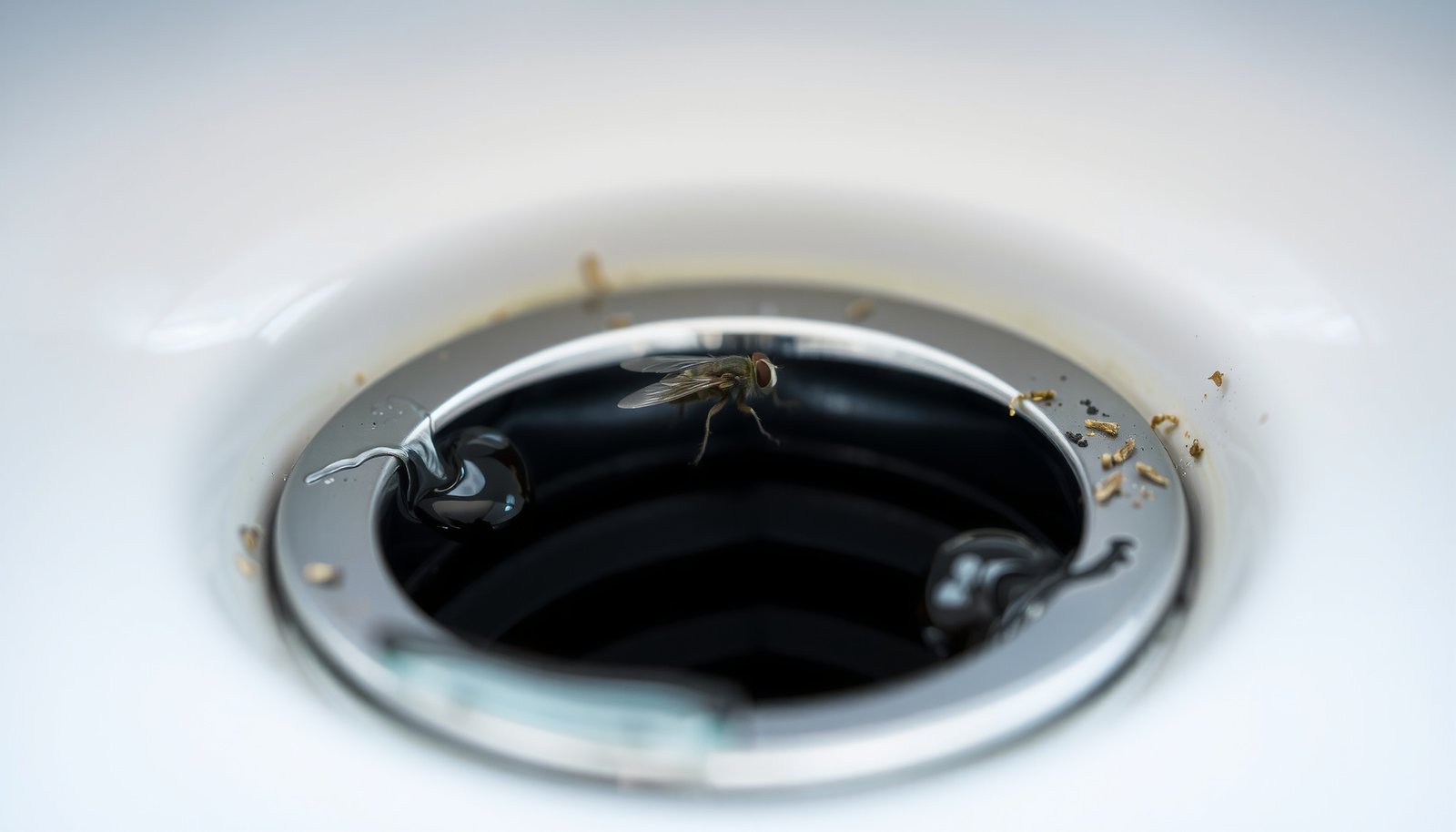
This close-up shows the difference between a treated drain surface and one still coated in biofilm — the contrast makes clear why liquid treatments need a clean surface to actually make contact with larvae and eggs.
Drain Gels vs. Enzyme Cleaners vs. Bio-Foam: What Each One Actually Does
These three product categories get lumped together constantly, but they work through completely different mechanisms — and using the wrong one for your situation means wasted money and a persistent infestation. Understanding what each type actually does to biofilm and larvae helps you pick the right tool instead of just guessing based on star ratings.
| Product Type | How It Works | Best For | Limitation |
|---|---|---|---|
| Enzyme Drain Gel | Bacterial enzymes digest organic matter over 6–8 hours of contact | Maintenance after initial cleaning; slow drains with grease buildup | Slow-acting; needs pre-scrubbing to penetrate thick biofilm |
| Bio-Foam / Expanding Foam | Expands to coat full pipe circumference; enzyme or bacterial action follows | P-traps, elbow joints, hard-to-reach pipe sections | More expensive; overkill for simple sink drains |
| IGR Spray (Insect Growth Regulator) | Disrupts larval development so pupae can’t mature into breeding adults | Breaking the reproductive cycle alongside a cleaning protocol | Doesn’t remove biofilm; must be used with physical cleaning |
IGR-based sprays deserve more attention than they get in drain fly coverage. Products containing pyriproxyfen or methoprene don’t kill adult flies outright — they interrupt the larval development cycle so that juveniles can’t reach reproductive maturity. Used alongside an enzyme cleaner, they effectively put a ceiling on population growth while the biological agents clear out the food source. That two-pronged approach is what pest control professionals actually use, and it works faster than enzyme treatment alone.
The Right Treatment Sequence (This Is What Actually Eliminates Drain Flies)
Picture this: you’ve bought a quality enzyme gel, followed the label instructions, poured it down the drain every night for a week — and you’re still seeing flies hovering around the bathroom sink every morning. This is one of the most common complaints about drain fly products, and it’s almost never the product’s fault. The sequence is wrong. Here’s the order that actually works, based on how drain fly biology interacts with each treatment stage.
- Confirm the drain, not just the room. Tape a piece of plastic wrap over the suspected drain overnight. If you find small, moth-like flies stuck to the underside by morning, that’s your active breeding site. A single apartment can have 3–4 drains, and treating the wrong one wastes two weeks of effort.
- Physically scrub the drain pipe. Use a flexible drain brush (a bottle brush works) to scrape biofilm off the interior walls. This is not optional. No product penetrates intact biofilm reliably. Get the drain cover off and scrub the underside too — that’s where larvae cluster densest.
- Flush with hot (not boiling) water. Boiling water can damage PVC fittings. Hot tap water at 140°F loosens dislodged material and clears debris the brush lifted. Let it run for 60–90 seconds before any product goes in.
- Apply enzyme gel or bio-foam. Now the product can actually reach pipe walls. Pour gel slowly so it coats the sides rather than rushing straight to the P-trap. For foam products, follow manufacturer expansion time — usually 15–20 minutes before flushing.
- Repeat on nights 2 and 3, then weekly for 3–4 weeks. A single application won’t catch every egg. Drain fly eggs hatch in 32–48 hours under warm conditions, and pupation takes another 9–15 days, so maintaining treatment pressure across a full reproductive cycle is what ends the infestation.
For a more detailed walkthrough of the full elimination process — including how to handle drain flies in washing machine overflow drains and shower pan weep holes — How to Get Rid of Drain Flies in 48 Hours or Less covers those less-obvious breeding sites that can keep an infestation cycling indefinitely.
Which Specific Products Are Worth Buying (and Which Are Overhyped)
The drain fly product market is full of rebranded enzyme formulas with dramatically different price tags for essentially the same bacterial strains. A few products genuinely stand out based on how they’re formulated to cling to pipe walls — which is the actual variable that separates effective gels from watered-down versions.
Pro-Tip: Before buying any drain gel, check the viscosity. Runny, water-thin enzyme liquids flow straight through your drain without meaningful contact time on pipe walls. You want a product with a gel or thick consistency — it should coat, not just rinse. Brands like American Bio-Sciences Drain Gel and InVade Bio Drain Gel have higher viscosity formulas specifically designed for this reason, and they’re priced reasonably for the volume you get.
Here’s an honest breakdown of which product categories deliver real value versus which are mostly marketing:
- InVade Bio Drain Gel — Citrus-based microbial formula with high cling factor; one of the most consistently effective options available to consumers without a pest license. Use 4 oz per drain, nightly for the first week.
- American Bio-Sciences Drain Gel — Similar bacterial enzyme profile, slightly thicker consistency, good for heavily gunked kitchen drains. Less citrus smell, which some people prefer.
- Gentrol Point Source IGR — Contains hydroprene, an IGR that disrupts metamorphosis in drain fly larvae. Not a standalone fix, but used in combination with enzyme gel it shortens total treatment time significantly.
- Bio-Foam products (generic) — Worth using in P-traps and bathroom floor drains where a brush can’t reach. Expanding action gets coverage that gel alone misses in elbow joints.
- Bleach, boiling water, or baking soda/vinegar — These don’t work as drain fly treatments. Bleach doesn’t remove biofilm — it temporarily sanitizes the surface while leaving the organic structure intact. Larvae simply resume development within days.
“The number one reason drain fly treatments fail isn’t product choice — it’s application without prior mechanical cleaning. Enzyme products are biologically active, not chemically aggressive. They need direct contact with organic substrate to work, and intact biofilm is a barrier, not a substrate. Homeowners who pre-scrub consistently see resolution in 10–14 days; those who skip that step often treat for six weeks without resolution.”
Dr. Marcus Henley, Board-Certified Entomologist and Urban Pest Management Specialist, Cooperative Extension Service
When Drain Fly Treatments Aren’t Enough: Hidden Breeding Sites You’re Missing
One honest nuance that doesn’t get enough attention: drain fly infestations that persist despite correct treatment are almost always a sign that there’s a breeding site you haven’t found yet. This is especially common in older homes, apartments with shared plumbing, and any building with a history of slow drains or drain line leaks. The flies you’re seeing at the surface may be emerging from a pipe section you can’t access with a brush or any consumer product.
Slow or cracked sewer lines can accumulate biofilm inside walls or under concrete slab floors, and drain flies will breed in those areas indefinitely regardless of what you pour into your visible drains. If you’ve done everything correctly — confirmed the breeding site, scrubbed thoroughly, applied enzyme treatment for a full 3–4 week cycle — and you’re still seeing 10 or more adults per night, that’s the signal to call a plumber for a drain camera inspection before spending more money on products. There’s also a secondary identification issue worth noting: psychodid drain flies are sometimes confused with fungus gnats, which breed in overwatered potting soil and require a completely different treatment approach. If you’ve got small, dark flies that seem unrelated to your drains, it’s worth ruling out that possibility before committing to a full drain treatment protocol. And if you’ve got flying insects that look entirely different — darker, more elongated — How to Identify American vs German vs Oriental Cockroach can help rule out other pests that sometimes emerge from similar environments in older buildings.
The counterintuitive truth about drain fly infestations is that they’re almost never a hygiene problem in the way people assume. A spotless kitchen with a rarely-used prep sink, a vacation home that sits empty for weeks, or a commercial coffee machine’s drainage tray can all develop dense drain fly populations with no connection to how clean the space is kept. Biofilm develops wherever organic material meets moisture and airflow slows — which happens in clean pipes just as readily as neglected ones, just more slowly. Treating this as a cleanliness issue leads homeowners to scrub the wrong surfaces while leaving the actual breeding pipe untouched.
If you’ve confirmed the source, done the physical prep work, and used a quality enzyme product consistently across a full reproductive cycle without resolution, the next step isn’t buying a stronger product — it’s a plumbing inspection. Drain flies emerging from a cracked lateral line or a weeping pipe joint inside a wall aren’t a pest control problem anymore. They’re a plumbing problem wearing a pest control mask, and no amount of enzyme gel poured into an accessible drain will reach them.
Frequently Asked Questions
What is the best drain fly treatment that actually works?
Enzyme-based drain cleaners like American Bio-Sciences Drain Gel or InVade Bio Drain are the most effective drain fly treatments because they break down the organic slime layer where drain flies breed. You’ll typically need to apply the gel nightly for 5 to 7 consecutive days to fully destroy the breeding source. Sprays and IGR products can kill adults, but if you don’t eliminate the organic buildup inside the pipe, the flies will keep coming back.
How long does it take for drain fly treatments to work?
Most enzyme gel treatments take 1 to 2 weeks to fully clear a drain fly infestation when applied consistently. Adult flies can live up to 3 weeks, so you may still see some flying around even after the larvae and breeding material have been eliminated. Stick with nightly treatments for at least 7 days before deciding whether you need to escalate to a stronger product or call a professional.
Can I use bleach to kill drain flies?
Bleach won’t reliably eliminate drain flies because it moves through the pipe too fast to penetrate the thick layer of organic slime where eggs and larvae live. It also doesn’t contain enzymes that break down grease, hair, and food debris the way dedicated enzyme cleaners do. You’re much better off using a purpose-made drain gel and letting it sit overnight so it actually has time to digest the breeding material.
Are drain fly treatments safe to use if I have a septic system?
Yes — enzyme-based drain fly treatments are generally safe for septic systems because they use biological bacteria cultures rather than harsh chemicals that could disrupt your tank’s natural balance. Products like InVade Bio Drain are specifically formulated to be septic-safe. Always check the product label to confirm, and avoid any treatments that list bleach, lye, or sulfuric acid as active ingredients if you’re on a septic system.
Where do you put drain fly treatment gel?
Apply the gel directly into the drain opening so it coats the interior walls of the pipe — most products recommend pouring 2 to 4 ounces per drain and letting it sit undisturbed for at least 8 hours, ideally overnight. Focus on slow-moving or infrequently used drains like bathroom sinks, floor drains, and bathtubs, since those are the most common breeding spots. Repeat the application every night for a week and avoid running water through that drain until morning so the enzymes have time to work.