
Three treatments is the number most pest control companies quote you. It’s also, frustratingly, the number that leaves plenty of infestations still going strong six weeks later. The real answer isn’t a fixed number — it’s a moving target that depends on species, infestation size, treatment type, and one factor almost nobody talks about: whether the treatments are actually timed to the roach reproductive cycle or just scheduled for the technician’s convenience.
Here’s the thing most homeowners get wrong. They assume the goal of pest control treatments is to kill every roach they can see. It isn’t. The goal is to break the reproductive cycle — and that’s a completely different problem with a completely different timeline. A female German cockroach produces 30–40 eggs per capsule and can carry six or more capsules in her lifetime. Even after a thorough first treatment wipes out 90% of visible adults, the eggs already laid will hatch and restart the population unless follow-up treatments are timed correctly.
Why “One and Done” Roach Treatments Almost Never Work
No pesticide currently registered for residential use kills cockroach eggs. That’s not a marketing failure — it’s basic biology. Cockroach egg cases, called oothecae, have a tough protein shell that physically blocks chemical penetration. So even if a technician applies a flawless treatment that eliminates every living roach in your kitchen, the oothecae already deposited behind your refrigerator or inside wall voids are completely unaffected.
German cockroach eggs hatch in roughly 28 days under typical household temperatures. American cockroach eggs take longer — closer to 50–55 days. That’s the window pest control companies should be working around, not their monthly billing cycle. A single treatment, no matter how good the product, is almost always chasing the wrong problem.
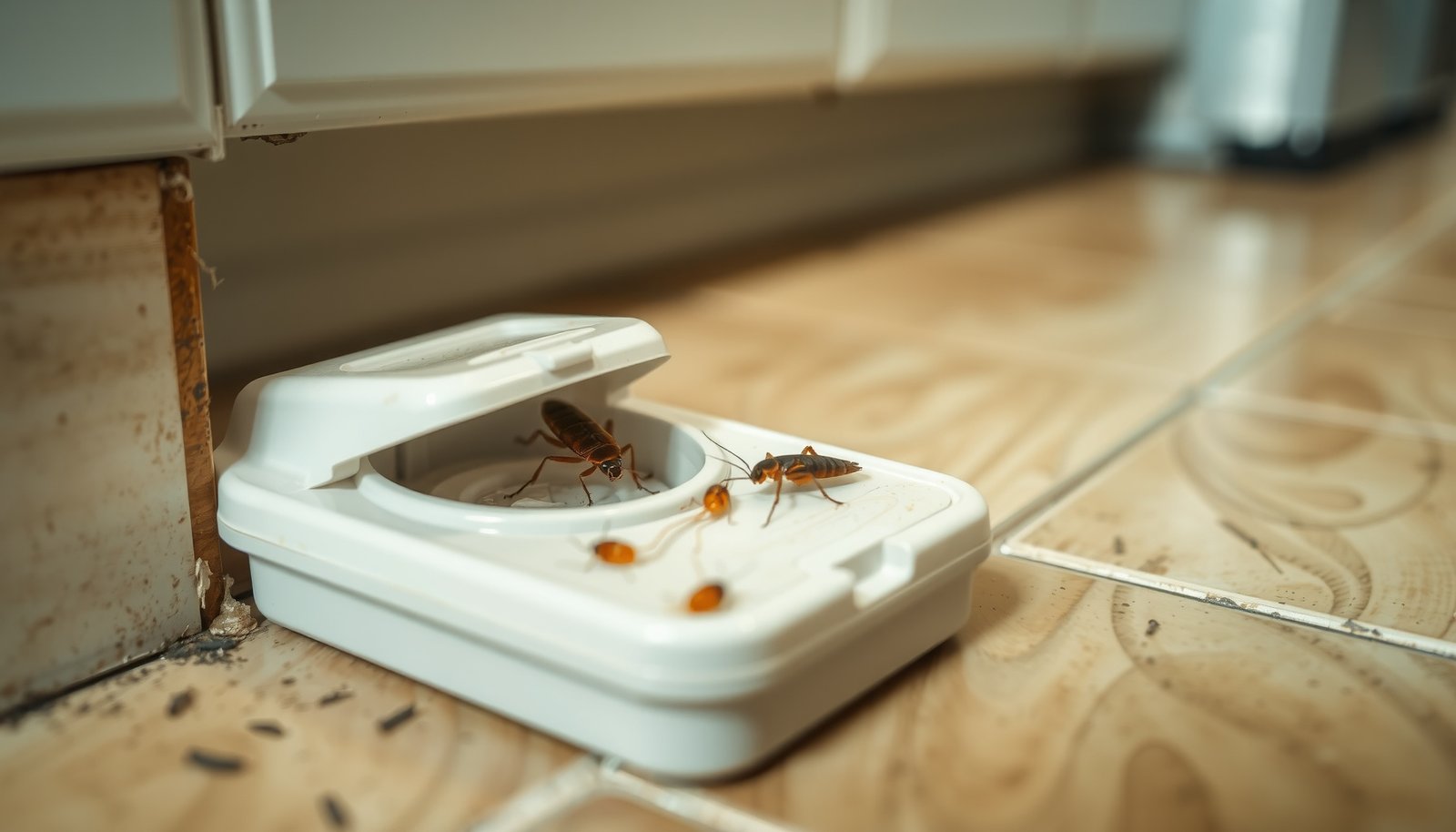
This close-up shows the kinds of harborage zones — tight crevices around plumbing, cabinet hinges, and appliance bases — where oothecae are typically deposited and where a single surface spray treatment has the least penetration, making follow-up applications essential rather than optional.
How Many Treatments Does It Actually Take by Infestation Level?
Picture this: you move into a rental unit and spot two roaches on the kitchen counter the first night. A week later, you’re finding them in the bathroom and inside a cabinet you haven’t even opened yet. That’s a moderate-to-heavy infestation — probably established for months before you arrived. The treatment count for that situation is genuinely different from catching one or two roaches early before they’ve had a chance to establish harborage.
The table below reflects realistic treatment expectations based on infestation level, not the optimistic estimates you’ll find on most pest company websites. These ranges assume professional-grade products applied correctly, combined with basic sanitation on the homeowner’s end.
| Infestation Level | Typical Treatment Count | Realistic Timeline to Control |
|---|---|---|
| Light (occasional sightings, no daytime activity) | 2–3 treatments | 4–8 weeks |
| Moderate (regular sightings, some daytime activity) | 3–5 treatments | 8–14 weeks |
| Heavy (daytime swarming, multiple rooms affected) | 5–8+ treatments | 3–6 months |
One honest nuance worth naming: these numbers assume German cockroaches, which are by far the most common indoor species and the hardest to eliminate due to their rapid reproduction. American cockroaches, Oriental cockroaches, and smoky-brown roaches are larger, breed more slowly, and typically respond faster — sometimes in two to three well-timed treatments — because their reproductive cycle gives treatments more time to work between egg hatches.
What Actually Determines Whether a Treatment Works (and What Doesn’t)
Most pest control content focuses heavily on which product was used. Professionals and homeowners alike obsess over brand names, active ingredients, and whether they used gel bait versus spray. That matters — but less than the application pattern and the follow-up timing. A mediocre product applied in the right places at the right intervals will outperform an excellent product applied once in the wrong spots every single time.
The factors that actually determine whether pest control treatments for roaches succeed come down to this list:
- Harborage access: If the technician (or you) can’t get product into wall voids, under appliances, and behind cabinetry, the roaches living there are never contacted.
- Treatment interval: Treatments timed 3–4 weeks apart for German roaches target newly hatched nymphs before they mature and reproduce — random monthly scheduling often misses this window entirely.
- Product rotation: Using the same active ingredient repeatedly accelerates insecticide resistance. German cockroach populations in urban apartments have shown documented resistance to pyrethroids and some organophosphates.
- Sanitation between treatments: Competing food sources reduce bait uptake. Gel baits are far less effective if roaches have open access to crumbs, grease, and standing water.
- Re-entry points: Multi-unit buildings, shared walls, and attached garages can continuously reintroduce roaches from adjacent spaces regardless of how good any single treatment is.
That last point about multi-unit buildings is where a lot of apartment treatment programs fall apart quietly. You can do everything right in your unit and still see roaches return within two weeks because the building next door hasn’t been treated. It’s one of the most frustrating — and least talked about — realities of urban pest control.
The Reproductive Cycle Timing Most Exterminators Don’t Explain
This is the counterintuitive part: seeing roaches again two to three weeks after a professional treatment is not necessarily a sign the treatment failed. It might be exactly what success looks like at that stage. Nymphs hatching from pre-treatment oothecae will be visible in that window — they’re small, pale, and fast — but they’re also now exposed to residual product left by the initial treatment. If the timing is right, those newly hatched nymphs walk through treated surfaces and die within hours of contact.
“The biggest mistake I see homeowners make is canceling their second treatment because they don’t see roaches anymore after the first one. What they don’t realize is that the egg capsules laid before treatment are still viable, and without a follow-up timed to the hatch window, you’re practically guaranteed a resurgence. Effective roach control isn’t about a single knockout — it’s about persistence through the full reproductive cycle.”
Dr. Melissa Hartwell, Board-Certified Entomologist and Urban Pest Management Specialist
The flip side is also true. Seeing zero roaches after the first treatment and then skipping the follow-up is exactly how a moderate infestation becomes a heavy one three months later. Roach populations don’t disappear — they go quiet when pressure is applied and then rebuild from whatever survived. German cockroaches can go from a handful of survivors to thousands of individuals in under two months under warm indoor conditions.
How to Get the Most Out of Every Roach Treatment — Professional or DIY
Whether you’re hiring a pest control company or handling it yourself with gel baits and insect growth regulators, the protocol you follow between treatments matters as much as the treatment itself. Insect growth regulators (IGRs) are one of the most underused tools in residential roach control — they don’t kill roaches directly, but they prevent nymphs from maturing into reproductive adults, essentially cutting off the next generation before it starts.
Follow these steps in order to genuinely support whatever treatment program you’re running:
- Deep-clean harborage zones before the first treatment. Pull appliances away from walls, clean grease buildup from behind and under stoves and refrigerators, and vacuum crevices around cabinetry. Roaches congregate where food debris and warmth combine — eliminating those hotspots makes bait and residual products far more effective.
- Remove competing food and water sources. Fix dripping faucets, store food in sealed containers, empty pet bowls overnight, and clean up spills immediately. This isn’t about being clean for its own sake — it’s about making gel bait the most attractive food source in the space.
- Don’t clean treated surfaces between visits. Mopping or wiping down baseboards removes residual product. Ask your technician exactly which surfaces were treated and avoid cleaning those areas until the next application.
- Track activity with sticky monitoring traps. Place glue traps in known harborage areas — under the sink, behind the refrigerator, along the back of lower cabinets. Counting catches between treatments tells you whether the population is declining, stable, or growing, which is far more useful than guessing.
- Ask about IGR inclusion in your treatment plan. If your pest control company isn’t applying an insect growth regulator alongside contact or residual products, ask why. For German cockroach infestations specifically, IGRs can reduce the number of total treatments needed by disrupting reproduction before it restarts the cycle.
- Seal re-entry points after the infestation is under control, not before. Caulking gaps and sealing pipe penetrations is essential for long-term prevention — but doing it mid-treatment can drive roaches deeper into wall voids and away from treated surfaces. Time exclusion work for after you’ve confirmed the population is declining.
Just as with other pest problems that seem simple on the surface but require systematic thinking — the way controlling a rat infestation involves far more than just laying bait — roach elimination is a process, not an event. The homeowners who get there fastest are the ones who treat it that way from the beginning.
Pro-Tip: If you’re doing DIY gel bait treatments, apply bait in small pea-sized dots placed every 6–12 inches in harborage zones rather than long smeared lines. Roaches feed on the edges of bait placements, so many small dots provide more feeding contact points than fewer large applications — and they dry out more slowly, extending the effective life of each placement.
It’s also worth knowing that roach problems occasionally come with a side effect nobody expects: secondary pest activity. Roach debris, dead insects, and shed skins can attract carpet beetles and other scavenging insects into areas where an infestation has been active for a long time. If you’re dealing with a heavy roach infestation and notice damage to stored fabrics or dry goods that doesn’t look like roach activity, it’s worth reading up on how to get rid of carpet beetles as a precaution once the roach problem is resolved.
The bottom line on treatment count is this: for a light infestation caught early, two to three well-timed treatments will typically do it. For anything moderate to heavy — especially German cockroaches in an apartment building — expect a minimum of four to six treatments over three to four months, and don’t let anyone tell you otherwise upfront without first assessing your specific situation. Any company promising complete elimination in a single visit is either not being straight with you or hasn’t looked closely enough at what you’re actually dealing with. Real control takes time, but it does happen — and now you know exactly what to measure to confirm it’s actually working.
Frequently Asked Questions
How many pest control treatments does it take to get rid of roaches?
Most infestations require 3 to 6 pest control treatments for roaches, spaced about 2 to 4 weeks apart. Severe infestations or German cockroaches — the hardest species to eliminate — can take up to 6 months of consistent treatment. One visit is almost never enough because eggs hatch after the initial treatment and surviving roaches need to be killed in follow-up visits.
How long after pest control treatment will I still see roaches?
It’s normal to see roaches for up to 2 weeks after a treatment as they come out of hiding to contact the pesticide. If you’re still seeing heavy roach activity after 3 weeks, that’s a sign the infestation isn’t under control and your technician may need to adjust the treatment approach. Dead roaches appearing in the open is actually a good sign — it means the treatment is working.
Can I get rid of roaches with just one exterminator visit?
A single visit might knock down the visible population, but it won’t eliminate a roach infestation completely. Roach eggs aren’t killed by most insecticides, so nymphs will hatch after the first treatment and the cycle starts over. Most professional exterminators won’t even guarantee results without at least 2 to 3 follow-up treatments included in the service plan.
Why do roaches keep coming back after exterminator treatments?
Roaches keep coming back because eggs hatch after treatment, neighboring units in apartments are reinfesting your space, or sanitation issues like food debris and moisture are still attracting them. Pesticides wear off over time, so without follow-up treatments and fixing the root conditions, the population rebuilds. If you’re in a multi-unit building, you really need the whole building treated — treating just your unit is a temporary fix.
Is monthly or quarterly pest control better for roaches?
For an active roach infestation, monthly pest control treatments are strongly recommended until the problem is resolved — quarterly service isn’t frequent enough to break the roach breeding cycle. Once the infestation is eliminated, quarterly maintenance treatments are usually sufficient to prevent roaches from returning. German cockroaches in particular breed fast enough that skipping even one monthly treatment during active control can set you back significantly.
Disclaimer: This article is for informational purposes only. Pest control costs, timelines, and outcomes vary widely depending on the pest, the severity of the infestation, your location, and the company you hire. Always get multiple quotes and ask for a written inspection report before agreeing to a treatment plan.