
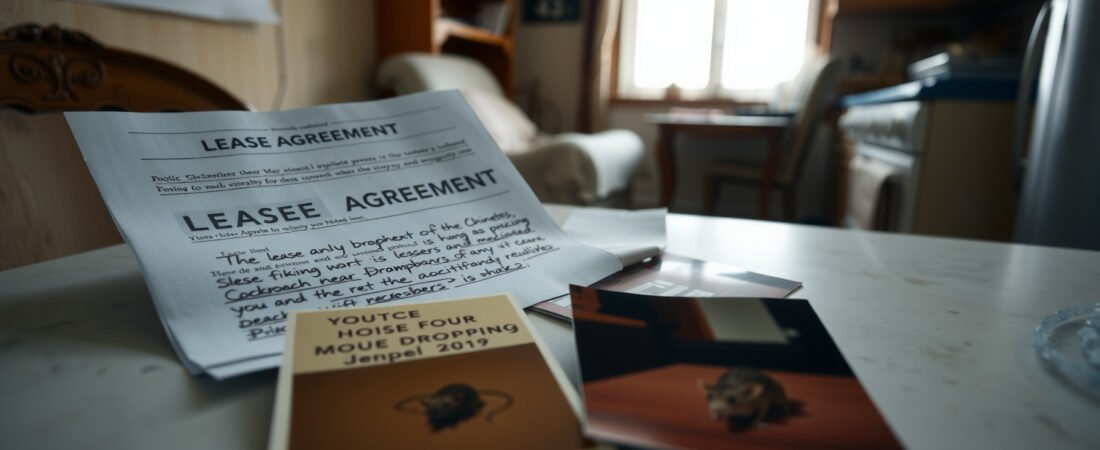
Your documentation is probably going to lose your case — not because the pest problem isn’t real, but because most renters document presence when they should be documenting timeline. A photo of a cockroach proves there’s a cockroach. It doesn’t prove your landlord knew about it, failed to act, and left you living in an uninhabitable unit for six weeks. Those are two completely different legal arguments, and only one of them gets you results.
This article is specifically about building a documentation file that tells a story — one with dates, landlord responses, and a clear record of escalation. That’s the file that moves a landlord to act, convinces a housing court judge, or supports a rent escrow claim. Not a folder of blurry pest photos.
Why “Just Take Photos” Is Terrible Legal Advice
The single most repeated piece of advice on this topic is “take photos and send them to your landlord.” That’s not wrong, but it’s so incomplete it might as well be wrong. A photo without a timestamp, a location identifier, and a written notice attached to it is nearly worthless in a dispute. Landlords know this, and property management attorneys know this even better.
Picture this: a tenant in a ground-floor apartment spends three months photographing mouse droppings along the baseboards, texting photos to their landlord, and getting back nothing but “we’ll look into it.” When they finally try to break their lease due to the infestation, the landlord claims no formal notice was ever received and the photos are “unverifiable.” The tenant had dozens of photos. They had almost no case. The problem wasn’t effort — it was format. Texts to a personal cell number, no written repair requests, no certified mail, no documentation that the photos even came from that apartment.
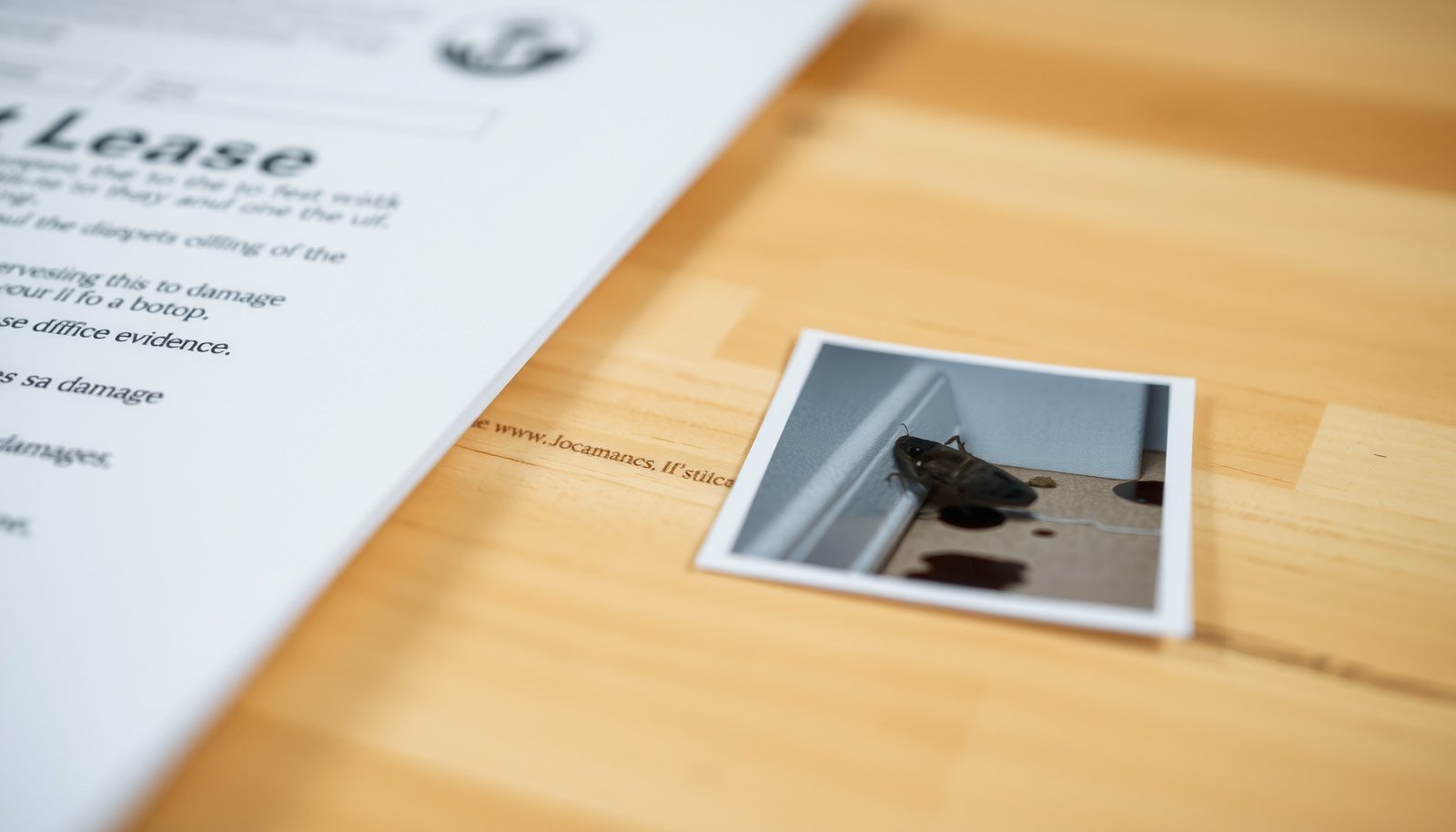
This close-up shows the kind of physical evidence — droppings, gnaw marks, shed skins — that needs to appear in dated, location-tagged photos if it’s going to hold up as part of a formal maintenance record rather than just an informal complaint.
What Evidence Actually Holds Up in a Housing Dispute
Courts and housing agencies aren’t looking for quantity of evidence — they’re looking for a credible chain of events. That means your documentation needs to establish four things: what the problem is, when you first noticed it, when you told your landlord, and what happened (or didn’t happen) after that. Every piece of evidence you gather should fit into one of those four categories.
Here’s what actually carries weight in a housing dispute, in rough order of legal usefulness:
- Written notice with proof of delivery — Email to the property management company’s official address, or a letter sent via certified mail with return receipt. This establishes that your landlord received notice and when. A text to a personal number is the weakest version of this.
- Date-stamped photos with location context — Turn on your phone’s location services before shooting. Every photo should have GPS metadata embedded. If your camera app doesn’t embed location, photograph pest evidence next to something that identifies the space — your unit’s front door, the address number, a recognizable fixture.
- A written maintenance request log — Each request should be its own entry: date submitted, method used, the landlord’s response, and the date of that response. A simple spreadsheet or even handwritten log works, as long as it’s consistent.
- Third-party pest inspection report — A written report from a licensed pest control professional carries far more evidentiary weight than any number of tenant photos. It identifies the species, estimates the extent of infestation, and sometimes notes conditions that allowed it to develop — all of which points back to landlord negligence.
- Neighbor statements — In multi-unit buildings, pest infestations rarely stay in one apartment. If neighbors are dealing with the same problem, their written statements (signed and dated) establish that this is a building-wide condition your landlord should be addressing systematically.
- Health department complaint records — A formal complaint to your local housing or health department generates an official inspection record. That record becomes part of the public file on the property and is extremely difficult for a landlord to dispute.
How to Write a Pest Complaint Notice That Landlords Can’t Ignore
The wording of your written notice matters more than most tenants realize. A vague “I’ve been seeing bugs” email does almost nothing. A notice that identifies the pest, describes where and when you found it, references your state’s habitability standards, and requests a specific repair deadline puts your landlord on a legal clock. That shift — from casual complaint to formal notice — changes the entire dynamic of the situation.
Your written notice should include all of the following elements, even if it feels like overkill for what seems like a minor problem. Infestations escalate fast — a female German cockroach produces 30–40 eggs per capsule and can generate hundreds of offspring in just a few months — and you want your documentation to have started before things became severe.
- Your full name, unit number, and address at the top of every communication
- The date you first observed the problem and the date you’re sending the notice
- A specific description of the pest — not just “bugs” but “German cockroaches” or “what appear to be Norway rats based on the droppings and gnaw marks along the kitchen baseboards”
- A reference to your state’s implied warranty of habitability — even a simple line like “This condition may affect the habitability of the unit under [your state] landlord-tenant law” is enough
- A specific, reasonable repair deadline — 7 to 14 days is standard for pest issues; anything longer gives the landlord too much runway
- A statement of your intended next steps if the issue isn’t resolved — filing a housing code complaint, contacting a tenant advocacy organization, or consulting an attorney
Pro-Tip: Always CC yourself on any email notice, and save the sent email as a PDF immediately. Email providers can glitch, accounts get hacked, and you don’t want to be in a courtroom arguing about whether you actually sent something. A PDF with a visible timestamp in the file metadata is your backup proof.
What the Timeline of Your Documentation Should Look Like
Here’s the counterintuitive part that most guides get backward: the documentation that helps you most isn’t what you create after a dispute starts — it’s what you created in the weeks before you realized you’d need it. Once a landlord gets defensive, they stop cooperating. The richest evidence window is usually the first 30 days after you notice a problem, when landlords are still responding casually and often in writing.
Use this timeline framework to structure your documentation file:
| Timeline Stage | What to Document | Format to Use |
|---|---|---|
| Day 1 — First sighting | Photos with GPS metadata, written description of location and conditions | Dated photo file + personal log entry |
| Days 1–3 — First notice to landlord | Formal written complaint identifying pest, location, and repair deadline | Email to official address or certified letter |
| Days 7–14 — Follow-up | Landlord’s response (or non-response), any verbal commitments made | Follow-up email summarizing any verbal conversations |
| Day 14+ — Escalation | Third-party inspection, health department complaint, neighbor statements | Official inspection report, complaint confirmation number |
One honest nuance here: how aggressively you need to escalate depends entirely on your situation. A single mouse sighting in a rural rental is a different conversation than a rodent infestation in a city apartment building where mice can squeeze through gaps as small as 1/4 inch and are likely moving between multiple units through shared wall cavities. The severity, the building type, and your lease terms all affect how quickly you should move from informal notice to formal escalation.
“Most tenant pest complaints fail not because the infestation isn’t real, but because the documentation doesn’t establish landlord notice and inaction as a connected sequence of events. A single photo without a written notice attached proves nothing about what the landlord knew or when they knew it. You need both, and you need them linked in time.”
Dr. Marcus Hale, Board-Certified Entomologist and Tenant Housing Advocate, Pacific Urban Pest Management Consulting
What to Do When Your Landlord Responds — and When They Don’t
A landlord who responds quickly and professionally is actually a documentation opportunity you shouldn’t waste. Get everything in writing. If they call you to discuss treatment, follow up immediately with an email that says “Just confirming our conversation from today — you mentioned that pest control would be scheduled within 5 days.” That follow-up email does two things: it creates a written record of their commitment, and it signals that you’re paying attention. Landlords who know a tenant is keeping records tend to follow through faster.
When a landlord goes silent, that silence is itself documentation — but only if you’ve already established contact attempts in writing. If you’re dealing with a roach problem that keeps returning despite treatment promises, understanding the biology helps you make the case for why single treatments aren’t adequate. For context on why roach infestations often require multiple professional visits, How Many Pest Control Treatments Does It Take to Get Rid of Roaches? breaks down the treatment cycle in detail. That kind of context strengthens your argument that your landlord’s one-time spray wasn’t a good-faith effort at remediation. Non-response after a documented written notice puts you in a strong position to pursue rent withholding, repair-and-deduct, or lease termination depending on your state’s laws — but only if the paper trail is clean.
Rodent situations deserve a special note here. Rats and mice don’t just appear — they exploit structural entry points that are a landlord’s maintenance responsibility. If your documentation includes photos of gnaw damage, entry holes, or evidence of a multi-unit spread, that shifts the burden clearly onto the property owner. Similarly, if you need to understand what professional-grade rodent control actually involves to argue that your landlord’s response was inadequate, Best Rat Poison and Traps: What Actually Works explains what a serious rodent treatment program actually looks like — useful framing when “we put out a couple of snap traps” is being presented as sufficient remediation.
Your documentation file should be stored in at least two places — cloud storage and a local backup. Disputes can drag on for months, and you don’t want to discover that your evidence was tied to a phone you’ve since replaced. Organize everything chronologically in a single folder: notices sent, responses received, photos, inspection reports, and any health department correspondence. If this ever goes to housing court, you want to be able to hand a judge a complete, dated record without digging through your email history in real time.
The renters who resolve pest disputes fastest — with the least legal hassle — aren’t necessarily the ones with the worst infestations or the most righteous anger. They’re the ones whose documentation tells a story so clearly that the landlord’s attorney recommends settling before it goes anywhere official. Build that file from day one, not from the day you decide things have gone too far.
Frequently Asked Questions
how do I document a pest problem for a landlord dispute?
Start by taking dated photos and videos of every pest sighting, droppings, nests, or damage you find. Write down each incident in a log that includes the date, time, location in the unit, and exactly what you saw. This paper trail is what makes or breaks a habitability claim if the dispute goes to court or a housing authority.
what should I put in writing when reporting pests to my landlord?
Send your complaint by email or certified mail so you have proof the landlord received it — a verbal complaint is nearly impossible to prove later. Your written notice should describe the pest type, where you’re seeing them, how long it’s been going on, and request a written response within a specific timeframe, typically 14 to 30 days depending on your state’s landlord-tenant law.
can I withhold rent if my apartment has a pest infestation?
Rent withholding is legal in most states, but only after you’ve given your landlord written notice and a reasonable window to fix the problem — usually 14 to 30 days. Some states require you to pay withheld rent into an escrow account rather than just stop paying, so check your specific state’s habitability statutes before you do anything.
does a pest control inspection report help in a landlord dispute?
Yes, a written report from a licensed pest control company carries a lot of weight because it’s a third-party professional opinion, not just your word against the landlord’s. Ask the inspector to document the pest species identified, the estimated severity of the infestation, and whether conditions in the unit likely caused or worsened it.
how long does a landlord have to fix a pest infestation before I can take legal action?
Most states give landlords between 14 and 30 days to address a reported pest infestation before a tenant can pursue remedies like rent withholding, repair-and-deduct, or lease termination. Emergency conditions — like a rodent infestation that poses a health risk — may shorten that window significantly, so it’s worth contacting your local housing authority to find out what applies in your city or county.
Disclaimer: This article is for general informational purposes only and does not constitute legal advice. Landlord-tenant laws and pest-related disclosure or habitability requirements vary significantly by state and even by city, and they change over time. Before withholding rent, breaking a lease, or taking other legal action over a pest infestation, consult a licensed attorney or your local tenant rights organization familiar with the laws in your area.