
Suing your landlord for a pest infestation is possible — but most tenants who try it lose, not because their landlord did nothing wrong, but because they can’t prove the specific things a court actually cares about. The pest problem itself is almost never the issue. The paper trail is.
Here’s the angle most legal guides skip entirely: winning a pest-related lawsuit against a landlord isn’t really about the pests. It’s about demonstrating a sequence — you reported it, they ignored it (or made it worse), and you suffered a measurable harm because of that failure. Without that chain, even a unit crawling with roaches may not be enough to win damages. Courts need causation, not just conditions.
This article breaks down exactly what you’d need to prove, what evidence courts look at, and why the thing most tenants focus on — the infestation itself — is actually the easiest part of the case to establish.
Does a Pest Infestation Actually Make a Landlord Legally Liable?
Not automatically — and that surprises a lot of tenants. A landlord’s legal duty is tied to something called the implied warranty of habitability, which exists in all 50 states in some form. That warranty says a rental unit must meet basic health and safety standards, and a serious pest infestation can absolutely violate it. But the violation alone doesn’t trigger liability for damages.
What triggers liability is the landlord’s response — or lack of one — after being properly notified. A landlord who receives written notice of a rodent infestation and does nothing for six weeks is in a very different legal position than one who sends pest control out within 48 hours. The same roach problem, two completely different cases. That distinction matters more than anything else when you’re deciding whether to pursue legal action.
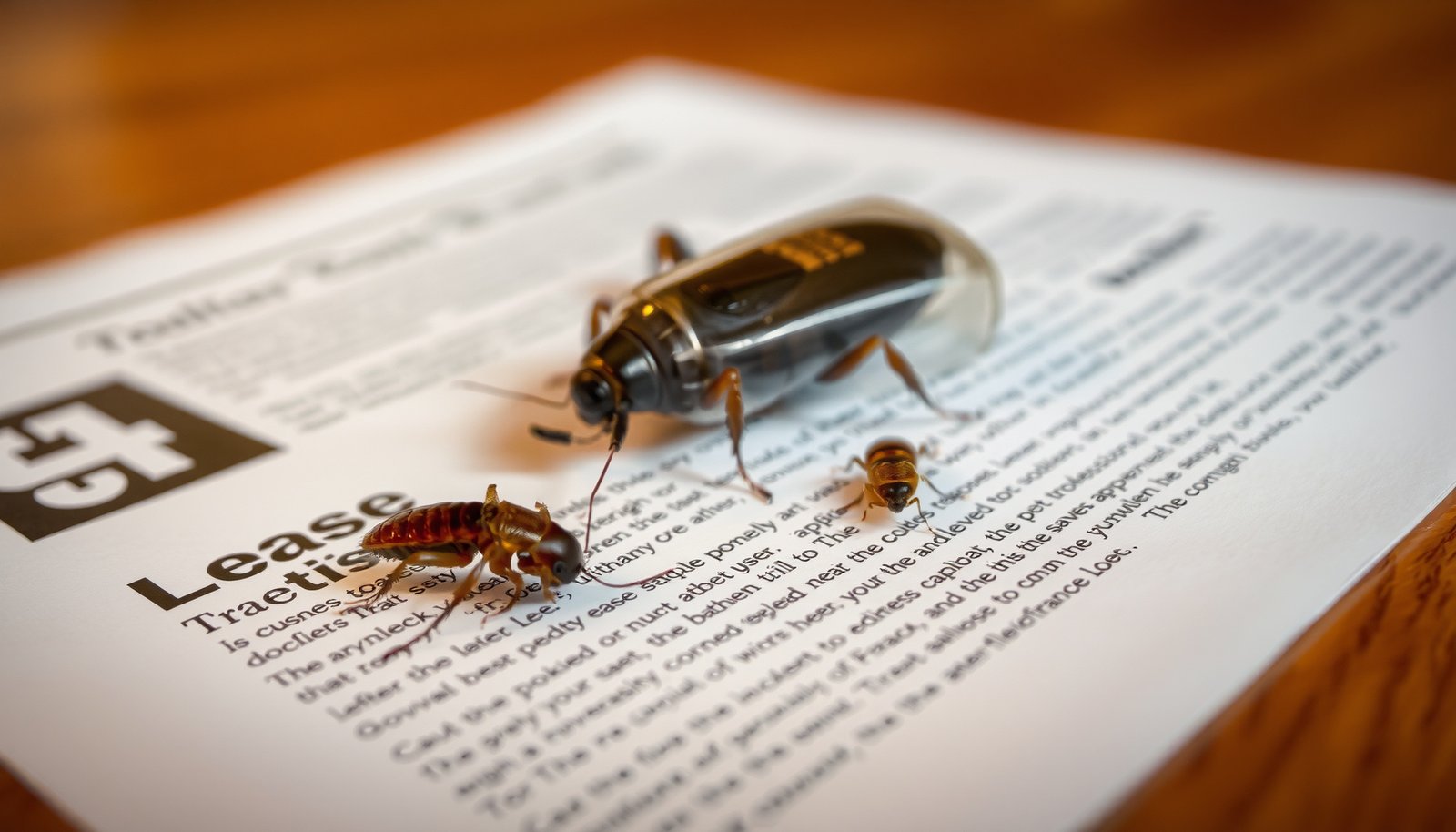
This photo shows the kind of visible evidence — droppings, grease marks, and harborage damage — that can help establish the severity and duration of an infestation in a legal dispute, both of which directly affect whether a court considers a unit uninhabitable.
What Do You Actually Have to Prove in Court?
There’s a specific legal framework courts use, and knowing it upfront will save you from building a case around the wrong evidence. Whether you’re pursuing a small claims action, a rent escrow claim, or a full civil suit, you’ll generally need to establish four things — and you need all four, not just one or two.
- The infestation existed and was serious enough to violate habitability. Minor occasional ant sightings won’t cut it. You need evidence of an active, recurring, or severe infestation — roach egg casings (a single female German cockroach can produce 30–40 eggs per capsule, and she rarely stops), rodent droppings throughout multiple rooms, bed bug evidence on mattresses and furniture. Photos with timestamps, pest control reports, or a health department inspection all help here.
- You notified the landlord in writing. Verbal complaints are almost impossible to prove and easy for a landlord to deny. A text, email, or certified letter creates a timestamped record. Courts want to see exactly when the landlord knew — because their legal clock starts ticking at notification, not at infestation.
- The landlord failed to respond within a reasonable time. “Reasonable” varies by state and severity, but most jurisdictions expect some action within 7–30 days for a serious infestation. A landlord who sends an exterminator but then never follows up after one ineffective treatment can still be found negligent — especially for pests like bed bugs or German cockroaches that require multiple treatments to eliminate.
- You suffered actual harm as a result. This is where most tenant cases fall apart. Courts generally won’t award damages just because conditions were bad — they need to see specific, documentable harm. That includes medical bills from pest-related illness or bites, costs you paid out of pocket for extermination or replacement of infested belongings, documented loss of use of part of your unit, or evidence of emotional distress in more extreme cases.
- You didn’t cause or significantly contribute to the infestation. If a landlord can show that your housekeeping, storage practices, or failure to report a problem you knew about for months directly caused or worsened the infestation, your damages can be reduced or eliminated. This is the counterargument landlords use most often, and it works more than tenants expect.
Picture this: a tenant in a multifamily building notices bed bugs in October, mentions it verbally to the super twice, but doesn’t send anything in writing until January. By then the infestation has spread to two adjacent units. The landlord’s attorney argues the tenant’s delay caused the spread — and gets traction with it. That three-month gap cost the tenant leverage they didn’t have to lose.
What Evidence Is Strong Enough to Hold Up?
Not all evidence is equal in these cases, and some of the stuff tenants think is most powerful — like photos on their phone — is actually the weakest on its own. Courts deal in documentation that’s hard to fabricate, timestamped, or verified by a third party. The more of that you have, the stronger your position.
The single most underrated piece of evidence in a landlord pest dispute is a report from a licensed pest control professional — not because it proves the infestation, but because it dates it, describes its severity, and identifies whether conditions in the unit (like gaps in plumbing, failed caulking, or improper food storage) suggest landlord maintenance failures. Understanding whether pest control treatments are actually resolving the problem or just suppressing it temporarily matters here too, because a landlord who repeatedly sends the same ineffective treatment can be shown to have failed their duty even if they technically “responded.”
“In rental pest disputes, the documentation gap is almost always what kills a tenant’s case. I’ve seen units with severe German cockroach infestations — populations that can hit several thousand individuals in a single kitchen — where the tenant had every right to pursue damages but had no written trail. Without that, you’re asking a judge to take your word against the landlord’s.”
Dr. Sandra Perez, Board-Certified Entomologist and Urban Pest Management Consultant
Here’s what actually holds up in court, ranked roughly by strength:
- Health department inspection reports — third-party, official, and very hard for a landlord to dismiss. File a complaint with your local housing authority and get the report in writing.
- Written communication with your landlord — emails, texts, certified mail. Save everything. Screenshot texts before you change phones.
- Invoices or quotes from licensed exterminators — especially if you had to hire one yourself after the landlord failed to act.
- Medical records tied to pest exposure — doctor visits for bed bug bites (confirmed via skin culture or physician documentation), allergic reactions, or asthma aggravated by cockroach allergens.
- Photos and videos with metadata intact — don’t screenshot your own photos, which strips the timestamp. Export originals directly.
- Witness statements from neighbors — especially useful in multifamily buildings where an infestation clearly originated from a common area or adjacent unit.
Pro-Tip: If you’re dealing with bed bugs specifically, invest in a bed bug mattress encasement immediately — not just for protection, but because it creates a controlled surface that makes future evidence collection cleaner and more credible. A properly rated bed bug mattress encasement can trap existing bugs and prevent new ones from burrowing into the mattress, which helps you document ongoing activity even after a landlord claims the problem is “treated.”
How Does the Type of Pest Affect Your Legal Case?
This is something almost no legal guide addresses, and it actually matters quite a bit. The pest species involved affects how quickly courts consider a unit uninhabitable, how easy it is to prove landlord negligence, and what kind of damages you can realistically recover. Not all pest infestations carry the same legal weight.
| Pest Type | Habitability Threshold | Key Legal Consideration |
|---|---|---|
| German Cockroaches | Low — courts treat heavy infestations as serious habitability violations | Cockroach allergens are documented triggers for asthma; medical harm is easier to establish |
| Bed Bugs | Low — nearly universally treated as a habitability violation in multifamily housing | Origin (tenant-introduced vs. building-wide) is a major contested issue; spread between units implicates building management |
| Mice / Rats | Low to medium — depends on severity and evidence of landlord-maintained structural entry points | Mice can squeeze through gaps as small as 1/4 inch; structural gaps the landlord failed to seal are strong negligence evidence |
| Ants / Silverfish | High — courts rarely find minor insect activity uninhabitable on its own | Harder to tie to landlord negligence unless linked to structural moisture issues or building-wide sanitation failures |
Bed bug cases occupy a uniquely complicated legal space because of how easily origin is disputed. A landlord will almost always argue that a tenant brought bed bugs in — and in multifamily buildings, that’s genuinely hard to disprove unless you have move-in inspection records showing the unit was clear. Adult bed bugs can survive over 300 days without feeding, meaning an infestation you discover six months into your lease could have been sitting dormant since before you moved in. That biological reality is actually useful evidence if you frame it correctly.
What Can You Actually Win — and Is It Worth It?
Tenants who successfully sue landlords for pest infestations typically recover one or more of the following: rent abatement (a refund of rent paid during the period the unit was uninhabitable), reimbursement for out-of-pocket pest control costs, compensation for damaged or destroyed property, and in some states, statutory penalties that can be two or three times the actual damages when a landlord acts in bad faith. A few states also allow attorney’s fees to be recovered, which changes the math on whether hiring a lawyer makes sense.
Here’s the honest nuance: whether a lawsuit is worth pursuing depends heavily on how much you actually lost, what your state’s landlord-tenant laws look like, and whether your landlord has any assets to collect from. Small claims court — usually capped at $5,000–$10,000 depending on the state — is where most of these cases land, and it’s genuinely accessible without a lawyer. But if your damages are smaller than a few hundred dollars, the time and stress involved may not justify it. The better move in those cases is usually a formal written demand, a health department complaint, or a rent withholding strategy — all of which cost nothing and often get faster results than litigation.
The counterintuitive reality that most pest-related legal guides miss entirely is this: the tenants who win aren’t usually the ones with the worst infestations. They’re the ones who documented everything from day one, kept receipts, and made the landlord’s inaction impossible to deny. A unit with 20 roaches and a bulletproof paper trail will beat a unit with 2,000 roaches and nothing in writing — every single time.
If you’re still early in the process — noticing signs but not yet in a dispute — start building your record now. Report in writing today. Get a pest control assessment in writing. Save every response (or non-response) your landlord gives you. If it ever gets to court, the case will be won or lost months before you file anything.
Frequently Asked Questions
Can you sue a landlord for pest infestation?
Yes, you can sue a landlord for a pest infestation if they failed to maintain a habitable living space — which is required by law in all 50 states. To win, you’ll need to prove the landlord knew about the problem and didn’t fix it within a reasonable timeframe, typically 14 to 30 days after written notice. Small claims court is the most common route for renters seeking compensation for damaged property or relocation costs.
what do you have to prove to win a pest infestation lawsuit against a landlord?
You generally need to prove four things: the infestation existed, your landlord was notified in writing, they failed to act within a reasonable time, and you suffered actual damages as a result. Documentation is everything — photos with timestamps, pest control inspection reports, and copies of every text or email you sent your landlord will make or break your case. Without written notice, it’s very hard to hold a landlord legally responsible.
how much compensation can you get for suing a landlord for roaches or mice?
Compensation varies by state and the severity of the infestation, but renters commonly recover rent reductions of 25% to 100% for the affected period, plus reimbursement for damaged belongings and temporary housing costs. If your landlord acted with gross negligence, some states allow you to collect double or triple damages. A few states also let you recover attorney’s fees, which makes it worth consulting a tenant’s rights attorney before filing.
does renters insurance cover pest infestation damage?
Most standard renters insurance policies don’t cover pest infestations because insurers classify them as a maintenance issue, not a sudden accident. That said, if pests caused a covered loss — like rats chewing wiring that sparked a fire — the resulting damage might be covered. Always check your specific policy, but don’t count on renters insurance to pay for extermination costs or furniture ruined by bedbugs or roaches.
what to do before suing landlord for pest infestation
Before filing any lawsuit, send your landlord a written notice — certified mail is best — describing the infestation in detail and giving them a specific deadline to respond, usually 14 to 30 days depending on your state. Keep a dated log of every pest sighting, take photos or videos, and get a written inspection report from a licensed pest control company if you can. If your landlord still doesn’t act, contact your local housing authority to file a complaint, since that creates an official record that strengthens your legal case.
Disclaimer: This article is for general informational purposes only and does not constitute legal advice. Landlord-tenant laws and pest-related disclosure or habitability requirements vary significantly by state and even by city, and they change over time. Before withholding rent, breaking a lease, or taking other legal action over a pest infestation, consult a licensed attorney or your local tenant rights organization familiar with the laws in your area.