
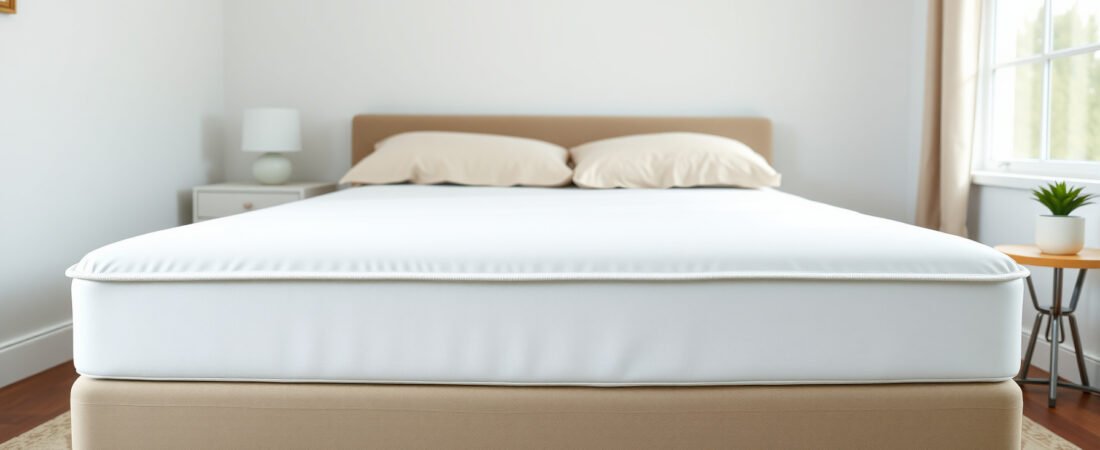
A mattress encasement won’t kill a single bed bug — and that’s exactly why most people buy the wrong one. The real job of an encasement isn’t elimination. It’s containment and detection, which means the zipper construction, fabric bite-resistance, and closure design matter far more than thread count or how “plush” the top feels. Get those wrong, and you’ve spent $30–$80 on a fancy fitted sheet that bed bugs can chew through in under an hour.
Why Most Bed Bug Encasements Fail Before the Bugs Even Arrive
The failure point almost nobody talks about is the zipper end-stop. That’s the tiny piece of hardware at the very end of the zipper track, and on cheaper encasements, there’s a gap between the last tooth and the fabric seam — sometimes as wide as 1–2 millimeters. Adult bed bugs are flattened enough to squeeze through gaps that narrow, and nymphs in their earliest instars are barely the size of a poppy seed. A zipper that “closes” isn’t the same as a zipper that seals.
The second common failure is fabric permeability at the seams. Encasement manufacturers love to advertise bite-proof fabric panels, and honestly, most modern encasements do use woven polyester or microfiber that’s genuinely hard to pierce. But the stitching holes at the seams are a different story. Low-quality encasements use standard sewn seams where each needle hole is a potential breach point. High-quality ones use ultrasonic welding or taped seam construction that eliminates those holes entirely. That detail alone separates the products worth buying from the ones that look identical in Amazon photos.
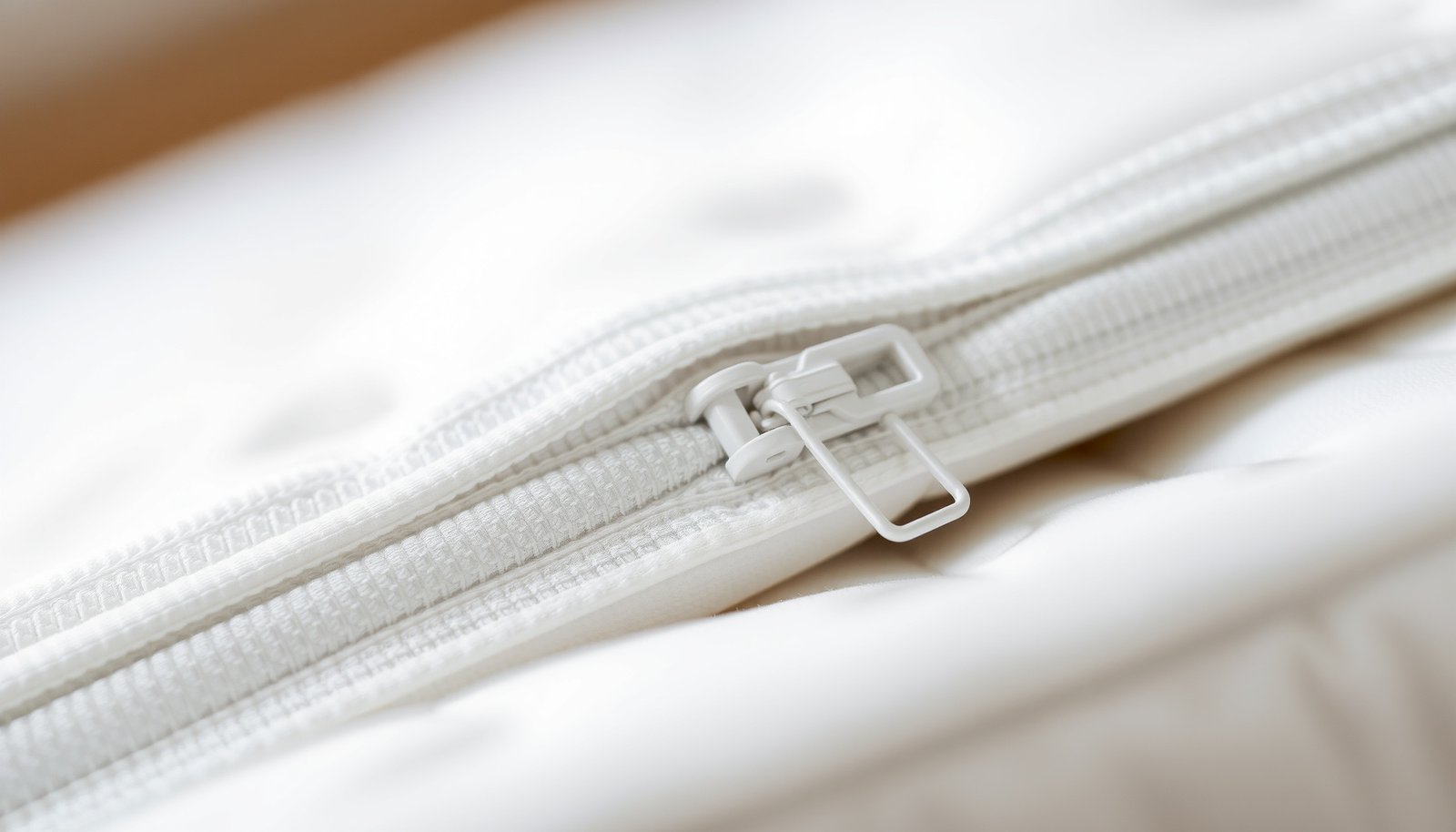
This close-up shows the zipper end-stop and seam construction on a lab-tested encasement — the two structural details that determine whether bugs stay trapped or find their way through.
What “Bed Bug Proof” Actually Means on a Product Label
The term “bed bug proof” has no federal regulatory standard behind it. Any manufacturer can print it on the box. What actually matters is whether the product has been independently tested under a protocol like the ASTM F3150 standard, which specifically tests for bed bug escape and entry under realistic conditions. A handful of encasements have passed this — most haven’t, and the ones that haven’t won’t tell you that upfront.
Here’s a comparison of the construction features that differentiate lab-certified encasements from marketing-only claims:
| Feature | Budget Encasement | Lab-Certified Encasement |
|---|---|---|
| Zipper end-stop | Open gap at closure | Velcro flap or zipper guard covers the end-stop |
| Seam construction | Standard sewn seams | Ultrasonic-welded or taped seams |
| Fabric bite resistance | Standard polyester weave | Tightly woven microfiber tested at ≤50 microns pore size |
| Testing standard | No independent lab certification | ASTM F3150 or equivalent third-party protocol |
Independent testing by entomologists at university extension programs has repeatedly shown that encasements without a zipper guard allow bed bug escape at rates above 60% during the first 72 hours of containment. That completely defeats the purpose of using one during an active infestation.
Which Encasements Actually Hold Up: Rated by Construction Quality
Picture this: you’ve just had a professional treatment, your exterminator tells you to encase your mattress that same day, and you grab whatever’s available at the nearest big-box store. Three weeks later, your interceptor traps are still catching live bugs — not because the treatment failed, but because the encasement you bought has a zipper gap that’s been letting survivors escape every night. This is a more common scenario than pest control professionals like to admit, because they often don’t specify which encasement to buy.
Based on construction quality, seam integrity, and independent testing results, here are the encasements consistently rated for genuine protection:
- SafeRest Premium Zippered Mattress Encasement — Uses a patented zipper end-stop guard and ultrasonic-welded seams on the sides. Breathable enough for regular use, and it’s waterproof without the crinkle noise that keeps people from keeping encasements long-term. Consistently recommended by pest management professionals for post-treatment containment.
- Protect-A-Bed AllerZip — One of the few encasements with ASTM F3150 certification and a Velcro zipper flap that covers the end-stop completely. The fabric is on the thicker side, which adds bite resistance but also means it runs slightly warm. Best choice if you’re actively treating an infestation and need the highest confidence in containment.
- Linenspa Zippered Encasement — Budget-friendly option with a basic zipper guard. It doesn’t have independent lab certification, but the seam construction is better than most at this price point. A reasonable choice for prevention on guest room mattresses, not ideal for active infestations.
- CleanRest Pro Mattress Encasement — Has a MicronOne barrier fabric with a documented pore size small enough to block both bed bugs and their eggs. The zipper design includes a fold-over guard. Frequently cited in extension program recommendations for renters dealing with multi-unit building infestations.
- SureGuard Mattress Encasement — Thin, quiet, and machine washable without degrading the seam integrity after repeated cycles. Lacks ultrasonic welding but compensates with reinforced stitching and a tight microfiber weave. Good middle-ground option for prevention-focused use after a cleared infestation.
One honest nuance worth stating: in apartments within heavily infested multi-unit buildings, even the best encasement alone won’t stop reintroduction from adjacent units through wall voids and electrical outlets. Encasements protect your mattress — they don’t create a perimeter around your room.
Do You Need to Encase the Box Spring Too?
“The box spring is almost always the more heavily infested harborage site — it has open fabric, wooden frames, and virtually no monitoring. Encasing only the mattress while leaving the box spring exposed is like putting a deadbolt on the front door and leaving the back door open. In my lab work, we consistently find higher bed bug densities inside unencased box springs than on the mattress surface itself.”
Dr. Michael Geary, Ph.D. Entomology, Urban Pest Management Specialist, Rutgers Cooperative Extension
Most buyers encase the mattress and stop there. That’s understandable — the mattress is what you sleep on, and the mental connection between bed bugs and the sleeping surface is strong. But box springs are structurally ideal harborage sites: they have an open fabric underside, internal wooden slats with gaps and crevices, and almost no direct light exposure. Adult bed bugs can survive over 300 days without a blood meal, which means a colony established inside an unencased box spring will patiently wait out any surface-level treatment.
Box spring encasements are built slightly differently than mattress encasements — they need to accommodate a deeper, more rigid structure, and some use a split zipper design that runs along two sides rather than the perimeter. The same quality criteria apply: zipper end-stop guard, taped or welded seams, and fabric pore size documented to block bed bugs at the nymph stage. Don’t buy a box spring encasement that’s just a giant sack with a drawstring — those have no meaningful closure integrity.
How Long Should You Keep an Encasement On?
The answer most people don’t expect: at least 18 months, possibly longer. Here’s the mechanism behind that. Bed bugs trapped inside an encasement after treatment will eventually die — but the timeline depends heavily on temperature and humidity conditions. At typical indoor temperatures between 65–75°F, unfed adults can survive 200–300+ days. Nymphs survive shorter periods but are harder to confirm dead visually. Removing an encasement at 6 months because you “haven’t seen any signs” is a gamble — there may still be living bugs inside waiting for an opportunity.
The practical upside is that encasements also make monitoring significantly easier. Any bed bug moving toward you as a food source has to travel across the smooth exterior surface, where it’s far more visible than in mattress fabric or piping. This is why pest control professionals use encasements as both a containment tool and a monitoring aid — the two functions work together.
Pro-Tip: After encasing your mattress and box spring, run a strip of white packing tape along the zipper length and leave it in place. Any bed bugs that manage to find the zipper will get stuck to the tape before escaping — and you’ll see them clearly against the white background during your weekly inspections. Replace the tape every two weeks.
Washing the encasement matters too, but do it carefully. Most quality encasements are machine washable, but high-heat drying cycles — 120°F for at least 30 minutes — are what actually kill any eggs or bugs that may be on the exterior surface. Cold or warm wash alone won’t do it. And just like with pantry moth infestations where heat treatment is the most reliable elimination step, temperature is the variable that determines whether you’re actually killing insects or just moving them around.
What Encasements Can’t Do — and What People Assume They Can
Encasements don’t repel bed bugs, don’t kill bed bugs, and don’t stop bed bugs from climbing onto your sleeping surface from the floor, walls, or furniture. This sounds obvious written out, but it’s genuinely surprising how many people install an encasement and then assume the problem is handled. The encasement is one tool in a coordinated response — isolation of the existing harborage site — not a standalone solution.
There’s also a counterintuitive fact worth knowing: a properly installed encasement can actually make an infestation easier to detect early, not just easier to contain after the fact. Because the smooth, uniform exterior gives bugs nowhere to hide on the mattress surface, you’re more likely to spot a single nymph or a shed exoskeleton during a routine visual inspection than you would on an uncovered mattress with seams, tufts, and piping. Think of the encasement as converting your mattress from a hiding place into a monitoring surface. This is one of the reasons they’re recommended for prevention in high-risk environments — hotels, college dorms, multi-unit apartments — not just for active infestations.
Here’s what an encasement genuinely does and doesn’t cover:
- Does: Trap existing bugs and eggs inside the mattress, preventing them from feeding and eventually killing them through starvation
- Does: Protect a new mattress from becoming infested if bugs are present elsewhere in the room
- Does: Make visual monitoring of the mattress surface easier during and after treatment
- Does not: Stop bed bugs from traveling across the floor, up the bed frame legs, and onto the encasement surface
- Does not: Eliminate bugs harborage in baseboards, furniture, or outlet covers in the same room
- Does not: Replace chemical or heat treatment for an active infestation — it’s a support tool, not a primary treatment
Understanding this separation is also why identifying harborage sites beyond the mattress is so important. Bed bugs follow behavioral patterns similar to other hiding insects — they cluster near food sources, exploit structural gaps, and leave behind detectable signs long before populations become visible. The same methodical inspection thinking that helps with identifying cockroach egg cases hidden in structural voids applies directly to locating bed bug harborage behind headboards and inside box spring frames.
Buy the encasement with the best zipper construction you can find, encase both the mattress and the box spring the same day you start treatment, and leave it on for the full duration — including a buffer period after signs disappear. The encasement isn’t the end of the process. It’s what keeps your mattress from becoming the reason the infestation comes back six months later.
Frequently Asked Questions
do bed bug mattress encasements actually work?
Yes, they work — but only if the zipper has a bug-stop closure and the fabric is rated bite-proof. A quality encasement traps any existing bed bugs inside so they can’t feed and eventually die, while blocking new ones from getting in. Look for encasements that are lab-tested to ASTM or CPSC standards for full protection.
how long do you have to keep a bed bug mattress encasement on?
You need to keep it on for at least 18 months, because that’s roughly how long bed bugs can survive without a blood meal. Removing it early means any bugs still trapped inside can escape and restart the infestation. Don’t take it off just because you haven’t seen activity — stick it out for the full period.
what size mattress encasement do I need for a bed bug cover?
You need an encasement that matches your mattress depth exactly — most standard mattresses run 8 to 12 inches deep, while pillow-top models can hit 14 to 18 inches. If the encasement is too loose, it won’t seal properly and bugs can slip through gaps near the zipper. Always measure your mattress depth before buying, not just the width and length.
can bed bugs get through a mattress encasement zipper?
They can if the zipper doesn’t have a Velcro flap or zipper guard covering the teeth. Bed bugs are flat enough to squeeze through standard zipper teeth, so encasements without a bug-lock flap aren’t truly protective. Brands rated for bed bug protection will specifically advertise a zipper closure system tested to prevent entry.
do I need a mattress encasement for the box spring too?
Yes — box springs are actually where bed bugs hide most heavily, so skipping that encasement leaves a major gap in your protection. Use a separate box spring encasement that’s also rated bite-proof and zipper-sealed. Covering only the mattress while leaving the box spring exposed won’t stop an active infestation.