
One ootheca can replace itself six times over before you ever spot a single live roach in your kitchen. That’s the part most pest guides skip entirely — they describe what an egg case looks like, but they don’t explain why finding even one means you’re already weeks behind the infestation curve. This article is about fixing that gap: learning to recognize cockroach egg cases accurately, understanding where they hide and why, and using what you find to estimate how bad the problem actually is.
What Does a Cockroach Ootheca Actually Look Like?
An ootheca is a hardened egg capsule that a female cockroach produces to protect multiple eggs at once. It looks nothing like the soft, scattered eggs you’d find from most insects — it’s a firm, ridged, purse-shaped case that ranges in color from light tan to dark reddish-brown to almost black, depending on the species and how old it is. The surface has a distinctive segmented or corrugated texture running lengthwise, almost like a tiny crimped pie crust, which makes it easier to identify once you know what you’re scanning for.
Size varies meaningfully by species. A German cockroach ootheca is about 6–9mm long and typically light brown, while an American cockroach’s case is larger — around 8–10mm — and tends toward a dark reddish-mahogany color. Oriental cockroach oothecae are the biggest of the common household species, reaching up to 12mm, and are a distinctive dark brown that almost looks like a tiny leather pouch. These size differences are actually one of your best clues for species identification before you ever see a live roach.
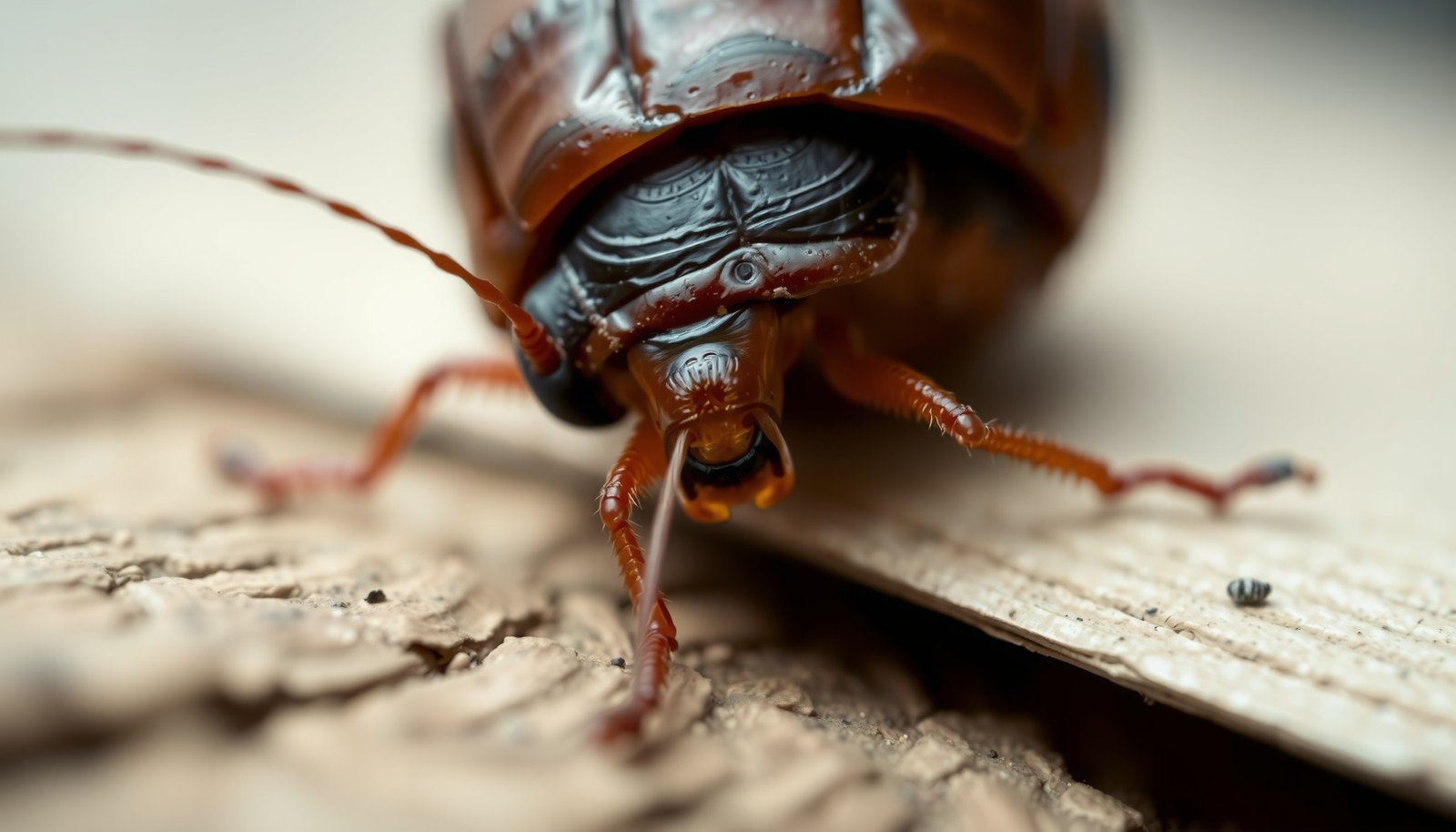
This close-up shows the ridged, segmented profile of a German cockroach ootheca next to an American cockroach case — the size and color contrast make it immediately clear why species identification from egg cases alone is entirely possible with a little practice.
How Many Eggs Are Inside One Egg Case — and Why That Number Should Alarm You
Here’s the counterintuitive part that most homeowners underestimate: the egg count per case isn’t the whole story — it’s the production rate that’s the real problem. A female German cockroach produces 30–40 eggs per capsule and can generate 4–8 oothecae in her lifetime. She carries the case attached to her body for almost the entire incubation period of 28–30 days, dropping it only hours before the eggs hatch. That means by the time you find a deposited case, the nymphs that came from it are likely already loose somewhere in your home.
Compare that to the American cockroach, which deposits her case within 1–2 days of forming it, cementing it to a surface with saliva. She produces roughly 16 eggs per capsule but can generate up to 90 oothecae over her lifetime — a lifespan that can stretch to 700 days under favorable conditions. The math compounds fast. One overlooked ootheca isn’t a minor find; it’s a data point telling you that a reproductive female has been active in that space for weeks, possibly longer.
“Finding an empty ootheca is actually more diagnostically valuable than finding a live cockroach in many cases. The empty case tells you where a female felt safe enough to deposit eggs — that location reveals harborage patterns, moisture sources, and how long the infestation has been established. Most homeowners throw them away without realizing they’re discarding the best map they have.”
Dr. Marcus Teel, Board-Certified Entomologist and Urban Pest Management Specialist, Texas A&M AgriLife Extension
Where Do Cockroaches Actually Hide Egg Cases in a Home?
The placement of oothecae is not random — female cockroaches are choosing locations based on very specific environmental criteria: warmth, darkness, humidity, and physical protection on at least two sides. That means you won’t find them out in the open. You’ll find them tucked into voids, gaps, and contact points that most people never inspect during a casual walkthrough of their kitchen.
Here are the specific locations worth checking systematically, ranked by how frequently oothecae are found in residential infestations:
- Behind and underneath the refrigerator motor housing — the compressor generates consistent warmth, and the dark recessed area near the rear base is a prime deposit site, especially for German cockroaches.
- Inside cabinet hinges and the gap between cabinet frames and walls — even a 3–4mm gap is sufficient; cases are often glued directly to wood surfaces here with the female’s secreted adhesive.
- Underneath and inside electrical appliances — toasters, microwaves, and coffee makers provide heat, food residue, and darkness simultaneously. Pull out the crumb tray on your toaster and look carefully at the inner walls.
- Behind loose wallpaper, baseboards, or cardboard in pantry areas — American and Oriental cockroaches in particular favor materials they can cement cases to; cardboard is a preferred substrate because it absorbs the adhesive saliva well.
- Inside wall voids near plumbing penetrations — the combination of pipe warmth and ambient moisture near sink drains and dishwasher connections creates ideal incubation conditions. Cases deposited here are nearly impossible to find without removing access panels.
- Beneath bathroom vanities and around toilet bases — Oriental cockroaches specifically favor cool, damp environments, and their oothecae are frequently found in utility spaces, crawl spaces, and around floor drains.
One thing worth knowing: the locations where you find egg cases don’t always match where you’re seeing live roaches. A female will travel from an active harborage to a preferred deposit site, meaning the eggs and the adults can be 10–15 feet apart in a standard kitchen layout. Don’t assume the infestation center is where the cases are — treat both sites.
How to Tell Whether an Ootheca Is Empty, Hatched, or Still Active
This is the distinction that actually matters for your response, and it’s one most homeowners — and honestly, some pest control guides — gloss over completely. An empty, hatched ootheca looks subtly different from an unhatched one, and knowing the difference helps you understand the timeline of what you’re dealing with. A hatched case will have a visible split along the keel (the ridged seam running along the top edge), and the interior will be hollow and lightweight. An unhatched case feels slightly firmer and heavier, and the seam will be sealed.
Color alone is not a reliable indicator of viability. A dark brown ootheca can be freshly deposited or long since emptied depending on species and substrate. Your best diagnostic tool is physical: pick it up carefully (use a piece of tape or a gloved hand), and gently flex it. A viable case resists compression and feels solid throughout. A hatched case will feel hollow, and the split seam is usually visible with a flashlight at a low angle. If you find multiple hatched cases clustered in the same area, that harborage has been active and productive — likely for longer than a month.
Pro-Tip: Before you discard any egg cases you find, photograph them next to a ruler or coin for scale. This gives you a species ID record and a rough timeline reference if a pest control professional gets involved later — they’ll want to know exactly what you found and where, and a photo is far more useful than a description from memory.
Cockroach Egg Case Identification by Species: Quick Comparison
Knowing which species you’re dealing with changes your treatment approach significantly. German cockroaches infest the spaces immediately around food and moisture and respond well to gel bait placed in harborage zones. American cockroaches often enter from exterior sources and sewer systems, meaning interior bait alone won’t solve the problem. Oriental cockroaches require attention to moisture control in addition to any chemical intervention. The ootheca you find can tell you which path you’re on before you’ve spent a dollar on products.
| Species | Ootheca Size | Color | Eggs Per Case | Deposit Behavior |
|---|---|---|---|---|
| German Cockroach | 6–9mm | Light tan to golden brown | 30–40 | Carried until hours before hatching |
| American Cockroach | 8–10mm | Dark reddish-brown to mahogany | 14–16 | Deposited and glued within 1–2 days |
| Oriental Cockroach | 10–12mm | Dark reddish-brown to almost black | 16 | Deposited in sheltered ground-level areas |
| Brown-Banded Cockroach | 5mm | Reddish-brown, lighter than German | 14–18 | Glued to walls, furniture, or paper products at height |
Brown-banded cockroaches deserve a specific callout because they break the pattern. Unlike the other three species, which concentrate oothecae near floor-level heat and moisture sources, brown-banded females deposit cases at elevation — on the underside of furniture, inside picture frames, behind wall decorations, and even inside electronic housings. If you’re finding egg cases in unusual high locations and your kitchen inspection comes up empty, brown-banded cockroaches are a serious possibility, and that changes where you need to apply treatment entirely.
It’s also worth knowing that this identification work only gets you so far on its own. If you’re a renter who finds evidence of an established infestation — multiple hatched cases, egg cases in multiple rooms, or cases near structural voids — that’s documentation worth keeping. How often a landlord is required to provide pest control varies by state, but photographic evidence of oothecae in multiple locations significantly strengthens your position if you need to escalate.
What Finding Egg Cases Should Change About How You Treat the Infestation
Here’s where most DIY approaches break down, and it’s worth being direct about why. Standard cockroach treatments — sprays, foggers, even bait stations placed incorrectly — can kill a significant portion of the adult population while leaving deposited oothecae completely unaffected. Egg cases are physically sealed and chemically resistant; contact insecticides cannot penetrate the casing to kill the developing embryos inside. You can fog an entire apartment and walk away feeling confident, then watch a new generation hatch 3–4 weeks later from cases that were never touched.
The practical implication is that any treatment plan needs to account for a full reproductive cycle — typically 30–60 days depending on species and temperature — not just an immediate knockdown. Gel baits are the most effective tool for this because they’re picked up by nymphs as they emerge, addressing the hatching generation directly. But the bait placement matters enormously: it needs to be positioned within a few inches of confirmed harborage sites, not placed generically on open countertops. If you’re going the professional route, here’s what preparing your home for a professional pest treatment actually involves — and doing that prep correctly dramatically affects whether the second-generation hatch gets addressed or just gives you a false restart.
The honest nuance here is that severity matters a lot. Finding one hatched ootheca behind a refrigerator in an otherwise clean apartment could represent an early-stage infestation that responds well to a focused DIY bait program over 6–8 weeks. Finding 20 hatched cases across multiple rooms, in wall voids, and near plumbing penetrations means the reproductive population has been established long enough that professional treatment with follow-up visits is genuinely the faster and cheaper path. The egg cases are telling you which situation you’re actually in — that’s why learning to read them is worth the effort.
- Don’t use repellent sprays near bait stations — residual sprays drive cockroaches away from bait, defeating the purpose of the bait entirely. These two products work against each other when placed in the same zone.
- Replace gel bait before it dries out — dried bait is ignored by cockroaches. Fresh bait needs to be applied every 2–4 weeks in active harborage sites during an infestation.
- Treat the perimeter of the refrigerator motor housing, not just the floor around it — German cockroach oothecae are frequently found on vertical surfaces inside the motor cavity, not on the floor beneath it.
- Seal cardboard boxes in kitchen storage areas — open cardboard is both a harborage site and a preferred ootheca deposit substrate; switching to sealed plastic bins removes a major breeding site.
- Vacuum up any egg cases you find rather than sweeping — vacuuming captures the case intact and removes it from the environment immediately; sweeping can dislodge viable cases into cracks or spread them to new areas.
The ootheca is ultimately not just a pest curiosity — it’s a timeline, a species ID, a map of harborage activity, and a direct indicator of how far behind the problem you currently are. Every roach control effort that ignores the egg case evidence is solving the visible part of the problem while the invisible part keeps replenishing it. Start with what you find, figure out what it’s telling you, and build your response from there.
Frequently Asked Questions
What do cockroach egg cases look like?
Cockroach egg cases, called ootheca, look like small purse-shaped capsules with a ridged seam running along one edge. They’re usually brown to dark reddish-brown and range from about 5mm to 13mm long depending on the species. German cockroach ootheca tend to be lighter tan, while American cockroach cases are darker and more reddish-brown.
How many eggs are in a cockroach egg case?
It depends on the species, but a single ootheca can hold anywhere from 14 to 48 eggs. German cockroach cases carry the most — usually around 30 to 48 eggs — which is why German cockroach infestations spread so fast. American cockroach cases hold closer to 14 to 16 eggs per capsule.
Where do cockroaches hide their egg cases?
Cockroaches typically deposit their ootheca in dark, hidden spots close to food and moisture sources. You’ll most often find them tucked behind appliances, inside cabinet hinges, underneath sinks, inside wall voids, or along the back edges of drawers. German cockroaches sometimes carry the egg case attached to their body until just before it hatches, so you won’t always find loose cases lying around.
How do I tell if a cockroach egg case has already hatched?
A hatched ootheca will be hollow, lighter in color, and often slightly cracked or split open along the seam. You might also notice small exit holes or a more flattened appearance compared to an intact case. Finding an empty casing still means you have an active infestation nearby — it just means the eggs have already released nymphs into your home.
What’s the difference between German and American cockroach egg cases?
German cockroach ootheca are smaller — around 6 to 9mm — tan or light brown, and rectangular with a fairly uniform shape. American cockroach cases are larger, roughly 8 to 13mm, darker reddish-brown, and have a more pronounced ridge along the top. If you’re finding cases glued to surfaces in your kitchen, it’s likely German cockroaches; cases found in basements, garages, or crawl spaces are more often from American cockroaches.