
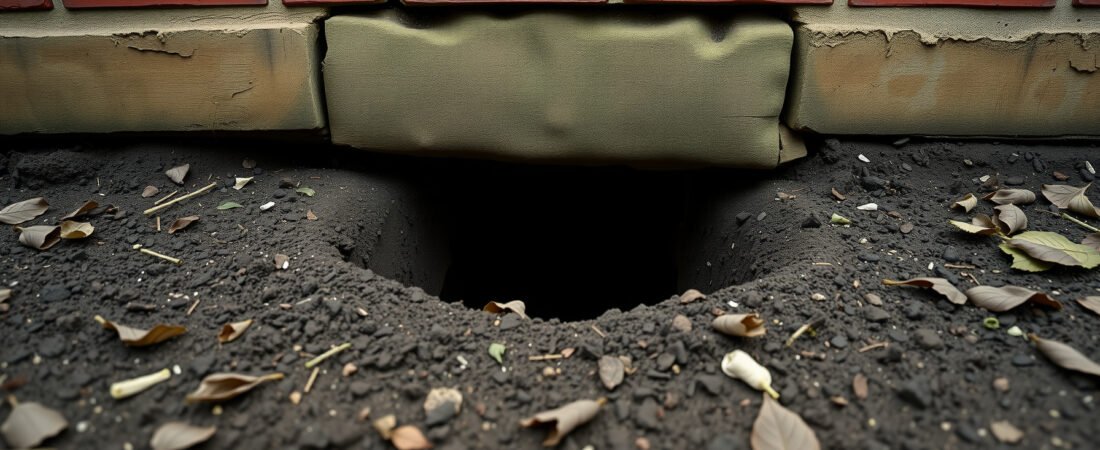
Rat holes outside your home don’t look like what most people expect — and that mismatch is exactly why so many homeowners misidentify them, dismiss them as mole damage, or seal the wrong openings entirely. The hole itself is almost secondary. What tells the real story is everything around the hole: the soil, the grease, the debris, the pattern of where it sits on your property.
Here’s the bottom line up front: a Norway rat burrow entrance is typically 2–3 inches in diameter, smooth and compacted at the edges, with a fan-shaped mound of fresh soil pushed out in front — called a “kick mound.” But if you’re only looking for the hole, you’re already behind the investigation. Rats are creatures of habit with established runways, and the hole is just the front door of a much larger problem underground.
What Does a Rat Burrow Actually Look Like Up Close?
A fresh rat burrow entrance is cleaner than you’d expect. The opening is roughly circular, about 2 to 3 inches across — slightly smaller than a tennis ball. The edges are worn smooth from repeated use, and the soil immediately around the hole is packed hard, almost polished-looking, from the constant friction of a rat’s body passing through dozens of times a day.
That fan-shaped kick mound of loose dirt directly in front of the entrance is one of the most reliable identifiers. Norway rats excavate aggressively — a single burrow system can extend 3 feet deep and run 6 feet or more horizontally — so there’s a lot of displaced soil. If you see a small pile of fresh, crumbly earth pushed outward from a hole near your foundation, under a deck, or along a retaining wall, that’s a serious red flag.
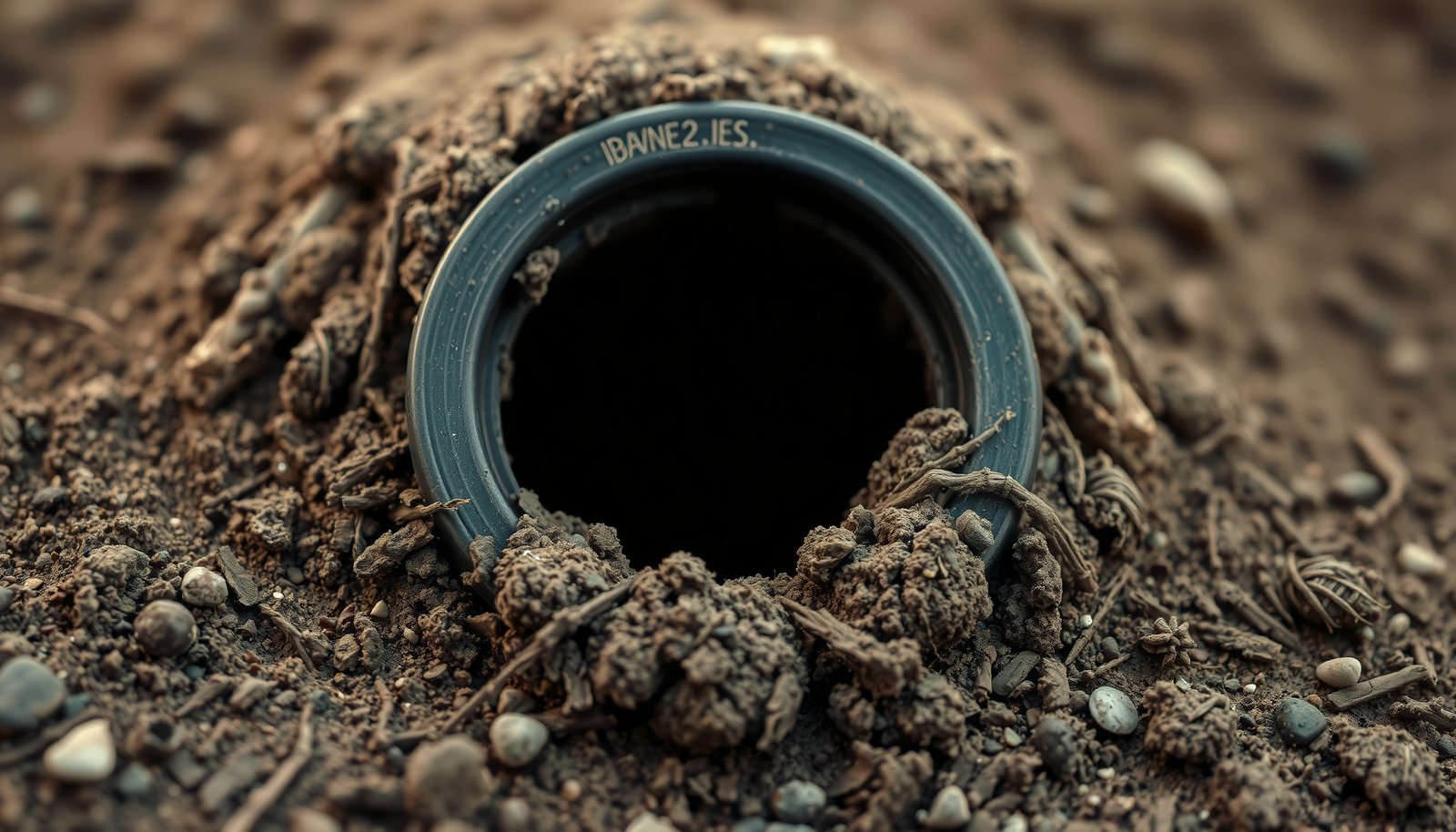
This close-up shows the smooth-edged, compacted entrance of an active Norway rat burrow alongside the characteristic kick mound — the combination of these two features is what separates a rat hole from lookalike damage caused by voles, moles, or chipmunks.
How Is a Rat Hole Different From a Mole Hole, Vole Tunnel, or Chipmunk Burrow?
This is where most homeowners go wrong. They find a hole in the yard, assume it’s some kind of rodent, and either ignore it or fill it with the wrong solution. Mole holes produce volcano-shaped mounds with the dirt pushed up evenly in all directions — and moles are almost never entering your home. Vole tunnels are narrow (about 1–1.5 inches), shallow, and often accompanied by surface runways of dead grass. Chipmunk burrows are small and tidy with almost no displaced soil, because chipmunks carry the dirt away in their cheek pouches.
Rat burrows are different in feel and in location. They’re wider, deeper, and almost always positioned with purpose — against a solid vertical surface like a foundation wall, under a concrete slab, beside a fence post, or beneath debris piles that provide overhead cover. Rats don’t dig in open lawns. They want protection above them while they excavate, which is a behavioral trait worth memorizing.
| Animal | Hole Diameter | Soil Displacement | Typical Location |
|---|---|---|---|
| Norway Rat | 2–3 inches | Fan-shaped kick mound at entrance | Against foundations, under slabs, near debris |
| Vole | 1–1.5 inches | Minimal, surface runways present | Open lawn, near garden beds |
| Mole | 1.5–2 inches (surface) | Volcano-shaped raised mound | Open lawn, flower beds |
| Chipmunk | 1.5–2 inches | Almost none visible | Near tree roots, stone walls, garden borders |
Where Around Your Home Are Rat Holes Most Likely to Appear?
Picture this: you’re walking your property line in the fall, leaves coming down, and you notice a hole tucked right where your concrete stoop meets the foundation. It’s about the size of a golf ball, edges worn smooth, a little spray of dirt in front. That’s not settling — that’s an active rat burrow, and it’s almost certainly connected to a network running beneath your slab or into your crawl space. Fall is exactly when Norway rats push toward structures as outdoor food sources dry up.
There are consistent hotspots worth checking methodically. Rats choose entry and excavation points based on three factors: structural coverage overhead, proximity to food or water, and minimal human foot traffic. Walk these areas specifically:
- Along the base of your foundation, especially where soil meets concrete or brick
- Under wooden decks, porches, and attached sheds where soil stays undisturbed
- Beside HVAC units, water meters, or utility boxes that provide overhead shelter
- Beneath compost bins, firewood stacks, or debris piles within 30 feet of the home
- Along fence lines and retaining walls, particularly at the base where two materials meet
- Near downspout splash zones — rats are attracted to consistent moisture and will burrow along drainage paths
One counterintuitive thing worth knowing: a tidy, well-maintained yard is not necessarily a rat-free yard. Rats don’t need clutter — they need cover and food. A bird feeder above a clean mulched bed is more than enough to establish a burrow site within weeks.
How Do You Tell If a Rat Hole Is Active or Abandoned?
This is the question that actually determines your next move, and most guides gloss over it. An abandoned burrow won’t have fresh soil at the entrance — the kick mound will be old, compacted, or overgrown with weeds. Active burrows show fresh, loose soil, and the hole itself will be clear of debris and cobwebs. Rats clean their own entrances constantly because they need to move in and out quickly.
The single best field test: loosely fill the opening with a small wad of paper, a light soil plug, or even a pinecone. Check back in 24–48 hours. If something has pushed it out or burrowed around it, the hole is active. This test costs nothing and gives you a definitive answer before you spend time or money on any treatment. A Norway rat colony can range from a handful of individuals to well over 100 in a mature infestation, so confirming activity level matters — treating an abandoned burrow accomplishes nothing.
Pro-Tip: Sprinkle a thin layer of flour or fine sand around the burrow entrance before dark. Check the next morning with a flashlight at a low angle — fresh rat tracks in the powder confirm active use and can even show you the direction of their travel runway, which points you toward secondary burrow entrances you haven’t found yet.
What Signs Around the Hole Confirm It’s Definitely Rats (Not Just the Hole Itself)?
The hole alone is circumstantial. But rats leave a cluster of secondary evidence that makes identification much more reliable. Grease marks — dark, oily smears called “rub marks” — appear on surfaces rats brush repeatedly as they travel. You’ll see these on the foundation near the burrow entrance, on fence rails at ground level, or along the bottom of a wall. Rats have poor eyesight and navigate by touch, running the same paths until they leave a greasy residue from their fur. Once you know what rub marks look like, you’ll start noticing them everywhere on an infested property.
Look for these additional confirming signs within a few feet of any suspected burrow:
- Rat droppings near the entrance — Norway rat droppings are 3/4 inch long, capsule-shaped with blunt ends, dark when fresh and gray-brown when old
- Gnaw marks on nearby wood or plastic — rats gnaw constantly to keep their incisors in check, and you’ll often see fresh wood chips or shredded material at burrow sites
- Worn pathways in grass or mulch — rat runways look like shallow grooves or thinning strips of vegetation leading away from the hole toward a food source
- Rub marks at ground level on walls or posts — dark, waxy-looking smears roughly at the height of a rat’s body (2–3 inches off the ground)
- Nesting material scattered nearby — shredded insulation, grass, paper, or fabric near a burrow entrance suggests rats are actively building or expanding a nest chamber
“Homeowners consistently underestimate how far a burrow system extends. What you see at the surface — one or two holes — is almost never the full picture. Norway rats maintain multiple escape exits, sometimes 10 to 15 feet from the primary entrance. Treating only the visible hole is like fixing one leak in a pipe that has six more you haven’t found yet.”
Dr. Marcus Tillman, Urban Rodentologist and NPMA-Certified Pest Management Professional, Rutgers University Extension
Honest nuance here: how aggressive your response needs to be depends heavily on the situation. A single fresh burrow under a bird feeder 20 feet from the house, found in early fall, is a very different problem than five interconnected holes along your foundation with worn runways, rub marks, and evidence of gnawing near a crawl space vent. The former might be resolved with trapping and exclusion work you do yourself. The latter warrants a professional assessment before you do anything — not because DIY is impossible, but because treating a large active colony incorrectly can scatter rats into your walls rather than eliminate them. If you’re dealing with a multi-unit building or rental situation, it’s worth understanding where the legal and financial responsibility lies — similar questions come up in cases like fumigation vs. spot treatment decisions, where the right answer really does depend on infestation size and building type.
One more thing that most people don’t consider: the presence of outdoor rat burrows near a foundation dramatically increases the risk of interior infestation, especially in older homes where utility penetrations, pipe chases, and foundation cracks haven’t been properly sealed. A Norway rat can squeeze through any gap larger than half an inch — that’s roughly the diameter of a dime — which means even a small, unnoticed crack at grade level is a viable entry point once a burrow is established right next to it. Tenants dealing with this kind of situation who are uncertain about their rights around pest-related housing issues should know that some of those questions overlap with tenant protections — much like the questions explored in resources covering what tenants owe during a pest treatment period.
Finding one rat hole outside doesn’t mean you have a catastrophe on your hands — but it does mean you have a window of time to act before it becomes one. Norway rats breed fast: a female can produce 5 to 6 litters per year with 6 to 12 pups per litter, and young rats reach reproductive maturity in about 3 months. What starts as a single burrow under your deck in September can be a well-established colony of 30 or more by spring. The hole is your early warning system. Use it.
Frequently Asked Questions
What do rat holes look like outside?
Rat holes are typically 2 to 4 inches in diameter with smooth, hard-packed edges from repeated use. You’ll usually spot a fan-shaped pile of fresh dirt just outside the entrance, called a spoil pile. Active holes look clean and open — rats push out debris and keep the entrance clear.
How do I know if a rat hole is active or abandoned?
An active rat hole will have fresh dirt, gnaw marks nearby, and a clear, open entrance with no cobwebs or debris blocking it. You can stuff the hole loosely with paper or dirt and check back in 24 to 48 hours — if it’s been pushed out, rats are still using it. Abandoned holes tend to collapse inward, fill with leaves, or grow over with grass.
Where do rats dig holes around a house?
Rats prefer to burrow along foundations, under concrete slabs, near garbage areas, and around overgrown shrubs or woodpiles that give them cover. They’re especially drawn to spots near a food or water source, so check around compost bins, AC units, and downspouts. Burrows are almost always within a few feet of a wall or solid structure — rats don’t like being out in the open.
What’s the difference between a rat hole and a mouse hole outside?
Rat holes are noticeably larger, usually 2 to 4 inches wide, while mouse holes are closer to 1 to 1.5 inches in diameter. Rat burrows also tend to go deeper — sometimes 18 inches or more underground — and have that distinct dirt spoil pile at the entrance. Mouse holes outside are less common and shallower, and they rarely show the same heavy foot traffic and worn path leading up to them.
Can rat holes outside mean rats are already inside my house?
Yes, absolutely — outdoor burrows close to your foundation are a strong warning sign that rats may have already found a way inside. Rats only need a gap of about half an inch to squeeze through, so if burrows are near utility lines, pipes, or any cracks in your foundation, there’s a real chance they’ve gotten in. Look for droppings, grease marks along walls, or scratching sounds inside as confirmation.