
Spot treatment fixes most infestations. Fumigation is rarely the right first move — and pest control companies don’t always tell you that upfront. The choice between these two methods gets framed as a scale question (“how bad is it?”), but that framing misses the real variable: whether your pest is localized or cryptic. Those are two completely different problems that require completely different solutions, and confusing them is how homeowners end up paying $3,000 for a tent job when a targeted gel bait would have done it in two weeks.
What Most Homeowners Get Wrong About “Severity” and Treatment Choice
The instinct makes sense: big infestation equals big treatment. But infestation size is almost never the right metric for deciding between fumigation and spot treatment. A home with thousands of German cockroaches concentrated in one kitchen wall void can be resolved with targeted bait placements. Meanwhile, a relatively small drywood termite infestation spread across five isolated structural members in an attic might genuinely justify whole-structure fumigation — not because there are more bugs, but because you physically cannot reach every colony pocket with a localized product.
The real question is distribution, not density. Pest control professionals use the term “inaccessible harborage” — locations where pests are living that no spray wand, drill bit, or bait station can realistically reach. Drywood termites are the classic example. They seal themselves inside wood galleries and can establish 10 or 15 separate gallery systems throughout a structure, each completely isolated from the others. That’s the scenario fumigation was designed for, not “I saw a lot of roaches.”
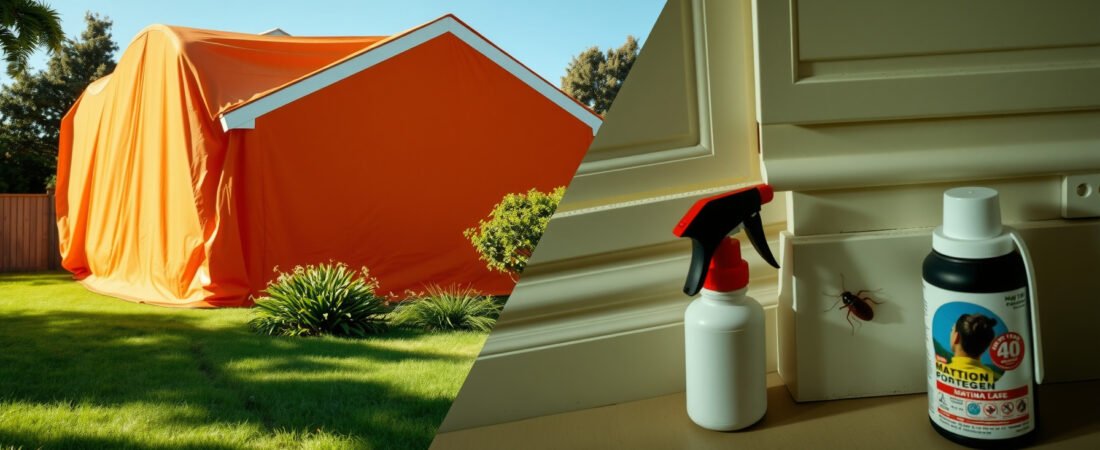
This side-by-side view of tented fumigation versus targeted spot treatment illustrates exactly why method selection comes down to pest location and accessibility — not just how many bugs you’re seeing.
How Fumigation Actually Works (and Why It’s Overkill for Most Pests)
Structural fumigation — the tent-and-gas method — uses sulfuryl fluoride, a penetrating gas that diffuses through wood, insulation, wall cavities, and furniture to kill pests by disrupting their nervous system function at the cellular level. The tent keeps the gas concentrated inside the structure for 24 to 72 hours depending on temperature, target pest, and building size. When it works, it works completely: the gas reaches places nothing else can. Drywood termites inside a 2×6 rafter 20 feet up a cathedral ceiling? Done.
Here’s what fumigation doesn’t do, though: it leaves zero residual protection. The moment the tent comes down and the home is ventilated — typically within 6 hours after the gas clears — there is nothing left in that structure to prevent reinfestation. A new drywood termite swarmer landing on your eave the following week faces exactly the same unprotected wood it would have before treatment. Spot treatments, by contrast, often deposit residual insecticides or physical barriers that remain active for weeks or months. For pests with ongoing pressure from outside the home, fumigation solves today’s problem but nothing more.
When Is Spot Treatment Actually the Better Option?
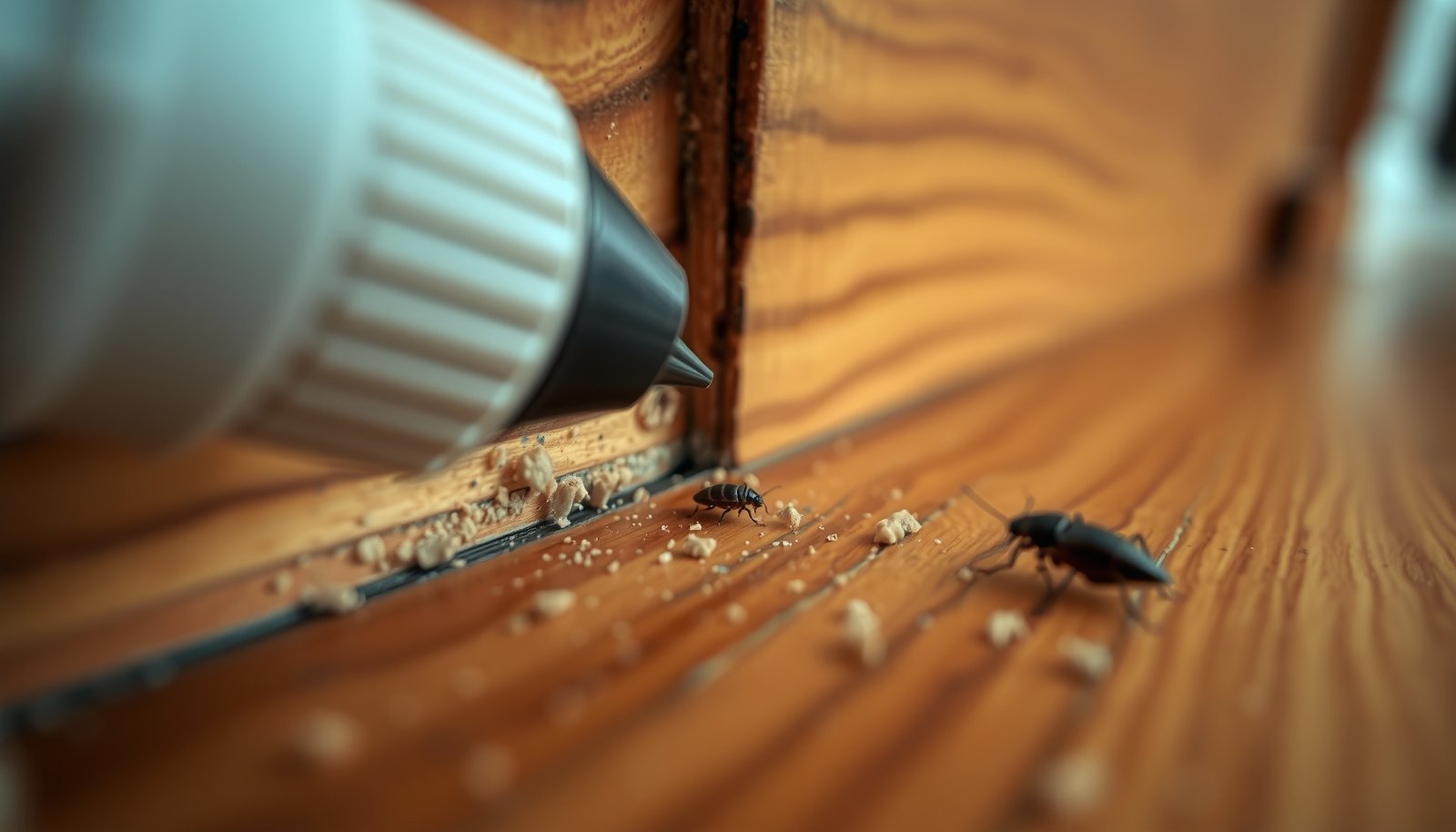
Spot treatment covers a wide range of application methods: gel baits, crack-and-crevice sprays, void injections, localized dust applications, and perimeter treatments. What they share is intentional precision — the product goes exactly where the pest is living, feeding, or traveling. For cockroaches, ants, bed bugs, stored product pests, and most rodent situations, this precision is a feature, not a limitation. A licensed pest professional placing cockroach gel bait in 15 to 20 precise harborage points inside a kitchen will typically see a 90% population reduction within 7 to 14 days.
Spot treatment also lets you stay in your home. Fumigation requires full evacuation for 2 to 3 days, bagging or removing all food, medications, and plants, and arranging accommodations — costs and logistics that rarely get factored into the price comparison. Picture this: a family of four spends $280 on a hotel, $60 on boarding their dog, and three days of work-from-home disruption, all on top of a $2,400 fumigation bill for a cockroach infestation that a $180 spot treatment service would have handled. That’s a real scenario, and it happens because the treatment choice was driven by the size of the visible infestation rather than where the pest was actually living.
Pro-Tip: Before agreeing to any fumigation quote for cockroaches, ask the company to show you evidence that the infestation has spread to inaccessible void spaces throughout the structure. If they can’t point to a specific reason why spot treatment won’t work, get a second opinion from a different company.
Which Pests Actually Justify Fumigation vs. Spot Treatment?
This is where the decision tree gets concrete. The pest species — and specifically how that pest lives inside a structure — should be the primary driver of method selection. Some pests are almost never worth fumigating; others make fumigation the only genuinely reliable option.
Use this breakdown as a starting framework, keeping in mind that building construction type and infestation distribution can shift the answer in edge cases.
| Pest | Recommended Approach | Why |
|---|---|---|
| Drywood termites (widespread) | Fumigation | Multiple isolated gallery systems in inaccessible wood — spot treatment can’t reach all colonies |
| Drywood termites (localized) | Spot treatment (orange oil or foam injection) | Isolated galleries can be drilled and treated individually if infestation is confined |
| German cockroaches | Spot treatment (gel bait + IGR) | Concentrated in harborage near food and moisture — highly responsive to targeted bait; fumigation leaves no residual |
| Bed bugs | Spot treatment (heat or chemical) | Fumigation is rarely used for bed bugs; heat or targeted chemical treatments are more cost-effective and leave residual protection |
| Subterranean termites | Spot treatment (liquid termiticide barrier or bait system) | Live in soil — fumigation doesn’t reach their colony; soil treatment is the only effective method |
| Stored product pests (pantry moths, beetles) | Spot treatment + source removal | Infestation is sourced from infested food — removing the source eliminates 90% of the problem |
One thing worth noting about that last row: stored product pests like pantry moths are almost universally a source problem, not a structure problem. Fumigating a home for a pantry moth infestation would be absurd — and yet some homeowners genuinely consider it when they feel overwhelmed. The solution is identifying and discarding every infested package, then using pheromone traps to monitor for stragglers. If you’re dealing with that situation, understanding how best pantry moth traps work and which ones actually perform will get you further than any chemical application.
What the Decision Actually Comes Down To: A Practical Framework
There’s no single answer that fits every home. A 1920s craftsman bungalow with balloon-frame wall construction and a drywood termite infestation in three separate zones of the roof structure is a genuinely different problem from a 1990s tract home with the same pest only in one window frame. Construction type, infestation distribution, pest biology, and your living situation all matter. That said, you can work through the decision methodically.
Here’s how to think through it before you commit to either approach:
- Identify the pest to species level. “Termites” isn’t specific enough. Drywood termites, subterranean termites, and dampwood termites require completely different treatments. Fumigation is primarily indicated for drywood termites — it does nothing for subterranean colonies living in soil, which can contain over 1 million individuals in a mature colony.
- Map the distribution of the infestation. Is the evidence of pest activity coming from one area or multiple disconnected areas? A single point of activity (one wall, one room, one piece of furniture) almost always points toward spot treatment. Multiple isolated locations throughout the structure is when fumigation starts making more sense.
- Ask whether the pest lives in accessible or inaccessible locations. Pests that live in open cracks, near plumbing, in kitchen voids, or in visible harborage points are accessible to spot treatment. Pests sealed inside structural wood with no chemical access point — like drywood termites deep in a beam — may genuinely require gas penetration.
- Factor in residual protection needs. If the pest pressure is ongoing (roaches entering from neighboring units, ants coming in from outside, drain flies breeding in your building’s shared plumbing), fumigation is the wrong tool. You need a residual treatment that keeps working after application. Fumigation leaves nothing behind.
- Compare true total costs, not just the service fee. Fumigation quotes rarely include hotel stays, pet boarding, food replacement (you’ll throw away more than you think), or time off work. For a typical 1,500 square foot home, fumigation runs $1,200 to $2,500. A professional spot treatment series for most pest types runs $150 to $400. The math only favors fumigation when it’s genuinely the only method that will work.
- Get a written explanation, not just a recommendation. Ask any pest professional recommending fumigation to explain specifically why spot treatment won’t work for your situation. A legitimate answer involves pest biology and structural access. A vague answer about “thoroughness” or “being safe” is not a technical justification.
“Fumigation is a precision tool that gets misapplied as a default tool. The gas doesn’t know the difference between a drywood termite gallery and a German cockroach harborage — but your wallet does. I tell every homeowner the same thing: if your pest professional can’t explain why your specific infestation is physically unreachable by a targeted application, you should be asking a lot of questions before you sign anything.”
Dr. Marcus Velt, Board-Certified Entomologist and NPMA-Certified Pest Management Professional, 22 years structural pest control experience
Are There Situations Where Combining Both Methods Makes Sense?
Yes — and this is one of the genuinely underappreciated options in the fumigation-vs-spot-treatment conversation. For severe drywood termite infestations in older homes with complex construction (multiple roof pitches, attached garages, finished attics), a pest professional might recommend full fumigation to address the inaccessible widespread infestation, followed immediately by a localized wood treatment or borate application to provide the residual barrier that fumigation doesn’t leave behind. It’s not double-spending; it’s using each method for what it’s actually good at.
The combination approach also comes up in multi-pest situations. A home dealing with both a widespread drywood termite infestation and an unrelated German cockroach problem might get fumigation scheduled for the termites while gel bait and an insect growth regulator handle the roaches — because applying fumigation to the cockroaches would waste gas and leave the home unprotected from the very next cockroach that walks through a door gap. Cockroaches, by the way, can squeeze through gaps as small as 3mm — roughly the thickness of a matchbook. A fumigated home with open entry points gets reinfested fast. Some pest issues genuinely overlap, like fungus gnats and drain gnats appearing simultaneously from different sources — and that same principle of treating each pest by its specific biology applies there too.
Here’s what the combination approach typically looks like in practice:
- Fumigation first, borate treatment second: Kills active drywood termite galleries, then creates a long-term wood preservative barrier that deters future infestations for years
- Fumigation for termites + bait system for subterranean: Addresses above-ground wood-infesting pests with gas while a soil-based bait system handles any subterranean colonies — because fumigation does nothing below grade
- Spot treatment + monitoring program: Targeted applications for the active infestation, with pheromone traps or glue boards left in place to detect any reinfestation within 30 to 60 days
- Partial fumigation (localized tent) + broader spot treatment: Some companies offer “local fumigation” for isolated structural sections — a garage, a single room — combined with spot treatment for the main living area
The honest nuance here is that combination protocols cost more upfront and require a pest professional who genuinely understands both methods well enough to deploy them strategically. Not every company offers or recommends both — some push fumigation because the margin is better, and some avoid it because they’re not licensed to perform it. Either bias can push you toward the wrong solution.
The clearest path forward is getting at least two quotes from licensed pest management professionals, asking each one to specifically justify their recommended method based on your pest species and infestation distribution — not just size. A professional who walks your property, checks the eaves, looks in the attic, and examines the actual wood damage before giving a recommendation is worth far more than one who quotes over the phone. The pest doesn’t care which method sounds most impressive. What matters is whether the treatment reaches every individual, and whether anything is left behind to stop the next one.
Frequently Asked Questions
fumigation vs spot treatment which one is cheaper?
Spot treatment is almost always cheaper upfront — it typically runs $100 to $300 per visit depending on the pest and area treated. Fumigation costs significantly more, usually $1,200 to $2,500 for an average home, because it requires tenting and specialized gas. That said, if spot treatment fails and you need multiple visits, the costs can add up fast and sometimes exceed what fumigation would’ve cost from the start.
when do you actually need fumigation instead of spot treatment?
You generally need fumigation when the infestation is widespread, deep inside structural wood, or inaccessible to sprays and baits — drywood termites are the classic example. Pest control pros often recommend fumigation when more than 3 to 4 infested areas are found throughout the home or when spot treatments have already failed twice. If pests are living inside walls, attic framing, or subflooring across multiple rooms, spot treatment usually can’t reach them effectively.
how long do you have to leave your house for fumigation vs spot treatment?
With fumigation, you’ll need to vacate your home for 2 to 3 days — that includes people, pets, plants, and any food that isn’t sealed in special bags. Spot treatment is much less disruptive; most treatments only require you to stay out for 2 to 4 hours while the product dries. Make sure you ask your exterminator for the exact re-entry time based on the specific chemicals being used.
does fumigation kill all types of pests or just termites?
Fumigation works on a wide range of pests — it’s not just for termites. It’s effective against drywood termites, bed bugs, cockroaches, wood-boring beetles, and some stored product pests. However, it doesn’t leave any residual protection, so if new pests enter your home after the gas dissipates, you’ll have zero barrier stopping them — which is why some pros recommend a follow-up spot treatment plan.
is spot treatment safe for kids and pets?
Most spot treatments are safe for kids and pets once the product has fully dried, which usually takes 30 minutes to 2 hours depending on the product. Always ask the exterminator for the Safety Data Sheet on whatever chemical they’re using so you know exactly what you’re dealing with. Some gel baits and non-repellent treatments have very low toxicity profiles and are considered safe for households with children and animals when applied correctly.
Disclaimer: This article is for informational purposes only. Pest control costs, timelines, and outcomes vary widely depending on the pest, the severity of the infestation, your location, and the company you hire. Always get multiple quotes and ask for a written inspection report before agreeing to a treatment plan.