
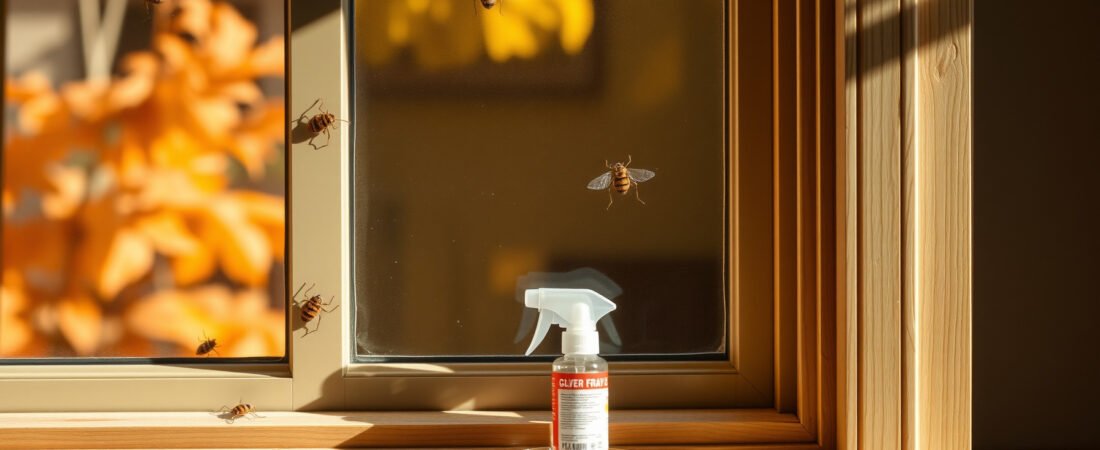
Spraying stink bugs with repellent as they crawl across your wall is the wrong move — and it’s exactly why most fall invasions keep coming back. The real problem isn’t the bugs you can see. It’s the aggregation pheromone they release when they find a warm entry point, which acts like a homing beacon for every other brown marmorated stink bug within range. Repellents and traps only work when you deploy them at the right phase of the invasion cycle — before the scouts signal the swarm, not after you’ve already got 30 of them on your ceiling. This guide focuses on that timing and strategy gap, because the products themselves are only half the equation.
Why Do Stink Bugs Invade Homes in Fall and What Triggers the Surge?
Brown marmorated stink bugs (Halyomorpha halys) aren’t randomly wandering into your house — they’re responding to a hard biological cue. As daylight hours drop below roughly 13.5 hours per day in late September and October, the bugs enter a pre-diapause behavioral phase where they actively seek thermal mass, which your house provides in abundance. A single south-facing brick wall can retain enough warmth to attract dozens of individuals within 48 hours of the first major cold front.
Here’s the part that catches most homeowners completely off guard: the first stink bug that finds a crack in your siding doesn’t just quietly slip inside. It deposits an aggregation pheromone — a chemical signal that persists for weeks — that recruits more bugs to the same entry point. Researchers at Virginia Tech found overwintering aggregations of over 26,000 individuals in a single structure. That number isn’t a freak event; it’s what happens when the pheromone trail goes uninterrupted through an entire fall season.
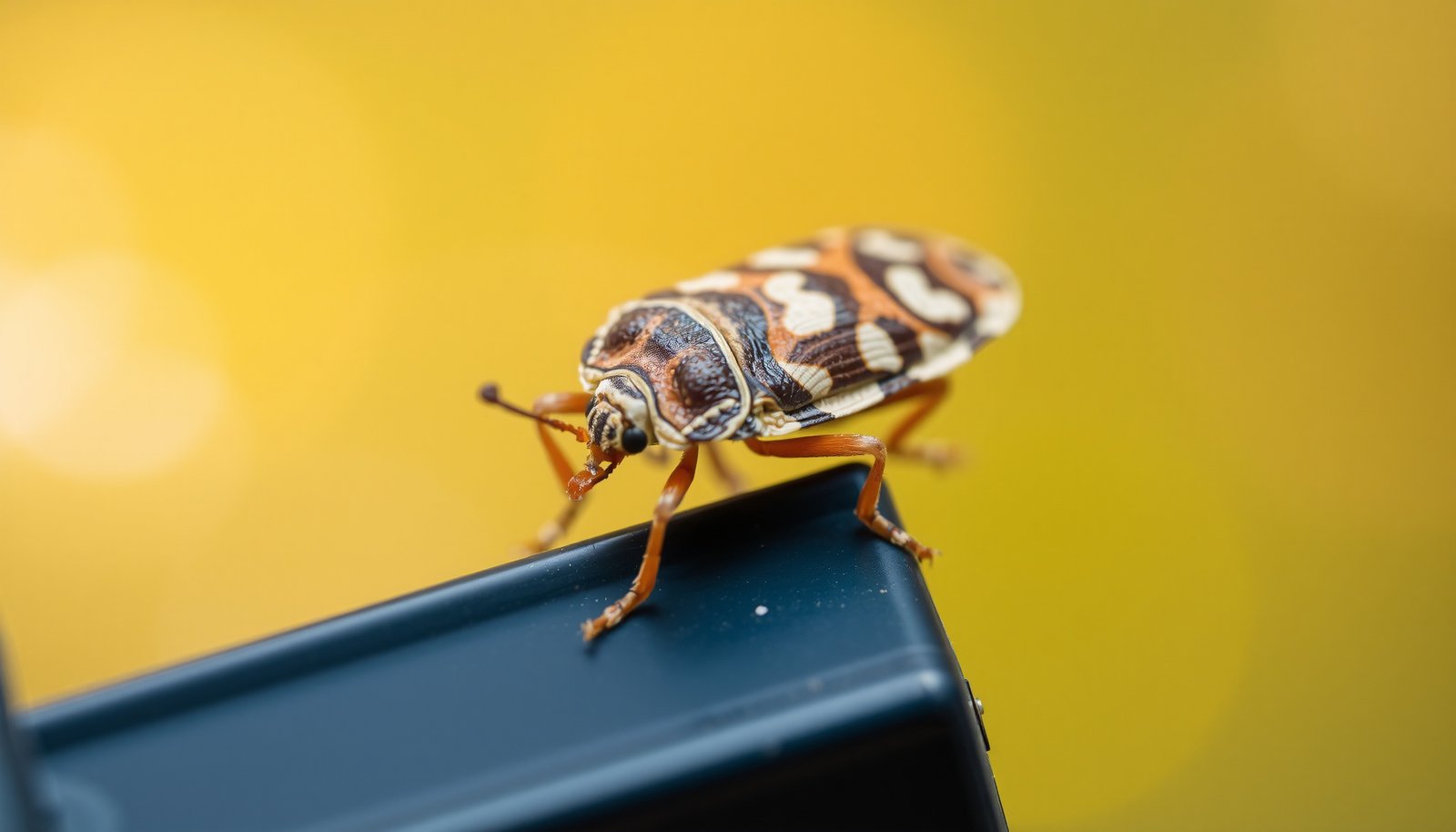
This close-up shows how stink bug traps and repellent products work together at a typical entry point — understanding the scale and placement of these tools is what separates an effective setup from one that gets ignored entirely by incoming bugs.
Which Stink Bug Traps Actually Work — and Which Are a Waste of Money?
Light traps, pheromone traps, and DIY bottle traps all get lumped together as “stink bug traps,” but they work through completely different mechanisms and perform very differently depending on where and when you use them. Understanding the mechanism is the only way to make an honest call on which one is worth buying. Most people grab whatever’s cheapest at the hardware store and then blame stink bugs when it doesn’t work — the trap was probably fine, it was just placed wrong or deployed too late.
Pheromone-baited light traps like the Rescue! Stink Bug Trap and the RESCUE! STBTR-DB4 Disposable Trap are the most field-tested options for indoor use. They use synthesized stink bug aggregation pheromone — specifically the blend of (Z)-bisabolen, trans-4,8-dimethyl-1,3,9-decatriene, and other components — to lure bugs toward a sticky or drowning capture surface. In university extension trials, these traps captured significantly more individuals than light-only or non-baited designs, particularly when placed in attic spaces and along south and west-facing walls where bugs first congregate. Running them from mid-September through mid-November covers the peak aggregation window in most of the Mid-Atlantic, Midwest, and Pacific Northwest.
“The aggregation pheromone component is what separates a trap that performs from one that’s basically just furniture. Without it, you’re relying on a bug accidentally walking into something. With it, you’re exploiting the same chemical signal that makes fall invasions so severe in the first place — you’re turning their biology against them.”
Dr. Anne Nielson, Research Entomologist, Rutgers University Cooperative Extension — Specialty Crop Research Initiative
Here’s what the product labels don’t emphasize: pheromone traps placed near active entry points can actually draw more bugs toward that wall before they’re captured. For severe infestations, placing the trap 10–15 feet inside the attic or crawl space rather than right at the foundation pulls bugs deeper into a contained area before they have a chance to spread through the living space.
What Are the Best Repellents for Keeping Stink Bugs Out Before They Enter?
Repellents fall into two categories that homeowners constantly mix up: contact repellents that deter bugs already on a surface, and barrier repellents that create a treated zone bugs won’t cross. Only the second category matters for fall invasions, and most of the products marketed as “stink bug repellents” are actually contact deterrents — useful for discouraging bugs indoors but ineffective as a perimeter defense.
The strongest evidence for outdoor barrier repellents points to pyrethrin- and pyrethroid-based perimeter sprays, specifically products containing bifenthrin or lambda-cyhalothrin at labeled concentrations. Ortho Home Defense Insect Killer and Bifen IT (bifenthrin 7.9%) are consistently cited by extension specialists as the most effective consumer-accessible options. Applied to the exterior foundation, window frames, door frames, and soffits in early to mid-September — before the first cold snap — these create a residual barrier that physically intercepts bugs before they locate entry points. Reapplication every 3–4 weeks through November maintains efficacy as rain and UV exposure degrade the active ingredient.
Pro-Tip: Apply your perimeter spray on a dry day when temperatures are above 50°F and no rain is forecast for at least 24 hours. Bifenthrin needs to fully cure on the surface to form an effective contact-kill zone — a rain event within 12 hours of application can cut residual effectiveness by more than half.
| Product | Active Ingredient | Best Use Case | Residual Duration |
|---|---|---|---|
| Ortho Home Defense Insect Killer | Bifenthrin 0.05% | Ready-to-spray exterior perimeter | 3–4 weeks (outdoor) |
| Bifen IT | Bifenthrin 7.9% | Concentrate for large homes or repeat coverage | 4–6 weeks (outdoor) |
| Rescue! STBTR Stink Bug Trap | Aggregation pheromone + UV light | Indoor capture, attic/crawl space | Replace lure every 3–4 weeks |
| Catchmaster Stink Bug Glue Trap | Pheromone-baited adhesive board | Windowsills, garage entry points | Replace when full or monthly |
Does the Order You Deploy Repellents and Traps Actually Matter?
Yes — and this is the specific mistake that makes most DIY stink bug control feel like it isn’t working. Deploying traps before sealing entry points and applying exterior repellent creates a scenario where your trap is actively pulling bugs into an undefended building. You’re advertising a warm destination while leaving all the doors open. The sequence matters more than the products themselves, and almost no product packaging tells you this clearly.
Picture this: a homeowner in suburban Virginia sets up three pheromone traps in early October, catches hundreds of bugs over two weeks, and still ends up with stink bugs crawling out of outlets and light fixtures by November. The traps were working perfectly — the problem was that the same pheromone attracting bugs to the traps was also reinforcing the aggregation signal on the south wall, funneling more bugs to the building than the traps could capture. Sealing first, repelling second, and trapping third is the correct order every single time.
Follow this deployment sequence for maximum effectiveness:
- Seal structural gaps first — focus on utility penetrations, window and door frames, soffits, fascia boards, and any gap wider than 1/8 inch. Brown marmorated stink bugs can squeeze through openings just 3mm wide.
- Apply exterior barrier spray — treat the full perimeter foundation line plus any surface bugs were observed on the previous year, typically south- and west-facing walls.
- Deploy pheromone traps in the attic or crawl space — place them 10–15 feet from the nearest entry point so any bugs that get past the barrier are intercepted before reaching living spaces.
- Add glue traps at interior transition zones — windowsills, the tops of doors, and the area around attic access hatches are the highest-traffic interior checkpoints.
- Monitor and reapply — check traps every 5–7 days and refresh the exterior spray after significant rainfall. The invasion window runs roughly 8–10 weeks, so consistency through the full period is what determines outcomes.
Are Natural and Essential Oil Repellents Effective Against Stink Bugs?
Natural repellents get a lot of enthusiasm online, and a few of them genuinely have some science behind them — but the evidence is much narrower than the marketing suggests. Clove oil, spearmint oil, and neem oil have all shown some repellent activity against stink bugs in controlled lab settings. The honest nuance here is that “shows activity in a lab petri dish” and “holds up on a painted exterior wall over three weeks of weather exposure” are completely different propositions, and most natural repellent studies haven’t cleared that second bar.
That said, for indoor spot treatment — on windowsills, around door frames inside the house, or in areas where you don’t want to use synthetic pesticides — a diluted clove or spearmint oil spray can meaningfully reduce bugs wandering across treated surfaces. It won’t replace a bifenthrin perimeter treatment for prevention, but as a supplemental indoor deterrent it’s a reasonable addition to the toolkit. Some homeowners dealing with other unexpected indoor pests alongside stink bugs have found that addressing multiple issues requires looking at the full picture of what’s entering their home — if you’re also noticing unidentified small arthropods, it’s worth reading about what tiny white bugs in your bed might be if they’re not bed bugs, since misidentification leads to the wrong treatment entirely.
- Clove oil (eugenol-based sprays): Best evidence among natural options; repels on contact but degrades within 24–48 hours indoors, faster outside
- Spearmint oil: Anecdotally popular, some lab support; effective concentration for real-world use is hard to maintain without frequent reapplication
- Neem oil: Disrupts insect feeding and development but works slowly — more useful as a garden perimeter spray than a home-entry repellent
- Diatomaceous earth (food-grade): Not a repellent but a physical barrier that kills bugs crossing it by abrading the exoskeleton — effective in dry attic spaces and wall voids where it won’t get wet
- Kaolin clay sprays: Used primarily on garden plants to deter stink bugs from feeding; not practical as a structural perimeter treatment
One counterintuitive point worth raising: the smell most people associate with stink bugs — that cilantro-like, vaguely chemical odor — is actually a defense secretion, not an attractant. Crushing or agitating bugs indoors releases it, and while it won’t cause structural damage, it does seem to linger in soft furnishings and can temporarily attract other individuals if they’re already in the building. This is why vacuum removal (into a sealed bag, immediately disposed of) beats smashing every time. It’s the same kind of multi-pest complexity that comes up when you’re dealing with something like centipedes getting into the house — the pest you’re targeting is often a symptom of a broader entry-point problem that needs to be solved at the building envelope level, not just treated species by species.
The fall invasion window is predictable, which means you have a genuine opportunity to get ahead of it every year — something you can’t say about most household pest problems. Set a calendar reminder for mid-August to order supplies and inspect your exterior before the first cold front hits. Stink bugs are seasonal, but the aggregation pheromone they deposit in your walls can keep drawing them back to the same spots year after year, which means the homeowners who do nothing one fall are always playing catch-up the next one.
Frequently Asked Questions
what is the best stink bug repellent for inside the house?
Essential oil sprays made with mint, clove, or lemongrass are the most popular DIY options, but they need to be reapplied every 2-3 days to stay effective. For stronger results, look for ready-to-use indoor sprays containing pyrethrin — they kill on contact and leave a short residual barrier around entry points.
do stink bug traps actually work?
Yes, but they work best as a monitoring tool rather than a full solution. Light-based traps and pheromone traps can catch dozens of bugs per night indoors, which helps reduce the population in a room, but they won’t stop more from coming in if your home has unsealed gaps.
how do I keep stink bugs from coming inside in the fall?
The single most effective step is sealing entry points before temperatures drop below 50°F — that’s when stink bugs start actively looking for winter shelter. Use silicone caulk on gaps around windows, doors, and utility pipes, and install door sweeps on any exterior doors that have visible light showing through the bottom.
does killing a stink bug attract more stink bugs?
It can, yes. When a stink bug is crushed or threatened, it releases an alarm pheromone that can signal other nearby bugs. That’s why it’s smarter to vacuum them up or use a trap instead of squishing them — vacuum them into a sealed bag and toss it outside immediately.
what smell do stink bugs hate the most?
Stink bugs are strongly repelled by mint, specifically spearmint and peppermint — even commercial repellents often use mint oil as their active ingredient. Dryer sheets rubbed along window sills and door frames are a popular home remedy too, and some homeowners swear by them, though the effect typically fades within a week.